
Gutter Cleaning Winchmore Hill
A hopper above a front entrance and a narrow gutter over a rear return can both leave water on the wall below. The useful starting point is the first place where the water becomes visible. Glen’s provides gutter cleaning in Winchmore Hill for accessible rainwater systems. Tell us whether the problem is on the frontage, side or garden elevation and explain which route reaches it. A view of the gutter in relation to a nearby window, doorway or corner can help us recognise the affected length.
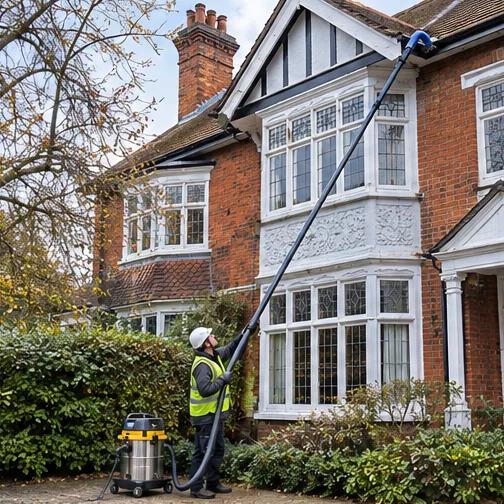
Illustrative photograph.
Winchmore Hill observations to include
| First wet point | Detail to send | What it helps locate |
|---|---|---|
| Water above a porch or shop door | Where it strikes the cover or wall | Associates the symptom with the relevant roof edge |
| Spill at a front gable | Position of the nearest short return and outlet | Shows the section to consider |
| Wetting by a garden path | Whether the visible pipe discharges at that point | Identifies the last observable part of the route |
| Drip beside an old fitting | Location of nearby supports and any previous repair | Gives context for further work |
Place the roof edge in its setting
Enfield’s appraisal identifies The Green and nearby streets including Wades Hill, Hoppers Road and Wilson Street as a distinct part of Winchmore Hill’s conservation area. At a building by The Green, a gutter or visible outlet can be set behind a projection or turn onto a side wall. Use a fixed feature to locate it when you report a spill. A wide photograph from a safe position can show the relationship between the roof, nearest outlet and front door. If water falls onto a shop entrance or porch, describe what it strikes first on the way down.
At a house on a nearby residential street, a bay or front gable can split the visible roof edge into short lengths. One may feed a pipe beside the front wall while another turns towards the side. A water trail that appears below a window can have begun further along. Note where the first wet spot appears and where the nearest outlet sits. At the rear, include the extension if there is one. Water from an upper pipe may run across a lower roof before it leaves the building.
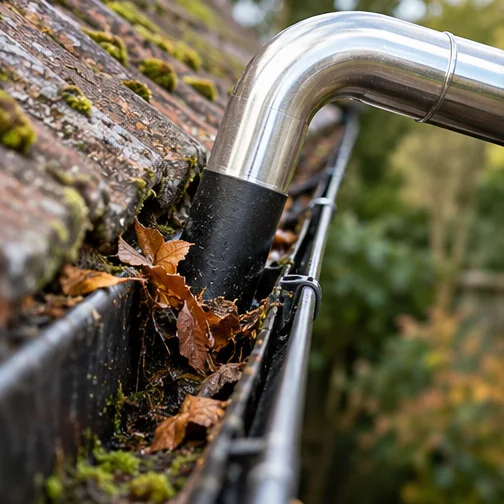
Identify the limit of the visible rainwater route
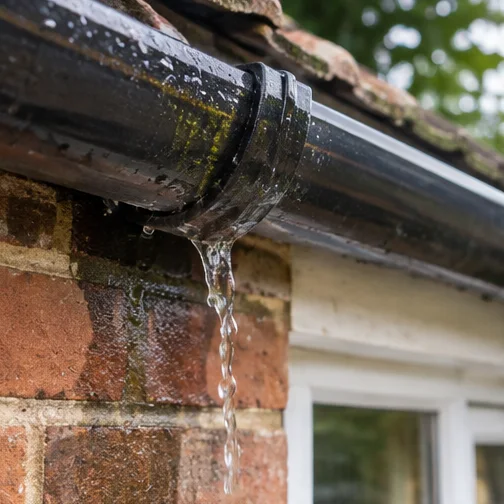
During gutter cleaning we clear agreed accessible lengths and openings. Debris can gather just before a bend or outlet, leaving a large part of the channel apparently empty. A camera may be useful where the angle gives a view. After clearance, the accessible fitting can sometimes be seen more clearly. If water still sits near a joint or the channel appears out of position, the adjacent support and outlet may need assessment. Tell us whether the drip happens at one point or a longer stretch overflows.
Follow a visible downpipe to the lowest point you can see safely. It may reach an open gully, enter paving or pass behind another feature. Note whether water reaches the ground from the pipe or arrives from the surface of a path. If part of the route is enclosed, mention any previous work that might explain where it goes. A concealed connection can require a separate inspection. The visible part of the route still helps identify where the remaining uncertainty begins.
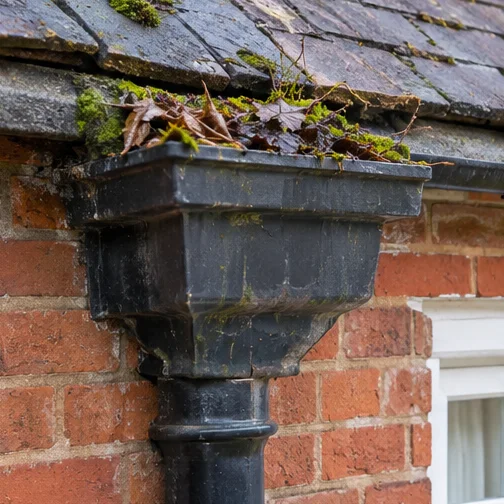
Check the passage before planning the rear
An entrance on one side may offer clear access to the garden while a narrow section under the roof is reached from the other. Describe the route from the gate and the available space below the gutter itself. If there is a step, a tight turn or a fixed cover, show it in a photograph. A view from the garden towards the house can show whether a lower roof blocks the line to the upper gutter. Tell us if the ground falls away beside the wall so the height can be estimated from the working side.
For a converted property, the person arranging the work may need one occupier to admit us to the garden and another to identify the affected window. Give a contact who can confirm the agreed route on the day. At a business, explain whether the rear door is used for deliveries and whether the yard is shared. Access to the front may also depend on how an entrance or pavement is used. A ground-based vacuum can suit a clear position with an appropriate angle, while a projection or lightwell can affect what can be reached.
- Frontages around The Green
- Short returns and gable outlets
- Side paths and garden access
- Records for the next rainfall
Compare a local repair with work on the wider run
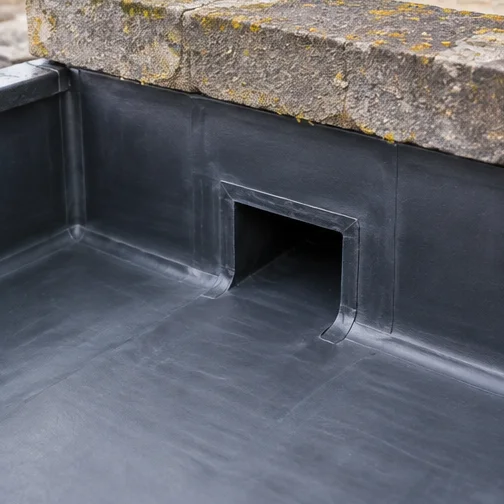
For a leak at an exposed seam, guttering repairs can be considered in relation to the nearby brackets, gutter fall and condition of adjoining pieces. A fitting may have been changed to connect newer material to an older run. Share photographs or an invoice that identifies what was changed. If several lengths or supports are deteriorating, replacement may be a more suitable discussion. Gutter lining can be considered when the supporting channel and outlet details suit a liner. Mention any known requirements for existing profiles and finishes before work is specified.
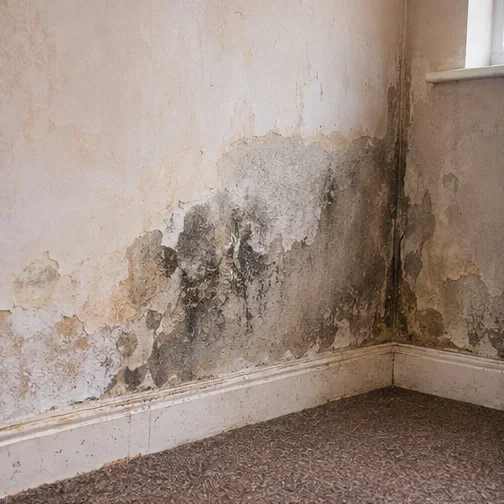
Where ivy crosses an outlet or passes behind a support, describe where the stems start and which parts of the wall or roof they cover. Ivy removal depends on the affected surface and how the growth meets the fittings. If there is water damage inside, note where the mark started and when it changes. Water damage repair begins with assessing the affected material and investigating the route of moisture. An exterior spill above the same room is relevant, while the path into the building may still need another inspection.
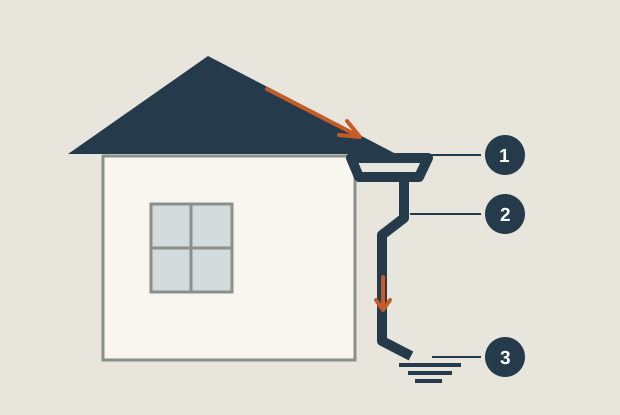
Services for the building manager
Guttering repairs
Consider visible seams alongside channel fall and nearby brackets.
Gutter cleaning
Clear agreed accessible runs above porches, frontages and rear projections.
Water damage repair
Compare dated interior observations with visible runoff to guide investigation.
Gutter replacement
Review existing profiles and connections when several lengths require renewal.
Gutter lining
Assess the support and outlet layout where lining is being considered.
Ivy removal
Assess stems that cover outlets or pass behind the pipe fixings.
Information to keep with the maintenance record
Preparing the working approach
| Setting | What to confirm |
|---|---|
| Frontage near The Green | Use of the door and available ground below the gutter |
| Side passage beside a bay or extension | Narrowest point, cover overhead and any steps |
| Rear garden reached through a dwelling | Occupier who can open the route and person authorising work |
| Shared yard behind a business | Key holder and regular use for deliveries or access |
Use the record to compare the next rain
A record can name the gutter or outlet that was reached, explain where material collected and identify any visible point that needs attention. Refer to a fixed feature such as the corner nearest the garden gate or the hopper above the upper window beside the entrance. If the work concerns more than one resident or business, confirm who should receive the account. A managing contact can use those references when arranging access to a remaining section or asking occupiers to look for further wetting.
If the original report returns, record how long it took to appear and whether water became visible in the same place. A lower fitting might drip while the upper edge no longer spills. Old staining can stay visible through dry weather, so describe any new wetting separately. For an interior mark, locate it against the closest outside wall or roof edge and include the date. The person arranging follow-up can use the earlier record and new observations to decide whether a gutter fitting, an enclosed connection or another part of the building needs assessment.
Questions about gutter cleaning in Winchmore Hill
What if I can see the pipe but the gutter is behind the roof edge?
Show where the pipe starts and include the roof shape above it. Tell us where water first appears when it rains. We can discuss whether the agreed position allows an inspection or whether another approach may be needed.
Can you clear a gutter above a side passage?
It depends on the width, ground and angle to the gutter. Send a view along the passage and one facing the wall. Mention any gate, cover or projection that interrupts the route.
How do I tell you which roof is feeding an extension?
Show the upper pipe and the lower roof in one picture if possible. Describe where the pipe ends and which edge of the extension gets wet first. This helps us locate both outlets before the visit.
Why does a joint drip only during heavier rain?
Water can rise around a restriction or gather at a low point during higher flow. The joint and its adjoining supports can then be considered together. Record when the dripping starts and whether the gutter edge also spills.
Who can request clearance for a shared roof?
The person responsible for the roof should agree which parts the visit covers and confirm any needed access. A resident can provide a useful description of the symptom and arrange entry where they control the garden or passage.
Can a stain remain after the gutter stops overflowing?
Yes. Keep a dated image of the old mark and look for any new change after rain. If it expands or a different surface becomes wet, record the location so the next inspection can consider the right part of the building.
Coverage and bookings
See the areas we cover. For nearby enquiries, see Southgate and Palmers Green and Enfield.