
Gutter Lining in London
We line suitable gutters where the water-carrying surface has deteriorated but the channel can still be retained. We look at the existing material, the support beneath it and the way the outlets are formed. If the gutter has shifted or the substrate is unsound, we discuss the repair or replacement it needs before deciding whether lining is appropriate.
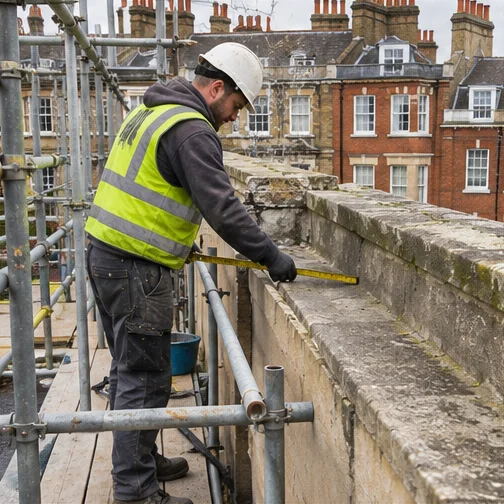
Photographic illustration of gutter lining in london.
Can you line an older box gutter?
We assess box gutters individually. Send a photograph if you can see the channel safely, and tell us where the outlet runs. An older metal lining can split at seams or at changes in direction, but the condition of the gutter underneath determines whether it can be relined.
Can lining stop a leak behind the fascia?
It may help if the water escapes through the lining. Water behind the fascia can also come from the roof edge, a blocked outlet or a channel that has moved. We look for the route the water takes before deciding whether lining addresses the fault.
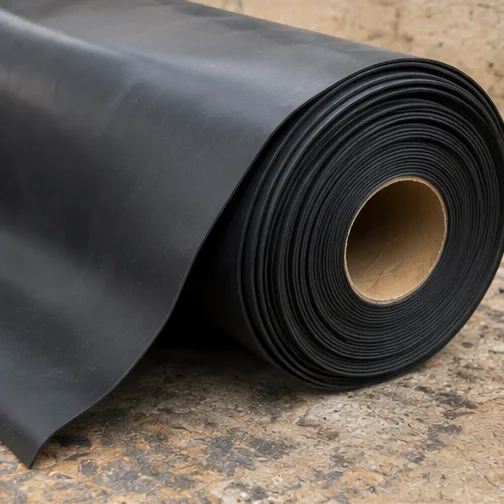
Retaining a sound channel
Lining gives the water a renewed surface while retaining the existing gutter where it is sound. A parapet or concealed channel can be part of the building’s roof detail, which makes it particularly important to understand how the existing gutter is supported and how its edges meet the roof. We establish what can remain and which details need work.
On an older building, we look at the existing gutter as part of the roof rather than as an isolated strip of material. If the channel runs along a party wall or sits behind a raised edge, the points where water enters it matter as much as the places where it leaves. Tell us if the leak first appeared after alterations to the roof or after an earlier patch. A repair to one end may have changed where water gathers, and the existing surface can hide the joint that is letting it through.
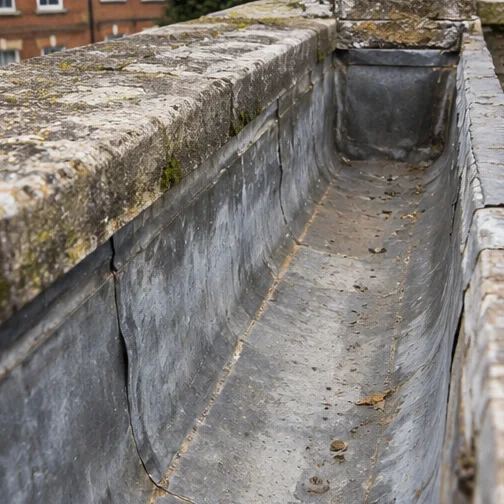
How we assess and prepare the gutter
We look at the visible channel, corners and outlet before choosing an approach. Leaves and silt can cover splits and hold moisture against the surface. We may need to clear the run first. The material beneath the old lining needs to be stable enough to carry the new work, and the surface needs to be prepared for the system selected.
We discuss what needs to be removed from the gutter before lining work can start. The channel may contain old repairs, fragments of the former lining or debris around the outlet. There is a difference between preparing a sound surface and finding material that has lost its support. If we uncover a defect that changes the work, we explain which part of the channel needs attention and discuss the options before proceeding. A lining cannot carry the weight of the original gutter or correct the route water takes through it.
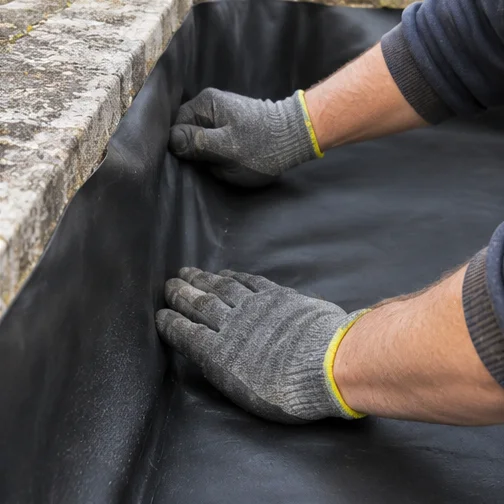
Fitting around corners and outlets
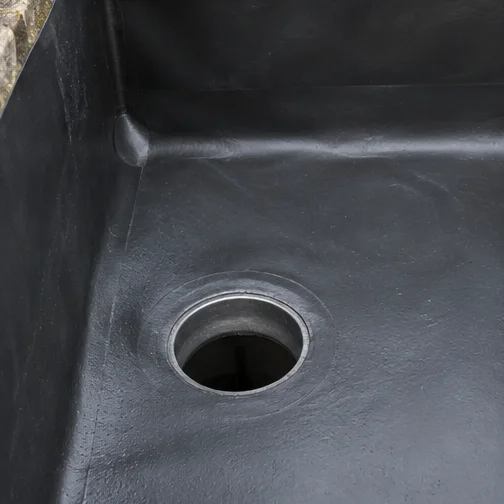
The liner needs to carry rainwater along the channel and into its outlet. Corners, changes in width and joins at the ends of the run all affect how the material can be fitted. We explain which parts can be lined in one run and where details need individual attention. Exact preparation and access depend on the building and the selected lining.
A well-shaped corner leads rainwater into the next section without cutting off the outlet. That matters when the gutter narrows near a hopper or passes through a parapet. On a straightforward exposed run, the details we need to look at are generally easier to see. A concealed channel can require closer access before we can say how its edges will be finished. We confirm the lining approach for the material and layout instead of assuming that a system for one property will work on another.
Where we use lining
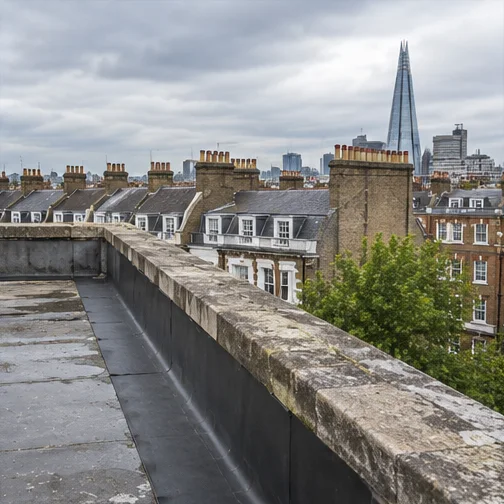
A concealed gutter behind a parapet needs different access from an exposed gutter on the outside of a building. Tell us if you can reach the relevant roof from a shared stair or if the channel runs over more than one property. At commercial premises, share any restrictions on access to roof areas and any times when work needs to be arranged around the building’s use.
For a single house, tell us whether a roof hatch, terrace or adjoining building is the usual way into the area. For a block with several occupiers, let us know who can agree access and whether the channel serves only one elevation. On a business premises, a roof route may be used by other trades or building staff. We need to understand who controls it, when it is available and whether there is a separate route to the outlet for inspection.
What to check after water has escaped
Tell us where water appears inside or outside and how long it takes to show during rain. A mark on a ceiling can sit away from the point where water first entered. If a section is blocked, clearing the gutter may be needed before the lining can be assessed. Where the gutter itself has moved, discuss repairing the supports. If it has failed across the run, replacement guttering may be more suitable.
Once we have looked at the channel, we explain which parts can remain and whether the work includes the full length or a defined section. A sound adjoining gutter may be outside the work. If an outlet or a roof junction is still a concern, we identify it so you can keep track of the separate issue. For a managing agent, it helps to describe which building and elevation are involved so that the recommendation can be shared with whoever approves the work.
What the channel needs
| Finding | What we examine | Potential work |
|---|---|---|
| Leak at an old seam | Condition of adjacent material and support | Prepare and line if the channel is suitable |
| Outlet backs up | Debris, outlet opening and discharge | Clear and assess the outlet |
| Channel has shifted | Support and the line towards the outlet | Assess repair before lining |
Details to identify before we quote
| Detail | What helps | Why it matters |
|---|---|---|
| Parapet | Roof access and visible gutter width | Determines how the channel can be reached |
| Outlet | Whether it exits through a wall or downpipe | Affects how lining meets the opening |
| Shared channel | Which elevations and properties it serves | Helps agree the work and access |
Arranging a visit in London
The useful details for a quote are the location of the channel, the approximate length affected and the point where rainwater appears. A distant photo of the elevation can show the arrangement of outlets. A closer view is useful if you already have one from a safe position. Let us know if the old lining has been repaired more than once and whether the water reappears at the same joint. We can then say whether an inspection is needed to agree the work.
Questions about gutter lining
Does the original gutter stay in place?
A suitable existing channel can stay in place. We check the structure and surface before recommending lining.
Can you line a gutter that still holds standing water?
We first look at why it holds water. Debris, a restricted outlet or an issue with the fall may need separate work.
What if the roof edge covers part of the channel?
Tell us if it is concealed. We need to determine which parts are accessible and whether other roof details affect the job.
Can you quote from a photo?
A photo helps us understand the layout. The condition beneath the old lining or at concealed outlets may need an inspection.
Is every leak a lining fault?
No. Roof junctions, loose supports and blocked outlets can produce similar signs. Tell us where and when the leak appears.
Can the outlet be retained?
We check the condition and shape of the outlet before discussing whether it can remain and how the lining can meet it.
Request a quote for gutter lining
Send us your postcode and describe the affected part of the building. Call us if you would like to talk through the work before arranging an inspection.