
Gutter Cleaning Southgate
A shop parade may have a roof edge that continues along the row even though the entrances and rainwater fittings are divided. At a house, a gutter over an extension can be separate from the one on the original roof. Glen’s provides gutter cleaning in Southgate for accessible rainwater systems. Tell us which edge or outlet you want to discuss and where water first becomes visible. Include the practical approach to that part of the building, whether it is a shopfront, a rear yard or a garden.
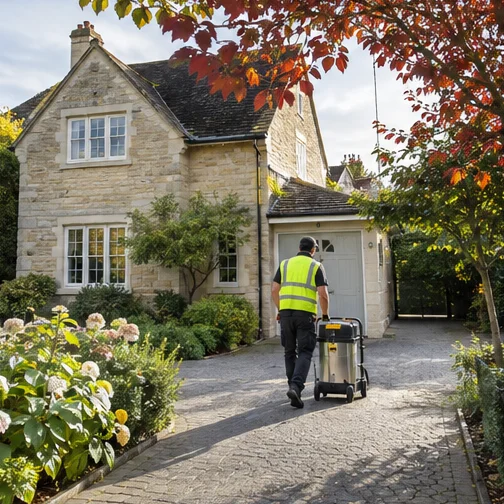
Illustrative photograph.
Compare the approach for each roof level
At a house, the front garden or drive can offer space while the side path narrows beside an extension. Show where the gate opens, where the route turns and whether a roof or other cover projects over it. The gutter above the side wall may be lower than the one over the main roof but harder to approach. At the rear, give the height from the garden rather than the number of floors visible from the street. Steps or a change of ground level can make a difference to the available position.
For a business, a service route may reach the yard without using the customer entrance. Confirm who can open it and whether deliveries or other tenants use the same space. If the work concerns the front as well as the rear, describe both. A rear route can be useful for one gutter without providing a suitable position to reach another. At a converted house, check who authorises work on the shared rainwater system and who can admit us to the garden. The occupier with the clearest view of a leak may have no access to the ground beneath it.
- Parade frontages and separate entrances
- Side paths around garage and extension roofs
- Visible discharge at yard and garden level
- Clearance records by fixed building feature
Identify the right part of the parade
Enfield’s Southgate Circus conservation area appraisal places the Underground station, transport interchange and shopping parades at the centre of the area. At a nearby address on Chase Side or Chase Road, use the relevant shop door, upper window or side return to identify where you see the water. A change of roof profile may mark where one length ends. A sign, awning or parapet may obscure the connection. A picture of the full frontage can show the position of the pipe even when the gutter itself is hidden.
Ask whether the water first appears above the awning or at its front edge. A cover may divert runoff towards another doorway. Staff downstairs can describe the drops landing, while an occupier upstairs may be able to see the point where they leave the roof. If both accounts are available, give the time and viewpoint for each. For a corner property, tell us which wall faces the side street. A photograph taken from a safe position can show how the roof edge turns and where an outlet sits relative to the entrance.
Southgate observations to provide
| What you noticed | Detail to add | How it helps |
|---|---|---|
| Drip above a parade entrance | Sign, upper window or outlet nearest the first wet point | Locates the affected part of a long frontage |
| Water on a low roof | Whether a higher pipe empties onto it | Shows the connection between roof levels |
| Puddle beside a downpipe | Whether a gully or entry below paving is visible | Describes the last point where discharge can be seen |
| Leak near a changed fitting | What was replaced and where the current drip appears | Helps compare the two locations |
Establish where the visible water leaves the pipe
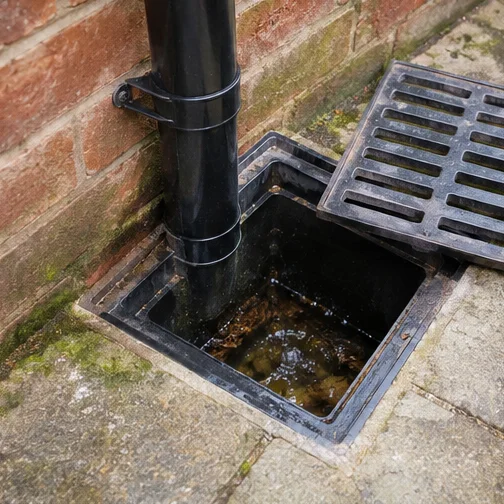
A downpipe can end at an open gully, enter paving or disappear behind an extension. In rain, note whether water comes from the pipe, moves across the yard or emerges at the edge of the gully. A wet patch at the base can receive water from several surfaces. A photograph showing the whole pipe can help identify a joint or bend above it. If the line enters a concealed route, tell us where it goes out of sight. A previous repair record or drawing can help if a separate drainage inspection is needed.
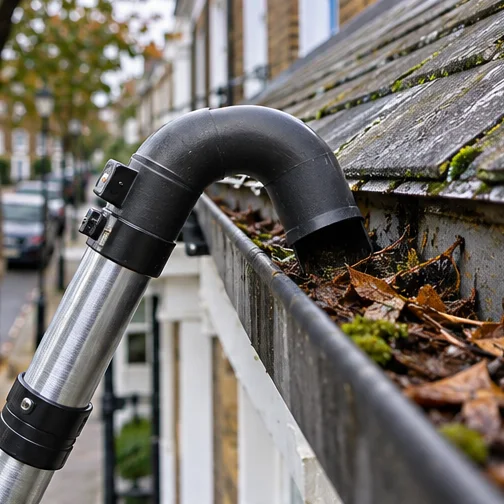
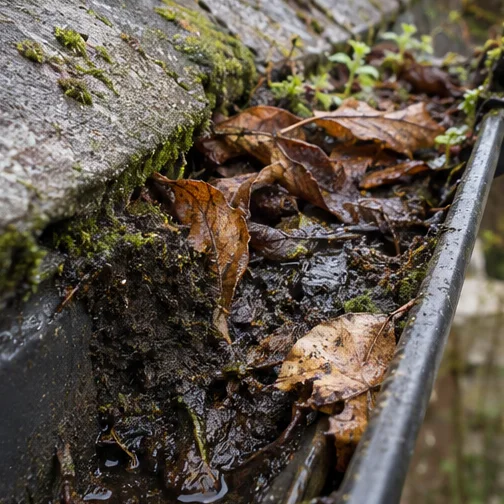
For gutter cleaning, we clear agreed accessible lengths and visible openings where the approach allows. An extendable vacuum may suit a ground-level position that gives a clear line to the gutter. A camera can sometimes help show a restriction at a corner or outlet. Debris around an opening can hold water in a channel that otherwise looks empty. After that material has been removed, remaining standing water or a persistent drip may warrant a closer look at the alignment and fittings.
Give occupiers a location they can check again
The visit record can state which runs were reached, where material collected and whether there is a visible concern that needs another look. Use a stable reference such as the first outlet beyond the corner or the gutter over the extension window. A shop sign or tenant name may change. A fixed feature can still be recognised by a building manager or someone arranging access for a follow-up. Give us the contact who will receive the record and share it with the people who use the entrances.
After the next rain, note whether wetting starts in the same place and how long it takes to appear. If the shop step remains dry but a lower pipe fitting now drips, record the two locations separately. If a patch indoors is changing, photograph it from the same safe position and describe the nearest feature outside. The person organising further work can compare it with the clearance record and identify which part of the system or building still needs investigation.
When upper and lower gutters need separate attention
Discuss repair after checking the adjoining pieces
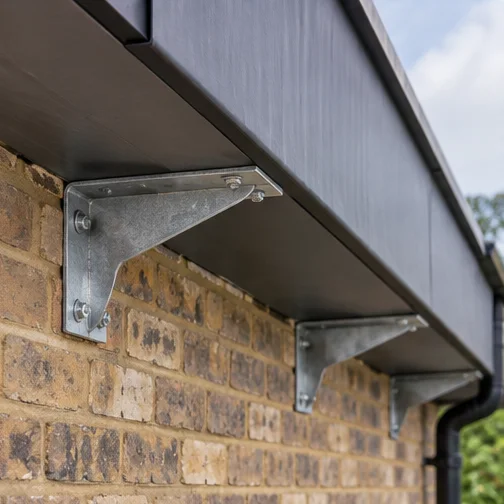
An individual seam may leak where two materials or profiles meet. A displaced bracket can also make water collect around the seam. For guttering repairs, the condition of the adjoining lengths and supporting surface affects whether the work can be local. Tell us if an outlet was moved or the gutter changed during an earlier project. A photograph showing the junction and nearby supports can help identify the affected pieces. For a parade with shared fittings, confirm who needs to agree any work that extends beyond one unit.
A channel may be considered for gutter lining where the support, profile and outlet details suit a liner. Replacement may be a better discussion when several lengths have deteriorated or the existing route needs a change. If ivy passes behind a pipe or reaches the roof edge, describe the path of the stems and the surfaces they cover. An ivy removal assessment can consider the condition of the wall and fittings. For water damage repair, record the time and position of new moisture inside. A visible gutter leak can guide the investigation, while the actual entry route may involve another part of the building.

Access arrangements for the visit
| Working area | Detail to confirm |
|---|---|
| Parade near Southgate Circus | Entrance use and position of any awning or sign below the gutter |
| Yard with a shared service route | Who opens the gate and when vehicles need access |
| House with a narrow side approach | Width, turns and any cover above the path |
| Conversion with a private rear garden | Who gives access and who instructs work on the roof |
Other work on the extension and roofline
Gutter cleaning
Clear agreed accessible lengths and openings above parades, homes and garages.
Gutter replacement
Assess renewal where several parts are damaged or the discharge route needs changing.
Guttering repairs
Review a local seam and bracket in relation to the connected gutter.
Ivy removal
Identify stems behind pipe fixings or extending beneath a roof edge.
Gutter lining
Review support and outlet connections before considering a liner.
Water damage repair
Use dated reports of moisture to guide investigation of interior surfaces and entry routes.
Coverage and bookings
See the areas we cover. For nearby enquiries, see Palmers Green and Winchmore Hill and Cockfosters.
Questions about gutter cleaning in Southgate
How do I identify an outlet on a row of similar shops?
Use the nearest fixed door or upper window and say where the pipe sits relative to it. A photograph of the whole unit and the next part of the parade can help locate the fitting. Add the point where water first appears.
Can you clear a house and its garage gutter together?
List both and describe the approach to each. A garage roof can have its own accessible gutter while obstructing the line to the main roof. We can discuss what can be reached and whether both lengths fit the agreed visit.
What if a service yard is in use throughout the day?
Describe who uses it, where they move and when access can be agreed. A yard may offer a suitable position for some lengths while other areas need to remain available. The person controlling the route should confirm the practical arrangements.
Why does the gutter spill some distance from the outlet?
Water can build up behind a restriction and reach a lower point along the run. The fall and supports can also affect where it collects. Tell us where the outlet is and where the spill begins.
Should I keep details of a previous repair?
Yes, especially if they identify a seam, bracket or outlet. Compare that location with the current wet point. This can help someone assess whether the problem has returned at the same fitting.
Can a ceiling mark be assessed as part of the gutter enquiry?
Tell us where the mark is and when it appears. The accessible gutters can be considered within the agreed visit. Finding the route to the interior surface may require a separate inspection of the building or drainage.