
Gutter Cleaning Holloway
Water crossing a shop threshold can have travelled from a roof edge, a sign or the surface of a canopy. At a home it may leave the gutter above a bay and become visible only when it reaches the front steps. Glen’s provides gutter cleaning in Holloway for accessible rainwater systems. To plan an initial visit, tell us where the first drip is visible and who can provide access to the affected wall. A full view of the property can help locate the concern even if the rain has stopped.
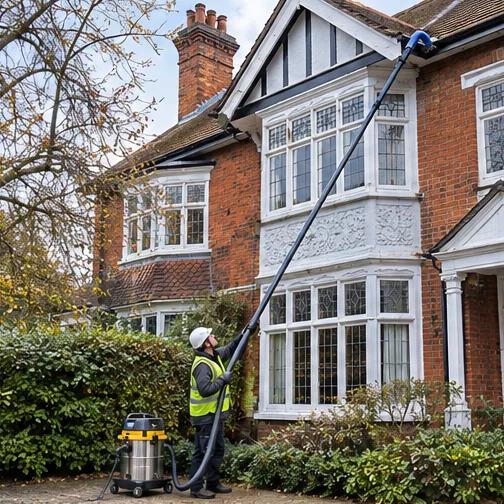
Illustrative photograph.
Holloway gutter observations
| What you noticed | Detail to add | Why it helps |
|---|---|---|
| Dripping above a retail doorway | First point where water crosses the canopy or sign | Relates the complaint to the relevant roof edge |
| Wetting below a rear addition | Whether an upper pipe empties onto the lower roof | Shows which levels may feed the affected outlet |
| Water around a pipe base | Whether it arrives from the pipe or the yard surface | Describes the last visible point of discharge |
| Marks near an interior ceiling | Which exterior wall is nearest and when wetting began | Gives a reference for further investigation |
Describe the frontage by the doors it serves
Islington’s Local Plan describes Holloway Road as a heavily trafficked route dividing the Nag’s Head town centre. At a business frontage near Holloway Road or Seven Sisters Road, use the shop door, sign or separate residential entrance to describe where you see water. Explain whether the area below the gutter is used by customers, residents or deliveries. An address can include two doors with different key holders and different routes to the rear. Give us a contact for the agreed approach.
Water may collect on a canopy and leave at the corner furthest from where it arrived. A person at the entrance might be able to point out the corner while someone on an upper floor can identify the rainwater fitting above. Record both views if they are available. A photograph from the pavement can show how the frontage is arranged, while a second image can show the area below the gutter. Keep a safe distance from road traffic, dripping water and busy entrances while taking photographs.
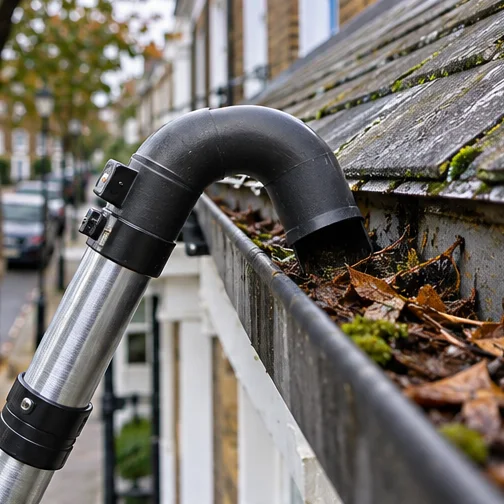
Look for an accessible point where flow changes
At an outlet, a small bundle of leaves can hold water back along a section that otherwise looks empty. Material can also collect at a change of direction where the trough is hard to see from below. During gutter cleaning we clear agreed accessible channels and visible openings where the available approach allows. An extendable vacuum can be useful from a suitable ground position. A camera may be able to show an outlet or corner before and after the debris is removed. A parapet or projection can limit the view and the angle.
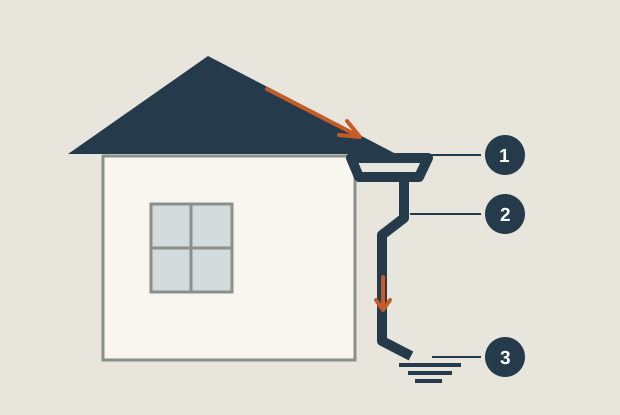
At the base of the pipe, note where water goes if the discharge is visible from a safe position. A puddle can reflect overflow from a gully, surface runoff from the yard or leakage from a pipe joint. If the pipe passes through paving, a wall or a canopy, show where the visible section ends. That information is useful when the symptom persists despite clearing reachable debris. An underground connection or enclosed fitting may require a separate inspection before its condition can be established.

Check how the rear roof meets the original building
On a terrace, a rear extension may sit immediately below the main gutter or off to one side of it. A pipe from the original roof can run beside the extension, pass through it or discharge onto its roof. If you see water fall into the yard, include both levels in the photograph. Tell us whether the extension gutter receives runoff from a higher pipe and where it is supposed to discharge. A window directly below one roof does not identify which roof first became wet.
The rear route may start at a shop service door, an alley or a domestic hallway. Walk through the route if you can do so safely and describe any tight turn or steps. At the yard, tell us where the wall can be approached without crossing planting, a lower roof or a boundary. A clear garden or yard can still have an obstruction directly between the ground and gutter. If the front and rear require different doors, confirm that the person booking can arrange both. Where access crosses another unit, give a named contact and the route they have agreed.
- Nag’s Head frontages and service access
- Terrace roofs and rear additions
- Observations at roof and ground level
- Records that identify the affected entrance
Discuss visible defects with the rest of the run in view
A drip under an exposed seam can be considered for guttering repairs where the adjoining gutter and supports are in suitable condition. A channel that has moved can concentrate water at that seam, so a repair assessment may also need to consider the alignment and the outlet. If the affected fitting was installed during previous work, send any photo or record showing what was changed. An extension may use a different profile from the original roof. A fitting that bridges the two can need a different assessment from one in the middle of a uniform run.
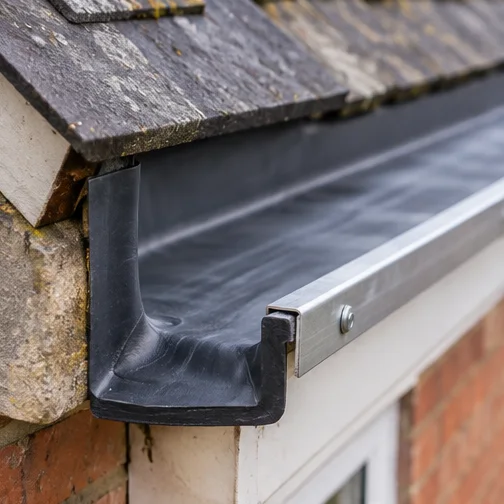
Gutter lining can be considered where the existing channel, its support and the outlet connections are suitable. Replacement may be appropriate to discuss when deterioration affects several parts or the route needs to be altered. A climbing stem around a pipe or wall fixing can complicate access. Describe where it starts and which surfaces it crosses for an ivy removal assessment. If moisture has marked a ceiling or wall, water damage repair starts with understanding where the moisture entered and the material affected. Provide dated notes about what happened before the mark appeared.
Services for the building manager
Guttering repairs
Assess visible leaks at a seam or support in relation to the connected run.
Gutter cleaning
Clear agreed accessible channels and openings above frontages, terraces and yards.
Water damage repair
Compare changes to interior finishes with the timing and position of external wetting.
Gutter replacement
Discuss replacement where several sections or fixings have deteriorated.
Gutter lining
Review the supporting channel and the proposed outlet connection for lining.
Ivy removal
Review growth around wall fixings and concealed rainwater fittings.

Information to keep with the maintenance record

Preparing access to the affected elevation
| Layout | Detail to confirm |
|---|---|
| Shop and flats with separate doors | Identify both contacts and the door serving the agreed route |
| Yard reached through a service entrance | Check key access, deliveries and any narrow turns |
| Terrace with a low rear roof | Show how far the lower roof projects beneath the upper gutter |
| Frontage with steps or railings | Describe the available area below the section to be cleared |
Give future reports a common reference
An owner, occupier and service manager may all describe the affected side differently. Agree a fixed reference such as the joint above the separate stair door or the outlet beside the right-hand end of the rear canopy. The clearance record can then use that reference to describe what was reached and what remains to be inspected. The owner can share the relevant parts with the people who use the entrances and have a view of the wall during rain.
After the next rainfall, write down whether drops appeared at the same point, when they started and whether the lower pipe still discharged. If the doorway is dry but water appears at a different fitting, record that as a separate observation. Where there is new staining indoors, describe the room and the nearest feature outside. Repeating the same location in reports makes it easier for the person arranging follow-up to identify whether the next step concerns a local gutter defect, another roof edge or an enclosed drainage route.
Questions about gutter cleaning in Holloway
How can I describe a leak when there are several shop signs?
Use the door below the affected sign and the position of the sign in the frontage. A wide image that includes the roof and both ends of the unit will help. Tell us where the drops first strike the sign or awning.
Can you clear the rear if the frontage is too busy?
We can discuss the rear separately where there is an agreed route and suitable working position. Tell us which roof edge you expect to reach from there. The rear may serve different gutters from those above the frontage.
What if the roof over the yard sits below a downpipe?
Show where the pipe ends and where water leaves the lower roof. The upper discharge may increase the flow through the lower gutter. Both levels are useful to consider when locating an overflow.
Does a clear channel mean the pipe can drain?
The visible channel can be clear while an enclosed bend or lower connection remains restricted. If you can safely see the discharge, note what happens during rain. An underground route may require separate assessment.
Should I include old repair invoices when making an enquiry?
Include any that name the affected elevation, fitting or date. They are especially useful where a new length meets older guttering or a leak seems to have returned at the same joint.
Who should receive the account after a visit to a mixed-use property?
Confirm the person responsible for the rainwater system and who needs to compare later observations. The record can identify the relevant entrance or rear wall so staff, residents and the managing contact can locate the same section.
Coverage and bookings
See the areas we cover. For nearby enquiries, see Archway and Highbury and Tufnell Park.