
Gutter Cleaning Highbury
A gutter above a formal terrace can be hard to see from the pavement. The visible clues may be a wet line below a parapet, a hopper that fills quickly or water striking a front step. Glen’s provides gutter cleaning in Highbury for accessible rainwater systems. Send a ground-level view of the whole affected elevation and describe any outlet you can see. If you are arranging work for several flats, tell us who can open the route below the gutter and who will receive the visit record.
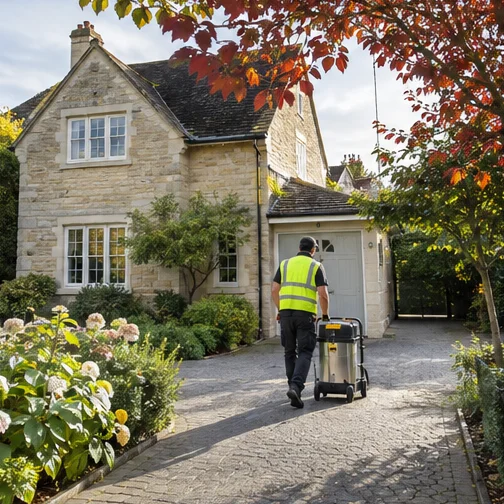
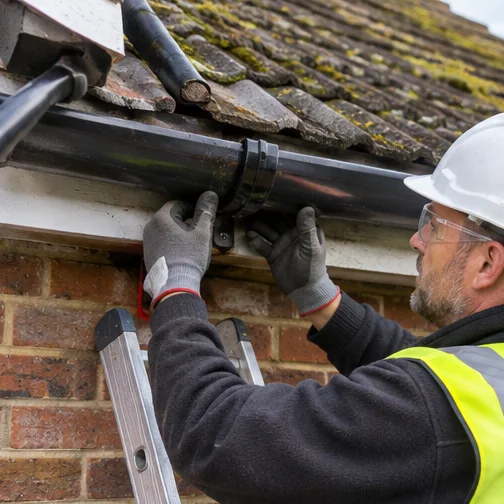
Illustrative photograph.
Describe the space around the entrance and lightwell
Where steps lead to a main door and a second entrance sits below, show the entire arrangement below the gutter. Railings and the edge of a lightwell can affect where equipment can be positioned. An apparently clear stretch of pavement may lead past a gate that opens into the only usable space. Tell us whether the working area is within the property boundary and how residents need to use it during the visit. If the door serves several flats, identify any times when access needs to be maintained.
At the back, a garden may be approached from a lower floor or through a passage that is shared with another property. Describe who controls the route and where it narrows. A large extension, steps or raised planting can make it difficult to approach the upper roof edge even when the garden itself looks open. Include a view of the whole wall and what sits in front of it. For a house arranged as flats, confirm whether the person who can admit the team is also responsible for instructing the work. They may be different contacts.
- Parapets, hoppers and visible outlets
- Front steps and basement lightwells
- Private gardens below shared roofs
- Follow-up records by roof edge
Start with the roof edge and its visible outlet
Islington’s Highbury Fields conservation guidance describes Georgian terraces facing the Fields and Victorian villas between Highbury Hill and Aubert Park. For work at an individual property, we ask whether the rainwater channel is visible at the outer roof edge or sits behind a raised wall. A visible hopper may be the first point at which rain leaves a concealed channel. A cropped view can show its shape without revealing which part of the roof serves it. A wider photograph helps locate the hopper against a window, boundary or return.
A bay roof, porch or small rear roof can have an outlet of its own. It may also receive water from an upper pipe. If rain falls past a bay, look from a safe position to see whether it arrives from a higher level or runs directly from the edge above the window. Note which point becomes wet first and whether you can see water leaving the nearest outlet. In a row of similar houses, identify the closest door or bay in your description. A continuous line of brick or stone can conceal a break between two drainage sections.
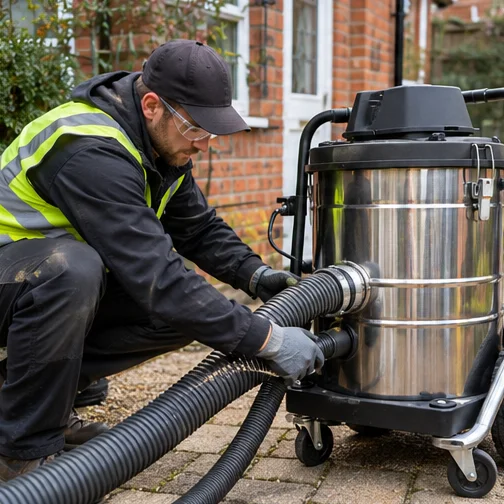
What to show when reporting a Highbury gutter
| Visible symptom | Useful detail | What it helps establish |
|---|---|---|
| Spill around a parapet outlet | Position of the hopper and the highest wet point | Locates the visible end of a concealed channel |
| Drops passing the front steps | Whether they cross a porch or bay roof first | Shows the route from the roof towards the entrance |
| Wet wall by a lower pipe joint | Position of the nearest bend and gully | Places the fitting within the visible system |
| Staining at the rear of a conversion | Location of the affected window and dates of wetting | Gives the occupier and agent a shared reference |
Check what clearance can reveal
Material can collect near an outlet or a change in direction while an adjoining length appears clear. An accessible gutter with a restricted opening may spill only during the heaviest part of a shower. During gutter cleaning, we clear the agreed accessible runs and openings. A ground-based vacuum and a camera may help when the angle and space are suitable. A channel behind a parapet or other obstruction can need a different approach. We can identify the visible sections and discuss what remains outside the agreed access.
After clearance, standing water at a low point may provide a reason to look at the alignment of the channel. A drip from the underside of a joint is a different observation from water running over its outer edge. Tell us whether you have seen either and show where the nearest support sits if visible. At the bottom of the pipe, note whether it ends above an open gully or disappears into the building or ground. If the outlet at roof level can be reached but the lower route cannot be followed, a separate inspection may be needed to understand it.
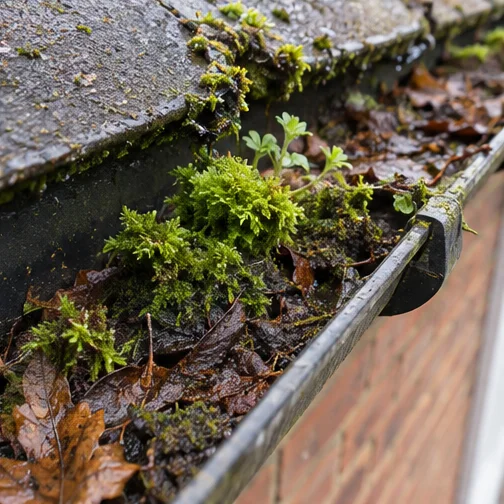
Record the point a future inspection should start from
A clearance record is most useful when it names the actual roof edges and visible outlets. A reference to the right-hand hopper above the lower entrance can be followed by someone who has never seen the property before. The record can identify where material was removed and which sections need another access arrangement. If the person reporting the concern lives in a flat, ask them to name the same landmark when describing any further rain. The agent or owner can compare it with the work already completed.
A fresh observation in the next rain can separate an old stain from active wetting. Note how long it has been raining, where water first becomes visible and whether it reaches the same part of the wall as before. If a lower pipe joint still drips after the higher spill stops, describe the two locations separately. A later inspection may need to focus on a fitting, an enclosed connection or another route through the roof or wall. Share the previous record so the person arranging it knows what was accessible during clearance.
When upper and lower gutters need separate attention
Account for the existing profile before choosing further work
On an older frontage, a painted pipe or hopper may conceal what it is made from and how it has been connected. Previous maintenance records can show which parts have been changed. If a local fitting has failed, guttering repairs can be assessed against the surrounding material, the fixings and the condition of the wall. Tell us if there are requirements for the appearance or materials of the rainwater goods at your property. The owner or agent can check what applies before deciding on a specification.
A channel with adequate support and compatible outlet details may be considered for gutter lining. Replacement may warrant discussion if several sections or supports are deteriorated. Where ivy obscures a connection or crosses between properties, an ivy removal assessment needs to account for the route of the stems and the condition of the surfaces they cover. If moisture has entered a room, water damage repair depends on investigating how the water reached it and what material is affected. An exterior stain near the same window helps locate the issue but may have a different origin.
Confirming access on different elevations
| Working area | Detail to include |
|---|---|
| Front steps beside a lightwell | Location of the railing, lower door and any clear standing area |
| Terrace with a hidden roof channel | Show the wall above the gutter and the visible outlet |
| Rear garden for one flat | Who grants entry and whether the route is through their home |
| Side return beside another property | Who controls the route and where the boundary is |
Other work on the extension and roofline
Gutter cleaning
Clear agreed accessible channels, hoppers and roof returns on terraces and villas.
Gutter replacement
Assess compatible profiles and fixings if several lengths need renewal.
Guttering repairs
Consider visible leaks at a local fitting alongside adjoining supports and connections.
Ivy removal
Assess stems that obscure pipe supports or cross the boundary between walls.
Gutter lining
Review the support and outlet detail where an existing channel may accept lining.
Water damage repair
Compare the dates and positions of interior wetting with observations of external runoff.
Coverage and bookings
See the areas we cover. For nearby enquiries, see Finsbury Park and Holloway and Canonbury.
Questions about Highbury gutter work
Can a gutter behind a parapet be cleared from the ground?
It depends on the wall height, roof shape and angle from the available position. A camera may give a view in some cases. Tell us what is visible and explain how to reach the wall so we can discuss the possible approach.
What should I tell you about the front lightwell?
Show its position relative to the gutter, steps and railings. Include any level surface beside it and describe how residents reach both doors. These details help establish which positions may be suitable.
Can a hopper leak while the channel remains clear?
Yes. A joint, pipe connection or the hopper itself may have a defect. Describe whether water crosses the lip or appears behind or below it. The visible condition can help guide a repair assessment.
Do you need to know whether the building is listed?
Tell us what you know about the building and whether any requirements apply to changes in materials or appearance. This is particularly useful if further work is being considered. The owner or agent can confirm the applicable requirements for the proposed change.
Who should arrange access for a garden below several flats?
The person instructing work should confirm who controls the garden and arrange entry with them. Give us a contact who can open the agreed route on the day. Mention any steps or tight turns between the entrance and the garden.
Is a dated photo of a stain worth keeping after clearance?
Yes. It gives you a reference for comparing the mark after rain. If the edge grows or the surface becomes wet in a new place, note the time and share a view showing the nearest roof edge or pipe.