
Gutter Cleaning Edmonton
Water at the edge of a shop entrance can come from a gutter well above the door, particularly where a sign or canopy changes its path. At a house, a lower roof can do the same thing before rain reaches the garden. Glen’s provides gutter cleaning in Edmonton for accessible rainwater systems. Describe the affected wall and the first point where you notice water. Include the practical route to that side, especially if it is reached through a service yard, shared gate or separate dwelling.
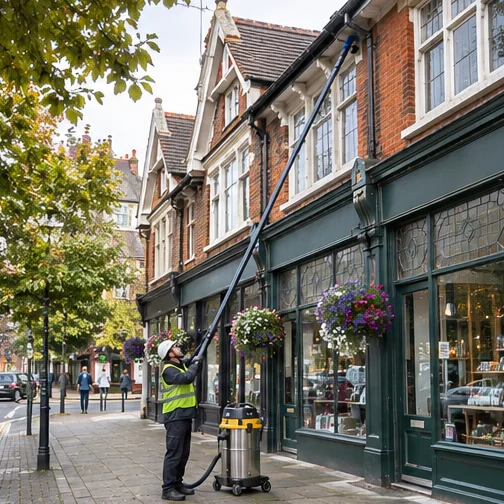
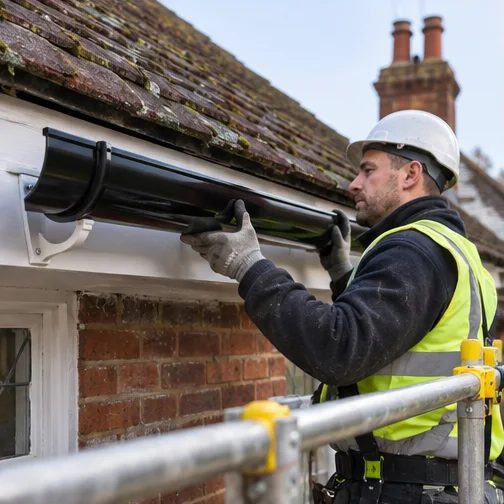
Illustrative photograph.
Locate the problem along Fore Street or away from it
Enfield’s draft local plan describes Fore Street as running through Angel Edmonton and linking Edmonton Green with Tottenham. On a frontage along that route, give the relevant shop door, upper window or side wall as a reference. A roofline can extend past several units before an outlet appears. If the spill is close to a corner, show both elevations and tell us which side becomes wet first. Where an awning or sign interrupts the flow, describe the point at which water first touches it as well as where it falls off.
For a house or converted property, a photograph should show the affected length against a bay, door or boundary. A close image of a stain may identify the wet material while leaving the roof edge out of view. If a tenant upstairs can see the outlet and someone below can see the pipe or gully, gather both accounts. Include the timing and viewpoint. They can help establish whether water travels along another surface on its way down or whether two separate areas become wet.
Keep the location clear across maintenance visits
The clearance record can identify which lengths were reached, where material was removed and what remained visible afterwards. It can also name any section that needs a different approach. Use a feature someone can find later, such as the outlet beside the separate stairs or the downpipe behind the left rear extension. A shop name or unit use can change, so give a reference tied to the building as well. Confirm who should receive the record and who can arrange further access if required.
If the original symptom returns, record the first wet point and how long the rain had been falling. Water may no longer reach the entrance but still drip from a joint lower down. If an old mark remains, distinguish it from active wetting or an expanding patch. Take photographs from a safe position and include the nearest fixed feature. The person organising follow-up can compare those observations with the clearance record before deciding whether to assess a fitting, another roof edge or a concealed route.

Describe the route to the rear before agreeing the work
A shop’s rear yard might be reached from a service route, through the unit or by a gate controlled by another occupier. Explain which route has been agreed and who will open it. Tell us if the route is shared with deliveries or if a door opens directly into the working area. A wide photograph from the yard towards the wall can show whether a cover or extension sits between the ground and the gutter. If the work concerns the front, describe the use of the pavement, private forecourt and any separate residential door below the roof edge.
At a house, the path may pass between a fence and an extension or lead through a dwelling to the garden. Give the narrowest part of the route and note any steps or overhead cover. If the ground drops at the rear, give the height from the garden. The property can have a different working height on that side even when the gutter looks level from the road. Where an occupier controls access but the owner instructs the work, give both roles clearly. They can each confirm the part they are responsible for.
- Fore Street and Edmonton Green frontages
- Service routes and separate entrances
- Outlets above extensions and yard gullies
- Maintenance references for mixed-use buildings
Access arrangements by property
| Location | Detail to confirm |
|---|---|
| Fore Street frontage | Use of the entrances, sign or awning and working area |
| Rear yard reached by a service route | Key holder, deliveries and access around the extension |
| House with a narrow side path | Width at the gate, steps and position of any overhead cover |
| Garden below a flat | Occupier who can admit the team and person agreeing the work |
Observe the outlet at the roof and at the ground
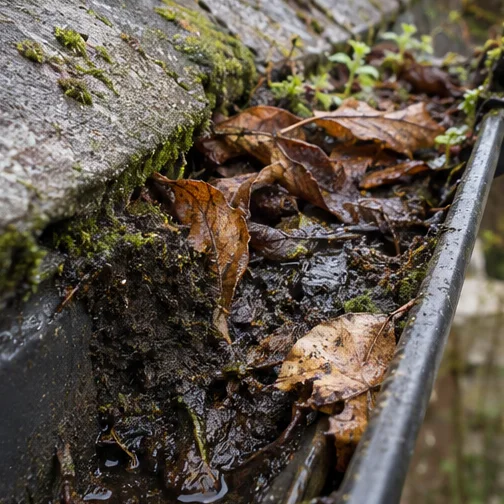
A gutter can spill where the edge is low even if material has gathered near an outlet further along. If rain appears at a joint rather than over the lip, show where the joint sits relative to the pipe and nearest support. At a property with a lower roof, check whether an upper pipe empties onto it. The lower gutter may have a separate outlet and may also take runoff from above. A wide picture showing both levels helps describe the route you can see.
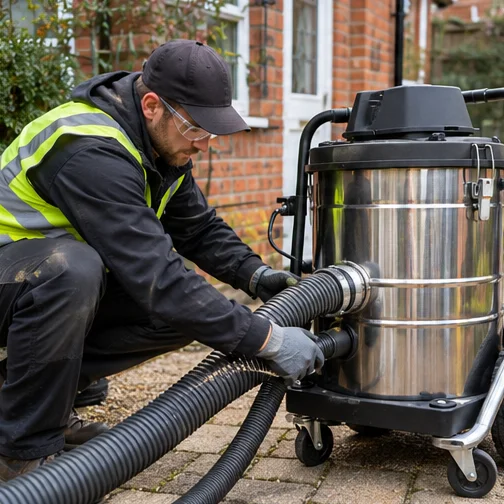
At ground level, note whether the pipe discharges above a gully or disappears into paving. A puddle can form when water arrives from the pipe, the surface of the yard or another connection. Describe the first direction of flow you can see safely. Gutter cleaning covers agreed accessible lengths and visible openings. Where a ground position gives a suitable line to the trough, an extendable vacuum may be practical. A camera can sometimes show material around an accessible opening. An enclosed bend or below-ground connection can need a separate inspection.
Separate work at the premises
Gutter cleaning
Clear agreed accessible gutters and visible openings above homes, frontages and yards.
Ivy removal
Assess growth around pipes and concealed fittings before agreeing ivy work.
Guttering repairs
Review visible seams and brackets in relation to neighbouring parts.
Water damage repair
Compare interior marks and external runoff to inform an investigation of moisture entry.
Gutter replacement
Consider renewal when several lengths have worn or the outlet arrangement needs changing.
Gutter lining
Assess channel support and connection details where lining is being considered.
Edmonton details that help identify the affected section
| What you noticed | Detail to send | What it helps establish |
|---|---|---|
| Water falling over a shop sign | Where it first strikes the sign or wall above it | Relates the frontage symptom to the visible roof route |
| Overflow beside a corner | Which elevation wets first and the nearest outlet | Helps identify the section that turns onto the side |
| Water at the foot of a pipe | Whether discharge enters an open gully or paving | Shows the last visible point in the system |
| Wet patch under a lower roof | Whether an upper pipe empties onto that roof | Shows how two roof levels can contribute |
Relate a visible defect to the connected fittings
If water remains at a joint after clearance, the channel fall and nearby support may influence where it collects. Guttering repairs can be assessed against the condition of the affected fitting, adjoining pieces and wall or fascia. Tell us whether previous work changed the profile or moved an outlet. A newer section may meet an older pipe, particularly above an extension or altered frontage. A record showing which part changed can help locate the current concern before repair is specified.
A channel may be considered for lining where it has suitable support and workable outlet details. Gutter replacement may warrant discussion if several sections or fixings are damaged or the route needs to change. Where ivy surrounds a pipe or reaches under the roof edge, describe the stem route and affected surfaces for an ivy removal assessment. Water damage repair depends on investigating the entry route and the condition of the affected material. Note whether the original report was a wet external wall, a mark indoors or both, and give the order in which they appeared.
What helps when several people report the leak
Coverage and bookings
See the areas we cover. For nearby enquiries, see Tottenham and Palmers Green and Enfield.
Questions about gutter cleaning in Edmonton
Can I identify the gutter by the shop name alone?
Add the nearest door, upper window or outlet. The shop name locates the premises, while a fixed feature identifies the affected section. A wide photo can help if several units share a similar frontage.
What if the only route to the yard passes through the business?
Confirm who can open that route and whether equipment can pass through it. Mention any delivery times, tight turns or steps. We can discuss whether the route leads to a suitable working position.
Can water from an upper roof overload a lower gutter?
It can add to the amount of water the lower gutter needs to carry. The position of the upper pipe, the condition of the lower channel and its outlet can each matter. Send a photo showing how the levels meet.
How can I tell if a puddle comes from the gully?
From a safe position, note whether water arrives from the pipe, rises at the gully or moves across the paving. Record whether the upper gutter also spills. The buried part of the system may need separate inspection.
Can a gutter be clear while a seam still leaks?
Yes. A seal, support or alignment problem can remain after loose material has been removed. Show the seam with the surrounding lengths and tell us when the drip appears during rain.
What should I include if a wall stays stained after clearance?
Give the date of the original mark and note whether it gets wet again or changes after rain. A dated photograph from the same safe position can help. Include the nearby pipe, window or roof edge when describing the location.