
Gutter Cleaning Tottenham
At a building on Tottenham High Road, an entrance can sit directly below the point where rain falls from a sign, hopper or roof edge. At a house on a side street, the first concern might be water running onto a low rear roof. Glen’s provides gutter cleaning in Tottenham for accessible rainwater systems. Tell us where you see the first wetting and which route reaches that part of the building. If the symptom is on a frontage used by several occupiers, include the relevant door and the contact who controls access.
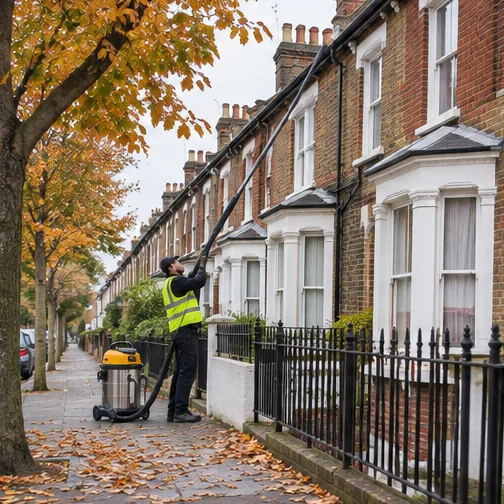
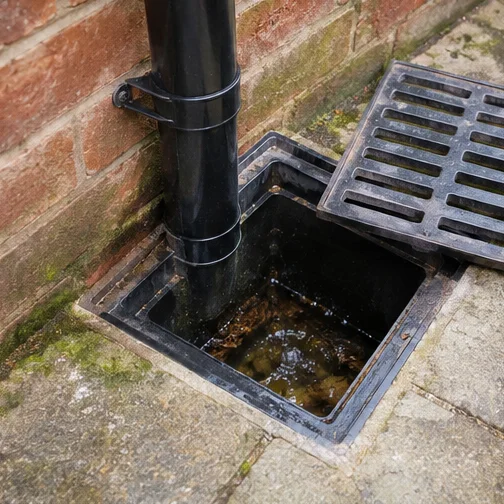
Illustrative photograph.
Tottenham gutter observations to include
| What you saw | Detail to provide | How it helps |
|---|---|---|
| Water falling beyond the corner | Which elevation wets first and where the outlet sits | Shows whether the return is part of the affected run |
| Drip across a shop sign | The highest visible wet point | Relates the threshold report to the roof or a fitting above |
| Water spreading over a rear roof | Whether an upper pipe feeds it | Helps trace runoff between roof levels |
| Wet patch around the base of a pipe | Position of gully, paving and other nearby runoff | Describes the lowest point that can be observed |
Describe the building on both sides of the corner
Haringey’s Tottenham High Road study describes the Bruce Grove stretch as a neighbourhood shopping area, with Victorian terraces and ground-floor retail on part of its western side. A shop or flat on a long frontage may share a roofline with neighbouring addresses while having a distinct gutter or outlet. Give the position of the nearest visible pipe, the edge of the shopfront and any return. A photograph from a safe viewpoint that shows the full frontage gives more context than a close picture of where the water lands.
For a corner building, explain which street the wet wall faces. If a gutter turns the corner, water may be visible on one side while the outlet sits on the other. A door that faces the side street can serve flats above a business entered from the main road. Tell us whether water affects either entrance and describe the area beneath the roof, including fixed signs, awnings, steps or railings. These details help establish where the relevant roof edge sits and how the work might be approached.
Confirm where the team can set up
At a business, a service lane or rear door may give access to the yard without using the retail entrance. Confirm who can open the route, how wide it is at gates or turns and whether other tenants or deliveries use it. If the work concerns the front, describe the space directly below the gutter and whether it is used by pedestrians. A canopy can affect both the available position and the angle to the roof. Tell us whether it is fixed or can be moved and who is responsible for it.
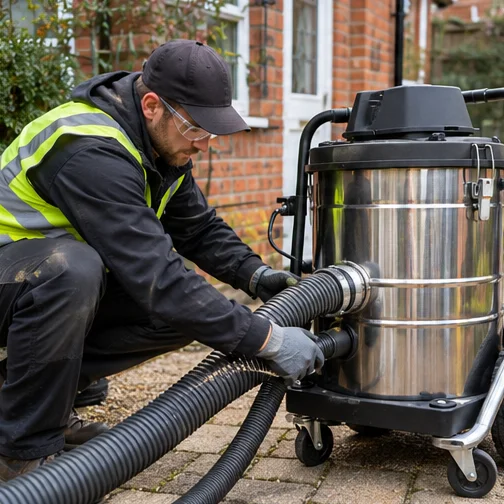
At a house, a narrow passage or enclosed extension can interrupt access from the front to the garden. A useful picture shows the view along the route and the height of any cover overhead. If the property is divided into flats, tell us who controls the garden and who agrees the work. Where there is enough clear space and reach, a ground-based vacuum can be useful for gutter cleaning. The agreed scope covers accessible lengths and visible openings. A high, covered or obstructed section may need another approach.
Work out which roof feeds the lower edge
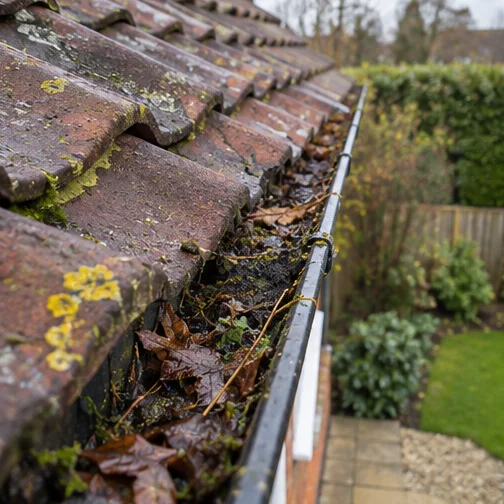
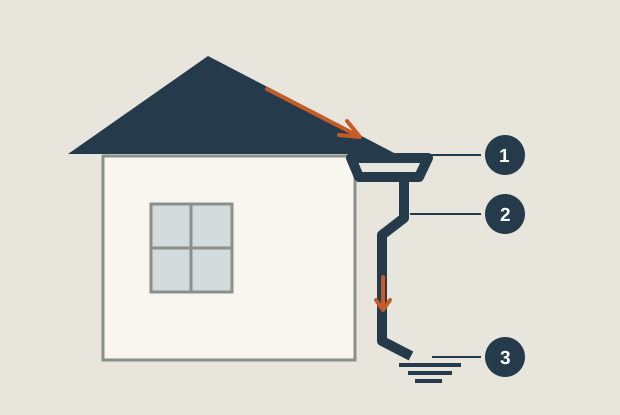
A terrace with an extension can have a main gutter, a short return and a lower channel. An upper pipe may discharge onto the extension or run down beside it. During rain, water might strike the lower roof before it spills into the yard. Record whether the first flow comes from a pipe above or starts at the lower edge. A photograph showing both levels can help someone place the symptom even if the upper channel is hidden from the garden.
An external pipe may end above a gully or continue through a wall or paved area. If you can see its discharge safely, note where the water reaches the ground. A puddle may be fed by a gutter, the yard surface or another pipe. Record the earliest point where you see water moving. Where the connection is concealed, explain where the visible section stops. If past work added or changed a below-ground route, a plan or invoice can help with any separate drainage investigation.
- Bruce Grove rooflines above retail
- Corner returns and side-street access
- Upper pipes above rear extensions
- Maintenance references for changing occupiers
Check whether a remaining problem is at a fitting or along the run
After loose material has been removed, a section that still holds water may have an issue with the outlet, alignment or support. A seam that drips can sit below a low point. If there is a visible gap or displaced bracket, show the adjacent fittings as well as the defect. Guttering repairs can be assessed where the problem appears local and the supporting surface and neighbouring lengths are in suitable condition. Tell us if a previous repair changed the seam or the position of an outlet.
A suitable existing channel may be considered for lining once its support, corners and outlet details are understood. Gutter replacement may be appropriate to discuss where several sections have deteriorated or the route needs to change. If climbing growth crosses a fixing, describe where the stems start and whether they reach behind the gutter. That gives a starting point for an ivy removal assessment. Water damage repair depends on identifying the affected material and investigating where water entered. A mark inside a room needs a dated record and the location of the nearest external features.
Services for the building manager
Guttering repairs
Review a visible seam or bracket alongside the channel fall and connected lengths.
Gutter cleaning
Clear agreed accessible runs and openings at High Road frontages, terraces and extensions.
Water damage repair
Compare indoor moisture history with exterior runoff observations before follow-up.
Gutter replacement
Discuss renewal where multiple sections or supports have deteriorated.
Gutter lining
Check existing support and outlet details when considering a liner.
Ivy removal
Assess how climbing stems reach concealed fittings or cross the wall.
Information to keep with the maintenance record

Clearance arrangements for different buildings
| Approach | What to confirm |
|---|---|
| Bruce Grove shopfront | Use of entrances, signs and any awning below the gutter |
| Yard reached by a service lane | Who opens the gate and when the route is in use |
| Terrace with an extension | Space between the extension and boundary or side wall |
| Flats served by a side entrance | Which route is authorised and who holds the relevant keys |
Make the record usable across tenancies
A report can identify the agreed lengths reached and name the outlet, return or visible joint that remains of interest. Use a reference likely to survive a change of tenant or signage. The upper window above a separate stair door or the first pipe beyond a corner can provide a clearer reference than the current business name alone. Confirm who receives the record and who can give permission for access to any outstanding part of the building.
When the next rain comes, describe what happens at the original spot. If the main spill stops but there is still a drip at a lower elbow, keep the two locations separate. Note how long it was raining before the drip started and whether water was leaving the pipe where you could see it. If a room shows new staining, record the exact location and compare it with the last report. This helps the person arranging follow-up decide whether another gutter, a pipe connection or another route through the building needs to be considered.

Questions about gutter cleaning in Tottenham
Can a gutter facing the High Road be reached from a side entrance?
Sometimes, depending on where the outlet and return sit and whether the side gives a clear angle. Show both elevations and explain the agreed route. We can discuss the parts that may be accessible from each side.
What if water affects the shop and the flats above?
Give separate descriptions of where each occupier sees it. A staff member may see the final drip while a resident identifies the upper fitting. Include the position of both doors and confirm who can agree access.
Does a wet sign mean the gutter directly over it is leaking?
Water can travel along the sign or another surface from a point further away. Record where it first touches the sign and send a wider photograph showing the roofline and nearest outlets. That gives us more to work from than the final wet spot.
Can you include a rear extension and a higher gutter in the same instruction?
Yes, list both and explain how they are approached. A lower roof can obstruct access to the higher edge, even if it has an accessible gutter of its own. We can assess the positions for each length.
What if the downpipe vanishes under a shared yard?
Tell us where it enters the ground and whether any records show the route. The accessible parts can be considered during clearance. If the connection below the yard remains uncertain, it may need a separate drainage investigation.
Who should look for another drip after a visit?
Ask the person with a safe view of the original location to record the first wet point and the approximate time after rain begins. Send that observation to the person responsible for the system so they can compare it with the clearance record.
Coverage and bookings
See the areas we cover. For nearby enquiries, see Seven Sisters and Wood Green and Edmonton.