
Gutter Cleaning Seven Sisters
Rain falling beyond the end of a shop sign can start at an outlet several metres away. At a house, a similar change of direction can occur when water strikes a bay roof. Glen’s provides gutter cleaning in Seven Sisters for accessible rainwater systems. Describe the highest point where you can see water and what it strikes before it reaches the ground. If an upper window or rear yard provides a better view, include that description without relying on access that has yet to be agreed.
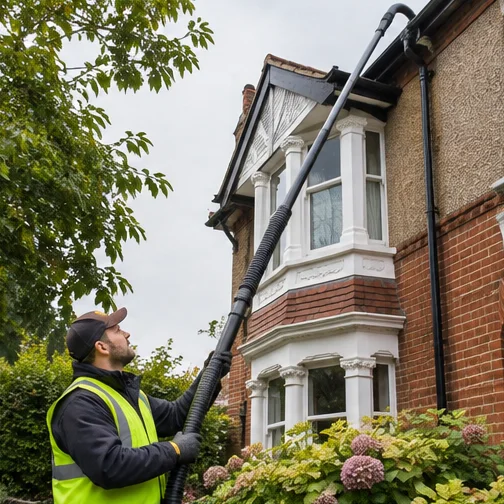
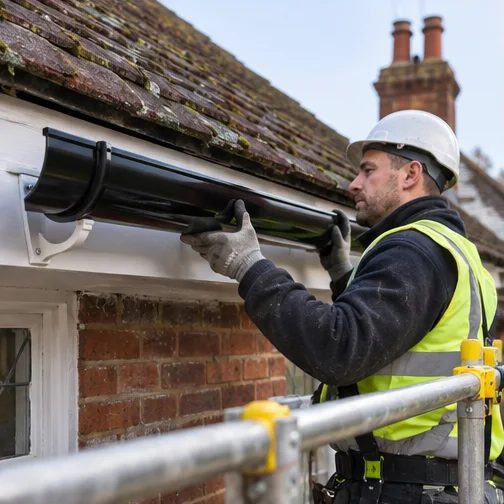
Illustrative photograph.
Identify changes in level and direction
A short gutter at a corner can empty into a longer one or discharge directly into a pipe. If it turns behind a projection, the connection may be hidden from the road. A wide photograph taken from a safe angle can show how the roof levels relate without requiring a close look at the gutter. At the rear, include any lower roof in the picture. A high downpipe can end on an extension, and water from that pipe may put extra demand on a small gutter below.
A water trail may appear under a fitting even when the lip above looks dry. Tell us if the visible pipe crosses another feature or bends behind a sign, extension or wall. At the base, note where it enters the ground or reaches an open gully. A wet patch beside the pipe does not establish that the upper gutter is overflowing. Where discharge cannot be seen below paving or inside the building, another inspection may be needed. Share any record that shows the route of the concealed section.
- High Road and Page Green frontages
- Corner gutters and changes in level
- Shared doors and service approaches
- Follow-up records for owners and agents
Relate the first report to a fixed feature
Haringey’s Seven Sisters and Page Green appraisal describes the High Road around Broad Lane, Ward’s Corner and Page Green Terrace. At a property near the junction, a postal address may identify the building without identifying which elevation is involved. Say whether the wet wall faces the main road, a side street or a rear court. On a corner building, include the turn in the wall and the nearest visible pipe. A gutter may follow the front before discharging on the side, or the two runs may be separate.
For a shop or flat, give the entrance, window or sign you use to identify the wet area. A view that includes part of the adjoining frontage makes it easier to locate a drip close to a boundary. Ask anyone else who saw the rain to describe where they stood. Their accounts may identify the roof edge and the point where the water lands separately. For example, an occupier upstairs can see a hopper while a person near the entrance sees the water crossing an awning.
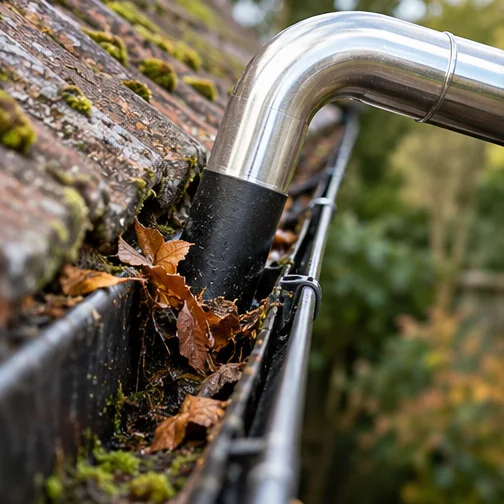
Seven Sisters observations for the first enquiry
| What you noticed | Detail to add | Why it helps |
|---|---|---|
| Spill beside a corner frontage | Which wall becomes wet first and the nearest outlet | Identifies the elevation and visible connection |
| Drops from a shop sign | Where water first reaches the sign | Relates the symptom to the upper frontage |
| Overflow from a rear extension | Whether an upper pipe feeds the lower roof | Shows the connection between the two levels |
| Water at the foot of the wall | Whether a gully, pipe end or concealed entry is visible | Locates the last observable part of the route |
Agree where the work can take place
At a frontage close to a main route, tell us whether the area below the gutter is private space, part of a shared entrance or a route regularly used by the public. Mention any seating, awnings or deliveries that affect the working area. If a separate service entrance provides access to the rear, describe the path from that door to the affected wall. At a building with several units, confirm who opens the gate or door and who can agree any arrangements around the entrance.
For a house with a yard or garden, send a view of the approach and the space directly below the roof. An extension, fence or basement stair can affect the angle to the gutter. Where a suitable ground-level position is available, an extendable vacuum can be practical for removing loose debris. A camera may give a view of some corners or outlets. Gutter cleaning covers agreed accessible lengths and openings. Any concealed or obstructed section can be discussed separately if it needs different access.
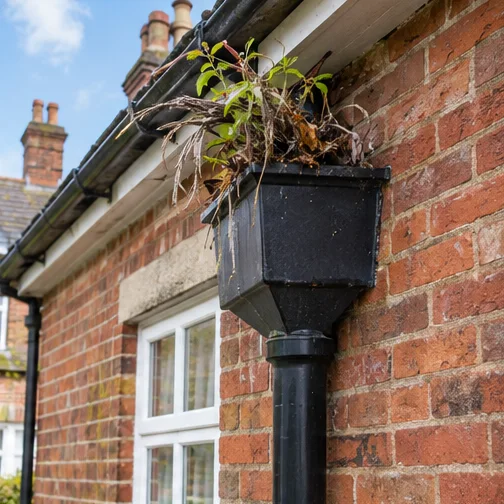
Connect the maintenance record to the original report
For a business or managed building, the report can name the relevant entrance, wall or outlet and say which lengths were reached. It can also describe a visible point that needs a follow-up or a section that requires another approach. Use names the people on site recognise. A reference to the short side gutter above the separate residential entrance is easier to locate than a generic reference to the corner. Confirm who should receive the record so they can pass the relevant observations to residents or other occupiers.
When it rains again, compare the first wet point with the record. If the front door is now dry but there is a new drip at the pipe beside it, report the lower fitting separately. Note how long the rain had been falling and whether water was visible at the outlet or base. If an interior mark appears, give the date and the closest external feature. These observations can help a property manager decide whether to investigate a fitting, a concealed drainage route or another part of the building.
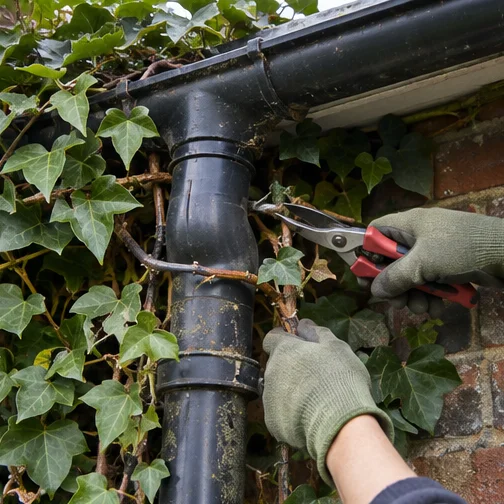
When upper and lower gutters need separate attention
Review the visible condition before choosing further work
Debris may have collected near the opening, leaving the rest of the channel relatively clear. After accessible material has been removed, any visible concern can be described by its position. If there is a drip at an exposed seam, guttering repairs may be considered after looking at the surrounding gutter and its supports. If a length has dropped, water may collect at the seam even when its seal is intact. Tell us about previous repairs or changes to the outlet so the relevant section can be identified.
A liner depends on suitable channel support and workable details at the corners and outlet. Gutter replacement may be the next discussion where several lengths or supports have deteriorated. For climbing growth, indicate where the stem starts, whether it passes behind a rainwater fitting and which wall or boundary it crosses. The ivy removal assessment needs to consider the surface beneath it. Water damage repair involves investigating where water entered and what has been affected indoors. An exterior observation is useful, especially when it is dated and placed against the nearest room or window.
Confirming practical access
| Setting | Detail to confirm |
|---|---|
| Shop and residential entrances side by side | Who controls the approach and when the doors are used |
| Yard served by a delivery route | Gate access, turning space and regular deliveries |
| House with a fence beside the extension | Width of the available strip and the location of the gutter |
| Corner roof with a short return | Position from which the return can be approached with permission |
Other work on the extension and roofline
Gutter cleaning
Clear agreed accessible lengths and openings around shopfronts, homes and corner returns.
Gutter replacement
Discuss replacement where deterioration affects several connected parts.
Guttering repairs
Review visible seams and brackets alongside the position of the run.
Ivy removal
Assess climbing stems behind fittings and across walls.
Gutter lining
Assess support and outlet details when lining is being considered.
Water damage repair
Compare the date and position of interior wetting with exterior discharge observations.

Coverage and bookings
See the areas we cover. For nearby enquiries, see Tottenham and Harringay and Stoke Newington.
Questions about gutter cleaning in Seven Sisters
What if I only see water once it reaches the pavement?
Give the exact position relative to the door, window or corner and note anything the water hits before it lands. A photo showing the wall and roof edge can help identify the area. The outlet may be further along the frontage.
Can you use a side street to reach a corner gutter?
That depends on the available space, the angle to the gutter and the agreed access. Tell us where the side route starts and whether there is a gate or projection in the way. We can then discuss which length may be reached.
Who should organise access for a shop with flats above?
The person instructing the work should check which tenant or manager controls the necessary route. Give a named contact for the agreed door or gate and say who can confirm arrangements around residents or customers.
Does a blocked outlet cause every part of a gutter to overflow?
A restriction can cause water to build up, but it may leave at one low point or joint. The shape and fall of the gutter affect where this happens. Record the first spill and the position of the outlet if visible.
Should I send information about a pipe under a yard?
Yes, if you have a drawing or know where the visible pipe enters the ground. The clearance visit can cover accessible channels and openings. The buried section may require a separate inspection if its condition is uncertain.
What if a wall still looks wet after the gutter has been cleared?
Compare dated photographs and look for new wetting during the next rain. Record the location of any active drip separately from an older stain. If an inside surface is affected, include its position and when the mark changes.