
Gutter Cleaning Stoke Newington
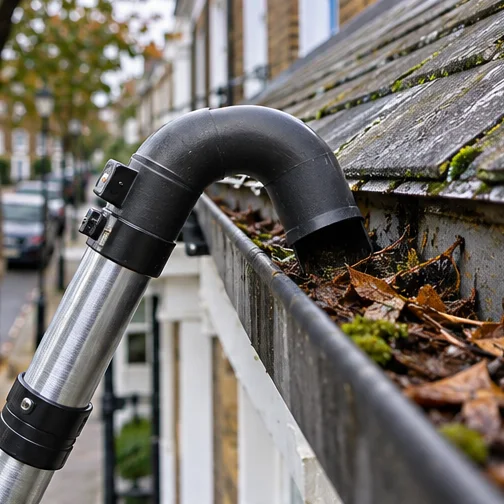
When a hopper spills above a shopfront, the water may fall near a door several metres from the pipe. When an extension gutter spills at a house, the first wet area may be a yard shared by more than one occupier. Glen’s provides gutter cleaning in Stoke Newington for accessible rainwater systems. Give us the location of the first wet point and explain how to reach the affected elevation. If you have a picture of the roof and the frontage together, send it with the enquiry.

Illustrative photograph.
Locate the problem above the frontage
Hackney’s Stoke Newington conservation area includes Church Street and substantial parts of the High Street. The council describes its mix of mainly commercial uses and some residential properties. At a business on one of these streets, locate the problem by a fixed feature such as the shop door, a bay of upper windows or an exposed pipe. Tell us if water crosses a sign, awning or cornice on the way down. The point where it lands can be further along than the fitting from which it first escapes.
If a tenant above the shop can see part of the roof, ask them to describe what happens at that level. A window may give a view of the gutter while hiding a return or hopper behind the building line. A staff member downstairs might see a wet sign without being able to identify what feeds it. Record each view separately and include the time if the observations were made during rain. A shared description of the frontage can help us place both reports against the same roof layout.
Show how the rear roof levels connect
An original rear roof can sit above a lower extension that has a separate gutter. An upper downpipe may deliver water onto the lower roof, or it may turn beside it and continue to the ground. Show the position of the pipe and the nearest outlet when reporting an overflow. If you only see water near the lower roof, describe whether it falls from an edge above or emerges at the lower trough. A photograph of the entire elevation can help locate a part of the system that is difficult to see from the yard.
Look from the same safe position during the next rain if practical. Notice whether water gathers in the lower trough before spilling or arrives suddenly from a fitting above. A gutter outlet might be open at the visible top while a lower bend remains out of sight. Tell us where the pipe disappears. If you have records of a connection installed during previous building work, share the part that shows the affected route. It may help someone decide whether further assessment belongs at roof level or at a concealed drainage connection.
- Church Street and High Street frontages
- Rear roofs and extension outlets
- Access around deliveries and shared doors
- Clearance records with fixed locations
Agree a working position on each elevation
At a shop or café, the space below the gutter may be used for arrivals, deliveries or a separate entrance to flats. Tell us which route needs to remain available and when the space is usually busiest. At the back, confirm whether entry is from a service yard, a gate or through a unit. Name the person who can open that route and explain whether it is shared with other businesses. An image from the yard towards the wall gives us a better idea of the approach than an overhead photograph.
At a house, a basement area, garden steps or a projection can interrupt the line from ground to gutter. A ground-based vacuum can suit a position with adequate reach and room for the equipment. A camera may provide a view of some corners or outlets. Gutter cleaning covers the agreed accessible lengths and openings. If a wall or lower roof prevents access to one part, we can discuss a different arrangement for that section. At a conversion, confirm who can authorise the work as well as who can admit us to the garden.
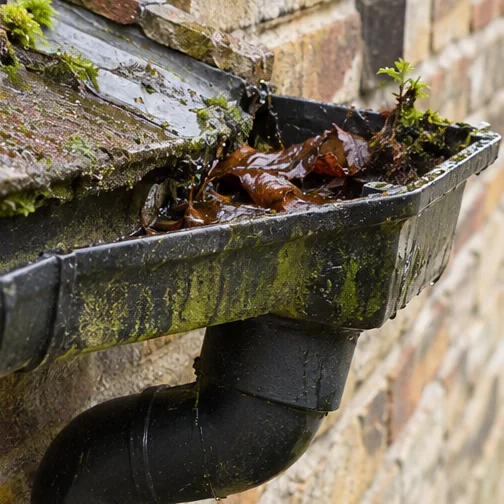
Stoke Newington observations worth recording
| First wet point | Detail to add | Why it is useful |
|---|---|---|
| Water falling off a shop sign | Where the water first reaches the sign or awning | Relates the symptom to a point on the upper wall |
| Overflow from a low rear roof | Whether an upper pipe discharges onto it | Shows how the two levels may feed into one another |
| Puddle by a lower pipe | Whether the pipe enters a gully or disappears below paving | Describes the lowest visible point in the route |
| Staining near an upstairs window | Which edge first shows moisture and when | Helps relate the report to a fixed exterior feature |
Distinguish the material cleared from the defect still visible
Once leaves and sediment have been removed from an accessible channel, a joint or support may be easier to see. A fitting can have a visible gap even when water continues to pass through it. Guttering repairs can be assessed where the adjoining sections and fixing surface are in suitable condition. If the gutter holds water beside the gap, the fall and supports may need attention as well. Tell us if the defect appears at a joint changed during previous work or where a newer length meets an older one.
Gutter lining depends on the condition and support of the existing channel and on how a liner could join the outlet. Replacement may warrant discussion when several lengths or connections are affected. Include any known requirements for the profile or appearance of existing fittings so the owner can confirm what applies. For ivy removal, describe whether the stems pass behind a pipe or into gaps above the wall. Water damage repair involves investigating the entry route and the affected material. The history of a ceiling mark or damp wall is useful even where there is an apparent leak outdoors.
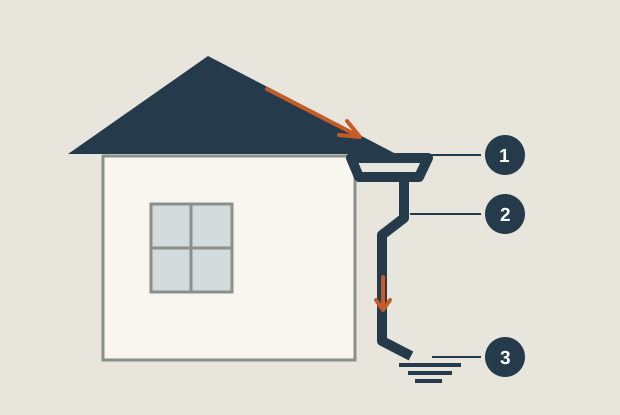
Work we can discuss after clearance
Gutter cleaning
Clear agreed accessible channels above shopfronts, terraces and rear roofs.
Guttering repairs
Assess a local seam or bracket alongside the gutter fall and adjacent material.
Gutter lining
Review support and outlet geometry before proposing lining for an existing channel.
Gutter replacement
Consider profile and appearance where several lengths require replacement.
Ivy removal
Identify stems behind rainwater fittings and assess the surfaces they cover.
Water damage repair
Compare interior changes and exterior discharge to guide investigation of water entry.
Give the building contact a record that can be followed
A clearance record can identify the sections reached and note visible points that may require further work. Refer to the same features you used at enquiry stage. On a mixed-use building, the outlet next to the separate stairs may be a clearer reference than the shop gutter. At a house with more than one addition, identify the particular window or corner beneath the channel. Tell us who needs the record and which people can supply another observation if the original concern returns.
In the next rain, note whether the first drip appears at the same fitting, on the same wall or at a lower point. Give the date and the approximate time after the rain began. A stain that remains visible through dry weather can be recorded separately from new wetting. If water appears inside, describe where the mark begins and which exterior features are nearby. A follow-up can then consider whether there is a local gutter defect, a covered connection or another possible route into the building.
Arrangements for a visit
| Location | What to confirm beforehand |
|---|---|
| Church Street or High Street frontage | How the doors, awnings and working area are used |
| Rear yard accessed through a business | Who can open the route and when deliveries arrive |
| Terrace with a lower entrance | Position of steps, railings and usable ground |
| Flats above a private garden | Who grants access and who instructs work on the roof |
Before we assess the roof edge
Questions about gutter cleaning in Stoke Newington
Can you look at an outlet above a shop with an awning?
We can assess the available position and line towards the outlet. Tell us whether the awning is fixed or retractable and who can operate it. A view of the whole frontage helps us understand its position below the roof.
What if the water falls on a neighbour’s side of the boundary?
Describe where it first appears and the position of the nearest visible outlet. Tell us which owner has agreed to the work. If access from the adjoining property is needed, it should be arranged before the visit.
Should I provide the opening hours of the business?
Give the hours relevant to access and explain when deliveries, customers or residents use the affected doors. A service route may be available at a different time. We can discuss the practical arrangements for the agreed length.
Why can the lower roof spill when the main gutter looks clear?
The lower roof may have its own restriction, or it may receive additional water from an upper pipe. A wide photograph showing both levels and outlets helps locate what to consider during inspection.
What if the water leaves a mark indoors only after prolonged rain?
Record the approximate duration before the mark appears and whether it changes during a dry period. Show the room position relative to the closest exterior wall. Further investigation can then consider the gutter and other routes into the building.
Can I use the maintenance record to arrange repair later?
Yes. Share the sections reached, any visible points that need attention and photographs of the affected fitting if available. Include subsequent observations so the repair assessment can consider whether the symptom changed after clearance.
Coverage and bookings
See the areas we cover. For nearby enquiries, see Newington Green and Seven Sisters.