
Gutter Cleaning Forest Gate
If the rainwater channel at your Forest Gate property sits behind a raised roof edge or between two slopes, you may be able to see its outlet without seeing the whole run. Tell us which part is visible and where the water appears when it overflows. Glen’s cleans accessible gutters and checks reachable downpipe openings. We can review the roof layout and the available access before confirming which lengths can be included.
Start with a wide photograph of the elevation and mark the point where you think the channel begins. If you are unsure, show where the pipe or outlet comes into view. A picture taken from a safe position inside an upper window may add detail, but please include a ground-level picture showing the route and surfaces below. Give the full address and identify which parts of the building you can access.
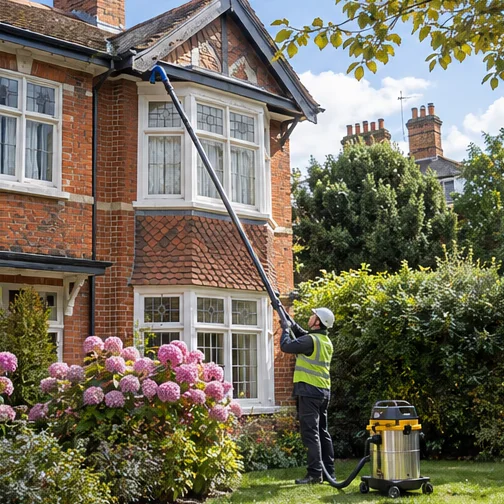
Illustrative photograph.
Show how the channel relates to the roof slopes
A narrow channel between two roof slopes can receive water from both sides. A channel behind a front roof edge can extend past a window or doorway and discharge some distance away. In a wide picture, mark where the visible slopes meet the channel. Show the transition to an open gutter if there is one. Describe what you can see from each position, especially if a roof extension or dormer obscures the view from one side.
If you have a roof plan from an earlier job, send the portion that shows the gutter and outlets. Say whether anything has been added since the plan was drawn. A picture of a later extension can be more useful than a complete old plan if the drainage route has changed. If the channel is fully hidden from the positions you can reach safely, tell us which downpipe you think serves it and let us assess what can be verified.
- Locate visible outlets where a channel is hidden
- Show both slopes that drain towards the channel
- Identify the working position beneath a hopper
- Record past patches before discussing lining
Check whether the outlet can be approached separately
A visible hopper may be easier to locate than the channel behind it. Show where the hopper sits in relation to the wall and the closest working area. At the front, a small garden wall, railings or a projecting bay can affect access. At the rear, show whether a lower roof or fence sits immediately beneath the outlet. Photograph the route into the property if the relevant area can only be reached through a gate or shared passage.
We can check reachable openings as part of the agreed clearance. The fact that one end is reachable does not establish access to the full channel. Ask for the accessible sections to be identified in the scope, especially if a repair quotation will depend on what is visible. A pipe continuing behind a wall or under paving may need separate investigation if the water appears to be backing up further along the route.
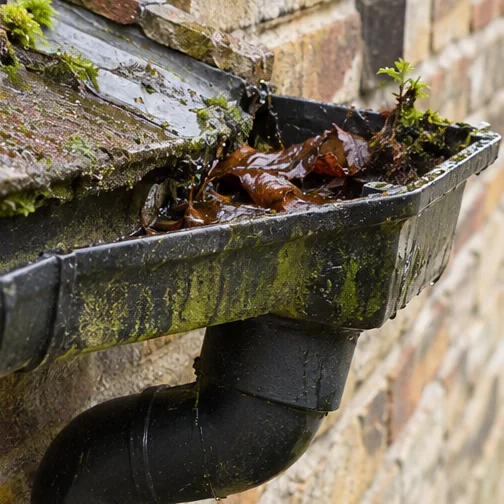
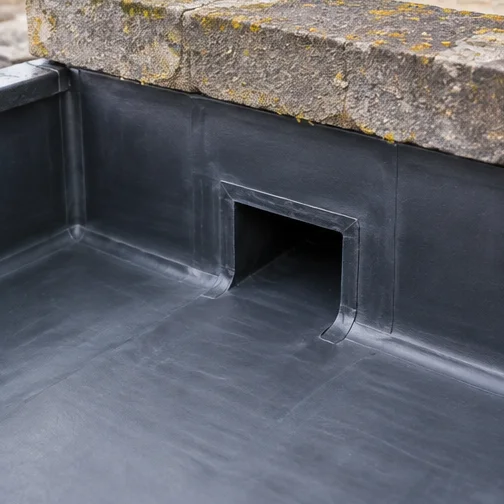
Find the visible ends of a recessed gutter
From the ground, look for an outlet through a raised edge or a hopper attached to the wall. If you can see a second opening at the far end, photograph both positions using the windows or chimneys as reference points. The outlet can be the first clue to where an internal channel sits. It may also receive water from another run. Where the roof turns, a picture from the side can show how much of the channel is obscured.
Tell us whether water spills from the outlet itself or first appears on the wall below the roof edge. If a neighbour has a different view of the building, ask whether they saw water running along the top of the wall or just dripping down it. Their view may locate the start of the spill. For gutter cleaning, the evidence helps identify the accessible parts and whether other access is needed to inspect a hidden length.
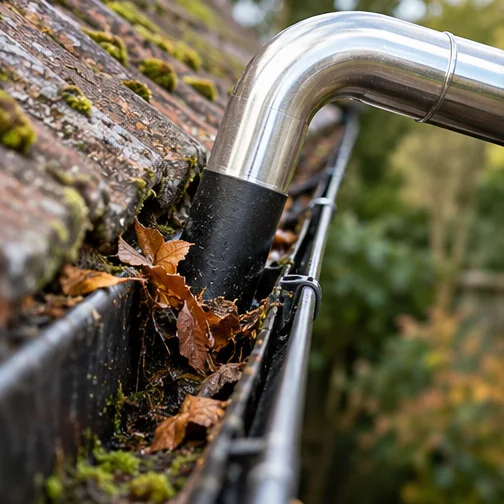
Work for other parts of the rainwater system
Gutter cleaning
Clear accessible open or recessed gutter lengths included in the booking.
Gutter replacement
Identify how new sections would meet the hopper and the adjoining roof edge.
Gutter lining
Assess the existing channel and outlets before deciding if lining is suitable.
Guttering repairs
Assess an accessible outlet, patch or union near a raised roof edge.
Water damage repair
Review high-level damp in relation to the visible discharge and roof junctions.
Ivy removal
Consider ivy growing against a hopper or around a reachable outlet.
Information for a Forest Gate assessment
| Detail | Useful evidence |
|---|---|
| Recessed channel | Wide roof view and the positions where it goes out of sight |
| Hopper or outlet | Visible pipe connections and a reference point below |
| Route to the wall | Gate, steps, lower roof and nearest working surface |
| Previous patch | Photograph or record identifying the affected length |
Record the first wet point before the wall dries
For a high-level stain, give the nearest roof feature or upstairs window and describe how the mark spreads. If a wet line begins under a hopper, include the top of the pipe in the image. If a patch starts higher, photograph the edge above it and any roof junction you can see from the ground. Water can follow a small ledge and become visible some distance from the point where it left the channel.
For indoor moisture, photograph the affected surface and explain which part of the outside wall it lines up with. Say how long it takes to appear after rain starts and whether it occurs when rain strikes from a particular direction. If water is reaching the upper floor after the reachable channel has been cleared, a water damage repair enquiry can include the roof edge, wall and other visible routes around the same location.
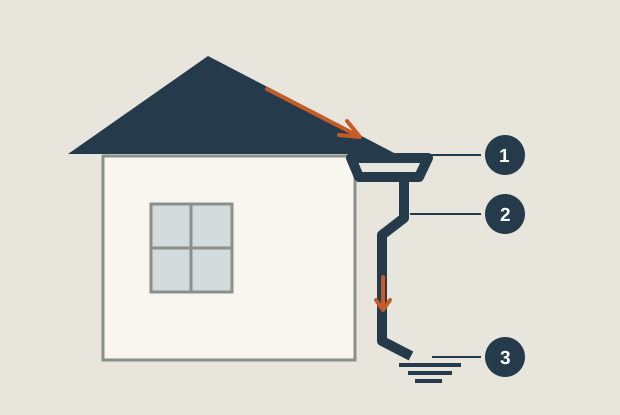
Keeping track of several independent runs
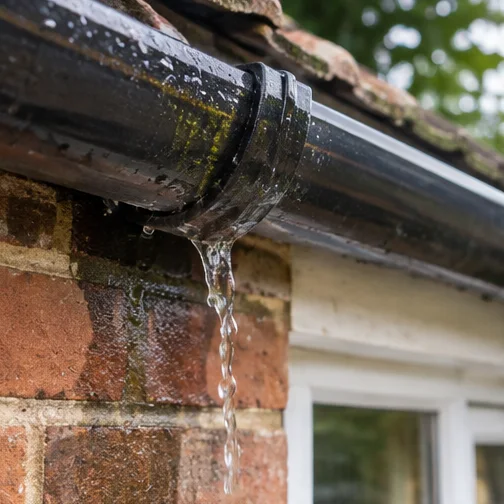
Decide what to inspect before considering lining
If a channel has previously been patched, ask for any picture of the exposed surface and record where the patch ends. A defect near the outlet might need a different approach from deterioration along an entire length. After accessible material is removed, we can report visible damage, poor support or signs of pooling. For an accessible fitting, guttering repairs can be discussed separately once its position and condition are clear.
If you are considering gutter lining, show the route and the way the existing channel connects to each outlet. The underlying gutter and support need to be assessed to determine whether lining is suitable. Mention any area that has been covered by later work. If you already have a report, identify the sections it describes and give a current picture of each outlet so the earlier findings can be placed on the building.
Forest Gate gutter cleaning FAQs
Can you check a gutter I cannot see from the street?
Send a picture of the roof and any visible outlet or hopper. We can assess whether there is suitable access and explain which part of the channel can be reached.
Can you look at an open gutter and a recessed gutter on the same visit?
Yes, if suitable access is available to each. Identify the two runs separately in your enquiry and show whether they discharge to the same pipe.
What if the hopper is mounted above a bay?
Send a front picture and a view from the side. Show the depth of the bay roof, the hopper and the ground below so we can assess the approach.
Can you tell whether the existing channel can be lined?
That depends on its condition, support and outlet layout. Any information about previous patches or persistent pooling is useful. A clear or inspection can help establish what further assessment is needed.
Do you need to go inside for an indoor damp patch?
For clearance we need access to the agreed working areas. If indoor evidence is relevant to a separate water damage enquiry, tell us which rooms are affected and who can give access.
What can I send if the wet area has dried?
Send a photo of the mark and note when it appeared. Include the closest window, outlet or roof junction in a wider view. A record of the last rainfall that produced fresh wetting is useful too.
Signs around a hidden channel
| What you see | Which area to check |
|---|---|
| Water spills over a raised edge | The channel behind the edge and where it discharges |
| Wet line begins below a hopper | The outlet, hopper rim and first pipe joint |
| Staining appears inside near the roof line | The corresponding roof or wall junction outside |
| A puddle forms below the pipe | The visible discharge and any enclosed route below it |
Coverage and bookings
See the areas we cover. For nearby enquiries, see Plaistow and Stratford.