
Gutter Cleaning Plaistow
A stain beside an upstairs window in Plaistow may be the first thing you notice when rainwater has been spilling from a gutter. At ground level, you might see a pipe serving the upper roof and another ending beside the kitchen or porch. Glen’s clears accessible gutters and checks reachable downpipe openings. Show us where the mark begins and where the visible pipes run so we can identify the roof edges to assess.
For an enquiry, send the address, a complete view of the affected wall and a note about what happened during the last shower. If the property is divided into flats, give the door number for access as well as the address of the building. Say which part of the wall belongs to the space reporting the problem. It may be easier to describe the outside position using a window or change in roof height.
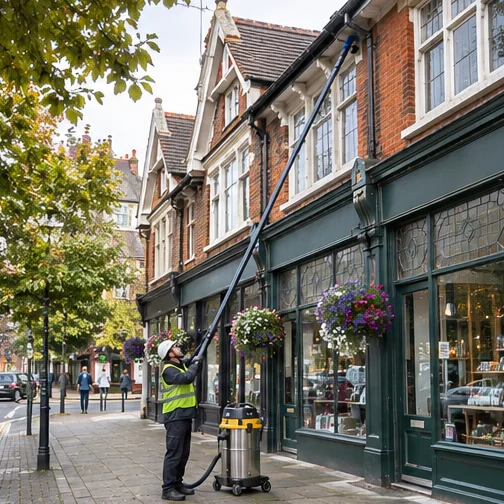
Illustrative photograph.
Use the window as a reference
First identify which window is nearest the stain and whether the mark is directly above it or off to one side. Look from ground level for the gutter joint or pipe that sits nearest that point. An upstairs occupier may be able to photograph a drip from inside while someone outside takes the wider picture. Use the same window as a reference in both views. If there is a canopy below, show where the mark is in relation to the canopy edge.
If the gutter runs around a corner, send an image of the adjoining wall too. Water can cross a short return or follow a pipe clip before it becomes visible beside the window. During rain, watch from somewhere sheltered and note the first place where water breaks away from the surface. If all you can see is a dry stain, include the last date you noticed it becoming wet. This gives us a starting point when assessing gutter cleaning.
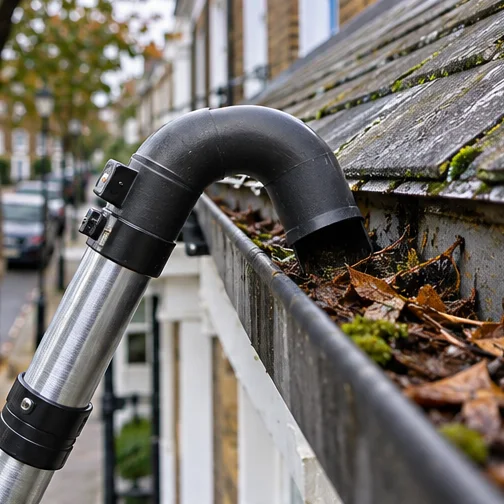
Report the condition of the fittings after a clear
A reachable gutter can be assessed for visible defects once loose material has been cleared. If a pipe has slipped out of its socket, take an image showing the clip positions and the fitting above it. For a suspected gutter split, include the length on either side of the mark. A close photograph alone can make it difficult to tell whether the damaged part is close to the outlet or in the middle of a run.
Ask for guttering repairs separately if a reachable joint or support needs attention. If several lengths have deteriorated, discuss gutter replacement with a view of the existing pipes and outlet positions. A change to the upper gutter can affect how the lower roof receives water. For a rented property, record which occupiers will need access notices for later work. Keep the clear and any repair in the maintenance record under the same roof-edge reference so a later caller can identify the part involved.
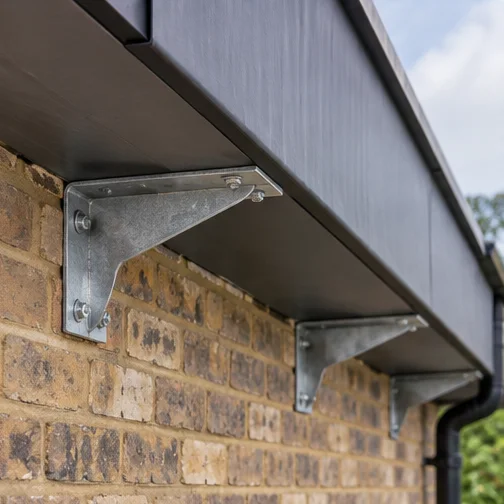
Work out where each roof level sends its water
A main gutter may have a pipe that passes behind a projection and becomes visible again lower down. Another pipe may serve only the roof of the projection. Look for a visible branch or shoe and photograph the whole connection. If the pipe goes out of view, state where you lose sight of it. A photograph of a short exposed length can otherwise look like a separate fitting on a wall that has several similar pipes.
Where the lower roof receives water directly from above, note where it lands. It may reach the lower gutter well away from the higher outlet. If the lower edge spills near a doorway, try to show both the spot that receives water and the place it spills over. The reachable upper and lower gutters can be considered together. The route from one to the other matters when choosing which lengths to include.
- Use an upstairs window to locate a wall stain
- Photograph the pipe connection between roof levels
- Show where a side path provides space below the gutter
- Compare when the wall and gully first get wet
Which observation helps with each symptom
| Symptom | What to look for |
|---|---|
| Streak from the top of the wall | The gutter edge, a joint and any visible route down a pipe |
| Drip reaches a door beneath a lower roof | Where the upper roof drains and where the lower edge begins to spill |
| Water collects beside a threshold | The paving level and any nearby gully or discharge |
| Wet mark returns after clearance | The first point to darken and any nearby seam or roof junction |
Show what the ground allows us to reach
Tell us if the pipe and gutter are on a wall that can only be approached from a narrow path. Send a view along the path showing its complete length and a second view looking at the roof edge from there. Mention any meter box, steps, stored cycles or other feature that changes the usable space. If an overhanging lower roof stops short of the boundary, an angled image can show the depth of the gap.
For a shared passage, confirm whether the occupier can open the gate from the side we will arrive at. A gate that can be opened from the yard may still need a key from the street. If a tenant or caretaker is letting us in, give them the positions that are included in the work so they can point out the correct wall. Tell us if access to a second roof edge is arranged separately. We can then assess each position and describe any that needs further access.
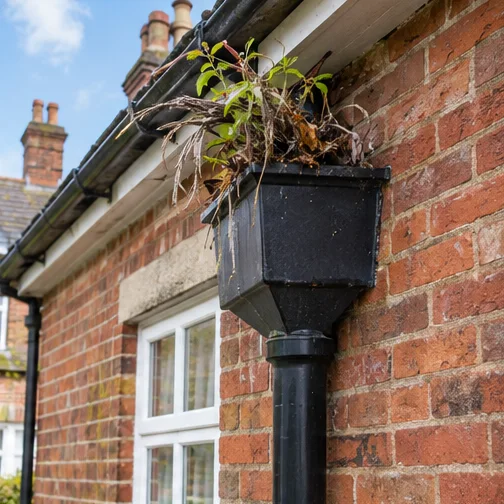
Separate work at the premises
Gutter cleaning
Clear agreed reachable gutters above the affected wall and lower roof.
Ivy removal
Check whether ivy has reached fittings where a pipe passes behind a lower roof.
Guttering repairs
Assess a reachable socket, gutter split or loose support by the marked wall.
Water damage repair
Compare the height of indoor wet marks with the outside drainage route.
Gutter replacement
Specify new lengths with the discharge to the lower roof in view.
Gutter lining
Assess a concealed channel along a roof return before discussing lining.
What to include in a Plaistow enquiry
| Detail | Useful evidence |
|---|---|
| Window reference | The window nearest the wet mark and a wider picture of the wall |
| Pipe connections | Where branches, shoes or changes in roof level can be seen |
| Side path | Gate operation, steps and the usable space below the gutter |
| Gully | The discharge point and any pipes that enter the same area |
Describe the difference between a wet wall and a wet gully
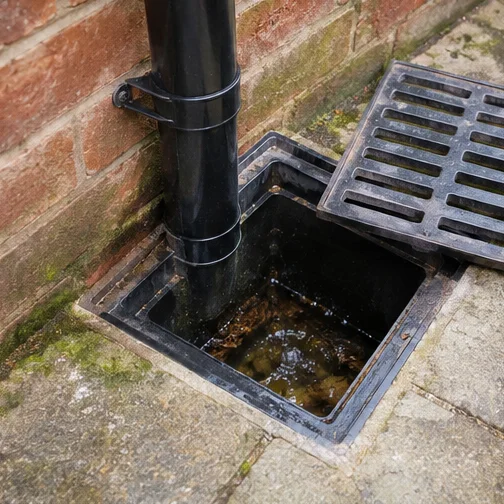
A gully filling from a downpipe can leave standing water at the bottom of a wall, while a gutter spill may wet the wall from the top. If you see both, record when they start and whether they are connected by a visible route. Photograph the gully with the nearby pipes in view. A shoe that sits above a gully and a pipe that disappears below paving give us different information about what can be checked during clearance.
We can check openings that are reachable included in the agreed work. A restriction deeper in a concealed pipe or below paving may need separate assessment. If the symptom is indoors, give the height of the first wet mark and the timing relative to the rain. For a water damage repair enquiry, send the external view too. The position of a gully is particularly useful where one doorway is lower than the yard and water appears around its threshold.

What helps when several people report the leak
Coverage and bookings
See the areas we cover. For nearby enquiries, see West Ham and East Ham.
Plaistow gutter cleaning FAQs
Can I send a photograph taken through the window?
Yes. Use it to show the fitting or the drip, and send a ground-level image of the same wall too. The second view helps locate the fitting and show how we might reach it.
Can you include the lower roof and the upper gutter?
Yes, where both can be reached. Show how the roofs overlap and where each gutter empties. We can list the relevant lengths when we agree the work.
What if I can see two pipes but only one outlet?
Photograph the point where each pipe appears and where it goes out of view. We can discuss which openings are reachable. A concealed connection may need separate access to establish its route.
Will the tenant have to provide access to the flat?
That depends on whether the relevant working positions can be reached from outside. Show any side passage or courtyard gate and let us know who can open it. Tell us if an indoor route is the only option.
Can you look at damp beside a window after clearing the gutter?
We can discuss a separate assessment if the damp persists or if the clearance reveals a visible fault. Share the timing of fresh wet marks and the positions of the relevant roof edges and pipes.
What if only one wall gets wet in wind-driven rain?
Tell us which wall it is and where the marks first appear. Show any nearby roof junction, window or outlet. That information can help determine which rainwater fittings and surfaces are relevant.