
Gutter Cleaning Kensington
A gutter above a shop on Kensington High Street and a rear gutter near Kensington Square can call for very different working positions. We clear agreed lengths, check reachable outlets and explain where a leak or restriction appears to need a separate assessment. Tell us which part of the building is affected and what lies below it. A picture taken during rain is especially useful if the water follows the outside of the pipe before it drops.
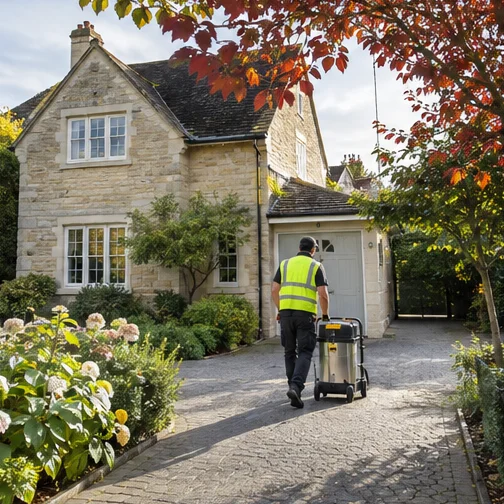
Illustrative photograph.
Describe the practical space available at the frontage
If the frontage opens directly onto a footway, tell us whether there is private space in front of the building and where people enter. We discuss the workable position before confirming that the roof can be reached. Signs, awnings and the roofs of entrances can obstruct the approach even if there is ample space farther out. A street-level photograph from the side can be more informative than a head-on image because it shows how far a canopy projects. If the only possible approach is from a rear yard, tell us how it is reached and who can give access.
A property manager may organise work on the upper part of a building while a shop or restaurant controls access to the service entrance below. Give us a contact who can confirm the agreed route and say which part needs to remain clear. If several occupiers use the same yard, tell us who can arrange a suitable time. We can discuss whether the upper and lower runs can be reached during one visit. An agreement to clear the front does not automatically include the rear, especially if reaching it would need a different arrangement. Tell us about both parts when you request the visit so we can assess them together.
- Show the gutter and shop sign in one picture.
- Identify the elevation using the relevant entrance.
- Tell us if the return shares a pipe with the frontage.
- Give us the yard keyholder before agreeing rear access.
Identify the run before booking the whole building
The council’s Kensington Square appraisal distinguishes the older square from surrounding buildings of later dates, including the taller development nearby. Those differences do not tell us how a particular gutter is fitted. For an enquiry, identify whether you are describing the high street frontage, a rear wing or a separate structure within the same premises. A roof may drain towards a neighbouring elevation or into a pipe shared by several lengths. We need the exact address and the direction the roof slopes, where you can see it safely. Tell us where water first appears, including the nearest doorway or window.
If the affected part sits over a shop sign, include the full width of the shopfront and the visible gutter above it in a ground-level photo. A picture framed tightly around the sign will not tell us whether water starts there or reaches it from somewhere higher up. If the same roof continues round a corner, point out the return and any pipe at the junction. We can then discuss whether one length or more than one needs checking. For the rear of a building, tell us if the gutter faces a lightwell, a garden or a shared yard, since the available position below the run affects how the equipment can be used.
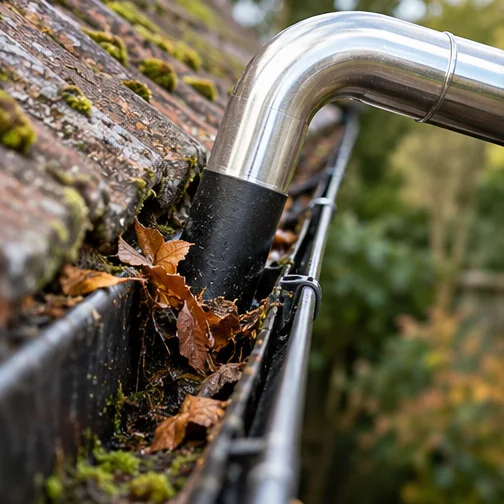
Work out where the overflow is coming from
| First visible sign | What we inspect where reachable | What to tell us |
|---|---|---|
| Water drops from the sign edge | Gutter and any outlet above the sign | Where the water first touches the sign |
| Drip appears just after turning the corner | End of the frontage and any connected return | Which side of the corner wets first |
| Water is visible behind an awning | Accessible seam, outlet and position of the channel | How far the awning projects |
Clear debris while tracing the outlet it can obstruct
Where the roofline can be reached from an appropriate position, we use reach poles and a gutter vacuum to clear accessible material. We follow the agreed run and concentrate on the point where it turns into an outlet, checking for compacted matter that may remain after loose leaves are lifted. An outlet near a corner can be partly hidden by the shape of the roof edge. We look at the accessible opening and remove what can be reached. If a pipe continues behind a sign or into a covered passage, tell us where the outlet can be seen lower down. We explain the limit of any check if the route disappears from view.
You can ask about a camera view if the channel is behind a parapet or cannot be seen from below. The position available for the equipment determines which parts a camera can show. We use the visible condition and the report from the occupier to distinguish overflow from the signs of a damaged connection. When a gutter has been cleared but still holds water, we describe the position rather than assuming the pipe is blocked. It may be necessary to consider the condition of the gutter or its supports separately. Read about the gutter cleaning service for the equipment and the checks that can be included where there is access.
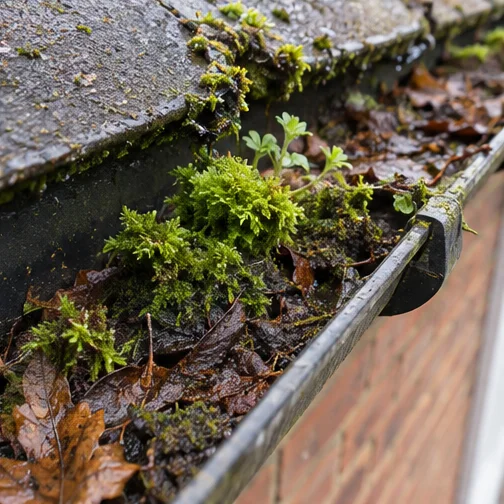
Record the visit by elevation and outlet
We tell you which runs we reached and which accessible outlets were cleared. If the report came from a shop occupier but the work is being arranged by the property manager, tell us who should receive the findings. We can refer to the entrance or roofline in the same terms you used when booking. If a visible seam or support needs attention, we identify the location and explain what a separate visit may need. When the original drip cannot be matched to a fitting from the available position, we tell you what part of the run still needs investigating.
For a building with several lengths, ask us to distinguish a clear run from an outlet we could not inspect. This is useful if the roofline has been altered and the pipe routes differ from older photographs or a maintenance schedule. If the next step involves a different occupier, record which entrance and working position were used. Give us the preferred contact for access in that area if it was outside the original booking. We can then discuss how to assess the remaining run and whether it belongs to the same drainage route.
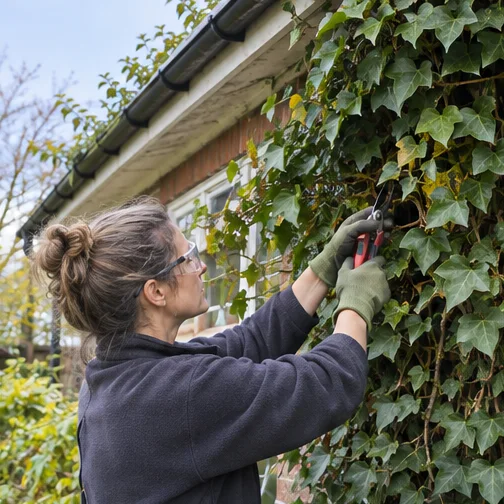
When upper and lower gutters need separate attention
Consider why water is falling from the sign or canopy
If rainwater runs down a fascia and falls from an awning, the place where it lands is one clue. It could have backed up at the outlet, escaped a fitting or come from another part of the roof. Tell us whether the drip appears in light rain or after the gutter has had time to fill. The location of the first visible flow can help us find a reachable point to inspect. If a connection stays loose or appears to leak after the debris is removed, we can discuss repairing that fitting rather than widening the clearance visit without agreement.
Sometimes a damaged section needs gutter replacement. We look at the lengths and outlets that would need to be renewed and whether sound fittings can remain. A supported channel behind a roof edge might instead need its surface assessed for lining. Tell us if ivy conceals a joint or if the roots or stems are near a doorway or pipe that must stay accessible. We can discuss how far the growth can be cut back. If the water has entered a room below the frontage or roof, let us know what surface is affected. We discuss water damage repair separately from the clearance or roofline work.

Frontage and rear access
| Area to be included | Who can give access | Information for the enquiry |
|---|---|---|
| Gutter above a high street entrance | Shop or building contact | Position of the doorway and any sign or canopy |
| Return at the side of the building | Person responsible for that elevation | Whether a pipe serves both runs |
| Rear yard or lightwell | Keyholder | Gate, steps and available working space |
Other work on the extension and roofline
Gutter cleaning
We agree the lengths above the frontage, the return or the rear yard and clear reachable debris.
Gutter replacement
We assess the join between a worn frontage run and any sound gutter on the return.
Guttering repairs
We look at the accessible fitting above a canopy where a drip may start.
Ivy removal
Tell us if growth conceals a clip or obstructs access to the rear pipe.
Gutter lining
We discuss the lining of a supported channel after seeing how it meets the roof and outlet.
Water damage repair
If the inside of the premises has been affected, identify the room, the surface and when it first became wet.
Coverage and bookings
See the areas we cover. For nearby enquiries, see South Kensington and Holland Park and Earl’s Court.
Questions about gutter cleaning in Kensington
Can you clear the upper gutter while a shop stays open?
Tell us which entrance needs to stay available and where the equipment could stand. We discuss the available space and access before confirming what can be done.
Does a drip off the sign show which gutter is blocked?
It gives us a useful reference but may be some distance from where the water first escapes. Tell us what part wets first and where you can see the pipe.
Can you look at the side return as part of the same visit?
Let us know where the frontage joins the return and whether the two runs share an outlet. We check access and agree which lengths can be included.
Who needs to arrange access to the rear yard?
Give us the person who can open the route and confirm which parts of the yard need to be clear. If someone else is approving the work, send their details as well.
How do you check a gutter hidden above a shop canopy?
We first consider where the equipment can stand and how much of the run can be reached. Ask about a camera view if the channel is out of sight from below.
What happens if a different part of the gutter still leaks?
We describe the location of any visible fault and explain what was included in the clearance. If the remaining issue needs inspection or repair, we discuss access and the work separately.