
Gutter Cleaning Holland Park
A balustrade or projecting cornice can conceal the gutter you need us to clear. We work on accessible gutters in Holland Park and check reachable openings at the head of the downpipes. If the roof cannot be seen from the street, tell us where the pipe comes down and which part of the wall becomes wet. That helps us discuss the visit without relying on a guess about the roof behind the frontage.
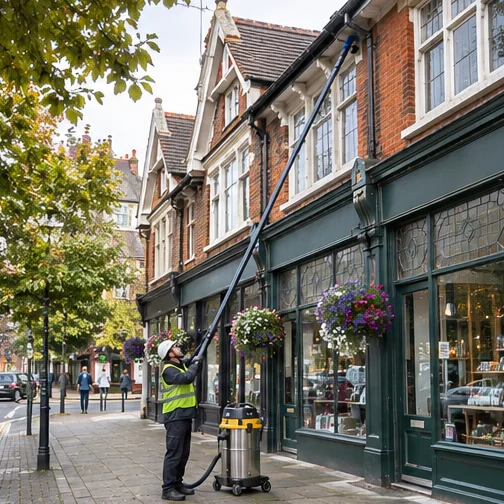
Illustrative photograph.
Describe the roof behind the frontage
The council’s Holland Park appraisal describes pitched roofs on streets including Addison Crescent and front slopes designed to sit out of sight behind a balustrade. You may be able to see a pipe from below without seeing the channel it serves. When you get in touch, tell us whether you are reporting a gutter at the front, a side roof or the longer run above a rear addition. If the problem shows up on a cornice, point out the level and the nearest visible rainwater fitting. A view from the opposite side of the street can be useful if it shows the top of the building and the ground beneath it.
A roof that looks symmetrical from the street can drain differently on each side. The gutter may turn round the corner or stop at a projection. If a side pipe is the only one you can see, tell us whether water appears near that pipe or closer to the centre of the frontage. If a previous inspection identified a channel behind the balustrade, send the report or a photo if you already have it. A ground-level view of the side access is still useful because the position from which we can inspect the gutter may be different from the position where the water first shows.
Leave you with a description you can use
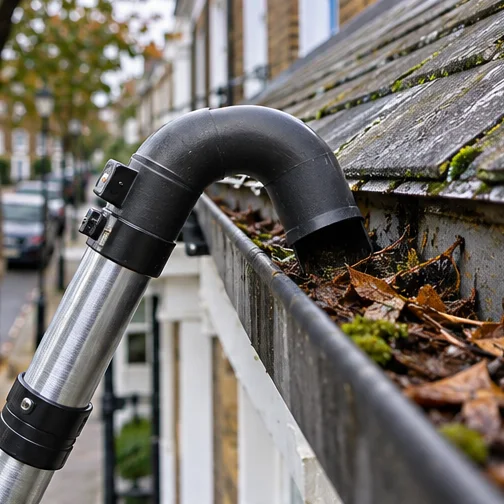
We describe the lengths we cleared and point out any accessible outlet where debris was removed. Where the working position did not allow a check behind a balustrade or around a corner, we explain which part was not reached. If there is a visible defect, we identify it in relation to an outlet or feature you can recognise. You may be passing the information to a property manager or to someone who has already worked on the roof. Give us the name they use for the affected side so that the position is clear.
If there are several possible paths for the water, we distinguish a finding we can see from a route that still needs to be checked. After a clearance visit, ask about the particular section if you want to know what may remain outside the agreed work. A photo from the available camera position may be useful where the channel is normally out of sight. We can discuss whether an image or a description of the fitting would be more helpful to whoever will arrange the next step.
Check where the equipment can approach the roof edge
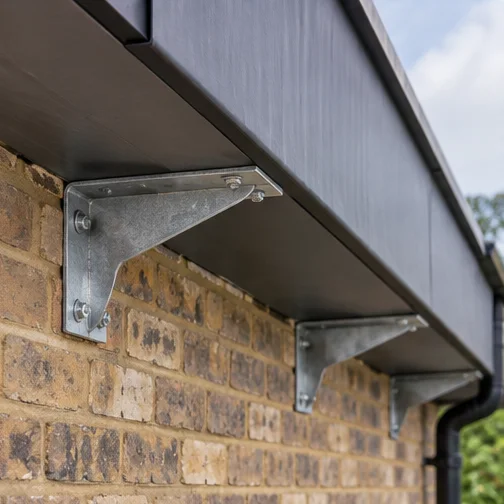
We ask about the ground from which the run might be reached. A front garden can give space to stand back from the wall while a side passage may offer only a narrow angle. If steps, a wall or a balcony intervene, say where they sit relative to the gutter. A reach pole still needs room to be set up even if the channel is within its available height. Tell us if there is access from both sides of the property. We can discuss which position is most useful and whether more than one is needed for the lengths you want us to clear.
For an address with separate flats, give us the contact who can open any side gate or rear courtyard. Tell us if the route is shared and if a resident needs to be there to provide access. A visit arranged for a front channel need not cover a rear run that can only be reached with a different setup. Describe both when they are part of the enquiry. If there is an existing safe roof access point, let us know who manages it. We can discuss what is needed for the section without assuming a particular access arrangement.
- Identify the pipe that serves the roof behind the frontage.
- Mention any balustrade or cornice that blocks the view.
- Show how much space there is to stand beside the building.
- Describe any route to a rear courtyard or separate addition.
Position the equipment below the run
| Access location | What affects the position | Information to send |
|---|---|---|
| Front garden | Setback and any steps or wall | A view from the street to the façade |
| Side passage | Width and room to approach the gutter | Gate and anything over the passage |
| Rear courtyard | Space beneath a lower roof | Which door or gate opens into it |
Use the outlet to make sense of an obscured run
We work along the accessible gutter with vacuum equipment where the roof height and working position allow. The pole lets us reach the channel from a suitable position and draw loose leaves and compacted debris into the collection drum. We pay attention to the point where the channel meets the outlet. If the channel is covered from view at the front but the pipe is visible to the side, it helps to know whether those fittings connect. A camera check can be discussed when the normal sightline is blocked. It may show debris or standing water within the section we can see, but does not reveal the inside of a pipe behind the wall.
If a blockage is within reach at the opening, we clear what we can access and explain how far the check extended. A pipe that disappears behind a façade or continues below ground may need a separate assessment if water still backs up. A pitched roof can feed a channel that turns abruptly around a corner. We consider that bend when working through the reachable debris. Find out more about the London gutter clearance visit if you are deciding whether to request clearance of the full property or a particular length.
Separate work at the premises
Gutter cleaning
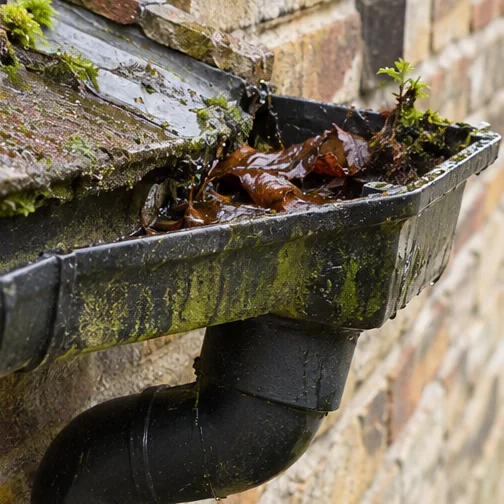
We clear the accessible lengths agreed and check where an obscured gutter meets its outlet.
Ivy removal
We discuss cutting back growth that prevents access to a pipe around the side.
Guttering repairs
We assess an accessible seam or loose fitting where water is visible on the cornice or wall.
Water damage repair
If a leak has marked the inside of a room, we can discuss the affected surface and whether the source has been stopped.
Gutter replacement
We look at how a replacement length would join the existing gutter behind or beside the frontage.
Gutter lining
We assess whether a supported hidden channel could be lined after seeing its surface and drainage route.
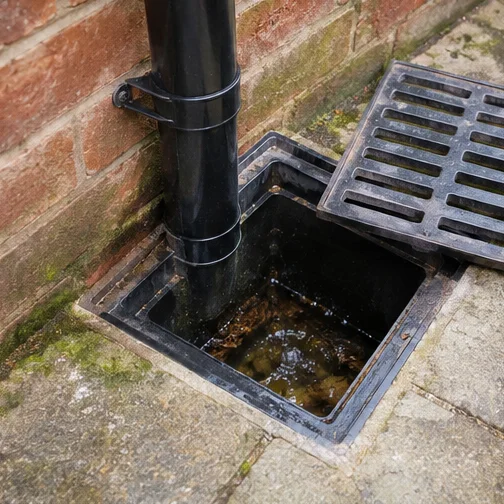
Follow water around a concealed roof edge
| Place where water appears | Inspection point | Detail to provide |
|---|---|---|
| Front cornice | Accessible gutter or outlet above | Nearest downpipe and level of the stain |
| Side of a balustraded roof | Reachable corner of the channel | Whether the pipe starts at that corner |
| Rear addition | Independent lower run and any discharge from above | Which roof begins to overflow first |
Distinguish a leak through the channel from a fault at the roof edge
Once accessible debris has been cleared, a stain on a cornice may still need investigating. A channel can leak through its surface, a pipe can leak at a fitting or water can reach the exterior from the roof above. We describe what is visible and can discuss a repair to an accessible gutter fitting where there is a local defect. A sound supported channel can be considered for gutter lining after the surface and outlet have been inspected. If a section has failed and cannot be repaired in place, we look at how a replacement would connect to the rest of the gutter.
Ivy can make it difficult to see the position of a pipe or reach its fittings. Tell us if you want to discuss removing growth around the pipe and where it starts. If water has entered the building, describe the room and surface and say whether the problem appears with rain. Water damage repair can be discussed separately from the work on the rainwater fittings. At an older frontage, describe the original feature that appears to be affected so we can consider the condition and avoid assuming it should be renewed along with the gutter.
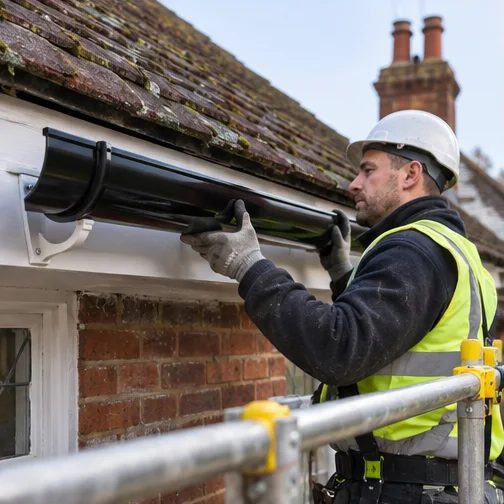
What helps when several people report the leak
Coverage and bookings
See the areas we cover. For nearby enquiries, see Kensington and Notting Hill.
Questions about Holland Park rooflines
Can you clean a gutter I cannot see over the balustrade?
Tell us where it sits and where the nearest pipe comes down. We discuss what can be reached from the available position and whether a camera view would help.
What if the side passage is the only route in?
Describe its width and the space below the affected gutter. We look at whether the equipment can reach that section from a suitable position.
Can you clear two sides of a villa on one visit?
Tell us which lengths and outlets you want included. We assess how each side can be reached before confirming the visit.
Does staining on the cornice mean the channel needs lining?
It does not establish the source on its own. We check the visible route, discuss clearance if there is debris and consider lining only where the channel and its support are suitable.
Can you inspect the roof without walking on it?
On reachable runs, a pole and camera may help from an appropriate position. The shape of the roof and the ground below determine what can be seen and cleared.
Will you distinguish the front and side outlets in the findings?
Yes. Tell us how you refer to each side when booking. We can explain which lengths and outlets were reached and identify the ones that need separate access.