
Gutter Cleaning Marylebone
Tell us if the gutter you want cleared faces a mews behind the main address. We clear accessible guttering in Marylebone and check the openings into downpipes where we can reach them. A mews roof may be a different building from the one you enter at the front. Give us the address, the affected side and the route to it so we can agree the right roofline for the visit.
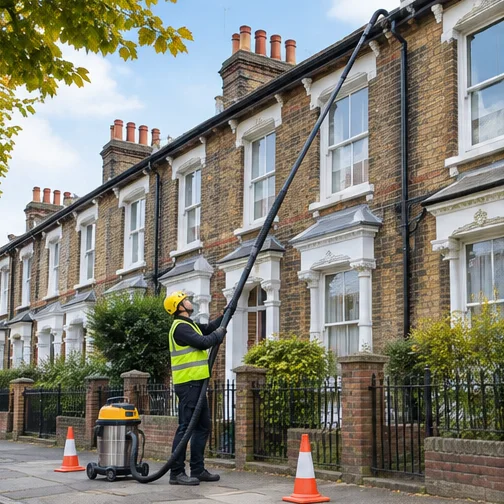
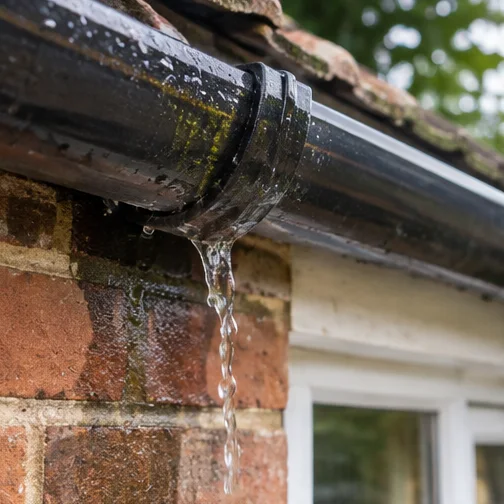
Illustrative photograph.
Establish whether the route and the working area are both available
An arch, gate or door can limit the route for a vacuum drum even when the area beyond it looks open. Explain how the equipment would get from the entrance to the position beneath the roof. If you normally use a service passage, tell us about its width, steps and any parts it shares with deliveries. We discuss where we could stand without relying on a door or access route that needs to be kept clear. A courtyard at the rear may be accessible from inside but unavailable from the mews. Describe the route someone has actually agreed to open.
When the gutter is on a house or business with separate occupiers, give us the details of someone who can identify the affected roof and let us into the area below. The person who instructs the work may be elsewhere. If the property has an occupied mews building and a separate main building, say which one has been included and whether anyone needs to be notified about the visit. We can assess the practical position and tell you what part is reachable. If one elevation calls for a different arrangement, we explain that before extending the booking.
- Identify the main building and the mews roof separately.
- Give the name of the person who can open the rear route.
- Describe the arch, gate or passage used by the equipment.
- Tell us if the upper roof discharges towards the lower one.
Work out how water passes between the accessible runs
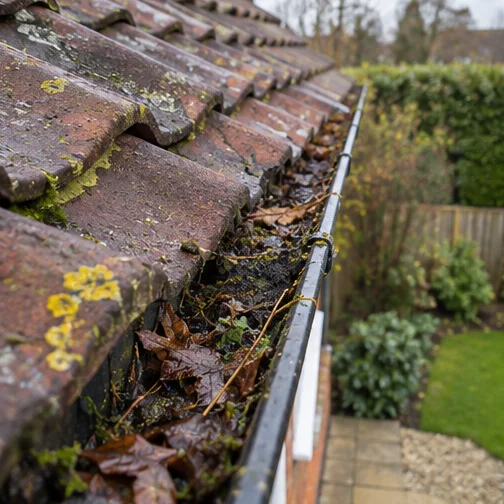
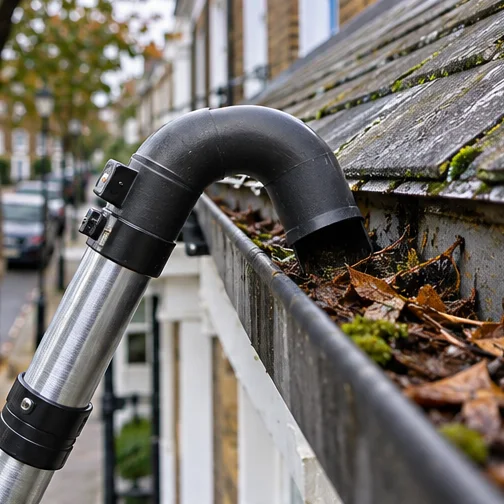
At the visit we confirm the included lengths and look for the outlet to each. On a suitable run we use reach poles and a gutter vacuum to collect loose material, moss and compacted debris. We clear what is accessible along the agreed length and check where it empties into the pipe. If the two roofs sit at different heights, we establish whether each gutter drains separately or whether one feeds another. A lower channel can be clear and still receive water that escapes from a fitting above it. We consider the visible route when checking where material has collected.
You can ask about a camera view where the channel cannot be seen from below. It may help identify a place where the gutter meets an outlet or where standing water remains visible. We do not assume the route of a concealed downpipe from that view. If we cannot reach a restriction beyond the opening, we explain where further inspection may be needed. Read about the gutter cleaning service for the equipment and typical checks. If an earlier visit only cleared the mews roof, tell us that so we can discuss the main building separately.
Give the roof its own location
Westminster’s Harley Street conservation area audit describes Marylebone Mews as serving houses on Wimpole and Welbeck Streets, with access from New Cavendish Street through an arch. That arrangement illustrates why a rear address can matter. We need to know if you are asking about a roof on the mews itself or the higher rear elevation of a building that backs onto it. A photo showing both roof edges can help if they overlap in the view from ground level. Tell us which gutter overflows and where you see the water falling. We can then discuss whether both roofs form part of the same enquiry.
If the report is from a business premises, give us the nearest staff or customer entrance as well as the address. Tell us if another tenant or an adjoining building controls the access beneath the gutter. A pipe seen at ground level may start farther up the adjoining wall or behind the roof edge. If you can see where it leaves the channel, point out that position in a wide photo. A close view of a leaking joint is helpful once we know which pipe it belongs to. The first step is to match the report to a location that can be recognised when it is dry.
Work for other parts of the rainwater system
Gutter cleaning
We agree which accessible runs belong to the main building and mews before clearing them.
Gutter replacement
We discuss how a failed length can be renewed at the main building or the mews.
Gutter lining
We assess the channel and outlet before discussing lining on a supported section.
Guttering repairs
We look at the reachable fitting where water still escapes after clearance.
Water damage repair
For water reaching an interior finish, identify the room and building before discussing an assessment.
Ivy removal
We can discuss cutting back growth at a pipe beside a mews or courtyard entrance.
Decide which roof the report refers to
| What you can see | Accessible check | Detail that helps |
|---|---|---|
| Water on a low mews roof | Lower gutter and any discharge from above | Which edge becomes wet first |
| Drip beside the main building’s rear window | Visible upper run and outlet | Floor and position of the nearest pipe |
| Water at a connection on the wall between roofs | Accessible joint and channel it serves | A view that shows both roof edges |
Agree the next step for a seam, support or other defect
Where a joint or bracket remains a concern after clearance, we can discuss repairing the relevant fitting. If the length needs renewing, we consider where a new section could meet the existing run. A supported channel whose surface is leaking may be assessed for gutter lining once its condition and outlet are visible. We describe what was found rather than assuming every gutter at the address needs the same work. An inspection of a shorter mews gutter can have a different outcome from one on the higher roof.
Growth can conceal a fitting near a wall, gate or mews entrance. Tell us if you want to discuss cutting the ivy back and where it is rooted. If rainwater has entered a room or affected a surface inside, give us the location, the first wet point and whether the source has been stopped. We discuss water damage separately after considering what can be seen outside. A stain below a roof does not establish that an accessible blockage caused it. Tell us if it appeared before or after work was last done to the gutter.
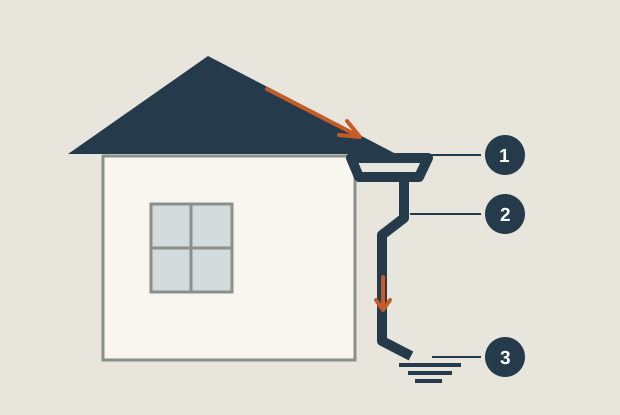
Keeping track of several independent runs
Tell the next person which building and roof were included
We explain which run we cleared and which opening we reached. We also describe any visible defect or position that could not be reached. For an enquiry involving a main building and a mews roof, we name each location separately so the person receiving the account knows what it refers to. If someone else manages the rear route, pass on the description of the section that still needs access. This is more useful for a follow-up than a statement that the address as a whole was checked.
Keep the details of the entrance, the position used and the person who opened it. If another contractor changes a gate or a roof addition alters the approach, mention it before another visit. If you receive a report from a different room, establish whether it concerns the same roofline first. A change from a mews-facing window to one in the main building can mean the gutter and the access are different. We can discuss where the next check should begin from the updated description.
Questions about Marylebone gutter visits
What if the mews address differs from the main address?
Give us both and explain which roof is affected. Tell us where to arrive and who can open the agreed access route.
Can you clear the lower mews roof on its own?
We can discuss it separately if the run and its accessible outlet are identified. Tell us if water from the main roof reaches it.
Does the arch need to stay clear during the work?
Tell us how the route is used and what space can be made available. We can discuss the working position without assuming the entrance can be obstructed.
Who should meet you if the rear is controlled by another occupier?
Give us the contact who can open it and the person who can agree the included work. The person who saw the leak can send a description if they are elsewhere.
Can you see whether one roof drains into the other?
We check what can be seen of the channels and outlets. If the route is concealed, we explain which part may need a separate inspection.
Can you report the high and low roofs separately?
Yes. Identify both in the booking and tell us the terms you use for them. We can describe the clearance and any remaining issue for each run included.
Plan the approach to a mews or rear elevation
| Route | What to confirm | Who can help |
|---|---|---|
| Through a carriage arch or gate | Opening and space beyond it | Contact who controls the entrance |
| Shared rear passage | Steps, turns and the route that needs to stay open | Building or premises contact |
| Courtyard within the main building | Which door leads to the working area | Keyholder for that part |
Coverage and bookings
See the areas we cover. For nearby enquiries, see Paddington and Fitzrovia and Mayfair.