
Gutter Cleaning Paddington
We clear accessible gutters on homes and commercial premises in Paddington. An entrance used by guests or customers may be on a different street from the yard beneath the affected roof. Tell us both locations if that is the case. We use the address, roofline and available access to work out which gutters and pipe openings can be included before you arrange the visit.
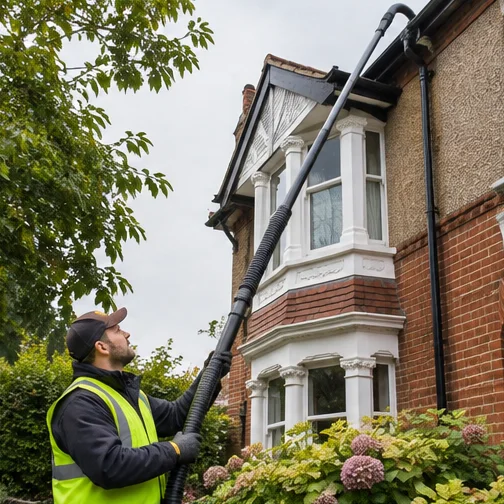
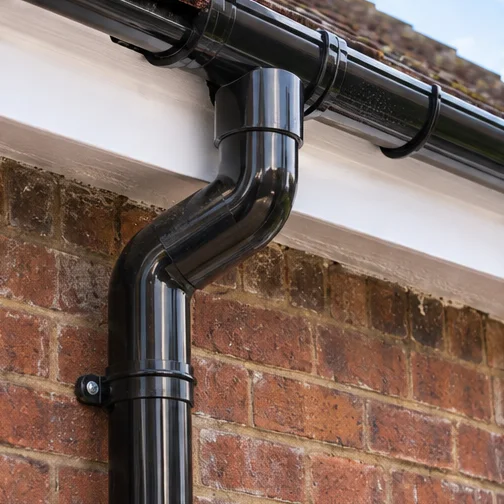
Illustrative photograph.
Plan the visit around the working space, not just the appointment time
A yard can be unlocked when we arrive and still be unsuitable as a working position if it is in regular use. Tell us where the equipment could stand and whether deliveries, doors or other contractors use the same space. If access depends on a service lift, an internal passage or a key, describe the route. We may need to bring in a vacuum drum and lengths of reach pole. Knowing where the route narrows or turns helps us assess it before arranging to attend.
For a premises used by several occupiers, tell us who can agree the working position and who can confirm that it will be available on the day. A person at reception may be able to direct us to the yard but may not control the timing of work there. Give us a name and number for the appropriate person. If the front run is accessible from a separate area, tell us whether that should be included even when the rear visit needs another arrangement. We discuss each length and its access separately before confirming what can be reached.
- Give the main address and the service entrance if different.
- Identify the roof wing and the door below the drip.
- Explain how the yard is used during the appointment.
- Name the person who can agree the working position.
Give us the address of the building and the entrance we should use
Westminster identifies Praed Street as one of the retail areas in its Paddington and Bayswater programme. On a premises with a frontage there or elsewhere in Paddington, the address used by visitors may not identify the most useful access to a gutter. A rainwater run can face the rear of the building while the entrance used for booking is at the front. If the service entrance has its own name or number, include it along with the main address. Tell us which side the gutter faces and whether there is a point on that side where we can approach it.
For a house or flat, describe whether the reported overflow is on the street-facing wall or beside a garden or courtyard. If you manage a larger property, tell us the specific wing, entrance or section of the roof involved. A photograph showing both the point that leaks and a feature on the ground can help us find it. If someone saw the overflow from inside, ask what they could see of the pipe or edge above it. Give us an on-site contact who can identify that area even when the water is no longer visible.
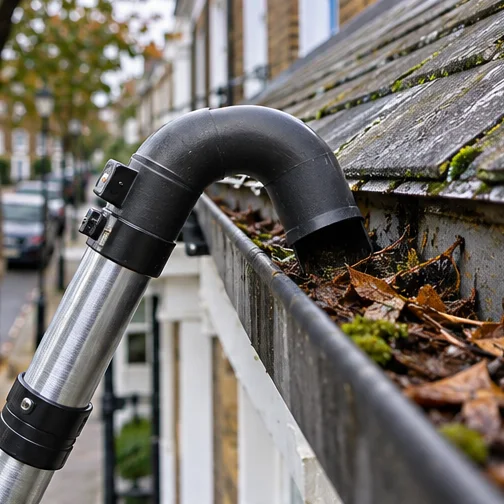
Identify which roof the report refers to
| What was reported | First reachable check | Useful location reference |
|---|---|---|
| Water falls beside a service entrance | Roofline above the entrance and accessible outlet | Side of the yard and nearest door |
| Overflow appears on the lower wing | Lower channel and any discharge from the higher roof | Which part wets first |
| A pipe drips behind a canopy | Accessible joint and outlet above it | Height and position relative to the canopy |
Clear reachable runs and make sense of the connection between them
We start by confirming the lengths included in the visit. Where the position allows, we use reach poles and a gutter vacuum to remove accessible leaves, moss and silt. We check the transition from the channel to the reachable pipe opening, where material can build up even if the centre of the gutter looks clear. A gutter along an extension or service wing may empty separately from the main roof. If the point that overflows is on the lower roof, we consider whether another run discharges into it before deciding what to inspect.
A camera view may help if a channel is hidden behind a roof edge. If a building manager wants that view for a particular run, identify it when making the enquiry. We discuss what can be seen from a suitable position and which areas would need different access. If the reachable opening can be cleared but water still appears to back up, we describe where the inspection ended. A concealed or enclosed pipe may require further assessment. See our gutter cleaning service for more about how we use the equipment and what the available reach depends on.
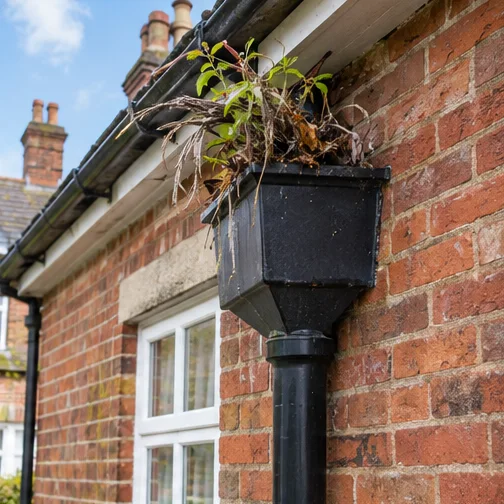
Pass the findings to the person who can act on them
We explain what was cleared and which outlets were reached. Where the report came from a member of staff, tell us how they identify the relevant yard, wing or entrance. If there is more than one similar pipe, we can describe the position by reference to a door or corner. We identify any visible fault that would need separate work and whether part of the run was outside our reach. This lets the person organising the work distinguish clearance from an issue that still needs investigation.
Keep the details of the route if you plan to arrange future visits. Let us know about a change to a gate, a new covering over part of the yard or a shift in who controls access. A position that was available before may no longer be suitable. If there was a part of the roof that we could not reach, send the previous description and ask about that length by name. We can then discuss what needs to be arranged instead of assuming the next visit is a repeat of the first.
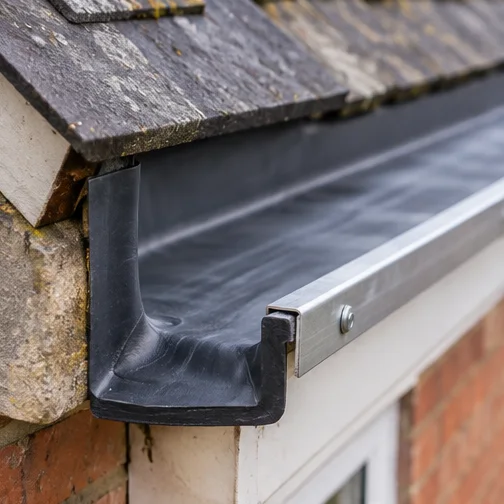
When upper and lower gutters need separate attention
Identify the fault before discussing an extra visit
Water falling into a yard may be overflow from above or may escape at a connection lower down. If it continues after debris is removed, we consider the visible joint, support or outlet. We can discuss repairing the fitting where a local fault is found. If the damaged run is beyond a suitable repair, we look at where a new length could meet the existing fittings. On an accessible supported channel that leaks through its surface, we can discuss gutter lining after examining its condition and outlet.
If ivy makes it difficult to see a pipe beside an access door, tell us how much growth there is and where it starts. We can discuss how far it could be taken back to expose the relevant part. For signs of water inside, give us the room or space and say when the mark first appeared. We discuss water damage repair separately from the roofline work. A wet interior wall may have a different cause from the gutter problem first reported. We explain which external findings are visible and what may need a separate inspection.
Information for premises with more than one entrance
| Detail | Who can confirm it | Why it matters |
|---|---|---|
| Public and service entrances | Reception or building contact | Identifies where the equipment should arrive |
| Shared working area | Person responsible for the yard | Confirms when and where it is available |
| Roofline included in the booking | Person who can agree the work | Separates it from other runs at the same address |
Other work on the extension and roofline
Gutter cleaning
We clear the agreed reachable frontage or rear runs and check their accessible outlets.
Gutter replacement
We discuss how a failed length could be replaced and where it joins sound fittings.
Guttering repairs
We examine the reachable connection where a leak persists after debris is removed.
Ivy removal
We can discuss cutting back growth around a pipe near the service entrance.
Gutter lining
We look at the support, surface and exit of a concealed channel before discussing lining.
Water damage repair
For signs of water inside a property, tell us where they appeared and what roofline or pipe is above them.
Coverage and bookings
See the areas we cover. For nearby enquiries, see Bayswater and Marylebone and Maida Vale.
Questions about Paddington gutter visits
Can we use the rear entrance if the address is on another street?
Tell us both locations and which route the equipment should take. Give us the contact who can let us into the agreed working area.
Does reception need to organise the whole visit?
Reception may be able to show us the route. We also need the person who can agree use of the area and confirm the lengths to be included.
Can you include a lower roof that drains separately?
Tell us which run and outlet it has and whether the same route reaches it. We can assess it as a separate length in the booking.
What if deliveries use the yard throughout the day?
Describe the route and the space that needs to stay clear. We discuss a suitable position and time with the person responsible for access.
Can you give the findings to an off-site manager?
Yes. Give us their details and the reference they use for the affected part of the property. A clear entrance or elevation reference is particularly useful when they cannot see the roof.
Can you tell if water is coming from the higher roof?
We check the visible relationship between the runs and their accessible outlets. If the connection cannot be seen, we explain which part may need further inspection.