
Gutter Cleaning Maida Vale
We clear accessible gutters in Maida Vale and check reachable outlets into the downpipes. If you look after a mansion block, tell us which entrance or courtyard the affected gutter faces. A pipe near one stairwell can serve a run that starts beside another. We need to identify that run and agree the working position before we can tell you what a visit can include.
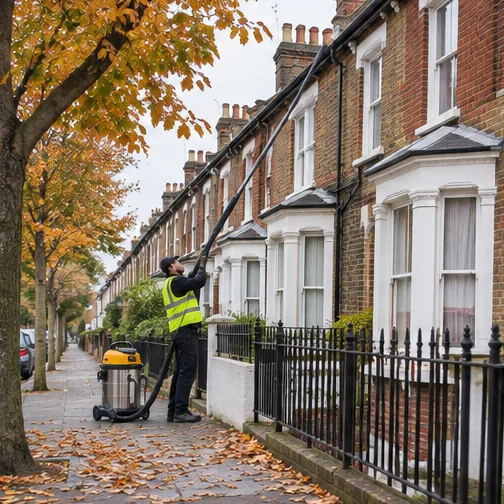
Illustrative photograph.
Use the building references that narrow down the issue
| Observation | First reachable check | Detail to confirm |
|---|---|---|
| Water appears inside the courtyard | Inner elevation and its visible outlet | Courtyard name and nearest stair entrance |
| Two flats see overflow at different levels | Relationship between the visible runs and pipe | Which part became wet first |
| Drip remains at the same seam after rain | Reachable joint or bracket | Previous clearance and location of the seam |
Bring reports from several residents together
Westminster’s conservation area information identifies early mansion blocks around Elgin Avenue and stucco crescents elsewhere in Maida Vale. At a multi-entrance building, a flat number tells us who reported the problem but does not always identify the gutter. Ask the resident which window, courtyard or entrance is closest to the overflow. If two flats have reported water on different floors, note where each first saw it. The reports could refer to the same downpipe or to two unrelated parts of the roof. We can use those observations to discuss where an inspection should begin.
If you have a simple plan of the building, mark the point where the gutter or pipe seems to be affected. A street-side photograph may show the outer elevation, but the report could refer to the inside of the block. Ask whether the water is visible from the courtyard or the street. If the only observation is a mark inside a flat, tell us which wall is affected and when it changes. We check the accessible external route, but an indoor mark by itself does not show which fitting caused it. Identifying the right elevation saves time when several rooflines and pipe connections look alike.
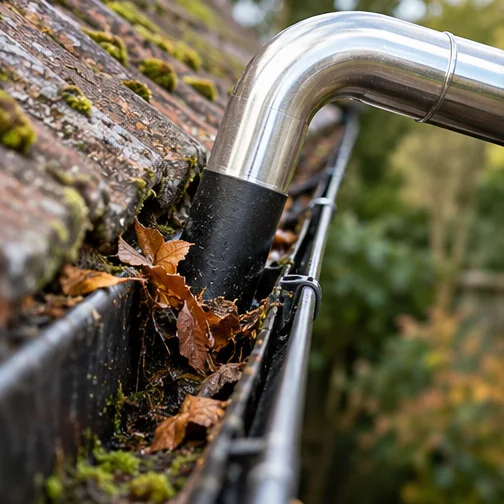
Clear what we can reach and note how the run joins the pipe
At the property we confirm which channel is included and locate the accessible outlet. If the working position is suitable, we use reach poles and vacuum equipment to remove leaves, moss and compacted debris. We work through the reachable length rather than only lifting the material visible from the ground. Fine matter can build up near a change of direction where the gutter empties into the downpipe. We clear obstructions we can reach at the opening. If one outlet is shared by more than one run, we establish which side was included and explain if another length remains outside the work.
A camera view can be useful where the roof edge is obscured or a manager needs to see the affected part. Ask about it when booking and identify the outlet in question. We can discuss whether the available position allows the view and what it can show. It does not let us inspect a pipe that disappears into the building. If the accessible opening is clear but water appears to remain in the channel, we note where. A further assessment may be needed if the difficulty lies in the support, the shape of the run or a restriction farther down. Read about gutter cleaning for the equipment and the usual limits of a visit.
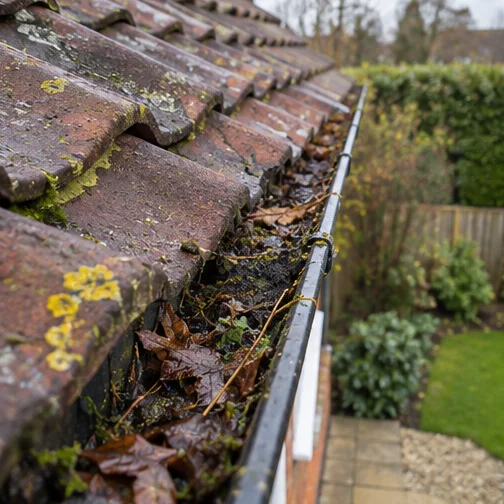
Agree which courtyard or entrance gives the working position
A gate can open into an internal space without giving access to the part beneath the gutter. Tell us if the yard is divided, reached by steps or crossed by a narrow passage. If the building has entrances with similar numbers or names, give us the name of the one we should use. We consider where the vacuum drum could stand and whether the pole can approach the channel from there. For a frontage with a deep bay, tell us how far the bay projects and whether the upper run is above it or to one side.
For a shared property, give us the details of someone who can confirm the working area and of whoever can approve the lengths to be included. They may not be the same person. If access changes during the week or the courtyard has to stay clear at certain times, tell us before confirming the visit. A ground-level view can help us discuss a suitable position even when the gutter itself is hidden. We may need separate arrangements for different parts of a block, so do not assume that access through one entrance covers all the roof drainage.
- Use the courtyard or elevation name alongside the flat number.
- Tell us which entrance leads to the working area.
- Identify any outlet that serves more than one run.
- Give us a contact for access and a contact for approval.
Decide whether the fitting itself needs work
If water still leaks from a visible seam after clearance, we can discuss a guttering repair. We look at where the parts connect and whether the section has moved. A length with widespread damage may need replacement, in which case we consider the adjoining fittings and the route into the existing pipe. A supported channel behind a parapet can be assessed for lining when the surface is the source of the leak. We discuss each of these separately so the person responsible for the building knows what is being proposed.
Ivy near a fitting can obscure the place where water escapes or prevent access to the pipe. Tell us where the plant begins if you want to discuss cutting it back. If the problem has affected an inside wall or ceiling, tell us who can provide access to that area. We discuss water damage repair after considering where the water may have entered. If a resident has already reported an indoor mark, give us the location and say whether it changes with rain. That is more useful than assuming that a newly noticed mark came from the gutter most recently reported.
Services for the building manager
Guttering repairs
We assess a visible seam or support and identify it using the manager’s roofline reference.
Gutter cleaning
We clear the accessible lengths agreed by entrance or courtyard and check reachable pipe openings.
Water damage repair
We can discuss indoor damage separately and ask which room and surface first became wet.
Gutter replacement
We look at adjoining fittings before agreeing how a damaged length on a block could be renewed.
Gutter lining
We can discuss lining after assessing how a supported concealed channel serves its outlet.
Ivy removal
We discuss cutting back growth that obscures a fitting within the agreed access area.
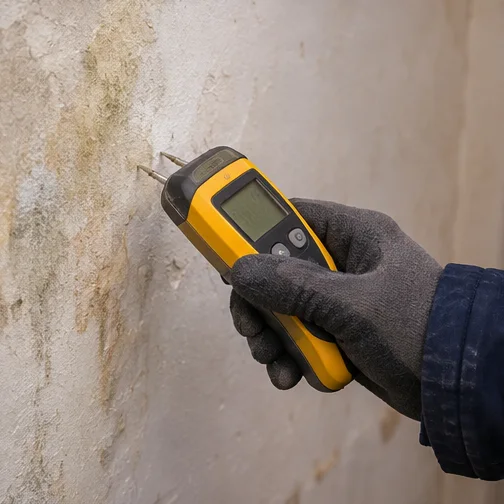
Information to keep with the maintenance record
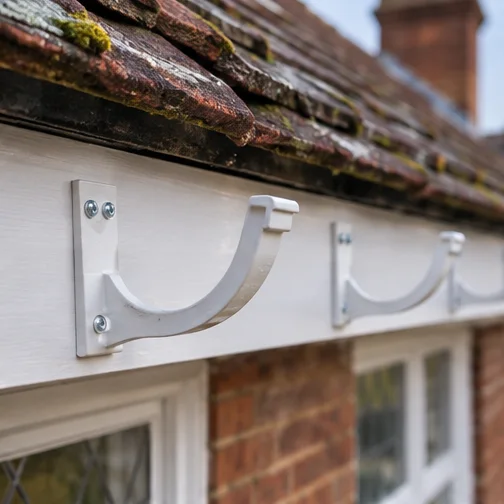
Agree access for a mansion block
| Contact | What to ask for | What it helps establish |
|---|---|---|
| Resident | Photo, elevation or nearest window | Location of the reported water |
| Keyholder | Gate, steps and divisions within the courtyard | Route to the working position |
| Building manager | Included lengths and contact for approval | Boundary of the visit and any follow-up |
Hand over a record that distinguishes one outlet from another
We identify the length we cleared, the opening we reached and any visible defect. Tell us how the manager records the roofline so our description can use the same entrance, elevation or courtyard name. An internal pipe may appear at ground level some distance from the flat that first saw overflow. If the route cannot be traced from the available position, we explain where our inspection stopped. This gives the next person a location to investigate instead of a general report that the whole block has been checked.
If a later visit is needed, keep the access contact and the description of the part we could not reach. Tell us about changes to gates, building works or who controls the courtyard before making another appointment. If a different run now needs attention, identify it separately. At buildings with several entrances, a small change in where the leak is seen can mean a different route for equipment. We can discuss what needs to be arranged from the new information.
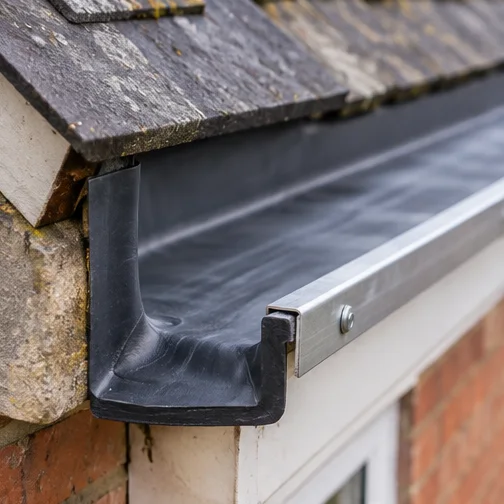
Questions about Maida Vale gutter clearance
What if the flat address and the gutter address are different?
Give us the full building address and identify the entrance or courtyard the gutter faces. If the access point has a different number or name, give us that as well.
Can we book for two adjoining entrances?
Tell us which lengths belong to each and whether they drain into the same pipe. We confirm what can be reached from the agreed positions before booking.
Do you need both the resident and the manager on site?
We need access and enough information to locate the affected part. If the manager is elsewhere, give us their details and the name of someone who can open the route.
Can a camera identify which flat caused the blockage?
A camera can show an accessible part of the channel, where a view is possible. It cannot assign responsibility to a flat or trace a pipe hidden inside the building.
Do you clear an outlet if it serves several sections?
We can clear reachable debris at an accessible opening if it is included. We explain which run was cleared and whether an adjoining section still needs attention.
What should we record for the next visit?
Keep the entrance or elevation name, the location of the outlet and who gave access. Note any visible fault or part that could not be reached.
Coverage and bookings
See the areas we cover. For nearby enquiries, see Paddington and St John’s Wood.