
Gutter Cleaning Harringay
When a gutter spills near the front of a Harringay terrace, check where the water lands in relation to the bay, entrance and next house. A wet step gives a useful location, while the gutter or pipe responsible may sit further along the roof edge. Glen’s provides gutter cleaning in Harringay for accessible sections of homes and business premises. Tell us whether the concern is at the front, the rear or a short return and describe the space below. We can discuss the scope of an initial visit from those details.
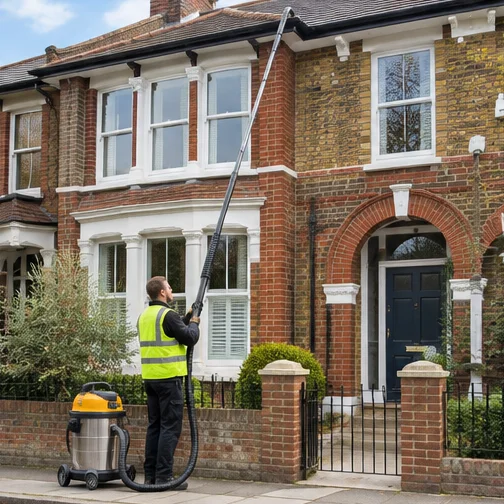
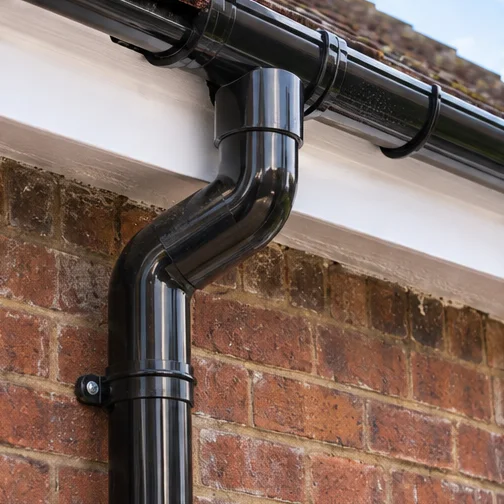
Illustrative photograph.
Follow the roofline across changes in level
Haringey’s urban character study describes tightly arranged terraces on the Harringay Ladder west of Green Lanes and notes that the rows follow the topography. Standing at the pavement, you may see a regular roofline interrupted by a slight step between properties. A visible gutter can end, change level or continue behind a projection at such a point. If the spill is close to a boundary, mark the nearest corner, visible outlet and house entrance in a wide view. This helps identify the section even where adjoining elevations look alike.
An owner may know that a neighbour’s roof sheds water towards their side without knowing whether both gutters connect. A previous invoice or drawing can help if it names the part that was repaired. At enquiry stage, say what is known and which property has agreed to the work. A description of a continuous visible edge does not establish responsibility for every fitting along it. Where an adjoining garden or frontage provides the only practical approach, the person booking should confirm the agreed access with that occupier.
Use one set of location references for the whole job
Residents and contractors can use different names for the same part of a terrace. A rear bedroom window on the second floor might be directly above a kitchen extension or look across a side return. Give a location that someone can recognise from outside and explain which window the occupier used to see it. The visit record can refer to the same point, describe the material removed and identify any fitting that still needs attention. A person with access only at the rear can then match the observations to the visible roof edges.
After the visit, compare what happens in rain from a safe viewpoint. Record the duration before the first drip and whether it falls in the same place. If the original water crossing the front steps has stopped but a stain remains on the wall, distinguish the mark from any active wetting. If a new report concerns a different wall, give it its own location and date. An owner or agent can use that information to decide whether a repair, further gutter access or a separate drainage assessment is needed.

Record the first contact with the wall or path
A drip may strike the bay roof and follow its edge before reaching the path below. At a shopfront it may cross a sign or awning and emerge near the entrance. A picture of the final wet spot provides one piece of the picture. Add where water is first visible and whether the stream runs across another surface. Tell us which direction you were looking from. An outside corner, a short return and the pipe behind the sign can look close together in a photograph even when they sit on different levels.
During a longer spell of rain, note whether water begins above the pipe or at a point away from it. If a visible outlet sends water into a lower roof, describe where that roof drains. A lower trough may receive water from the roof above or collect runoff only from its own surface. The distinction affects where to begin checking for debris, alignment or a joint problem. Where the discharge disappears into a covered bend, make a note of the last place it can be observed. That gives a useful limit for any inspection based on visible fittings.
- Roofline changes along Ladder terraces
- Green Lanes awnings and frontages
- Rear access around extensions
- Evidence for follow-up at joints and outlets
Preparing access on either side
| Property arrangement | What to confirm |
|---|---|
| Terraced frontage beside a lightwell | Give the position of steps, rails and any clear area |
| Private rear garden | Explain entry through the house or by a gate |
| Shop with flats above | Name the access contact for each side of the building |
| Roof edge close to a boundary | Confirm the working position and any agreed neighbouring access |
Describe the access behind the terrace
A rear gutter might sit above a garden reached through the house, a side gate or a route shared with other properties. Tell us which entrance you expect us to use and how to get from it to the affected wall. Steps down from a kitchen door, a narrow turn at an extension and a conservatory can all affect the working position. A photograph looking across the garden towards the house will often show the relationship more clearly than a photo aimed straight up from the back door.
At the front, tell us whether there is room between the wall and the pavement and whether any lightwell or railing interrupts it. At a Green Lanes business, describe which door customers use, when deliveries take place and whether the rear can be reached without going through a separate unit. Gutter cleaning covers the agreed lengths we can reach from suitable positions. A ground-based vacuum and camera may be practical when the approach gives a clear angle. An overhead obstruction or a channel hidden behind a projection may call for another arrangement.
Separate work at the premises
Gutter cleaning
Clear agreed accessible channels on terrace frontages, returns and extensions.
Ivy removal
Review stems behind pipe fixings or growing towards the eaves.
Guttering repairs
Assess visible seam or bracket faults alongside channel alignment.
Water damage repair
Use the timing and position of interior marks to inform investigation of water entry.
Gutter replacement
Consider renewal when several linked fittings or lengths need changing.
Gutter lining
Review support and outlet connections where an existing gutter may be lined.
Harringay details that help locate a leak
| First observation | Detail to add | Why it matters |
|---|---|---|
| Drip close to a stepped roofline | Nearest bay, entrance and outlet | Places the symptom in the correct part of the terrace |
| Water crossing an awning | The point it first reaches the cover | Relates the shopfront report to the roof above |
| Wet brick below a joint | Position of the next bracket and visible bend | Gives context for an assessment of the fitting |
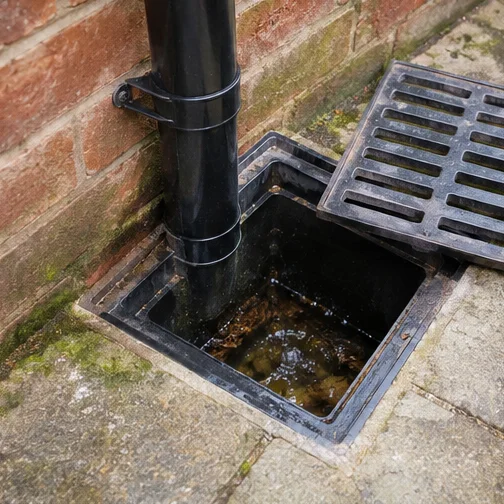
| Puddle where a pipe enters paving | Whether the ground also receives runoff from another surface | Helps describe the visible routes into that area |
Decide whether a follow-up belongs at the seam or the outlet
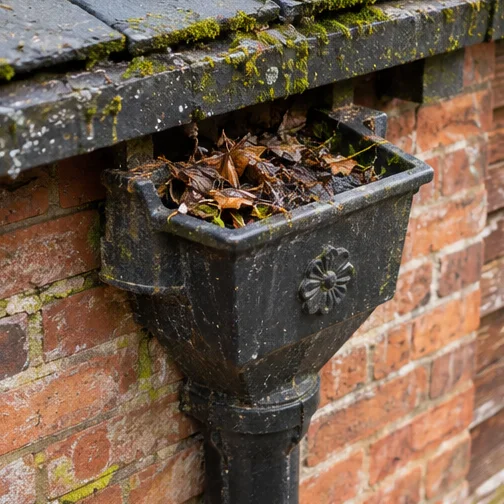
A plug of leaves at the outlet can hold water back across a long run. Sediment can also settle in a low section. Where an accessible channel has been cleared and a drip remains at a visible seam, guttering repairs may be considered alongside the position of the adjoining support. If an opening looks clear but water still reaches the wall, the enclosed part of the pipe may need inspection. Tell us where the pipe turns or goes below the ground, and whether anyone has information on the route.
A channel that retains adequate support and has workable corners and outlet connections may be considered for gutter lining. Replacement can be discussed where several fittings have deteriorated or the route needs to be changed. At a wall with ivy near the pipe, describe the height of the growth and whether stems pass behind the fixings. The removal approach depends on the surfaces and affected fittings. If you need water damage repair, record which part of the inside surface became wet first and when. A wet wall and a visible gutter defect need to be considered alongside other possible entry routes.
What helps when several people report the leak
Coverage and bookings
See the areas we cover. For nearby enquiries, see Hornsey and Stroud Green and Seven Sisters.
Questions about gutter cleaning in Harringay
How do I describe a problem where every house has a similar frontage?
Use at least two landmarks, such as the bay next to the entrance and the downpipe on its left when facing the house. A wide photo showing the full frontage makes it easier to identify a short gutter or change in level.
Can you clear the rear if the only access is through my home?
Tell us which route is available and whether it has narrow doors, turns or steps. We can discuss whether equipment can use the route and whether the area at the rear provides a suitable working position.
Why does water leave the gutter on the far side from the outlet?
A restriction can allow water to build up and reach a lower edge elsewhere. The slope of the channel and its supports can also influence where water collects. Give the position of the outlet and of the first visible spill.
Do you need to speak to the shop tenant if an agent is arranging the work?
If the tenant controls access or the affected entrance is used by staff and customers, their information can be useful. Give a contact who can confirm the hours, route and practical arrangements for the agreed work.
Can a short gutter above a bay have a blockage of its own?
Yes. Its outlet may be independent of the main gutter or it may receive water from above. Include both roof levels in the photograph and describe whether water reaches the bay from another fitting.
What if the first report was an indoor mark rather than a visible overflow?
Send a dated picture of the mark and describe what sits outside or above it. Tell us if it changes after rain. We can discuss the accessible gutter assessment and whether another inspection is needed to establish the entry route.