
Gutter Cleaning Hornsey
A narrow stream at the end of a gutter and a broad spill over its outer lip can both soak the same stretch of brickwork. If you have noticed new wetting on a Hornsey property, describe the first place it appears rather than the full area that becomes wet. Glen’s provides gutter cleaning in Hornsey for accessible rainwater systems. We ask about the channel, the nearest outlet and the ground beneath them so we can discuss what the visit can cover.
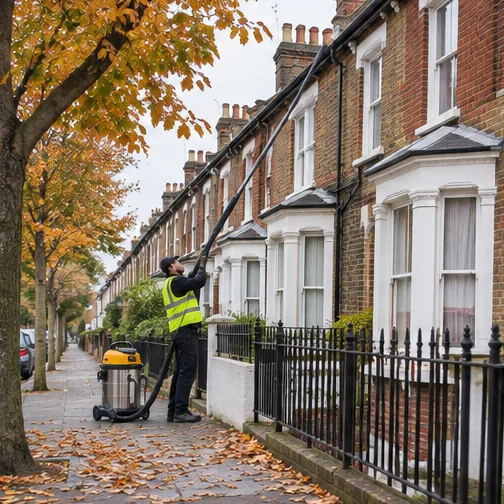
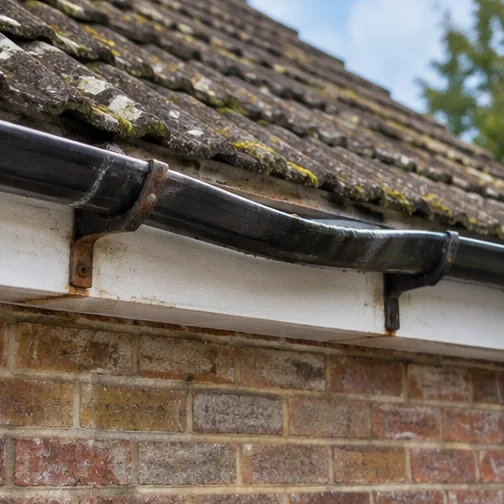
Illustrative photograph.
Information to share for a Hornsey property
| What you see | Detail to include | How it informs the enquiry |
|---|---|---|
| Spill close to an adjoining house | The nearest outlet, return and boundary | Helps establish which connected section to consider |
| Water on the extension roof | Whether it arrives from the gutter or an upper pipe | Shows how the roofs may feed into one another |
| Wet streak near a lower bend | Position of the nearest joint and the visible outlet at ground level | Helps locate the point where water becomes visible |
| Interior mark near a rear window | Date of first appearance and corresponding outside feature | Gives a reference for investigation |
Identify the end of the affected run
Haringey’s urban character study describes Hornsey’s late Victorian residential fabric and identifies conservation areas around Hornsey High Street and Hillfield Avenue. On a terraced frontage, a visible line of roof can extend across several addresses, while gutters and downpipes may be divided in ways that are hard to see from the road. If a spill appears close to a boundary, give its position in relation to the end wall, nearest bay and visible outlet. An occupier who has seen it in rain can often identify the first wet spot more accurately than a photograph of the dry wall.
A short length can finish beside a return or connect to another length behind a gable. Look from a safe angle to see whether the visible edge continues around the corner. If part of it disappears behind the next building or a projection, say so. A diagram of the route can help if the building manager already has one. Include any information about who is responsible for shared parts. The owner can agree the extent of work before the team arrives, particularly where reaching one end would involve access from another address.
Record what happens at the outlet
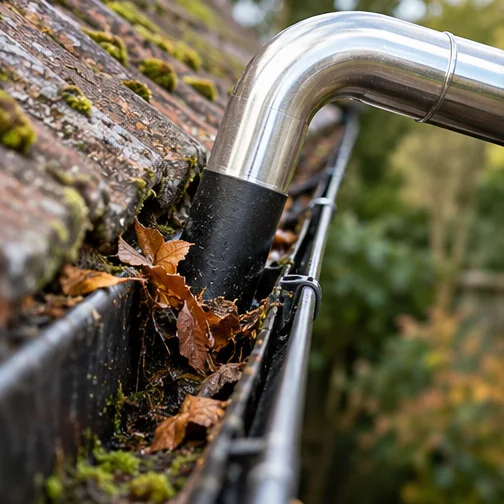
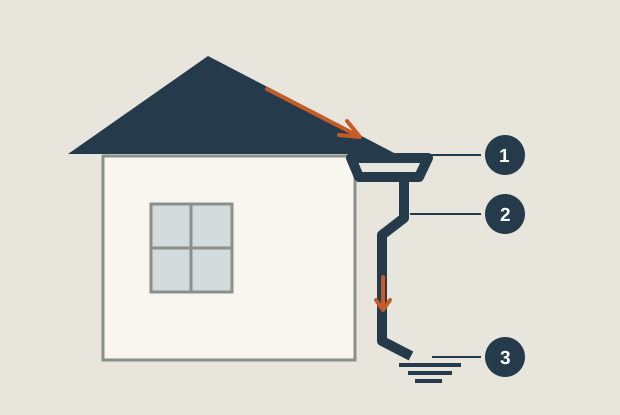
At a pipe with an open outlet to a gully, note whether water reaches the opening and whether the gully accepts it. Avoid the area if it is wet or slippery. Where the pipe goes directly into a cover or disappears into paving, explain where it ceases to be visible. A leak might sit at a joint above the ground even when there is no obvious spill from the channel. A photograph showing a pipe from the gutter to its base helps locate bends or fittings in the visible part of the route.
For gutter cleaning, we remove material from agreed accessible channels and openings. A ground-based vacuum and camera may be useful when there is a clear position and angle below the gutter. Debris can collect at an inlet while other parts look relatively empty. When we can see the area afterwards, we can describe any remaining visible concern, such as a joint under a low point or a displaced bracket. An enclosed bend, a pipe behind a wall or an underground connection may need another kind of inspection.
Consider both sides of the extension
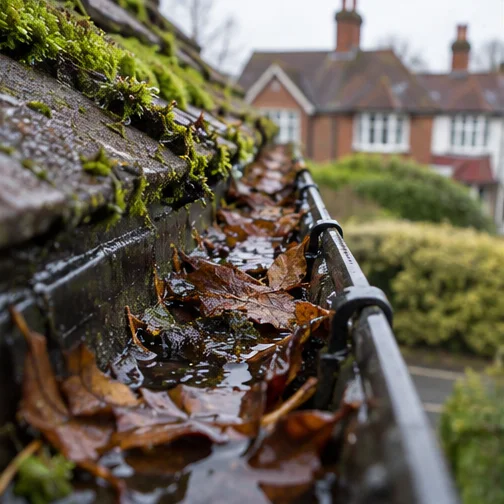
A rear projection on a house may have its own gutter and a higher one immediately above. When an upper pipe drops onto a lower roof, the discharge may run across the surface before it reaches the extension outlet. Tell us whether you see water fall from the upper edge or first notice the lower gutter filling. If the mark is beside a rear window, a full picture of the back of the property can show the location of both systems. A photo of the wet window alone cannot show which roof is feeding it.
At ground level, check whether the extension leaves a continuous path to the wall. A low roof may take up most of the space beneath the main gutter, with only a narrow strip beside a fence. Tell us if a side gate or rear route leads to that strip. If a route passes through a kitchen or common hallway, confirm who will admit us and whether it is suitable for the equipment. Access to the garden does not guarantee that every roof edge can be reached from it.
- Terrace returns and neighbouring gutters
- Upper and lower roof outlets
- Access beside rear extensions
- Visit records tied to the visible symptom
Choose a next step using the condition you can see
A gap at a connector and a length pulling away from the fascia can affect one another. If you notice a gap in dry weather, photograph it in the context of the adjacent supports and outlet. Guttering repairs may be appropriate where the surrounding material remains suitable and the fault can be addressed locally. If several fittings are failing or there are widespread alignment problems, ask about gutter replacement. Share any information about the existing materials and where one profile meets another.
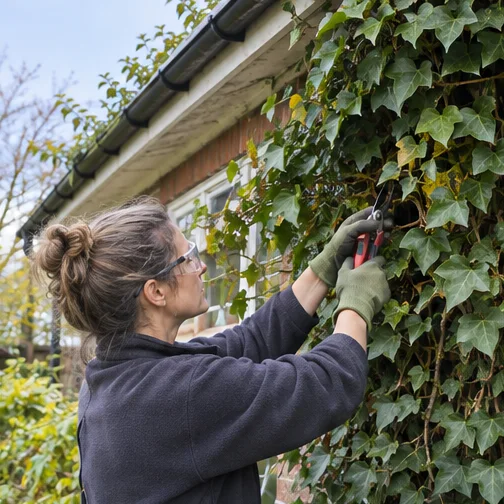
Lining depends on whether the current channel and its support are suitable, as well as how a liner could connect to the outlet. A proposal can account for the fittings that would remain. If ivy crosses the same length, describe whether stems cover a bracket, follow a pipe or pass behind the edge. The wall surface and the condition of covered fittings affect how ivy removal might be approached. For water damage repair, record what changed inside and when. A visible leak outside and a damp mark indoors can be related, but identifying the entry route may need a separate assessment.
Services for the building manager
Guttering repairs
Assess a local joint, bracket or alignment problem in the context of adjoining pieces.
Gutter cleaning
Clear agreed accessible channels and outlets on terrace frontages and rear projections.
Water damage repair
Compare the history of interior marks with visible runoff and outlet conditions.
Gutter replacement
Review profile compatibility where damaged lengths join different materials.
Gutter lining
Check supporting channel condition and outlet connection before discussing lining.
Ivy removal
Identify stems that cross supports or enter behind the roof edge.

Information to keep with the maintenance record
Agreeing the working approach
| Property setting | Access detail to give |
|---|---|
| Terrace with a shared passage | Identify gate keys, narrow turns and agreed boundaries |
| Rear projection beside a fence | Show the gap below the affected channel |
| High Street premises | Confirm how front and service entrances are used |
| Flats above a garden | Name who grants access and who authorises work on the gutter |
Give future reports a fixed reference
When the visit covers several elevations, the record can name each accessible section and identify visible points still under consideration. Use references that can be found again from outside the house, such as the right-hand end of the gutter above the kitchen window. If more than one resident or business is involved, give the record to the person responsible for the rainwater system. A named contact can compare new reports and ask someone with access for additional information.
For an issue that persists, record the timing of rain, the first wet point and whether there is visible discharge at the pipe. A note that the wall became wet after ten minutes gives more context than a statement that the gutter still leaks. You may find that one symptom has changed while another remains, such as a dry gutter edge and a drip at a lower pipe joint. Use separate photos or captions so the next person can work from both observations. Where the discharge disappears below paving, the earlier clearance record can show where observation was possible before a drainage assessment.
Questions about gutter cleaning in Hornsey
What if the gutter ends where it meets a neighbour’s roof?
Tell us where the nearest outlet and boundary are, and whether any shared responsibility has already been identified. We can discuss the part of the system covered by the instruction. Any access from the adjoining property should be arranged in advance.
Does water always fall straight down from the damaged part?
No. It can run along a roof edge or fitting before it drips. A full view and an account of the first wet point can help identify the feature to inspect. Note whether the drip starts beside a joint or follows a surface first.
Can you work from the narrow strip beside an extension?
That depends on the width, footing and line to the gutter. Send a photo along the strip and another towards the roof. If a projection obstructs the approach, a different access method may be required.
Can a cleaner tell whether a pipe under paving is blocked?
The accessible channel and visible fittings can be assessed as part of the agreed visit. A buried connection cannot usually be assessed from the gutter alone. If the route below paving is a concern, provide any records for a separate drainage investigation.
How do I know if the damp patch is getting worse?
Take dated pictures from the same position and note any changes after rain or after a dry period. Record which surface is affected and whether the edge of the mark moves. Share that account with the person arranging investigation.
Should I book both front and back for routine maintenance?
List each length you want considered and describe the approach on both sides. We can discuss which sections are reachable and how to include them. A rear extension or private garden may need an arrangement separate from the front.
Coverage and bookings
See the areas we cover. For nearby enquiries, see Crouch End and Wood Green and Harringay.