
Gutter Cleaning Newington Green
On a shop parade, water can run along the top of a sign and fall outside a different part of the frontage from where it began. A resident above may have a view of the upper fitting while the shopkeeper can see the point where it reaches the pavement. Glen’s provides gutter cleaning in Newington Green for accessible rainwater systems. Tell us where the water first shows and which door or passage gives access to the wall. If more than one person saw it, give the viewpoints separately.
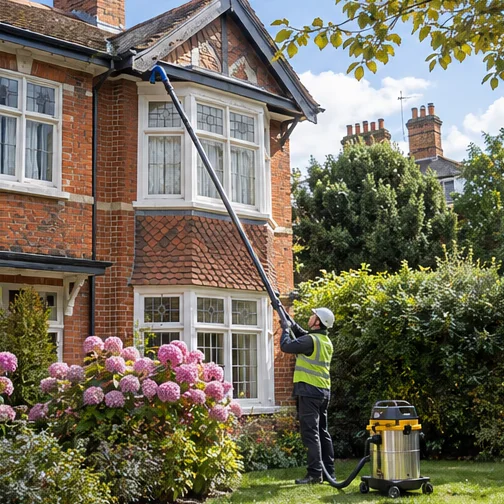
Illustrative photograph.
Check how the property is approached from behind
A street-level business may have a separate route for staff or deliveries. The route might lead to a rear door without providing access around a projecting extension. Describe which door we should use, who opens it and how the route continues to the wall. If a yard serves more than one unit, explain when people use it and which parts are shared. Send a photograph looking from the yard towards the gutter as well as a view of the door or gate. This shows the available position and any obstruction above it.
At a house divided into flats, a rear garden may be available only through a particular home. Arrange access with the occupier and give the name of the person who can authorise work on the roof. The two contacts may be different. Describe any steps, tight turn or low cover between the entrance and garden. A short gutter beside an extension may be lower than the main one but harder to reach because of a fence or projection. Give information about each side if the enquiry covers several lengths.
- Historic shopfronts and separate entrances
- Terrace boundaries and visible outlets
- Service doors and shared rear yards
- Follow-up by sign, window or fitting
Observe the outlet as well as the channel
A gutter can spill from a low corner when debris collects beside an outlet elsewhere along the run. Standing water may also be related to the channel fall or to a raised lip at a connector. During gutter cleaning we clear agreed accessible lengths and look at visible openings where the approach permits. A ground-based vacuum may be suitable if there is a clear line to the trough. A camera can sometimes show the corner or opening from a position below. A roof edge behind a screen or parapet may require another approach.
If you can safely see the bottom of the pipe, note whether it ends above a gully, bends into an extension or continues below paving. Water on the ground may arrive directly from the pipe or cross the yard from another surface. Watch for the point where it first becomes visible, and tell us if the upper gutter was spilling at the same time. A pipe that enters the building or disappears into the ground may need a separate drainage investigation. Any drawing or record of work in that area can help identify its route.
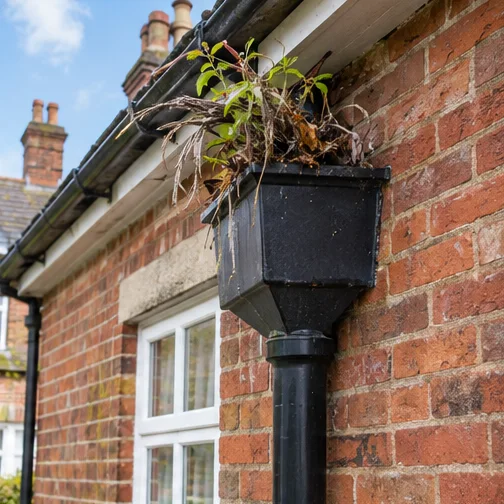
Find the first wet point on the frontage
Islington’s Newington Green conservation area statement describes historic shopfronts around the Green, Ferntower Road and Green Lanes. At a frontage with an upper floor, a projecting sign or cornice can catch runoff and move it sideways. If you saw rain falling past the entrance, describe whether it appeared at the front edge of the sign or above the wall behind it. A wide photograph showing the door, the upper windows and any visible pipe will help us place the report. Take it from a position that keeps you clear of traffic and falling water.
For a house facing the Green or a nearby residential street, use the front steps, bay or boundary as a reference. A line of gutters can look continuous from the pavement while individual runs are divided at a joint or change of roof level. Indicate the closest visible outlet and tell us if the flow crosses a lower roof before reaching the ground. If the affected part lies near a shared boundary, confirm which sections are covered by the instruction and who can provide any necessary access. An old report or drawing can help if it names the connection.
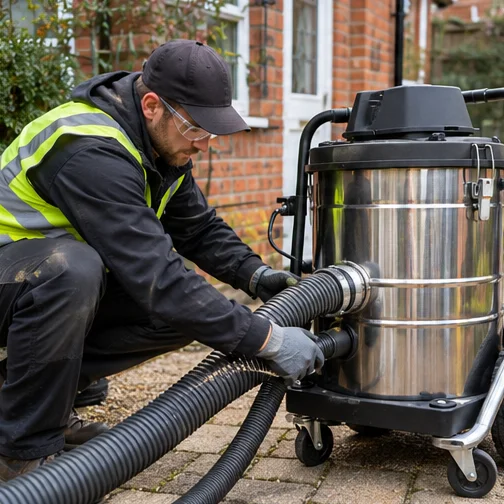
Work for other parts of the rainwater system
Gutter cleaning
Clear agreed accessible gutters and openings above shop parades, terraces and extensions.
Gutter replacement
Review profiles and discharge routes where several lengths require renewal.
Gutter lining
Consider the existing channel, supports and outlet connections before specifying lining.
Guttering repairs
Assess visible joints or supports in the context of the adjoining run.
Water damage repair
Compare the weather history and indoor observations with exterior runoff before follow-up.
Ivy removal
Review the route of stems around wall fittings and beneath edges.
Newington Green gutter observations to share
| Where the problem shows | Detail to send | Why it helps |
|---|---|---|
| Water passing a shop sign | Where water first meets the sign or cornice | Places the report relative to the roof and frontage |
| Overflow near a terrace boundary | Position of the nearest joint and outlet | Identifies the section of the run to consider |
| Puddling below an extension | Whether water reaches it from a pipe or roof edge | Helps separate possible routes across the yard |
| Interior stain near a window | Date, weather and closest exterior feature | Gives a location for further assessment |
Use earlier work to place a remaining defect
After loose material is removed, the visible problem might be a gap at a joint, a bracket that has moved or a fitting that no longer sits squarely against the wall. Guttering repairs can be assessed where the surrounding sections and supports are suitable. A photograph of a single fitting is more helpful when it includes the nearby outlet and the profile of the adjoining gutter. If there has been work around a sign or canopy, say whether it changed the way the gutter or pipe can be approached. Keep previous invoices if they name the relevant elevation.
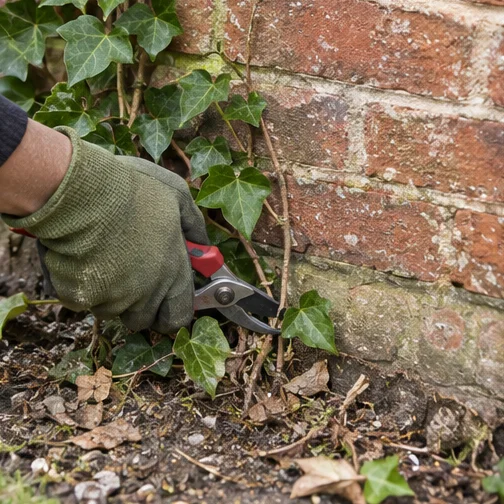
Gutter lining may be considered where the existing channel can support it and the shape and outlet connections are suitable. Replacement may deserve discussion if several lengths have deteriorated or the discharge route needs to change. For ivy removal, describe where stems cross a fitting or grow behind an edge and which surface they cover. That helps define the area to assess. Water damage repair depends on understanding where moisture entered and how it affected the material. An exterior leak can guide the search, while an indoor mark may require assessment of other possible routes.
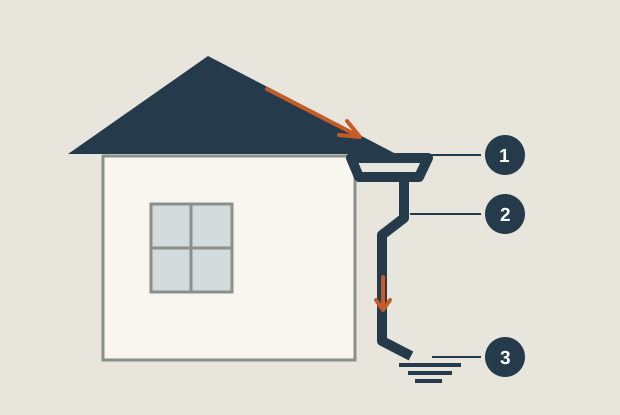
Keeping track of several independent runs
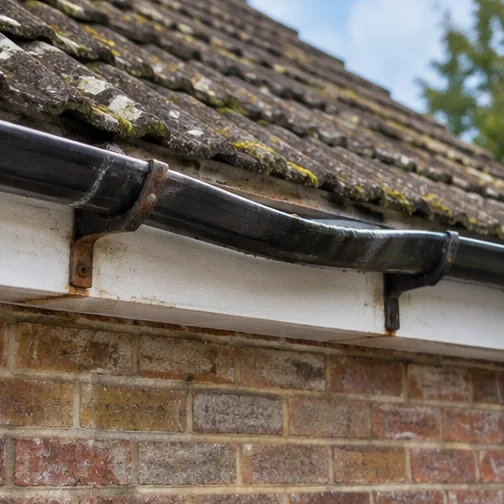
Keep the work record with the location of the concern
A visit record can refer to the outlet above the residential door, the short return beside the shop sign or the gutter above a garden extension. Specific references help someone who was not present locate what was reached. The record can describe the visible material removed, any fitting that requires another look and where access stopped. Tell us who should receive it. For premises with several occupiers, the person responsible for the roof can use it to gather new observations from the relevant door or window.
In the next rain, check whether the water first appears in the same place and note the length of time before it starts. If a shop entrance is dry but an upper connection is still dripping, record the two locations separately. If the concern is an inside mark, write down when it changes and describe the nearest outside wall or fitting. The person organising follow-up can use these details to decide whether another inspection concerns the gutter, a visible pipe connection or a different part of the building.
Questions about gutter cleaning in Newington Green
Can I report a leak by naming the shop below it?
Yes. Add the relevant door, sign or upstairs window so we can identify the position within the frontage. If the leak is near a boundary, show the nearest outlet and where the water first falls.
What if the shop awning hides the gutter from view?
Send a picture that shows both the awning and the upper elevation. Tell us whether the awning can be moved and who controls it. The angle and space below the gutter affect what can be seen or reached.
Can you include a gutter on the far side of a shared yard?
It depends on the agreed work, permission and working position. Give the route to that side and tell us who controls the yard. Describe any extension, cover or boundary that affects the approach.
Why might water drip near an outlet after the leaves have been cleared?
A nearby fitting may leak or the alignment may keep water against a joint. A concealed part of the pipe can also need inspection. Note whether the water passes over the gutter edge or appears below the connection.
Does a damp mark inside establish which pipe is leaking?
An indoor mark gives a position for investigation. Describe when it appears and show the corresponding wall or roof area outside if possible. Several routes may need consideration before the entry point is known.
Can an agent use photographs supplied by two occupiers?
Yes. Ask each occupier to name the door or window they used as a reference and give the time of the observation. The two pictures can show different parts of the same route or help identify two separate concerns.
Arrangements to confirm before booking
| Access setting | Practical information |
|---|---|
| Shop and flats with separate entrances | Name the contact for the agreed route and describe both doors |
| Shared rear yard | Explain deliveries, key access and any areas in regular use |
| Garden used by one occupier | Confirm permission and the route through the property |
| Frontage with a bay or steps | Show the available position below the affected gutter |
Coverage and bookings
See the areas we cover. For nearby enquiries, see Canonbury and Stoke Newington and Highbury.