
Gutter Cleaning Wood Green
An entrance below a long roofline can get wet even when the nearest gutter outlet looks clear. Rain may have crossed an awning or a ledge before it reaches the doorway. Glen’s provides gutter cleaning in Wood Green for accessible rainwater systems. Tell us where water first appears and describe the route to the affected wall. For a business or managed building, give the contact who can confirm how the team will enter and who can identify the relevant roof edge.
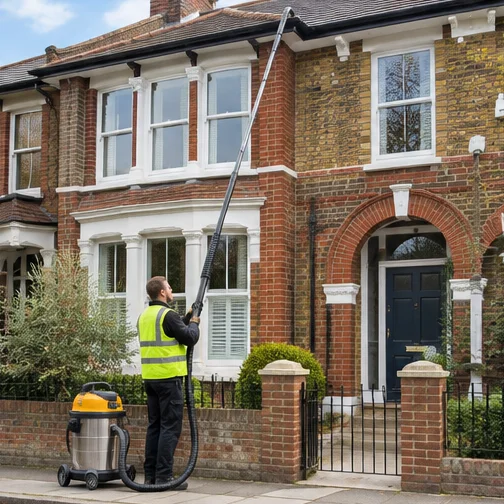
Illustrative photograph.
Match the roof section to the entrance
Haringey’s urban character study describes the High Road as the main route through Wood Green, with an urban centre and lower-density areas further north. For a property on or near the High Road, give the exact entrance where water falls and show the upper floors in relation to it. A building may have a retail door at the front and a separate entrance serving flats or offices. If a pipe runs near the corner, include a view of the adjoining elevation. A gutter can change direction or discharge around the corner rather than directly over the affected entrance.
A canopy or sign can take water across a frontage. Tell us where it first reaches the cover and where it leaves the edge. If a tenant can see the gutter from above, compare their account with what staff saw below. The two reports may describe the same flow at different points. If one person saw an overflow on the side while another reports a wet step at the front, give the time and location of both events. A dry-weather photograph of the full frontage can be used to locate them later.
Record the work by location and access route
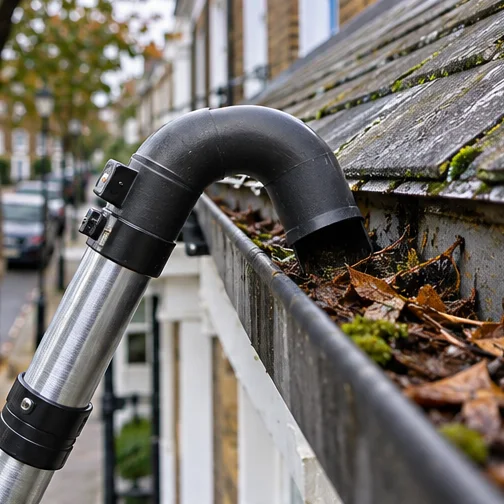
A clearance record can name the particular part of the roof, describe the material removed and identify any visible issue still requiring attention. Use a stable reference such as the hopper above the stair door or the gutter beside the rear delivery gate. Business names and signs can change. A fixed part of the building can still be found by the next tenant or agent. Confirm who needs to receive the record and who can arrange access if a separate visit is required.
When the original symptom returns, note the first wet point and the time after rain began. If water no longer crosses the entrance but appears at a pipe joint lower down, record that location separately. The same applies if an interior stain develops in a room on a different elevation. Include a dated photograph from a safe position where possible. The owner or manager can then refer the observation to the appropriate person, with the earlier clearance record showing where the accessible inspection stopped.
Follow the service route before booking
A rear yard can be reached by a separate door, a shared route or through a unit. Name the way that has been agreed and say who controls it. A route may look open on a map but have a locked gate or a narrow turn around an extension. Tell us whether vehicles or deliveries use the same space and when the yard needs to remain clear. A photograph showing the approach from the yard back to the gate can help us understand how the equipment would be brought in.
At a house, the approach can be just as important. A side gate may lead to a narrow path between a fence and a conservatory. The path may open onto a garden without providing a direct line to the gutter. Send one view of the side approach and one of the whole affected elevation. If the property has different ground levels at the front and back, describe the height from each side. We can then discuss whether the front and rear lengths can be considered together or need different arrangements.
- High Road entrances and canopies
- Service yards and gated access
- Roof-to-gully observations
- Records that survive tenancy changes
Confirming access at the front or rear
| Location | What to agree |
|---|---|
| High Road frontage | Use of entrances, awnings and available working space |
| Yard approached from a service route | Key holder, delivery use and width at the entrance |
| Garden behind a house | Route past any conservatory, fence or steps |
| Flats with a separate stair door | Who can admit the team and who instructs work on the roof |
Identify the last point where water can be seen
An upper gutter might discharge through a visible hopper, or its outlet may be hidden behind a raised roof edge. Where you can see a hopper, say whether water first appears at its lip, down the back or near a connection below. If the pipe passes behind a sign or into a lower roof, describe where the exposed section ends. A low extension may receive water from above and have a separate route to ground level. A wide image can show how the pipe and both roof levels fit together.
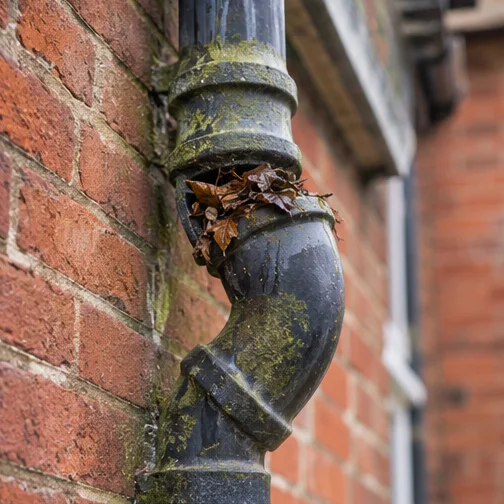
Gutter cleaning removes material from agreed accessible runs and visible openings. A ground-based vacuum can be practical where the roof edge can be reached from a suitable position. A camera can sometimes show a restriction around the outlet. If the accessible channel clears but water still gathers beside the foot of the pipe, note whether a gully is visible or the pipe passes below paving. That section may need a separate inspection. Previous records can help identify where an enclosed route was expected to discharge.
Separate work at the premises
Gutter cleaning
Clear agreed accessible channels above High Road frontages and domestic extensions.
Ivy removal
Assess stems where they enter behind a fitting or cross onto another wall.
Guttering repairs
Check a visible local defect against the fall and surrounding components.
Water damage repair
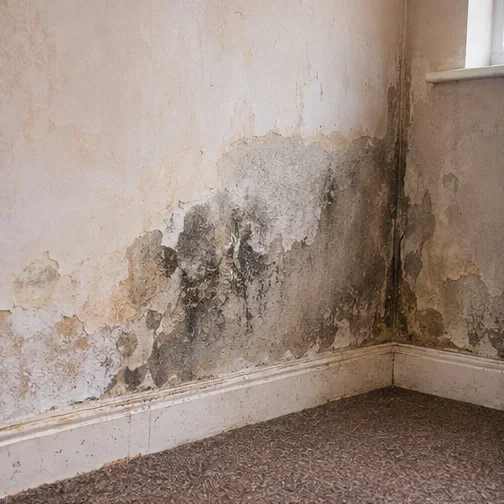
Use the timing and location of indoor marks to investigate possible routes of water entry.
Gutter replacement
Review the extent of worn lengths and fittings before proposing replacement.
Gutter lining
Assess outlet design and support before discussing lining for an existing channel.
Wood Green observations that identify the gutter
| Visible issue | Detail to send | What it helps establish |
|---|---|---|
| Drops crossing a sign or canopy | Point where water first strikes the cover | Relates the symptom to the upper elevation |
| Overflow near a corner | Which roof edge wets first and the nearest pipe | Shows whether the return may be involved |
| Water around a gully | Whether the pipe or surface of the yard feeds it | Identifies the lowest visible point of flow |
| Stain inside an upper room | Which outside wall is nearest and when it appears | Gives a reference for further investigation |
Assess the surrounding run before changing a component
A visible joint may drip once the gutter carries water again. If there is a displaced bracket nearby or the channel holds water beside the joint, the position of the surrounding run may also need assessment. Guttering repairs can be considered where a defect is local and the adjoining pieces and fixing surface remain suitable. Share any previous invoice that identifies a changed seam or outlet. A change in profile from an original roof to a newer section can affect which fitting is appropriate.
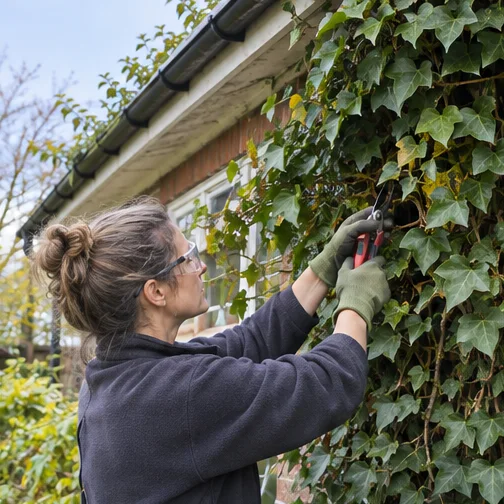
Lining can be considered where the existing channel can support the liner and the corners and outlet connections are suitable. Gutter replacement may be a more appropriate discussion if several parts have deteriorated or the route is unsuitable. If there is ivy around a fitting, show where the stems grow behind it and whether the same growth reaches another property. Ivy removal depends on the surfaces and fixings involved. Water damage repair starts with assessing the affected material and finding the path by which moisture arrived. Provide a record of any changes to interior marks after rain.
What helps when several people report the leak
Coverage and bookings
See the areas we cover. For nearby enquiries, see Bounds Green and Hornsey and Tottenham.
Questions about gutter cleaning in Wood Green
Can you use a service lane if the front is busy?
The service lane may give access to the rear or side gutters. Tell us which roof edge it reaches and whether the gate and yard can be used. The front may still need its own working position.
What if a gutter is set back behind a sign?
Give us a photograph that shows the sign, upper floors and outlet if visible. Tell us whether the sign or canopy is fixed. The equipment angle and available space affect whether the gutter can be reached.
How can a shop and the flats above report the same leak?
Ask each occupier to note their first visible wet point and the time. Include the position of their door or window. The accounts may help trace where water starts and where it finally lands.
Can a full gully make the gutter overflow?
It depends on how the gutter, pipe and gully connect. Record whether the pipe discharges above the gully or goes into the ground and where water becomes visible first. The lower connection may need a separate drainage assessment.
Do you need to know the material before cleaning?
You can begin with photographs and a description of the approach. Material and profile become especially useful if a seam, bracket or other fitting needs work. Send any records you have of previous changes.
What if the stain remains after the visible overflow stops?
Keep a dated photograph and record whether new wetting appears during the next rain. If a mark indoors grows or changes, explain its location and timing. Further investigation can compare it with the outside observations.