
Gutter Cleaning Morden
If rain from a gutter in Morden lands in a planted border, the first visible sign may be a patch of displaced soil or a wet strip against the wall. The border can also make the roof edge difficult to approach. Glen’s clears accessible gutters and checks reachable downpipe openings. Send your full postcode and a picture showing the roof edge, planted area and nearest paved surface so we can assess which lengths are reachable.
Mark where water first lands, especially if it falls close to an airbrick, window or door. If the gutter is on the side of the house, show where the bed begins and where the path next to it leads. Tell us about other roof edges you want included, even if there are no visible signs of overflow there.

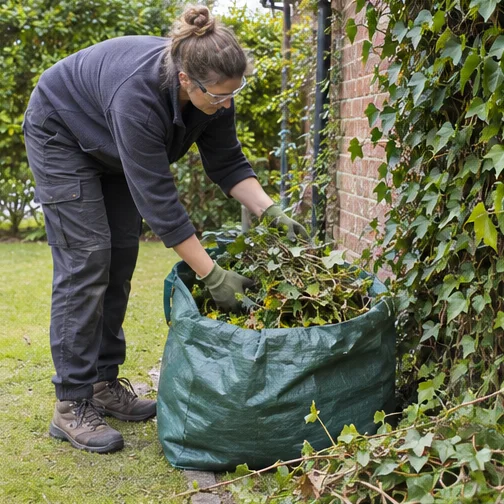
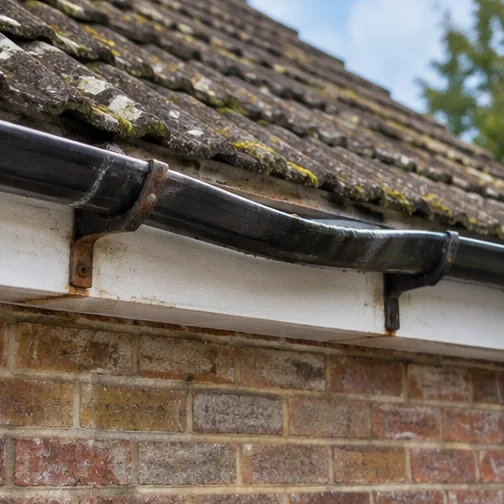
Illustrative photograph.
Locate the drip above the disturbed soil
After rain, take a wide photograph of the wall above the disturbed area. A small patch of bare soil can sit directly below a leaking gutter union, but it can also be where water leaves the lower end of a window ledge. Look for a wet mark higher on the wall and use a fixed point to connect it to the photograph of the ground. If several patches are visible, record which one appears first during a shower.
A short recording taken from indoors can show whether drops fall straight from the gutter or strike a lower edge before reaching the garden. Send a daylight image of the same roof edge so we can locate the nearest downpipe and supports. These details help us decide which accessible lengths to consider for gutter cleaning and whether the affected area can be approached from a paved position.
Describe the ground between the path and wall
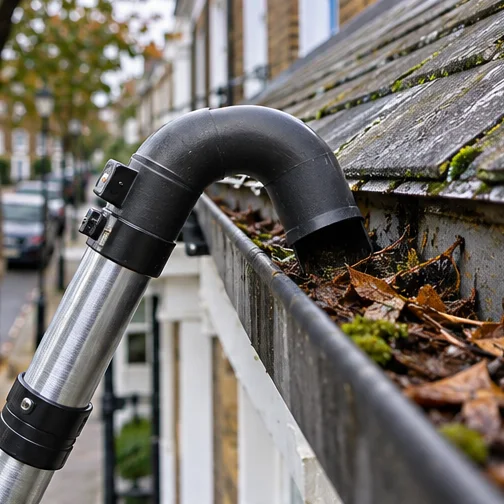
Photograph the width of the bed and the surface immediately beside it. A paved path can sit a considerable distance from the wall if a border runs along the whole elevation. Include raised edging, changes in level and fixed supports for plants. If the border ends near one corner of the house, show the space available there. Mention any small cover or surface that shifts underfoot.
If a hedge blocks the view from the path, show how high it reaches in relation to the gutter and whether there is another approach from the far end. Let us know which objects can move and which plants or fixtures need to stay where they are. Where a side gate gives access to a patio behind the border, show how the route bends and tell us who can open it. A usable route to the rear may offer a better view of the gutter and outlet.
- Match disturbed soil to the first visible drip
- Show the width of planting beside the wall
- Photograph growth where it reaches a fitting
- Check what is visible below the downpipe
Check whether plant growth has reached a fitting
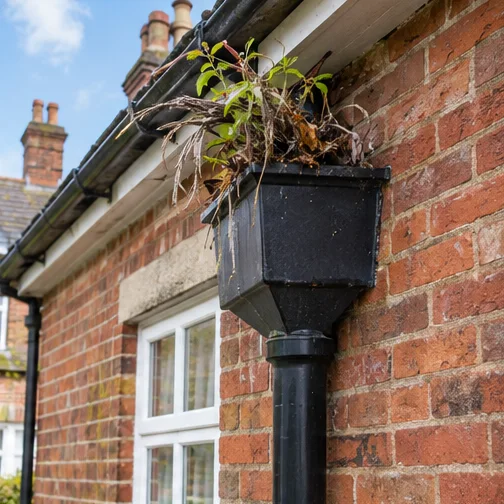
Look from ground level for stems crossing the wall, entering a gutter edge or wrapping around a pipe clip. Take a picture showing where the growth starts and which fitting it reaches. Growth from a nearby fence can run behind a pipe before it becomes visible at the top. A close view of the leaves alone may leave it unclear where the plant connects to the wall or whether it occupies the outlet.
If you want to discuss ivy removal, give the height and extent of the visible growth and show any gutter or pipe affected. It helps to know whether the growth is confined to a low wall or continues above a porch or extension. We can discuss what can be assessed from the available approach. If earlier pruning exposed a loose support, tell us where the support sits and send a picture of the surrounding fittings.
What to send for a Morden enquiry
| Detail | What helps us plan |
|---|---|
| Planted border | Width, raised edging and the nearest usable surface |
| Affected gutter | Wide view showing the roof edge and location of the first spill |
| Pipe or outlet | Where it is obscured by plants and where it discharges |
| Access | Gate, path, fixed structures and any area that can be made available |
Identify what the downpipe discharges into
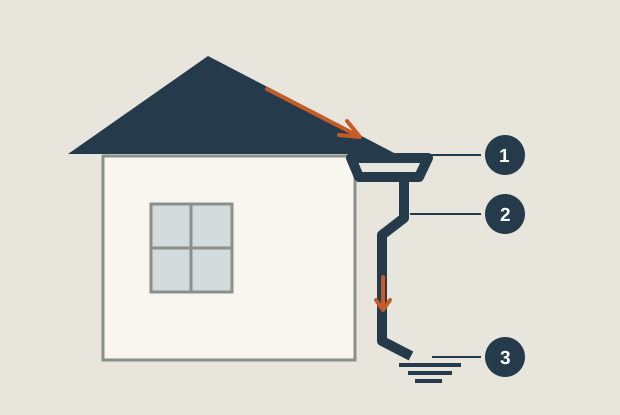
Follow the visible pipe down from the gutter. If it ends behind plants, show the last visible joint and the area around it. It may empty above a gully, pass below a border or continue into an enclosed connection. Take a second view if the route can be seen from the other end of the path. If another pipe uses the same gully, include both.
During rain, note whether water appears at the pipe base before the gutter begins to spill. If water runs out of a border towards the house, record where it first crosses onto the paving. We can check reachable downpipe openings during the agreed clearance. A restriction in an enclosed or underground section may require separate investigation. Tell us where the pipe goes out of view and what you can see without moving a cover or disturbing the planting.
Work we can discuss after clearance
Gutter cleaning
Clear the reachable gutter lengths agreed for the available garden or paved access.
Guttering repairs
Assess a reachable loose fitting above the marked patch of disturbed soil.
Gutter lining
Assess the channel and discharge before considering lining above a planted border.
Gutter replacement
Consider where new gutter lengths would discharge without directing water into the border.
Ivy removal
Review where stems have reached the gutter edge, outlet or pipe clip.
Water damage repair
Compare fresh indoor wetting with the position of the pipe, border and external soil level.
Document visible defects and fresh damp
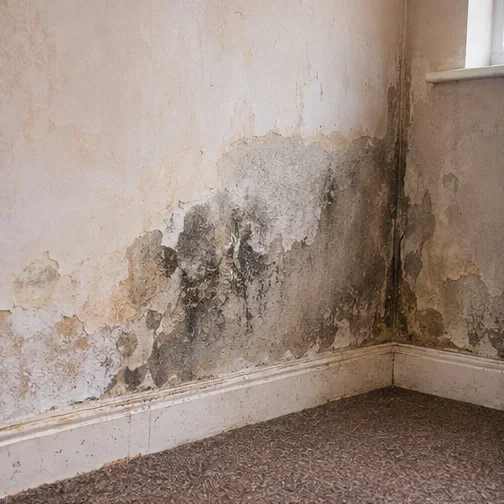
After an accessible gutter is cleared, we can report visible defects such as a displaced joint or a loose stop end. Photograph the fitting and the nearest supports if they are visible from a safe position. For guttering repairs, give the position relative to the border and identify the most practical approach. A later visit may need a different working position if the fault sits above a planted area that cannot be reached directly.
If moisture appears inside, mark the first fresh patch and give its height relative to the floor or nearest opening. An exterior view should show the matching position, the nearby pipe and the level of the soil. For a water damage repair enquiry, share any dates when the damp returned and say if the gutter had already been cleared. Mention changes to edging, paving or soil levels if they affected the path water takes near the wall.
Signs to observe near a border
| Sign | What to record |
|---|---|
| Soil splashes up the wall | Where the first drops land and what is above the spot |
| Water emerges beside a pipe base | Whether it leaves a visible joint or rises from below |
| Stems cross the gutter edge | Where the plant starts and which fitting it reaches |
| Damp begins beside an opening | Its height and the position of the soil and outlets outside |
Before we assess the roof edge
A row of fixed containers can hide the point where a pipe reaches the ground. If there is a gap at either end, take a picture along the wall from there. Tell us whether the containers were added before or after the wet patch appeared. This helps establish whether the discharge has been obscured or whether water is reaching the border from another direction.
Morden gutter cleaning FAQs
Can you assess a gutter above a wide flower bed?
Yes. Send pictures of the bed, nearest paved surface and roof height. If there is a clearer approach from the end of the house, show that as well.
Do I need to move plants before the visit?
Tell us what can move and what needs to stay. Pictures of the existing layout help us assess whether there is a suitable working position without disturbing the bed.
Can you check a pipe that disappears behind a hedge?
Send a view of the visible pipe and the point where it goes out of sight. We can discuss which openings are reachable and whether another approach is available.
What if water gathers below a window?
Note where it appears first and whether it drops from above or travels across the ground. Show the nearest gutter and any outlet or gully close to the window.
Can you include the garage or porch gutter?
Yes, where access is suitable. Show the separate roof edge and outlet, and tell us whether the upper roof also discharges onto it.
What if the soil dries before I can take a photograph?
Mark where the water landed and show the roof edge and wall above it. Give the time and date you last saw the spill and describe what the rain was doing.
Coverage and bookings
See the areas we cover. For nearby enquiries, see Colliers Wood and South Wimbledon.