
Gutter Cleaning South Wimbledon
When water drops onto a South Wimbledon entrance, show us which door is affected and where the first drops appear above it. A shop awning, house canopy or projecting sign can catch rainwater from a gutter higher up and release it at a different point. Glen’s clears accessible gutters and checks reachable downpipe openings. We review the photographs and available access before agreeing which lengths can be included.
Send the full postcode and say whether the doorway serves a shop, a flat, a house or a shared part of the building. If several entrances use the same street number, describe which one is affected and which one we should use. A wide view of the frontage will help us place the detail shown in any video.
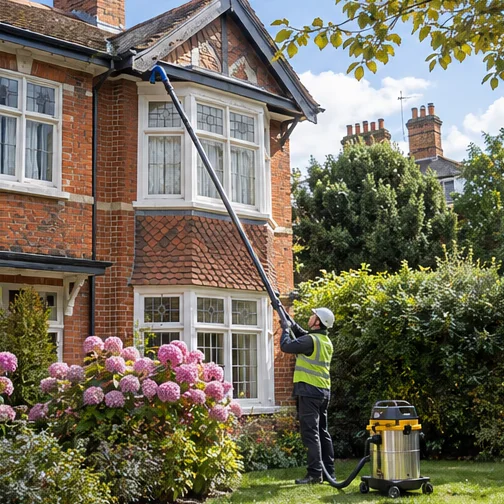
Illustrative photograph.
Arrange access around the people using the doorway
Find out when the entrance is busiest and whether there is another usable door. If the front serves both customers and residents, check who can agree the access arrangements for each. Let us know if a security shutter, outward-opening door or movable sign normally occupies the pavement or entrance recess. Take a photograph showing the space as it will be during the proposed visit.
If there is a separate rear entrance, give its location and confirm whether we can reach the affected wall from it. A rear entrance can open into a yard with no route around to the front. Conversely, a shared side passage can provide a useful approach to a pipe that cannot be reached directly from the street. Give details of the keyholder, opening hours and any vehicle route through the same area. We can assess the working position and discuss what access will be needed.
- Identify the first surface that gets wet above the doorway
- Confirm who can make the entrance available
- Check how the canopy drains before specifying the scope
- Match indoor wetting to the outside doorway and paving
Show whether the awning or canopy has its own drainage
Some lower roofs or awnings have a channel along the front or a small outlet to one side. Others shed water directly off the outer edge. Photograph the complete lower edge and the wall behind it. If there is a small downpipe, show where it ends and whether it joins the main pipe. Include any upper outlet that drops water onto the lower surface.
Check whether water reaches the canopy from the upper roof only in heavy rain or whether it runs there each time. Water can appear at a lower corner far from where it first reaches the roof. If the main pipe continues behind a sign or awning, photograph the visible sections above and below. We can check reachable openings as agreed for the visit. A connection hidden by cladding or below paving may need further assessment.
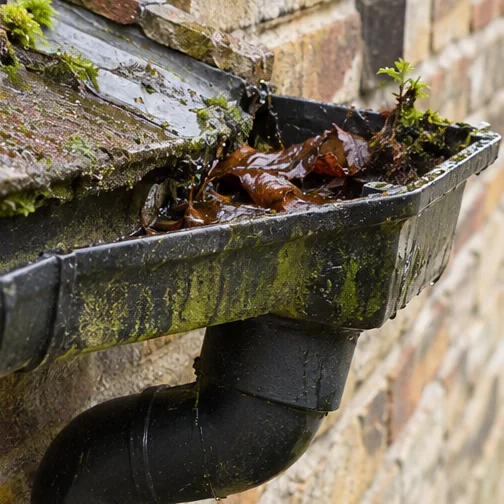
Watch which surface gets wet first
From inside or another sheltered position, note whether the drops leave the gutter edge, the underside of an awning or a pipe along the wall. If water lands on a sign before reaching the pavement, show the sign and the fitting above it. A short recording can show where the water changes direction. Include the position of the nearest door so the recording can be matched to a wider photograph.
If the entrance stays wet after rain, note how long it continues to drip. An awning can release water collected in a fold or low point, while a seam on a gutter may drip whenever water passes it. Look at the fittings from ground level after the rain has stopped and show the upper roof edge as well as the lower surface. We can use both views to discuss which accessible runs to cover for gutter cleaning.
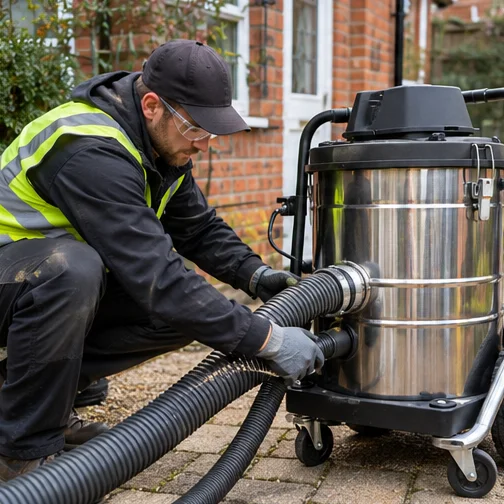
Work for other parts of the rainwater system
Gutter cleaning
Clear the agreed accessible roof and canopy gutters.
Gutter replacement
Review new lengths and connections around an existing awning or sign.
Gutter lining
Assess a canopy channel and the outlet feeding its pipe before discussing lining.
Guttering repairs
Assess a visible loose fitting, union or stop end over the entrance.
Water damage repair
Review the visible route from the upper roof to a wet doorway or indoor surface.
Ivy removal
Check whether ivy behind an awning or on a rear wall has reached a pipe.
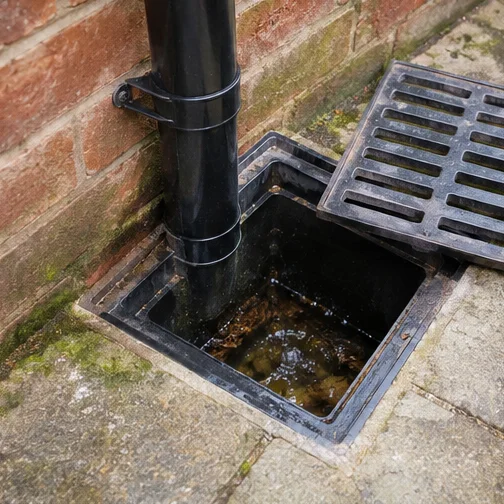
What to send for a South Wimbledon visit
| Detail | Useful evidence |
|---|---|
| Entrance | Door number or trading name and a wide view of the frontage |
| Upper and lower edges | The main gutter, awning or canopy and any visible outlets |
| Working approach | Who uses the entrance, when it must be available and any alternative route |
| Pipe base | Where the pipe ends and which other surfaces drain nearby |
Locate a suspected fault relative to the entrance
If you think a union or stop end is leaking, show where it sits in relation to the wall and the nearest support. A close photograph of a displaced fitting helps when it is accompanied by a wider image showing the lengths it connects. After reachable material has been removed, we can describe any visible damage and discuss guttering repairs separately. If the reported symptom comes from below a sign, include the fitting above it as well.
For gutter replacement, tell us which lengths are being considered and where they currently discharge. Show whether the lower channel or pipe has to stay in service for another part of the building. If new signage, a canopy or a door is planned, share the proposed position. A change to the frontage can affect working space, the support for an outlet and the route the pipe takes.
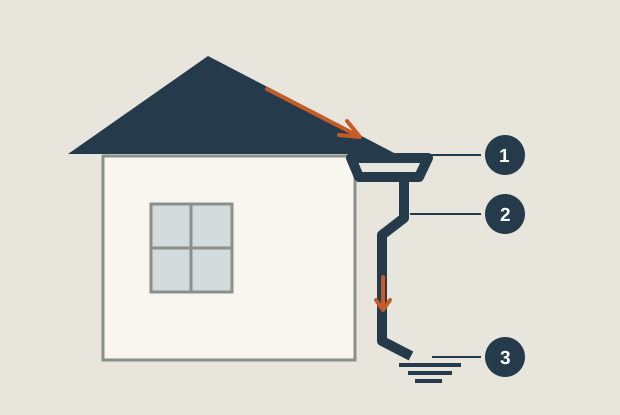
Keeping track of several independent runs
A retractable awning can expose the upper wall when folded and hide the lower edge when open. Tell us which position it normally occupies when water spills and whether the person on site can move it during the visit. A photograph in each position, taken from the same point, can help us see what changes in the approach and where water can reach the doorway.
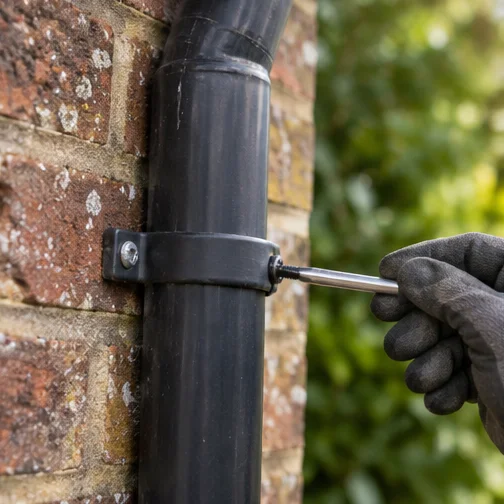
Keep evidence of indoor wetting with the exterior report
If water enters the building, photograph the first wet mark and identify the nearest corner of the doorway or window. Say whether the water arrives above the frame or crosses the threshold. An outside picture should show the ground level and any gully near the entrance. Where a pipe discharges close to the door, capture how it meets the paving and whether another outlet enters the same area.
For a water damage repair enquiry, include the date and conditions of the last fresh wetting. Tell us if the gutter, awning or doorway was worked on recently and give the part that was changed. If a separate person manages the upper roof, share the record and the access contact. The occupier who saw the water can use the door or sign as a reference when speaking to the person who arranges maintenance.
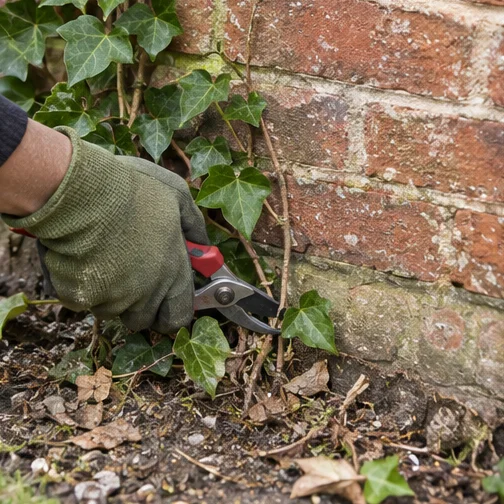
South Wimbledon gutter cleaning FAQs
Can you check the main gutter above a shop awning?
We can assess it if there is suitable access. Send the whole frontage, the awning depth and a view of the area below. Tell us when the doorway needs to remain in use.
Can you include a small canopy gutter at a house?
Yes, where it is reachable. Show its edge and outlet and tell us whether the upper roof also drains towards it. We can agree which lengths are covered.
What if the upper flat and shop use separate entrances?
Give both references and say who can open the route to the affected wall. A marked picture will help the site contact show us the right roof edge.
Can you check a pipe concealed by a sign?
Show the visible sections on either side. We can discuss which openings can be reached. An enclosed part may need separate access to establish what is happening there.
What if the gutter has already been cleared?
Send the earlier work record and show where the fresh drip begins. It helps to know which outlets and roof levels were reached and what has happened since.
Should I take a picture while the entrance is busy?
A picture from a quiet moment is suitable if it shows the space and fixed features. Tell us how people use the entrance and when a suitable working area could be available.
Observations at the entrance during rain
| What you see | What to record |
|---|---|
| Drops fall off the outer edge of an awning | The point where water first lands on it |
| A streak runs down behind a sign | Any upper outlet, joint or pipe visible above the sign |
| Water reaches the threshold across the pavement | Where the flow begins and the nearest visible gully |
| A damp mark forms above the door | Its height and the position of the roof and pipe outside |
Coverage and bookings
See the areas we cover. For nearby enquiries, see Colliers Wood and Wimbledon Park.