
Gutter Cleaning Soho
We clear accessible gutters in Soho and check reachable downpipe openings. If water is falling into a court or narrow passage behind a business or flat, tell us where the gutter sits and how that space is reached. The door you use at the front may lead to a different part of the building. We can discuss the right working position once we know where the water first appears.
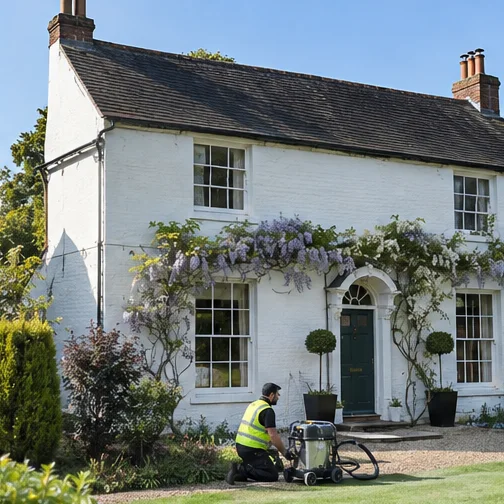
Illustrative photograph.
Trace the report to a particular wall or roof edge
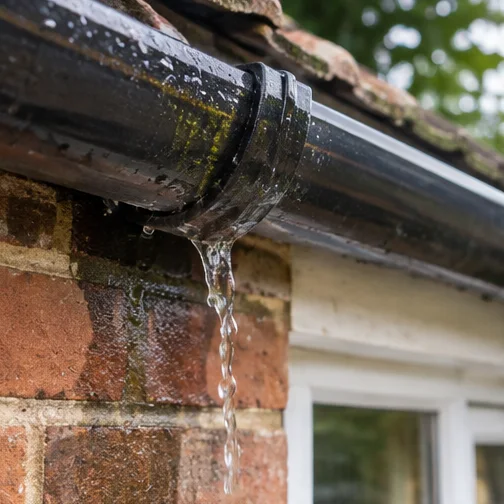
Westminster’s Soho and Chinatown conservation area audit describes narrow streets, courts and alleys with homes and businesses close together. If a report comes from a room that overlooks a small court, give us the address and which side of the court the gutter faces. A shop or flat on the main street may be served by a run at the rear. The point where you see water may also be under a different roof from the one that feeds it. A wide picture showing the gutter edge and the ground can help us identify it. Include a door or corner that can still be recognised after the rain stops.
Where a lower roof sits between the wall and the yard, tell us if the water drops onto it or comes from its own gutter. A narrow view of the wet patch may not show the difference. Ask the person who first saw the leak whether it started above their window or close to an accessible pipe opening. We can use that description to discuss which part should be checked. If there are several occupiers at the premises, identify the unit or entrance that relates to the report. The street and building number are useful, but they may not identify the affected section by themselves.
Confirm when the passage can be used
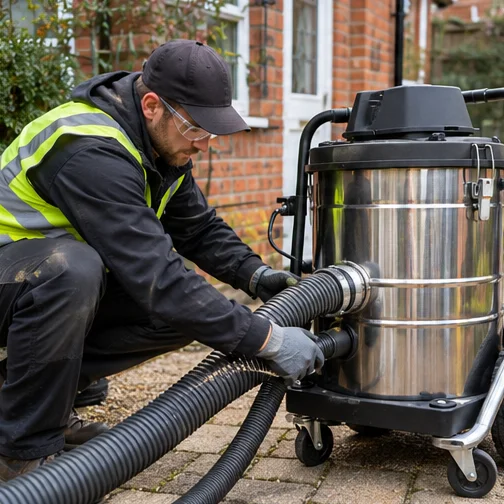
Tell us what happens in the space below the gutter and who controls it. A route may be open for staff or residents but unsuitable for setting up while it is being used for deliveries or other work. Describe the usable ground and what must remain open. If the route has a sharp turn or several doors, say how the equipment would get through. On reachable runs we use a collection drum and reach poles, so the route to the position and the position itself both matter. A short alley that has enough width to walk through can still be restricted for the equipment.
If the person reporting the issue cannot arrange access, give us a separate keyholder or premises contact. For a building with a business below and flats above, confirm who can agree use of the rear. If the front gutter can be reached from another position, tell us whether that needs to be part of the booking. We can discuss what can be done from each approach. An available appointment time does not settle whether the affected gutter is reachable, so give us the access details before agreeing the included lengths.
- Give the court or passage name as well as the address.
- Show the lower roof if it sits between the gutter and yard.
- Confirm who can open the route through the premises.
- Tell us what needs to remain available during the work.
Clear the run and check whether the accessible outlet is obstructed
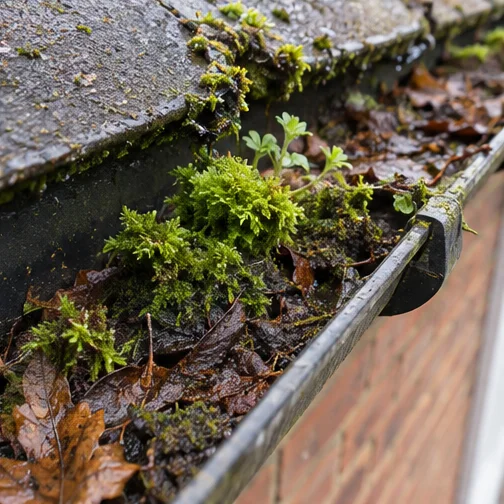
We confirm the run agreed and look for the point where it empties. On a suitable gutter we use reach poles and a vacuum to remove accessible leaves, moss and compacted debris. We work along the channel and check the accessible opening into the downpipe. Material can build up where the gutter turns at a corner or where water enters a small outlet. If another roof drains onto it, we consider what can be seen of that connection and which parts were included. We remove what can be reached and tell you where the check stopped if the pipe passes out of view.
Ask about a camera view if the gutter is hidden from below. The working position and the reach determine what can be seen. A camera may show debris around the outlet, but it does not establish what is happening in a pipe beyond the visible opening. If there is still a sign of a restriction after the reachable material is removed, we describe what we found and which part may need another assessment. See our gutter cleaning service for the equipment and typical limits of clearance. If you have already had one roof cleared, identify it so the new enquiry concerns the right length.
Locate the gutter in a narrow rear space
| What was seen | Accessible check | Useful detail |
|---|---|---|
| Water falls into a rear court | Roof edge and outlet above it | Side of the court and nearest door |
| A lower roof becomes wet first | Discharge from the higher run and its own gutter | Where water first touches the roof |
| Drip remains at a seam | Visible joint and surrounding fittings | Which run has already been cleared |
Consider separate work if water still escapes
If an accessible seam or support looks damaged after the gutter is clear, we can discuss repairing the fitting. If a length is beyond a suitable repair, we consider where a replacement would join the adjoining gutter or outlet. A concealed but supported channel whose surface has failed may be suitable for lining after an assessment. A rear gutter can have a different profile from the frontage, so we describe the visible part before agreeing what work is appropriate.
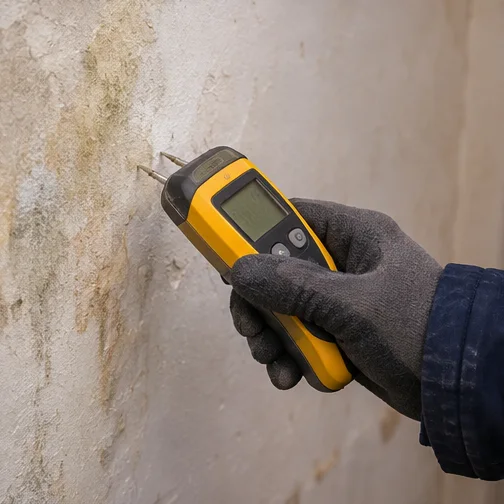
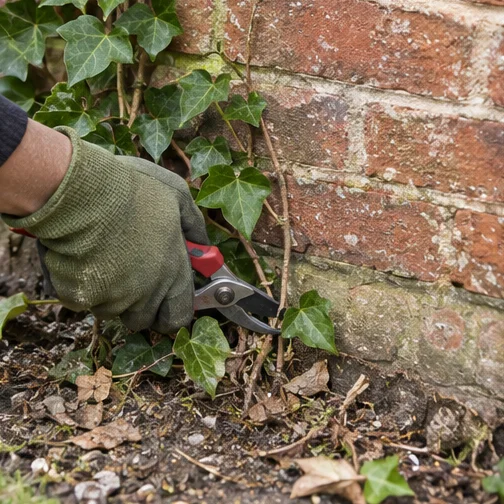
If ivy obscures the joint or covers the wall near an opening, tell us where it starts and what you need to see. We can discuss cutting back growth where access allows. If moisture has reached the inside of the building, identify the room and surface and say when you first saw it. We discuss water damage repair separately from clearing the outside channel. A mark in a business below and a report of overflow above may concern the same roof, but the visible route still needs to be checked.
Work we can discuss after clearance
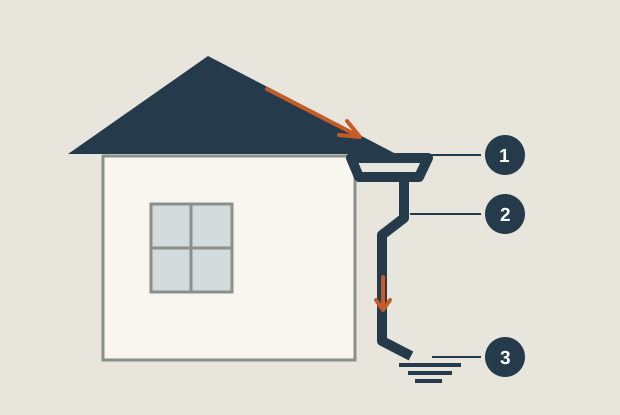
Gutter cleaning
We clear reachable lengths on the agreed frontage or court and check their accessible openings.
Guttering repairs
We can assess a reachable seam or support that still shows a visible fault.
Gutter lining
We look at the condition and exit of a supported hidden channel before discussing lining.
Gutter replacement
We consider the adjoining profile and outlet when discussing replacement.
Ivy removal
We discuss taking growth back where it prevents access to a relevant pipe.
Water damage repair
Tell us which room or finish became wet and where it sits in relation to the reported overflow.
Give each occupier a location they can recognise
We explain which runs were cleared, which openings were reached and where a visible defect remains. If the working area was in a court, we refer to the part of the wall and the nearest door or pipe so the person organising any follow-up can identify it. We say if another length was outside the booking or could not be reached. Give us the contact for the findings if they are not the same person as the keyholder.
For a later appointment, tell us if the route now depends on a different occupier or if the court has to be used differently. If the water starts in a different place, describe it in relation to the previously checked gutter. A repeat report from the same address can concern a separate run. We can discuss the new position with the information from the earlier visit and agree what still needs looking at.
Arrange access through the premises
| Route | What to confirm | Why it matters |
|---|---|---|
| Passage shared by occupiers | Working area, doors and who can agree use | Shows when the gutter can be approached |
| Rear gate or yard | Keyholder and position beneath the run | Identifies the route for the equipment |
| Separate front entrance | Ground and anything projecting above it | Determines what can be reached from that side |
Before we assess the roof edge
Questions about gutter visits in Soho
Can you use the rear court if the main entrance is elsewhere?
Tell us both locations and who can open the route. We discuss whether the court provides a position beneath the affected gutter.
Does a clear passage mean you can reach the upper gutter?
We also consider the height, the angle and what lies beneath the run. Show us any lower roof or projection in the way.
Can we arrange work around use of the rear route?
Tell us what needs to remain open and who can agree the working area. We can discuss what is practical before confirming the visit.
Can you check a smaller roof below the main gutter separately?
Identify the lower run and its outlet. We can consider it separately if there is a suitable position to reach it.
Who should get the findings if the occupier is not the owner?
Give us the person who can arrange any follow-up. The occupier can still provide the location of the visible water and the route to it.
What if water still backs up beyond the opening?
We explain how far the reachable check extended and which part may need another inspection. The pipe farther down may be outside the clearance.
Coverage and bookings
See the areas we cover. For nearby enquiries, see Fitzrovia and Mayfair and Covent Garden.