
Gutter Cleaning Mitcham
If two roof gutters at your Mitcham property appear to feed the same downpipe, show us where they join and tell us which gutter first spills. The problem may be visible near a small extension even when much of the water comes from the main roof. Glen’s clears accessible gutters and checks reachable downpipe openings. We assess the roof edges, the connections and the available approach before agreeing what the visit will cover.
Give the full postcode and send a picture showing the wall from roof to ground. Include the nearest door or window so we can locate any close image of a fitting. Tell us where water reaches the ground and whether that spot is used as an entrance, a path or a place to leave bins.
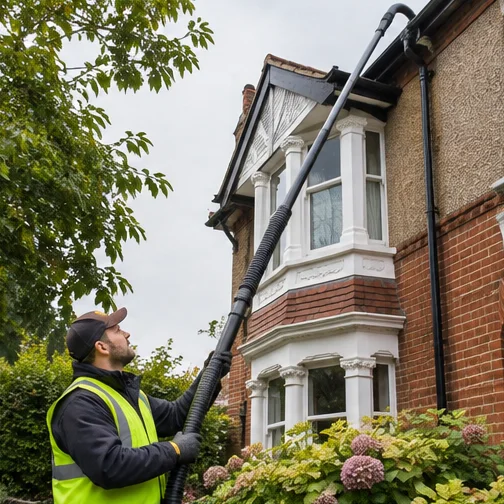
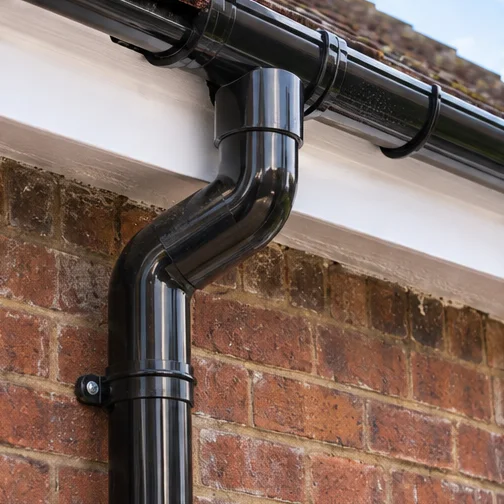
Illustrative photograph.
Record the order in which water appears
During rain, note which surface gets wet first. If the upper gutter spills before the lower one begins to drip, the lower roof may be receiving water from above. If water comes out at the pipe branch while the gutter edges remain clear, record the position and timing of that leak. Take a short recording from indoors or a sheltered spot if you can see the fittings safely. Include both the branch and the nearest roof edge.
A drip seen after rain can also help if you know how long it continued. Water may be draining out of a low point or following an edge before it falls. Tell us whether the same place gets wet in lighter rain. If a second report comes from someone with a view of the other side of the building, note when they saw it and what they could see. The two views can help place the first spill.
- Trace each pipe branch back to its roof
- Record the order in which the fittings get wet
- Show the ground available near the pipe junction
- Identify other outlets feeding the same gully
Follow each branch back to its roof
Start with the pipe you can see from ground level. Look upward for a branch, a hopper or a bend that carries water in from a second direction. Photograph that connection and include the roof edges above it. If the lower section sits behind the extension or goes through a wall, show the visible parts on either side. Tell us which connections you can see and which you are inferring from their positions.
A lower gutter can look as though it shares the main outlet when its small pipe actually runs behind it. A photograph from the side may show the gap between them. Include the ends of the upper and lower gutters if they are visible. We can use this information to consider which lengths are reachable for gutter cleaning and which openings should be identified included in the agreed work.
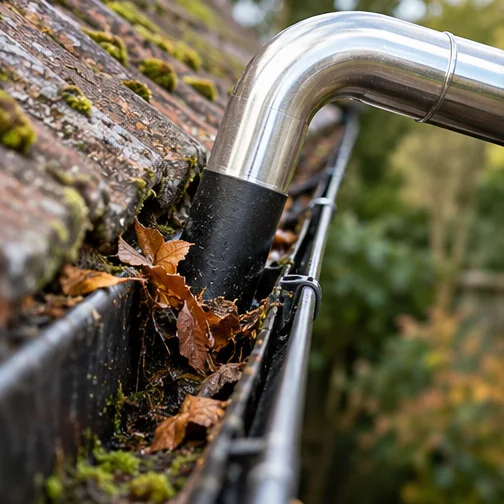
What to send for a Mitcham enquiry
| Detail | What to include |
|---|---|
| Pipe branch | Its location and the roof edge each section appears to serve |
| Overflow | The first visible wet point and what happens next |
| Working position | Upper gutter height, extension depth and ground around it |
| Ground discharge | Pipe base, nearby gully and other visible outlets |
Check what can be reached at the junction
Send an angled photograph showing the pipe branch and the surface beneath it. A wall may be visible from a patio while an extension roof sits between the patio and the fitting. Show the depth of the extension and the available ground at either end. If there is a gate or side route, include its narrowest point and any step or fixed cabinet. Tell us if there is another usable approach from the opposite wall.
If a shared path leads to the rear, confirm who can open it and whether anyone needs it at a particular time. Give a photograph of any turn beyond the gate. If the route goes through the home, let us know about door widths, steps and who can provide access. We can consider the working positions for both roof levels once we have the whole route. An accessible branch does not establish that the two gutters above it are also reachable.
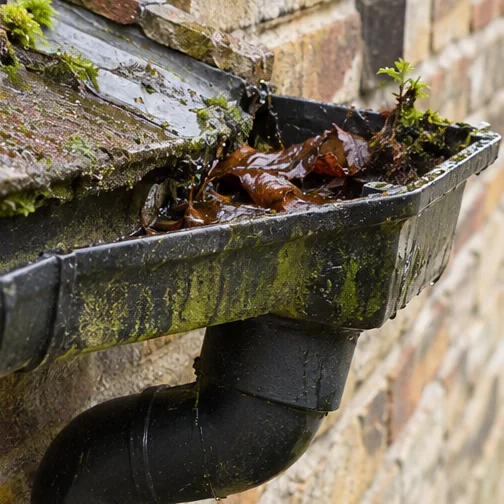
Identify fittings that need their own assessment
If the pipe branch is visibly shifted or the gutter is open at a seam, take a wide and a close photograph. Mark the wall, height and roof served. Once accessible debris is removed, a loose support or damaged socket may be easier to identify. Ask about guttering repairs separately if you want a reachable fitting assessed. Tell us whether the joint serves another gutter that needs to remain connected.
For gutter replacement, show how the existing lengths meet the branch and which pipe they use. Replacing one run can affect the angle or height at which it discharges. If earlier work altered a connection, share a photograph or scope showing which part changed. Keep the record of accessible gutter lengths so you can distinguish what was cleared from any further inspection that needs another route.
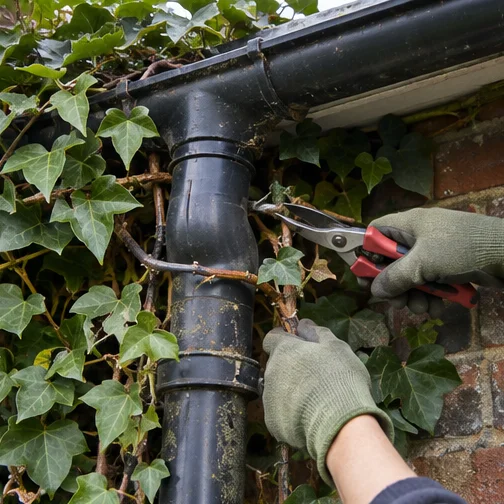
When upper and lower gutters need separate attention
If a lower pipe was added after the main roof was built, show where it joins the existing run and whether there is an older outlet nearby. Tell us if the older outlet is still used or if its destination is unknown. A visible unused fitting can be mistaken for the pipe serving a newer gutter when the wall is photographed from only one side.
Examine the visible discharge before booking further work
Photograph the base of the pipe and the nearest gully, including any other connection that discharges there. If the pipe continues below the surface, mark the last part you can see. During rain, note whether water emerges at that point before there is an overflow higher up. Water running across the paving may arrive from an outlet on the same wall or from a different surface. Show which way the ground slopes if that seems relevant.
We check reachable downpipe openings within the agreed clearance. If the restriction appears to be inside a concealed pipe or beneath the paving, it may need a separate investigation. If water reaches the inside of a building, a water damage repair enquiry can use pictures of the wet mark and its position relative to the pipe, wall and roof junction. Give the timing and whether the latest wetting happened before or after clearance.
What the sequence during rain can show
| Observation | Useful follow-up |
|---|---|
| The upper gutter spills first | Where its water lands and whether it reaches the lower gutter |
| Drops start at the branch | The socket, adjoining pipes and nearby supports |
| Water appears from below paving | The last exposed connection and direction of surface flow |
| Fresh damp starts indoors | Its height and the matching exterior position |
Other work on the extension and roofline
Gutter cleaning
Clear agreed reachable roof gutters and assess the openings that serve them.
Gutter replacement
Plan new lengths around the existing branch, outlet height and pipe support.
Guttering repairs
Assess a reachable shifted branch, socket or gutter seam.
Ivy removal
Check where plant growth obscures a branch between roof levels.
Gutter lining
Assess the channel and where its flow joins another run before discussing lining.
Water damage repair
Compare fresh indoor wetting with the visible pipe junction and roof edges.
Coverage and bookings
See the areas we cover. For nearby enquiries, see Colliers Wood and Morden.
Mitcham gutter cleaning FAQs
Can you clear two gutters that use one downpipe?
Yes, where the relevant lengths are accessible. Show the connections and ground beneath them. We can agree which roof edges and reachable openings are covered.
What if I cannot see the pipe branch?
Send photographs of the visible pipe and gutter ends. Let us know where the route disappears. We can discuss what can be established from the available access and whether another approach is needed.
Can you include a lean-to gutter?
Yes, where suitable access is available. Show its complete edge, outlet and the higher roof. Tell us if the upper roof discharges onto it.
What if the branch is above a small extension?
Send side and rear views showing its height and the depth of the extension. Show the ground on either side so we can assess whether the fitting is reachable.
Can you check a drain beneath the patio?
We can check reachable downpipe openings within the agreed gutter work. An enclosed or below-ground restriction may need separate assessment. Describe what happens near the pipe base.
How do I show a mark that is already dry?
Send a close photograph and a wider view of its position. Include the last time you saw fresh wetting and any visible fitting or roof junction on the other side of the wall.