
Gutter Cleaning Lee
When rainwater gathers beside a Lee home, look at the pipes and surfaces nearest the wet area before choosing which gutter to book. A downpipe beside the kitchen may serve the original roof or a later addition. Another outlet can empty closer to the boundary. Glen’s clears accessible gutters and checks reachable downpipe openings. Send the full postcode and photographs that show the affected wall, the visible outlets and the ground where water gathers.
Use a door, window or corner as a reference. If the first report is from a tenant or neighbour, ask where they were standing when they saw the water. A wide image of the rear wall can help locate their report before a visit is arranged.
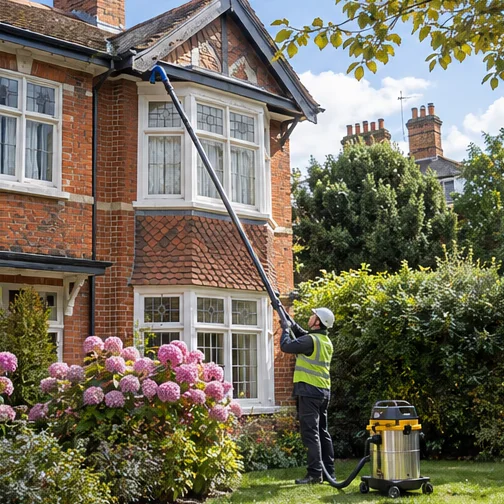
Illustrative photograph.
Show how water reaches the wet area
A puddle beside the back door can begin where water falls from a gutter or where water travels across the paving. If you can watch safely from inside, note the first place where the ground becomes wet and the direction the puddle spreads. A short film can be useful if it shows the door and the nearest pipe. Add a daylight photograph after the rain so we can see the paving and any steps clearly.
Check whether the roof above has a gutter, a canopy edge or an open outlet. If water hits a lower roof and then reaches the ground, try to record both points. Tell us if one area becomes wet soon after rain begins and another only after several minutes. The sequence can help us assess which visible fittings are relevant and whether the discharge point needs a separate look.
- Identify where each visible downpipe starts and ends
- Record where water first appears on the paving
- Show the working position at the rear wall
- List each pipe that feeds a common gully
Describe the working positions behind the house
A back gate can be easy to open but lead to a tight turn beside a store or low roof. Take photographs from both sides of the opening and show the route to the wall. Include any fixed bench, step or cover that affects the usable area. If there is a shed or summerhouse under the line of the gutter, send a view from the side that shows how far it projects.
If we would pass through the house, tell us which door provides access and who can open it. Mention any area that needs to stay clear for another person. For a shared passage, give the address of the gate and the contact who holds the key. An occupier may be able to point out the problem from a window while a different person is needed to make the ground below available.
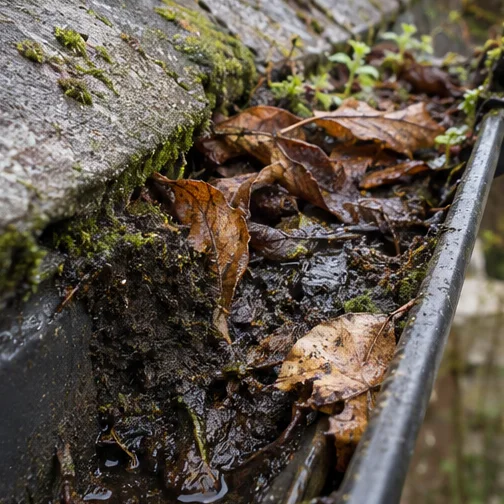
Map the pipes from roof to garden
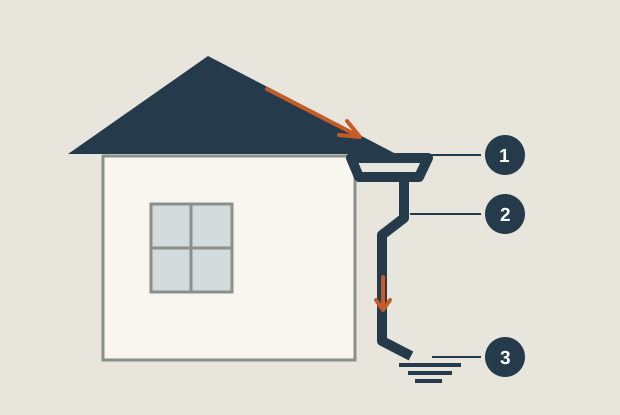
Start at ground level and photograph the visible base of each pipe. Then look upward to see which roof edge each pipe reaches. If you cannot see the full route, mark the point where the pipe disappears behind a projection. A branch above a window can establish where water from a second roof joins the route. A photo showing the complete wall helps connect those details.
Where a rear addition sits beneath the main gutter, take a side view that shows the difference in height. A lower roof may have a pipe near the house and an outlet at its far corner. Include the upper gutter and pipe so it is possible to tell which channels drain independently. We can use the visible layout to agree the accessible lengths for gutter cleaning.
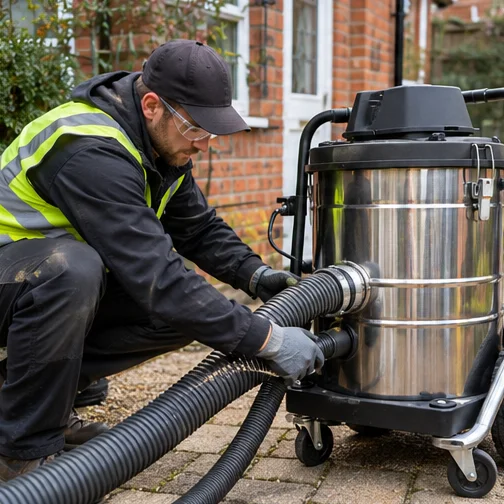
Work for other parts of the rainwater system
Gutter cleaning
Clear accessible roof gutters agreed for the house and any lower addition.
Gutter replacement
Plan replacement lengths around the pipe connections that will remain in use.
Gutter lining
Review a channel and discharge arrangement before considering lining.
Guttering repairs
Assess a visible joint, support or outlet near the reported wet area.
Water damage repair
Compare fresh damp with the direction water travels from the roof and across the ground.
Ivy removal
Check whether ivy beside a yard boundary has reached a pipe or gutter.
Information for a Lee visit
| Detail | What helps us assess it |
|---|---|
| Roof edges | A complete view of the wall showing upper and lower gutters |
| Ground-level pipes | Where they join, discharge or disappear |
| Access route | Gate opening, steps, fixed objects and the keyholder |
| Wet area | The first point water reaches and the direction it travels |
Check what is visible at a common gully
If more than one pipe ends at a gully, send a photograph showing all the visible discharges. Note whether water rises there while it is still flowing from the pipes. Where the gutter starts to spill first, show its nearest outlet and the position of the gully. If water starts at the gully, look for any nearby paving that slopes towards it. A wider picture can reveal a second source that is absent from a close view.
We check reachable openings within the agreed clearance. If a restriction appears to be in a concealed pipe or below the yard, that part may need its own investigation. Tell us where each pipe goes out of sight and whether a previous job changed the discharge. That information helps define the gutter work and record the visible conditions for any later drainage enquiry.
Keeping track of several independent runs
If the yard has been resurfaced, share a photograph from before the work if it shows the old pipe outlet or gully. Give the approximate date and identify any point that was covered or relocated. This helps when you can see a patch of water beside the new paving and the pipe now enters the surface without a visible shoe.
If a branch takes water from a small roof into the main pipe, photograph the junction and the roof it serves. Tell us which roof was extended or altered most recently. A connection that looks like a simple bend from the garden can be easier to identify from the other end of the wall, especially where two pipes overlap in the view.
Keep the clearance and later assessment connected
If clearing a reachable gutter exposes a displaced union or damaged outlet, we can describe the visible defect and discuss guttering repairs separately. Give the location of any repair you already know about and identify what happened after it was carried out. A seam that drips immediately in light rain can behave differently from one that only leaks after water backs up. Show the fittings on both sides of the suspected fault.
For gutter replacement, record which pipe connections must stay in service and how much of the existing channel you want assessed. If wetting persists inside, a water damage repair enquiry can include the first position and height of fresh damp, and the timing compared with rain. Keep the clearance record with the photographs. It is useful to know which gutter lengths and outlets were reachable when comparing the original problem with a later report.

Lee gutter cleaning FAQs
Can you check the house gutter and the lower addition together?
Yes, where both are reachable. Show each roof and outlet and explain the available route. We can identify the agreed lengths individually when arranging the visit.
Can you tell which pipe serves the upper roof?
Visible branches and bends may show the route. Send photos of the wall and base. If a connection is concealed, it may need separate access or assessment.
What if the ground is wet near two pipes?
Record where the water becomes visible first. A video during rain can help, especially if it shows the pipe ends and direction of any flow across the paving.
Can I book if the rear gate is shared?
Yes, if the agreed access can be made available. Tell us who can open the gate and whether other people need to pass through it during the visit.
Do you include a gully under the paving?
We can check reachable downpipe openings within the agreed gutter work. A drain below paving may need separate assessment. Show the visible entry point and where water appears.
What if I am unsure whether the gutter was previously repaired?
Send any photos or paperwork that identify the roof edge and the fitting. Tell us when the current problem started. We can discuss what can be checked from the available access.
Observations around a common discharge
| What you see | What to record |
|---|---|
| Water crosses the paving towards a door | The starting point and any pipe or gully nearby |
| A lower gutter spills first | What drains onto it and where its own outlet is |
| A gully rises during a shower | Which pipes discharge there and whether the paving drains into it |
| Damp appears above a door frame | The matching outside position and any roof edge or fitting above |
Coverage and bookings
See the areas we cover. For nearby enquiries, see Blackheath and Eltham.