
Gutter Cleaning Harlesden
A shop entrance can get wet beneath a sign even when the nearest visible pipe sits a few doors away. In a terrace, the same thing can happen when water travels along the edge of a bay roof. Glen’s provides gutter cleaning in Harlesden for accessible rainwater systems. Tell us where you first see the water, where it lands and how to reach the relevant wall. A photo showing the outlet, doorway and roof edge together can help us understand what to check.
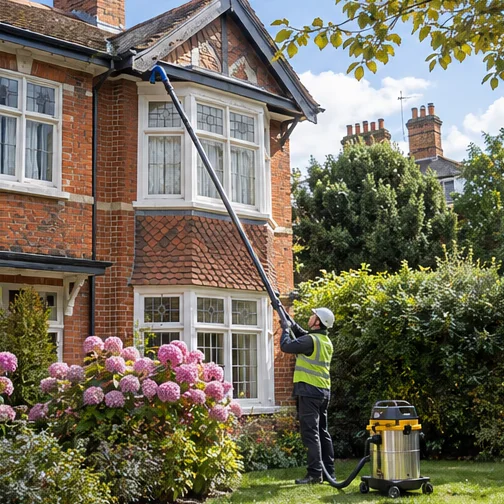
Illustrative photograph.
Describe where the service route or passage leads
A shop can have a rear service gate, a route through the unit or a yard shared with another occupier. Tell us which route has been agreed and who opens it. Describe when deliveries or residents use the same area. The yard can be open at the entrance but narrow where it passes an extension or external stair. Send a picture that shows the approach from the gate to the wall. If the front also needs work, describe the space under the roof there separately.
At a house, a rear route may pass beside a boundary wall or through a dwelling to a lower garden. Give the width at the narrowest point and show any step, turn or overhead cover. A lower roof can change the line to the upper gutter even where the area behind the house is open. If the roof is shared by several flats, confirm who authorises the work and who can admit us. The person who reports a leak may have no access to the garden beneath it.
- High Street and Jubilee Clock frontages
- Victorian terraces and bay drainage
- Shared yard access and service gates
- Records tied to fixed entrances and outlets
Check which visible section carries the water
An upper downpipe may end on a lower roof and feed a separate gutter. If water spills at the lower edge, describe whether it first appears from the upper pipe or gathers in the lower channel. A photograph showing the two levels can locate the connection. If the gutter turns behind a projection, show as much as you can from the agreed side. Water can follow a ledge or roof edge before it falls, so the nearest fitting may need to be seen in relation to the other roof sections.
Gutter cleaning covers agreed accessible channels and visible openings. A ground-based vacuum can be practical where the working position gives enough reach and a clear angle to the trough. A camera may show material near an accessible corner or outlet. At the foot of a pipe, note whether it ends over an open gully or enters paving. Water can also collect there from a path or yard surface. A concealed bend or underground connection may need another inspection when the visible route stops above it.
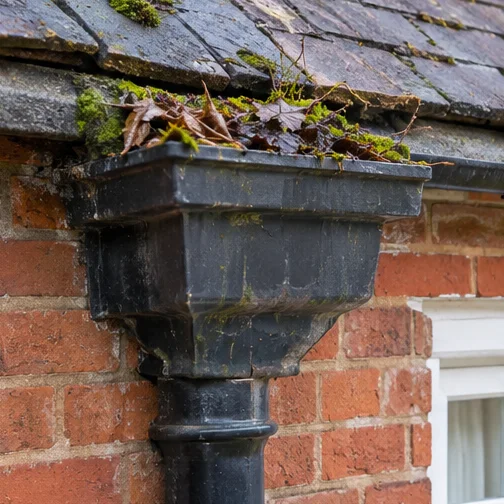
Use a permanent feature to locate the affected frontage
Brent’s Harlesden conservation area appraisal describes dense Victorian development and identifies the Jubilee Clock at the centre of the town. At a High Street property near the clock, the address may identify the building while leaving several possible roof edges. Use a fixed door, upper window or corner to locate the first wetting. A gutter may run across the front before turning towards a pipe on the side. Include both elevations in a wide photograph if the roof turns around a corner. This helps identify the nearest visible outlet.
At a shop or flat, note whether water falls directly down the wall or first strikes a canopy, sign or projecting ledge. A person at the entrance might see only the final drop, while an upper-floor resident can see the pipe or hopper. Give both accounts if available, with the time and each viewpoint. At a terraced house, water can cross a bay roof before it reaches the front path. Photograph the whole bay and main roof together to show which part becomes wet first.
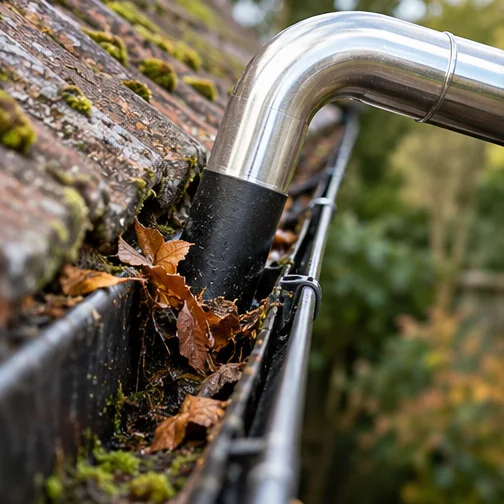
Work for other parts of the rainwater system
Gutter cleaning
Clear agreed accessible channels and visible openings above High Street frontages, bays and rear roofs.
Gutter replacement
Discuss renewal when several lengths or fixings have deteriorated.
Gutter lining
Assess the existing channel and outlet details where lining may be suitable.
Guttering repairs
Review a visible seam or bracket alongside the adjoining gutter and fixing surface.
Water damage repair
Compare dated indoor observations and exterior runoff to guide further assessment.
Ivy removal
Assess where climbing stems cover pipe joints or reach beneath the eaves.
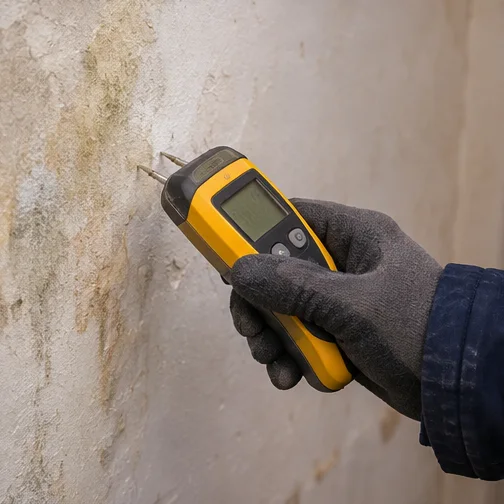
Harlesden observations that locate the gutter
| What you see | Detail to send | What it helps establish |
|---|---|---|
| Water falling above a High Street entrance | First wet point and nearest sign, window or outlet | Identifies the affected section of frontage |
| Spill close to a terrace boundary | Position of the bay, return and visible pipe | Places the report against the relevant length |
| Water crossing a lower roof | Whether an upper pipe discharges onto it | Shows how the roof levels may connect |
| Puddle in a service yard | Direction of flow and closest gully or pipe | Describes the lowest visible point of the route |
Review the parts that remain after clearance
Debris can collect at an outlet and hold water back against a seam further along the run. Once reachable material has been removed, a local drip may still be linked to a joint, support or change in fall. Guttering repairs can be assessed alongside the adjoining lengths and the surface supporting them. If a previous project replaced a connector or changed the outlet, send a photograph or record of where it sits. This helps identify which fitting meets the original channel.
Gutter lining may be considered when the channel has adequate support and the outlet details suit a liner. Replacement may warrant discussion where several lengths or fixings have deteriorated. If ivy grows behind a pipe or reaches the gutter, describe where the stems start and which surfaces they cover. That helps an ivy removal assessment account for the wall and concealed fixings. Water damage repair begins by establishing which material became wet and investigating where moisture entered. Record the date and position of an inside mark and its nearest outside wall or fitting.
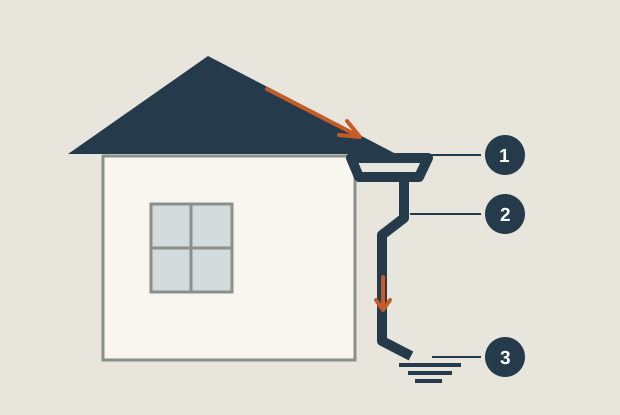
Keeping track of several independent runs
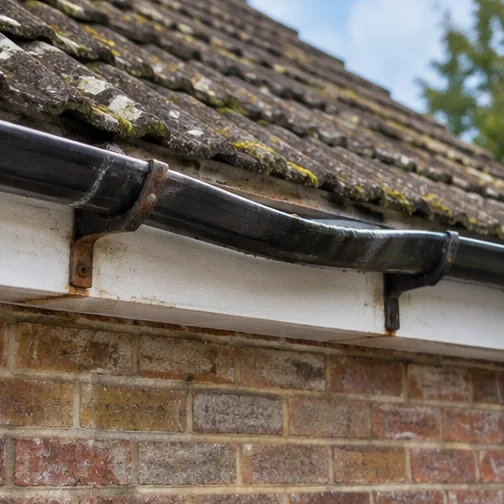
Keep follow-up observations tied to the original visit
A clearance record can name the accessible lengths reached, where debris collected and any visible point needing more attention. Use a reference that stays clear if the shop sign or tenant changes, such as the pipe beyond the separate stair door. At a house, the window above the rear gate or the end of the bay can be used in the same way. Confirm who receives the record and who can arrange access to an outstanding section.
When it rains again, record how long it took for the first wet point to appear and whether it is in the same place. If the original entrance stays dry but a lower connection still drips, give both positions. An old stain may remain through dry weather. A dated photo can help distinguish it from a fresh wet area. If the concern is inside, add the affected room and nearest outside feature. The person organising follow-up can use both records to decide which fitting, concealed route or other part of the building to assess.
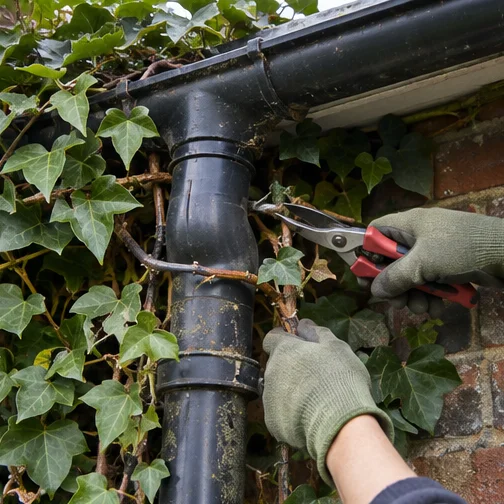
Questions about gutter cleaning in Harlesden
Can the outlet be on another wall from the High Street door?
Yes. A gutter can turn around a corner before it reaches the pipe. Send a view of both walls and say where water first appears. Tell us which approach is available below each section.
What if water first becomes visible at the end of a shop sign?
Describe where it touches the sign and where it falls from it. A wide photo showing the upper windows and outlet can help locate the source. If someone upstairs saw the first spill, include that observation separately.
Can you use a yard that serves several businesses?
It depends on who controls the route, when it is available and what space lies below the gutter. Confirm the agreed gate and explain any regular deliveries. We can discuss which lengths can be reached.
Why does an extension gutter spill while the upper edge looks dry?
The extension may receive water from a pipe above even when the upper gutter is draining. It can also have its own restriction. Show both levels and record where the lower roof empties.
Should I mention that a fitting was repaired before the current leak?
Yes, if you know where it was. Give the position, date and nearest visible support. A current view can help establish whether the same joint is affected.
What should a resident report if a new mark appears indoors?
Give the date, room and nearest exterior feature, and note whether it changes after rain. A photograph from the same position can help show changes. Share it with the person who can compare it with the clearance record.
Confirming access before booking
| Setting | Practical detail |
|---|---|
| Shop with a separate stair entrance | Which door is affected and who controls each route |
| Yard reached through a service gate | Key holder, delivery use and overhead cover |
| Side path beside a rear projection | Width at the tightest point and any change in level |
| Garden used by one flat | Who grants entry and who authorises work on the roof |
Coverage and bookings
See the areas we cover. For nearby enquiries, see Willesden and Wembley and Kensal Green.