
Gutter Cleaning Kensal Green
If rainwater lands on the roof over a bay window at a Kensal Green property, show us both the small roof and the gutter above it. A drip at the edge of the bay can come from its own gutter, an upper outlet or water travelling along the wall. Glen’s clears accessible gutters and checks reachable downpipe openings. We use the positions of the roof edges and the available ground to agree what the visit will cover.
Give the full postcode and describe which window or doorway is affected. If there are separate flats, say whose entrance is beneath the gutter and who can open the approach. A photograph of the whole frontage can help us locate the affected bay even if the only recording of the drip was taken from indoors.
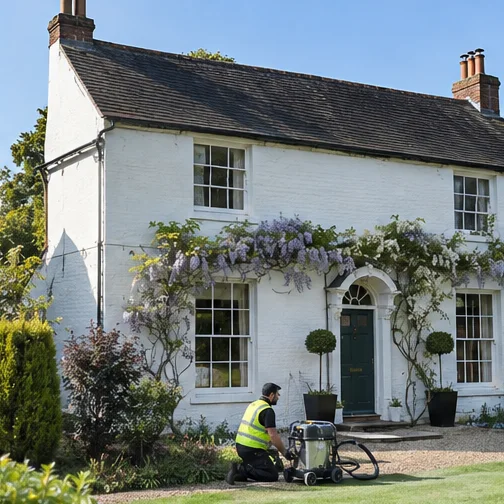
Illustrative photograph.
Locate where the bay first receives water
When you can watch from inside or another sheltered position, note whether water falls from the main gutter onto the bay roof or appears from beneath the small gutter itself. A short film may show where the drops first land, how they travel and where they fall to the ground. Keep a daylight photograph of the same place showing the higher roof edge. A close image of the bay gutter alone may miss the connection.
If the bay roof has a raised side or return, show it from an angle. Water can travel behind an edge before appearing at a corner. Note whether it drips near a seam, bracket or outlet and give the timing. We can use that information to discuss which accessible lengths to include in gutter cleaning.
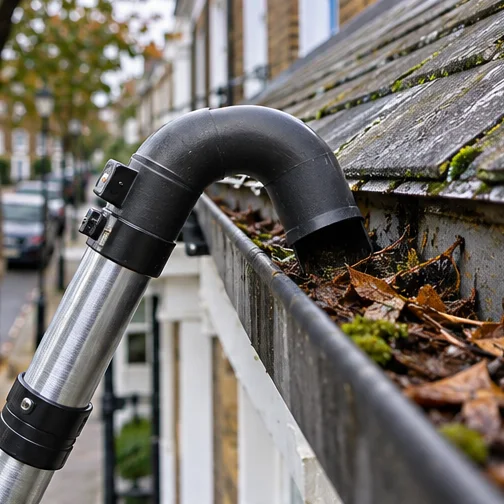
Show what the bay blocks and what remains open
Photograph the frontage from the side so the depth of the projection is visible. Include the ground and railings or low wall in front. A picture taken straight on can hide the gap between the bay and the boundary. Tell us whether the affected gutter can be seen from both ends and whether one side sits above steps, a planting bed or an entrance to a lower room.
If there is a side gate or rear passage, show where it leads. Include any tight turn, fixed cabinet or change of level. An approach to the back may not give access to the front bay, so identify the roof edges separately. Where more than one person controls the working space, confirm who can open each area and when it is available. We can assess the ground around the affected fitting before confirming the visit.
- Find where water first reaches the bay roof
- Show the working space on either side of the projection
- Identify where the bay outlet discharges
- Match fresh marks around the frame to the outside roof edge
Follow the small outlet to its visible end
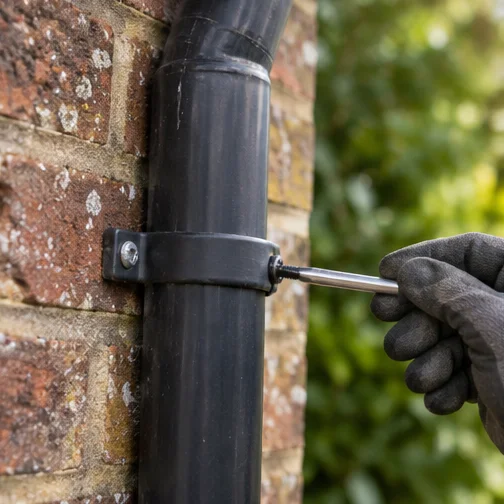
Look for a small pipe at the edge of the bay. Photograph where it joins the channel and whether it stops above a gully, enters a main pipe or disappears behind a projection. A pipe beside the bay may serve the higher roof instead. Include both levels and show any branch if you can see it. Tell us if the two outlets reach the same part of the paving.
At ground level, note what happens first during rain. If water appears around the gully before the small gutter spills, send a picture of the incoming pipes. If it drops straight from the bay and collects beside a wall, show that route too. We check reachable downpipe openings as part of the agreed clearance. A concealed or below-ground restriction may need separate assessment.
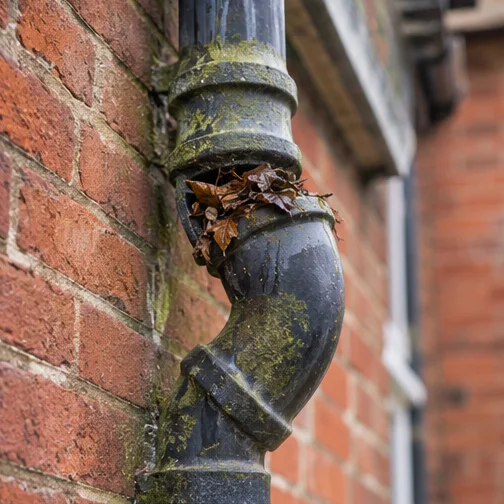
Details for a Kensal Green enquiry
| Detail | What to send |
|---|---|
| Bay roof | Side and front views showing where it sits beneath the main gutter |
| Working area | Railings, steps, boundaries and usable ground on either side |
| Small outlet | Its connection to the bay and where the visible pipe ends |
| Damp or overflow | Position of the first wet point and the closest window reference |
Match damp around the window to the outside surfaces
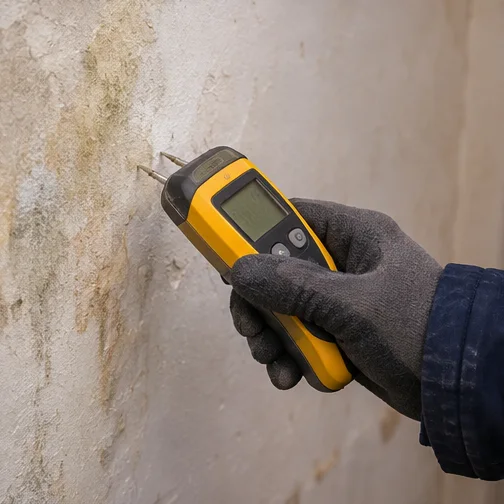
If moisture appears inside, record where it starts relative to the frame and sill. A wet patch near the top of a bay can line up with the junction between its roof and the main wall. A mark beneath the window can sit closer to the path of water from an outlet. Take a wider photograph showing the matching outside position and give the date of fresh wetting. If you saw the water move during the same shower, describe the sequence.
For a water damage repair enquiry, share any earlier work on the roof, gutter or window. Say whether the gutter had been cleared before the latest wetting and identify which lengths could be reached. A dry stain can remain after the cause changes. A photograph of fresh damp from the same position makes it easier to compare the new report with the earlier one.
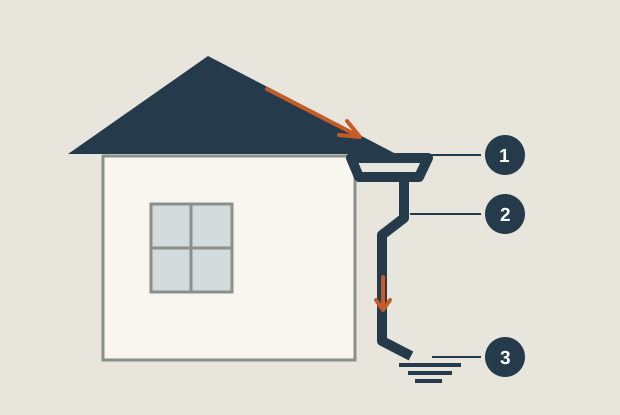
Work we can discuss after clearance
Gutter cleaning
Clear reachable bay and main roof gutters included in the agreed work.
Guttering repairs
Assess a visible shifted seam, loose bracket or stop end over the bay.
Gutter lining
Assess a channel around the bay and its connection to the outlet before discussing lining.
Gutter replacement
Specify replacement lengths around corners and connections that must stay.
Ivy removal
Check where growth has reached a rainwater fitting beside the bay window.
Water damage repair
Compare new damp near the frame with the visible bay roof and upper discharge.
Describe the fitting before arranging further work
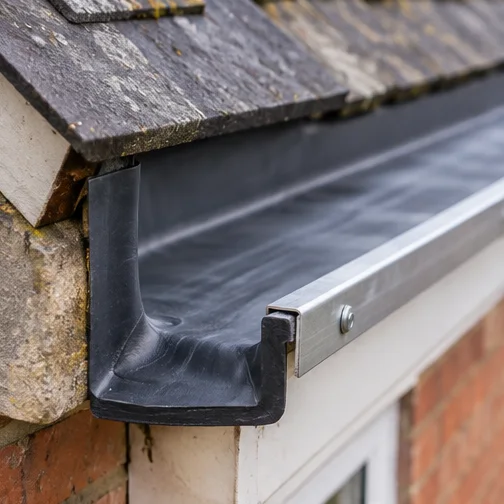
After reachable debris is cleared, a visible displaced seam or loose stop end can be described for a separate guttering repairs enquiry. Show which gutter the fitting belongs to and what supports it. A small outlet over the bay may be attached differently from the one on the main roof. If you can see a change in profile at the corner, include the lengths that meet there.
If you are considering gutter replacement, give the length and outlet you want assessed. Identify any older fitting that should remain and show where the proposed section would connect to it. If work on the bay roof or window is planned, tell us how it will affect the position of the gutter or the working space. Keep the scope and access photographs for whoever arranges the later visit.
Observations near a bay window
| What you see | Evidence to record |
|---|---|
| Water lands on the roof of the bay | Where it first leaves the higher gutter or pipe |
| Drops gather at the bay corner | The small outlet, nearest seam and wall junction |
| A gully rises below the window | Which visible pipes or surfaces feed it |
| Damp appears around the frame | Height, timing and matching position on the exterior |
Before we assess the roof edge
If the small gutter turns round the bay, photograph the corner from both sides. A short length above the side window can share the same outlet while remaining hidden in a picture of the front pane. Mark where water crosses the edge and note whether the window below it becomes wet at the same time.
Where a bay roof meets a porch at different levels, show the short wall between them and any pipe attached to it. Rain leaving the bay may strike the porch even when their gutters are independent. This view helps explain why a drip beside the doorway can be worth tracing back to the window above.
Kensal Green gutter cleaning FAQs
Can you clear the bay gutter on its own?
Yes, if the small channel can be reached. Show the outlet and the higher roof above it. Tell us if rainwater from the main roof falls onto the bay.
What if the railings block the approach?
Send a view from inside the boundary if you can access it safely, and show the available ground on either side of the bay. We can discuss whether there is a suitable approach.
Can a tenant send the pictures?
Yes. Include the address and flat number, and say who can open the relevant gate or arrange access. A view of the whole frontage helps locate the window in the report.
Can you check the main gutter at the same time?
Yes, where suitable access is available. Show the main roof and the lower projection. We can identify the agreed lengths separately before the visit.
What if I can see the pipe but not its outlet?
Show where it comes into view and where it disappears. We can discuss the reachable openings. An enclosed connection may need separate assessment.
Should I report a damp mark even if it is dry today?
Yes. Show where it sits in relation to the frame and give the last date you saw fresh wetting. A matching outside photograph can help identify the roof and fittings nearby.
Coverage and bookings
See the areas we cover. For nearby enquiries, see North Kensington.