
Gutter Cleaning Bayswater
The gutter visible above a Bayswater terrace may be only one part of the route rainwater takes down the building. A projecting bay can have a separate length, while a higher roof may send its water to a pipe at the far end of the frontage. We clear accessible gutters and check reachable outlets. Tell us where the overflow starts and whether you are asking about the main roof, the bay or both.
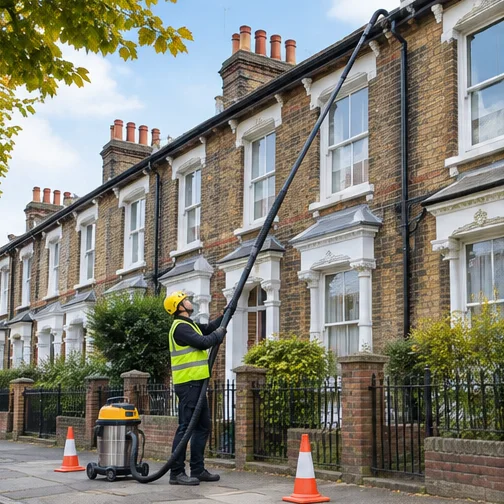
Illustrative photograph.
Locate the first wet edge on the terrace
Westminster’s Bayswater conservation area description identifies large groups of stuccoed terraces, including those around Westbourne Terrace and Sussex Gardens. Queensway’s conservation area audit also describes buildings that have shops beneath roofs concealed by a parapet. These are useful references for describing the building but the visit depends on the layout at your address. We ask which visible edge wets first in rain, what projects from the wall and where the nearest pipe starts. If a bay is wet while the main gutter is out of sight, describe the height of the wet area relative to both.
A close-up of flaking paint can show us where moisture has collected, while a wider photograph shows the possible route to that point. If the mark is on decorative stucco or beside an upper window, a photo of the whole façade is useful when taken from a safe position. Tell us whether the water is falling in a continuous sheet, dropping from a seam or running down the wall. The difference can help us choose which gutter or outlet to inspect first. If it only happens in heavy rain, say roughly how long the rain has been falling before you see it.
Make room to reach the part that needs clearing
The ground immediately below the gutter may be taken up by front steps or a lightwell. At a property with railings, include those in the image so we can assess the usable working position. Tell us if equipment can be brought to a front forecourt, a lower courtyard or a rear entrance. The length of the pole needed is only one part of the question. We also need room for it to approach the channel around a projecting roof or balcony. A gutter over a short bay can need a different setup from the one that serves the main roof.
A terrace used as several flats may have separate access arrangements for the front steps and the lower ground. If a hotel, shop or other business occupies part of the building, tell us who can confirm the approach and which entrance must remain available. When you can arrange access to two sides of the building, describe both so we can assess what each position can reach. If only one route is available on the day, let us know before booking. That can change which lengths can be included.
- Distinguish the bay gutter from the upper roof run.
- Show the height of the first wet edge above the ground.
- Include railings or steps in a wide photograph.
- Tell us who can open the front or rear working area.
Remove what is holding water inside the agreed runs
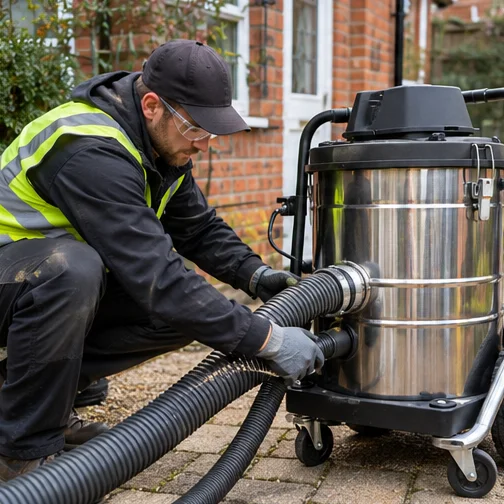
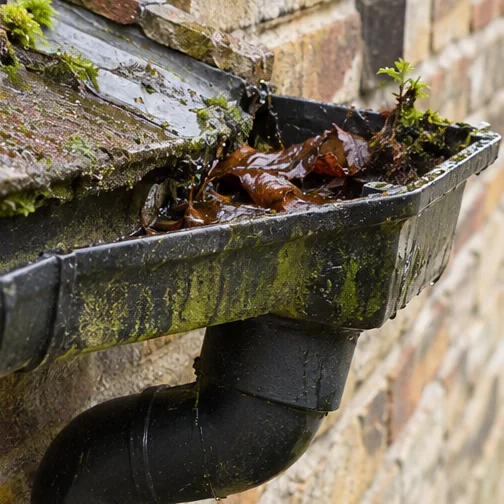
We start with the gutter or gutters identified for the visit. Using vacuum equipment and reach poles where suitable, we work along the accessible run and draw loose leaves, moss and compacted material into the collection drum. Debris can accumulate near the change from a bay gutter to its small outlet, or at the point where a higher channel feeds a pipe. We check reachable openings and clear obstructions we can reach there. If the roof edge hides the gutter, ask about a camera view when arranging the visit. The shape of the façade and the available position affect what we can see.
Where there is a lower and an upper channel, we distinguish what was cleared on each level. A lower gutter may still overflow if it is receiving more water than it can carry or if the pipe below it remains obstructed. We explain where the accessible check ended and what may need separate assessment. For information about the service and the equipment, see gutter clearance. If you have had the bay gutter cleared before and water still falls from the same spot, say which lengths were included last time. That lets us discuss whether the higher run still needs checking.
Where to start on a multi-level façade
| First sign | Reachable check | Helpful detail |
|---|---|---|
| Water collects on the top of a bay | Bay gutter and any discharge from above | Whether the upper pipe ends over it |
| A wall becomes wet behind the main gutter | Visible roof edge, seam or support | Level of the first wet patch |
| Water drips beside a front stair | Accessible pipe fitting and outlet | Whether the drip begins higher up |
Discuss the condition of the fitting before agreeing further work
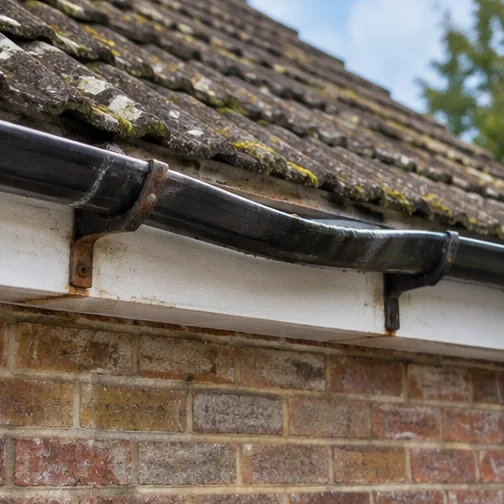
Older rainwater fittings may have a different profile from newer sections on the same building. If water still escapes after clearance, we consider the visible condition before discussing a gutter repair. A loose support can affect the way the gutter sits. A damaged seam can leak even when the outlet is free of debris. Where the old length is beyond repair, we look at the connections and the profile before discussing gutter replacement. On a sound supported channel with a failing surface, we can assess whether lining is an option.
If a pipe is difficult to see because growth surrounds it, tell us what you want opened up and how the area can be reached. We can discuss ivy removal where that is appropriate. If the reported leak has already affected a room, tell us the surface and the first sign you noticed. We discuss water damage repair separately from work to the external fittings. The aim of the clearance visit is to deal with reachable debris and report what can be seen, while agreeing any wider assessment on its own terms.
Work we can discuss after clearance
Gutter cleaning
We clear accessible runs serving the bay and main roof separately where both are included.
Guttering repairs
We look at a visible seam, fitting or loose support after debris has been cleared.
Gutter lining
We can assess the support and outlet of a concealed channel before discussing lining.
Gutter replacement
We consider the profile and joins before discussing replacement of an older length.
Ivy removal
We can discuss opening up access to a pipe that is hidden by growth.
Water damage repair
For moisture that has reached a room, tell us which surface became wet and whether the leak is still active.
Leave a clear account of each level
After the visit, we explain which lengths were cleared and which outlets could be reached. We identify any visible fault by reference to the nearest window, pipe or roof edge. If an upper gutter could not be reached from the position available, we tell you which part still needs assessment. This is useful where a report first came from a tenant and the person responsible for the repair was not there. Let us know in advance if the findings should go to a property manager rather than the person opening the gate.
If a further visit is needed, keep a note of which gutter was included and the location of the remaining drip. A report that only says the frontage has been cleared can leave doubt about whether the bay and main roof were both included. We distinguish those lengths when describing the work. If an older fitting needs a repair or replacement, tell us whether other work on the frontage is planned. That helps us discuss the timing and which connections may need to be assessed separately.
Allow for different access at each level
| Area | Detail to give us | What it helps establish |
|---|---|---|
| Bay below the main roof | Height and width of the projection | Space for the equipment to approach |
| Upper roof behind a parapet | View from the ground and nearest visible pipe | Which reachable points are useful |
| Rear section facing a courtyard | Gate or door and the person with access | Where we can set up |
Before we assess the roof edge
Questions about Bayswater gutter cleaning
Can a bay gutter be cleared on its own?
We can discuss clearing it separately if it is accessible. Tell us whether it has its own pipe or takes water from a higher run.
Can you see over the parapet from the front?
That depends on the height, the space below and what projects from the building. Ask about a camera view if the channel is hidden.
Should I send a photo of a stain or of the whole frontage?
Both can be useful. A wider image shows how the roof and pipes relate to the mark. A closer one can show its precise position.
Will a loose seam be fixed during clearance?
We explain what is visible and can discuss a repair separately. Tell us if you are already aware of a damaged fitting when booking.
Do you need someone from the shop or hotel to be there?
We need whoever can confirm the route and let us into the agreed working area. Give us a separate contact for approval of any further work.
Can you explain which outlets remain outside the visit?
Yes. We identify the lengths we cleared and say which openings were outside the booking or could not be reached from the available position.
Coverage and bookings
See the areas we cover. For nearby enquiries, see Notting Hill and Paddington.