
Gutter Cleaning Covent Garden
We clear accessible gutters in Covent Garden and check reachable downpipe openings. If a gutter faces an alley while the premises opens onto a shopping street, give us both positions. An address at the front and the name of the rear route help us identify the right roofline. Tell us what the water does before it reaches a doorway, lower roof or passage.
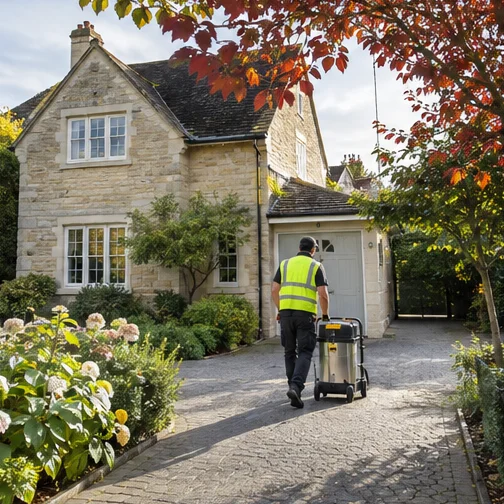
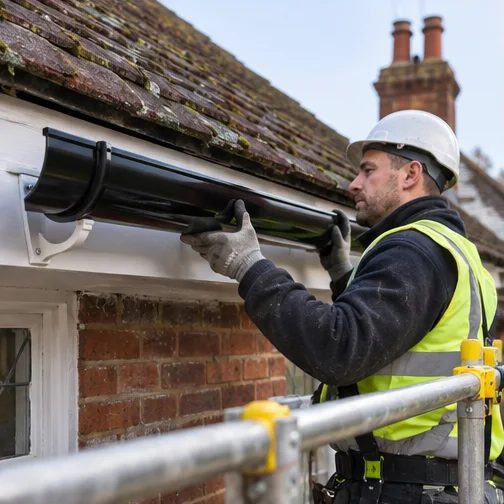
Illustrative photograph.
Decide how to approach the affected side
A narrow approach might lead to a larger yard, or the available position may be limited all the way to the gutter. Tell us where the equipment can be brought in, where it can stand and what routes need to remain open. A working position near the wall can be affected by signs, canopy edges and lower roofs. The reach needed is not just the height. We consider how far the gutter is from the available ground and whether we can approach it from a suitable angle. A ground-level photo along the alley can be more useful than an image of the roof alone.
If more than one premises uses the alley or yard, identify who can agree the working position and who can show us the route. The person reporting the problem may be a tenant who sees the spill but does not control access to the ground below it. Give us a contact who can confirm access and a person who can approve the included lengths. If a separate frontage needs clearance too, describe the position beneath that run. We discuss what can be reached from each approach before agreeing to include both sides.
- Give the alley or rear door as well as the main address.
- Distinguish the lower wing from the main roof.
- Name the person who can agree use of the shared position.
- Show the nearest visible pipe or outlet.
Locate the channel behind the shop or building frontage
Westminster’s conservation area description identifies long narrow plots and historic alleys south of the Piazza, as well as former warehouses and commercial buildings near streets including Floral Street. The roofline arrangement varies by address. An enquiry for a rear gutter needs to say which wall faces the alley and which roof edge the water falls from. The building directly above the wet paving may not be the one whose gutter is spilling. Tell us the nearest door, visible pipe or corner so we can recognise the location after the rain stops.
At a building with a rear wing, distinguish the lower roof from the main one when taking a picture. A broad view of the gap between them can help show whether water is falling from above or escaping along the lower gutter. If the issue is visible from a flat or office window, ask the person who reported it to identify the floor and elevation. For a shop, describe the nearest entrance or unit. We can then discuss which parts of the rainwater route need checking and where there is space to reach them.
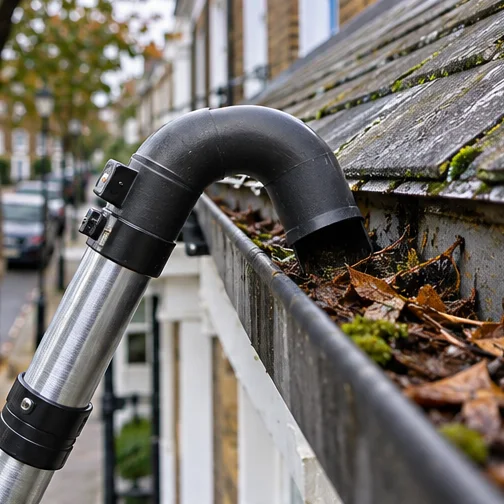
Identify which edge is sending water into the alley
| What you see | Reachable check | Useful detail |
|---|---|---|
| Water falls beside a rear doorway | Roof edge and accessible outlet above | Door and side of the alley |
| A lower wing gutter spills first | Its opening and any visible discharge into it | Which roof wets before the other |
| A joint stays wet after clearance | Visible seam and nearby supports | Where the earlier work stopped |
Clear the reachable length and check its opening
We confirm which gutter belongs in the visit and locate the visible point where it empties. Where the position allows it, we use a gutter vacuum and reach poles to remove accessible leaves, moss and heavier debris. We work along the reachable channel and check for obstructions at the opening into the downpipe. A short run can still collect material near its corner or outlet. If another roof drains into it, we take account of that visible connection. We describe how far we could reach and say whether an adjoining run was outside the work.
If the gutter is behind an edge or cannot be seen from below, ask about a camera view. We discuss what the working position allows us to show. A view may reveal debris or standing water in the channel, but it cannot establish the condition of an enclosed pipe beyond the accessible opening. If we clear the reachable obstruction and water still appears to back up, we explain where further assessment may be needed. See our gutter cleaning service for more about the equipment and the accessible checks. Tell us if another visit already covered one part so we can identify the remaining run.
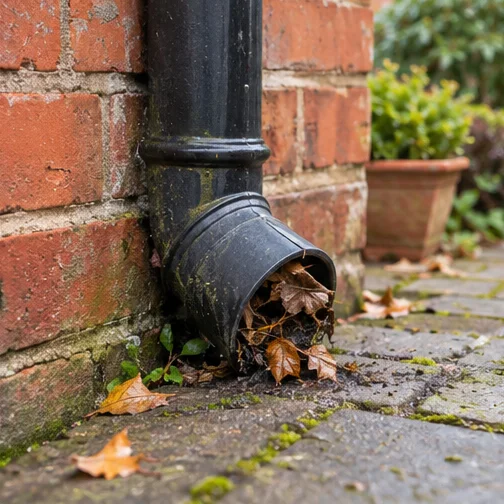
Report which roof and opening were reached
After the visit we describe the cleared lengths and accessible openings. If the enquiry covered both a rear wing and a main roof, we distinguish them in the findings. We identify the nearest pipe, window or doorway so the person arranging follow-up can locate a visible defect. If a section could not be reached, we say where the accessible work ended and what might need arranging separately. Tell us who should get the results if the person opening the route does not manage the roof.
For a repeat appointment, let us know if a door, alley or working position is used differently. If the report now concerns another roofline, describe it separately and tell us which one was cleared before. A reference to the particular entrance or length is useful when several people work at the address. If someone has since repaired or altered a fitting, point out its position. That gives us a clearer starting point when discussing whether the issue is the same or needs looking at elsewhere.
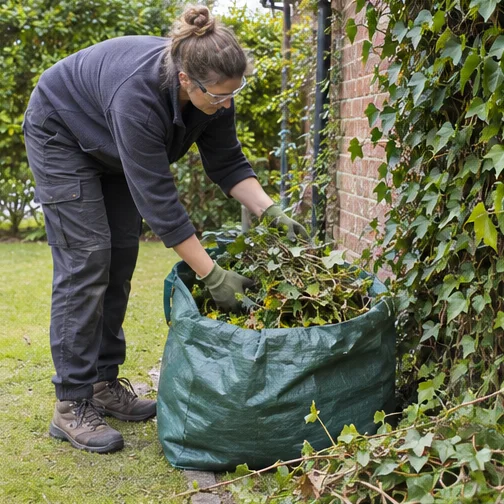
When upper and lower gutters need separate attention
Consider additional work if a visible fault remains
A seam or bracket may still be a concern after debris has been cleared. We can discuss guttering repairs if we can see a local fault. If the length has failed beyond a suitable repair, we consider how a new section would meet the outlet and adjacent gutter. A sound supported channel with a failed surface may be assessed for lining after we can see its condition and the way it drains. We describe the fitting and location before discussing work beyond the clearance.
Ivy can prevent a view of a pipe at the back of a building or make the fitting hard to reach. Tell us where the growth begins and what part needs to be seen. We can discuss removing the relevant growth where there is access. If water has reached a room or shop interior, give us the affected surface and the first sign you saw. We discuss water damage repair separately from work to the gutters. Water appearing inside and overflow into the alley may concern the same route, but the connection still needs assessment.
Give the route to the working position
| Approach | Detail to confirm | Person who can help |
|---|---|---|
| Alley serving more than one premises | Space available and route to keep open | Contact responsible for shared access |
| Rear door through the premises | Turns, steps and entrance used by equipment | Keyholder or site contact |
| Separate frontage | Ground beneath the gutter and any projections | Person who can agree the position |
Other work on the extension and roofline
Gutter cleaning
We clear the reachable lengths agreed on the main roof, lower wing or frontage.
Gutter replacement
We look at the meeting point between a failed section and the existing gutter.
Guttering repairs
We assess a reachable seam that still leaks after accessible debris has been cleared.
Ivy removal
We can discuss removing growth that prevents a useful view of the rear pipe.
Gutter lining
We consider the support and outlet of a concealed channel before discussing a liner.
Water damage repair
For water inside a room or premises, give us the affected surface and timing separately.
Coverage and bookings
See the areas we cover. For nearby enquiries, see Soho and Holborn.
Questions about Covent Garden gutter visits
Can you work at the rear if our address is on the main street?
Tell us the rear route and how it relates to the roof. We can discuss what can be reached once someone can arrange access.
What if the lower roof belongs to another occupier?
Identify the roof and tell us who controls access beneath it. We agree the included lengths and access before booking.
Can you inspect from a narrow alley?
We assess the position, height and angle to the gutter. A narrow approach may still be workable if there is suitable space below the affected run.
Can the business stay open while you clear the gutter?
Tell us which doors or routes need to remain available. We discuss the working position before agreeing what can be done.
Does water running into the alley identify the affected outlet?
It helps locate the issue, but the water may be coming from a higher run or a connection. Tell us where you first see it leave the roofline.
Can we get separate findings for the main roof and rear wing?
Yes. Identify both in the enquiry and tell us the terms you use. We can report the lengths and openings reached by location.