
Gutter Cleaning Kentish Town
We clear accessible gutters in Kentish Town and check the reachable openings into downpipes. If the gutter above the garden is causing trouble, tell us how the rear can be reached and whether it is the main roof or an extension. A narrow front plot can tell us little about the available space behind the house. We use both sides of the address to discuss what the visit can include.
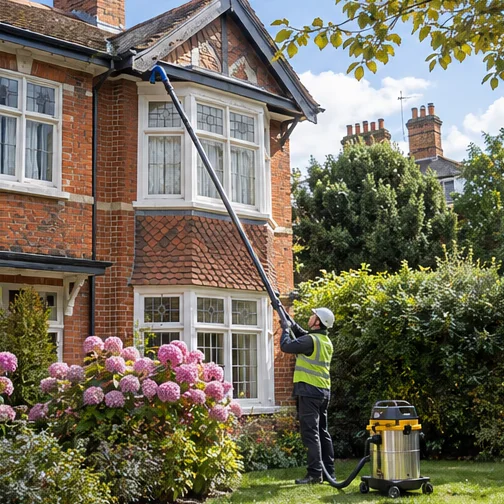
Illustrative photograph.
Work out how to reach the rear before choosing the included lengths
Tell us if there is an outside route into the garden, a side gate or access only through the building. We need enough room to bring the vacuum drum and reach poles to the agreed working position. A long garden may offer space once the equipment is there, but steps or a sharp turn can affect the route. If a lower roof projects across the garden end, show what ground is available beside it. The working angle matters as well as the height of the upper gutter.
Give us the contact who can open the route on the day. At a divided house, the occupier who saw the overflow may not have access to the garden. Where the property adjoins another one, tell us whether the relevant gutter or pipe crosses the boundary and who can agree any access that depends on it. If the front and rear are both in the booking, describe the available positions separately. We can assess whether the two lengths can be reached in one visit rather than assuming the front position gives access to the rear.
- Distinguish the main roof from a separate addition.
- Tell us whether the rear route is through the house or a gate.
- Show the space below the upper gutter.
- Give the keyholder if the garden belongs to another occupier.
Remove the material in the accessible channel and at its outlet
We confirm which runs are agreed and look for the accessible opening that each serves. Where the roofline and working position allow, we use reach poles and a gutter vacuum to collect leaves, moss and compacted silt. We work along the accessible length and check the corners and exit into the pipe. Material can settle where the channel turns or narrows. If the gutter on the rear addition is separate, we distinguish its outlet from the upper one. If one roof drains onto the other, we consider the visible connection before describing what was cleared.
Ask about a camera view if the channel sits behind a roof edge or above a projection. It may show debris or standing water in a section that can be seen from a suitable position. It cannot establish the condition of an enclosed pipe farther down. We clear obstructions that are reachable at the opening and explain if the restriction appears to continue beyond the accessible part. Read about our gutter cleaning service for more information on the equipment. If one run has been cleared recently, give us its location so we can discuss what remains outside that earlier work.
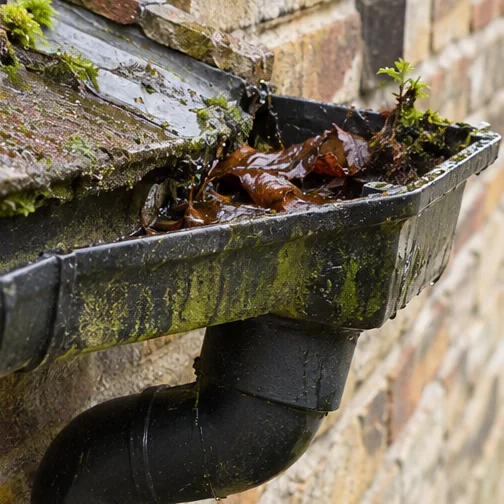
Distinguish the garden gutter from the frontage
Camden’s Kentish Town conservation area appraisal describes terraces on narrow plots around streets such as Lady Margaret Road, with smaller front gardens and longer gardens behind. At an individual property, identify the gutter by the roof it serves. The run on a rear addition may empty into a different pipe from the one on the main house. Tell us whether water appears on the side of the addition, on the wall above it or at the foot of a pipe. A photo showing the full roof and the garden below helps us discuss the route.
A terrace can have a projecting bay at the front and a lower roof at the back. If the report is simply that the gutter leaks, ask where water was first seen. A drip onto a bay can start in the upper gutter. Water in a rear garden may come from an independent run or discharge from the main roof. If a rainwater pipe is visible on only one side, tell us where it starts. We can use the position of that outlet to work out what accessible parts to inspect. If the report came from an upper room, include the nearest window and whether it looks towards the street or garden.
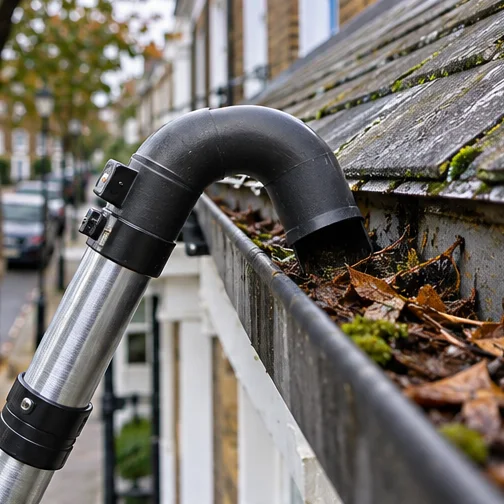
Work for other parts of the rainwater system
Gutter cleaning
We clear accessible front or garden-side runs agreed at booking and check their reachable openings.
Gutter replacement
We consider the connections at the addition before discussing replacement of a failed length.
Gutter lining
We assess a supported channel and its outlet before discussing lining.
Guttering repairs
We look at a reachable seam or support that still leaks after clearance.
Water damage repair
For water inside the house or extension, give us the room and surface affected.
Ivy removal
We can discuss removing growth that hides the pipe at the garden wall.
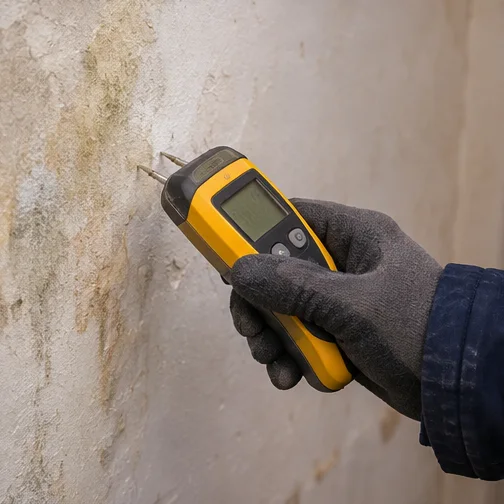
Distinguish the roof by the first visible spill
| What you see | Reachable check | Information to provide |
|---|---|---|
| Water falls onto the rear addition | Upper run and any discharge onto the lower roof | Which edge becomes wet first |
| A bay gutter drips beside the entrance | Lower channel and its accessible opening | Whether the main roof drains separately |
| Water appears at the garden end of a pipe | Visible discharge and opening above | Where the pipe starts and where water first shows |
Assess a visible seam or support separately from clearance
If the gutter still drips at a seam once accessible debris has been removed, we look at the visible fitting and can discuss guttering repairs. A damaged section that cannot be repaired may need replacement. We consider the join to the existing gutter and the outlet. A sound supported channel with a failing surface can be considered for lining after checking the visible condition and where it drains. We describe the location before discussing a separate visit or additional work.
If growth near the garden wall covers a pipe or its fixing, tell us where the stems begin and which part you want exposed. We can discuss cutting ivy back if access can be arranged. If the leak appears to have reached an interior surface, give us the room and say when it first became wet. We discuss water damage separately from clearing a gutter. A mark on the inside of an addition and water seen outside above it may be related, but it is useful to report each observation on its own terms.
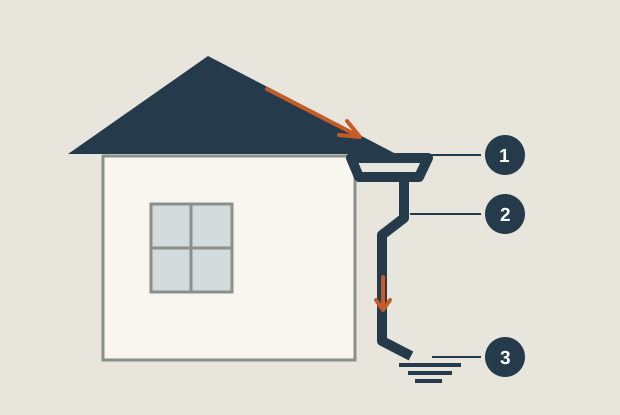
Keeping track of several independent runs
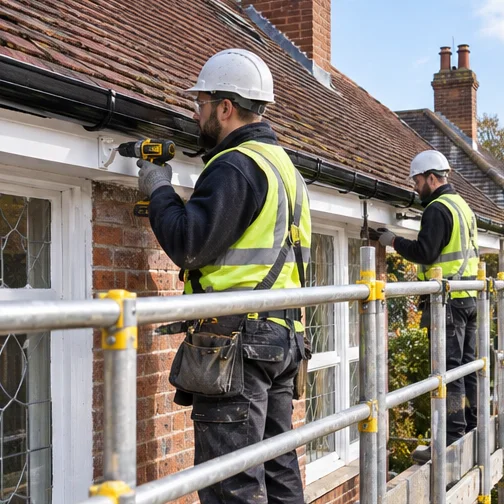
Explain the results by roof and side
We tell you which lengths were cleared and where the accessible openings were checked. If the visit covered the upper roof but could not reach a section over a lower addition, we identify that part. We describe any visible defect by reference to the nearest pipe, window or corner. If the person arranging follow-up was not there, give us the reference they use for the affected side. It is useful to distinguish the run that was cleared from the one that still needs a different position or inspection.
For a repeat visit, tell us if access through the garden or the building has changed. An addition, gate or change in who controls the route can alter which lengths are reachable. If water now appears at a different corner, give us the earlier and current positions. That helps us discuss whether it concerns the same outlet. If a fitting has been repaired since clearance, tell us where it was and whether the visible symptom changed. We can then discuss the appropriate check for the remaining issue.
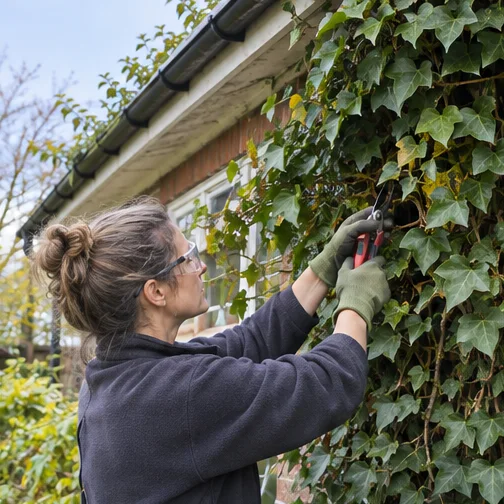
Questions about gutter clearance in Kentish Town
Can you clear the rear gutter if there is no side gate?
Tell us which route is available and who can open it. We can discuss whether the equipment can reach a suitable position.
Does the extension gutter drain into the same pipe as the main roof?
That depends on the fittings. Tell us what you can see of the two outlets. We check the visible connection where it can be reached.
Can you clear the front without going through the house?
We can discuss a front visit separately if there is a suitable working position. Identify the run and anything that projects below it.
What if a tenant can see the leak but cannot open the garden?
Give us their description and the details of the person who can arrange rear access. They do not need to be the same person.
Can you tell me if another roof is feeding the overflow?
We look at the visible relationship between the runs and their outlets. If the route is hidden, we explain what part may need further assessment.
Can you record what remains to be done at the rear?
Yes. We identify the reached lengths and accessible openings and describe where another position or a separate repair may be needed.
Plan the approach on a narrow plot
| Route | Detail to give us | What we assess |
|---|---|---|
| Through the house | Doorways, steps and route into the garden | How equipment can be brought in |
| Side gate or shared passage | Width and person who can open it | Access to the position below the run |
| Front garden | Space beside the bay or steps | Reach to the frontage gutter |
Coverage and bookings
See the areas we cover. For nearby enquiries, see Camden Town and Tufnell Park and Gospel Oak.