
Gutter Cleaning Finsbury Park
A report about rain at a shared doorway can come from someone who sees the paving but has no view of the roof. Someone on an upper floor might be able to see a pipe or a short gutter that is invisible at street level. Glen’s provides gutter cleaning in Finsbury Park for accessible rainwater systems. Tell us which entrance or wall is affected and who can provide access below the roof. If there are two accounts of the same event, include both and describe where each person was standing.

Illustrative photograph.
Determine how people reach the other side
There may be a route through the business, a service lane or a separate passage behind the building. Tell us which one can be used and who opens it. If the rear is reached through several doors, say where equipment would need to turn and whether the approach passes through an occupied room. An open door on a photograph may belong to another unit. A named contact can clarify which access has been agreed for the work.
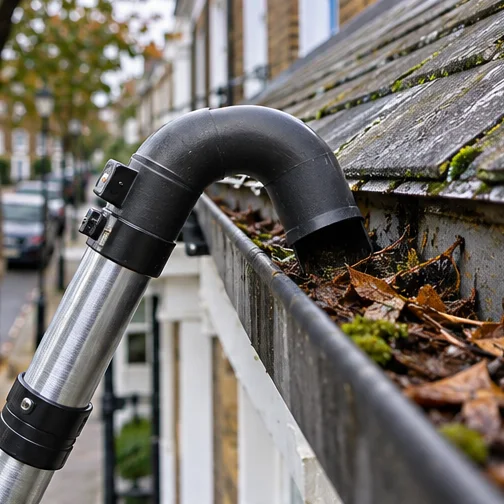
On a house or converted terrace, the path to the garden can pass close to a kitchen extension or a boundary wall. The gutter may sit several metres back from the point where the path opens out. Describe the space under the channel and give the height from that level. An extendable vacuum can be practical where there is a clear line from the working position. A fixed cover, overhead wiring or a drop to a basement entrance can affect whether that position is suitable. We discuss the front and rear individually where the work covers both.
- Shopfronts and separate stair doors
- Awnings, signs and service routes
- Visible outlets and pipe connections
- Records for agents and occupiers
Observe what happens at the pipe and the opening
A shop tenant might see a wet streak running down a sign, while the roof outlet is behind an upper parapet. Describe where the visible pipe starts and whether there is a hopper. If you can safely see the foot of the pipe in rain, note whether it releases water into an open gully or goes directly into paving. A gully that receives runoff from a yard may become wet even if the downpipe is carrying little. A dated photograph of the whole area can distinguish these routes better than a close picture of a puddle.
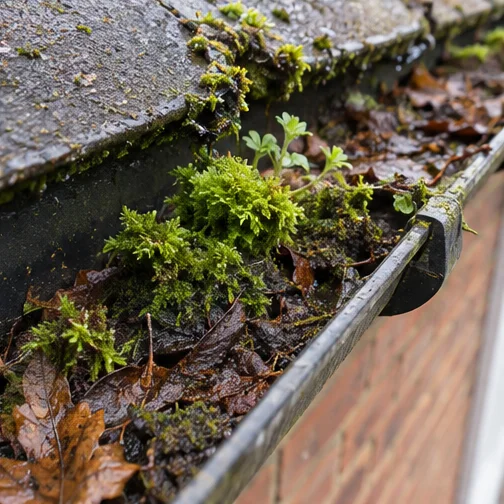
At an accessible outlet, leaves or fine debris can restrict flow even when the rest of the channel looks clear. Gutter cleaning covers agreed channels and visible openings where they can be reached. The equipment used depends on the height and the approach. If water remains near one corner after loose material is removed, the fall of the gutter or the condition of an outlet may deserve attention. An enclosed section of pipe or a connection under paving can require a separate inspection.
Read the frontage as more than one address
Islington’s Local Plan identifies parts of Fonthill Road, Stroud Green Road, Blackstock Road and Seven Sisters Road within the primary shopping area. For an enquiry at a commercial frontage, say whether the rain passes over the shop entrance, a separate stair door or the gap between two businesses. A shared address may have several doors with independent access arrangements. A photograph showing the entire frontage will help identify the area while the person arranging the visit confirms who needs to be involved.
The roofline may continue across several units, and awnings or signs can make the path of the water harder to follow. Explain which feature the drops strike first. If water appears below the edge of a canopy only after the fabric is wet, it may be running along the canopy from elsewhere. Tell us what the canopy is fixed to and whether it can be moved. On a building without an awning, steps or a recessed front door can still create more than one point where water becomes visible. The affected threshold gives us a landmark for looking higher up.
Work for other parts of the rainwater system
Gutter cleaning
Clear agreed accessible channels around shopfronts, terraces and rear additions.
Gutter replacement
Review multiple deteriorated sections and connections before discussing replacement.
Gutter lining
Consider the support and outlet configuration when assessing lining.
Guttering repairs
Assess visible seams, brackets and alignment around a local defect.
Water damage repair
Compare exterior runoff with the first signs of wetting indoors.
Ivy removal
Review the route of stems behind pipe supports and across walls.
Finsbury Park observations to include
| What you noticed | Detail to add | What it helps locate |
|---|---|---|
| Drops near two entrances | First wet point and position of each door | Connects the report to the appropriate frontage |
| Water at the end of an awning | Where water first reaches the cover | Helps distinguish roof discharge from canopy runoff |
| Wet area at the pipe base | Whether water reaches an open gully | Shows where the visible drainage route ends |
| Marks below an upper window | Time of first wetting and roof edges above | Gives a reference for further assessment |
Assess the fitting in the context of the building
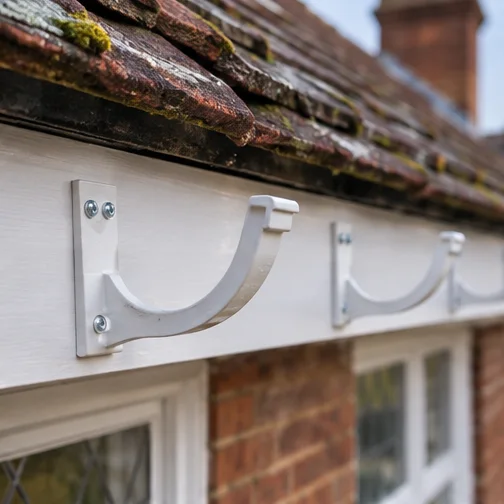
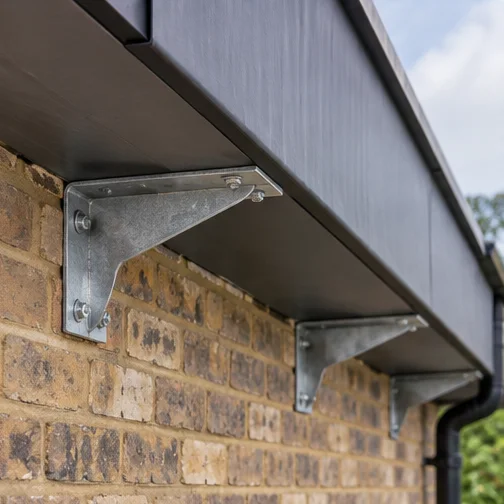
A leak at an exposed joint may be suitable for guttering repairs if the adjacent sections and supports are sound enough. If water passes over the edge near a displaced bracket, the relationship between the bracket, gutter and wall needs to be understood before work is specified. Let us know if a roof or frontage has been altered and whether you can identify which lengths were changed. An older pipe can serve a recently installed channel, or the reverse. A photo of the junction helps establish which components connect.
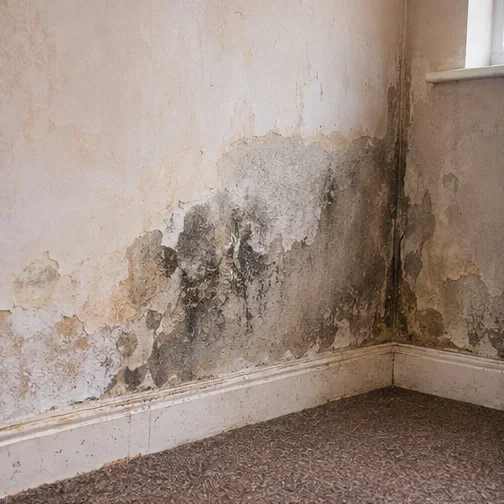
A channel with suitable support and outlet geometry may be considered for lining. Where multiple lengths have deteriorated, gutter replacement can be discussed. If ivy covers a bracket or reaches behind a pipe, an ivy removal assessment should include where the stems start and which wall or boundary they cross. If an internal finish has become wet, collect the dates and approximate position of each observation. Water damage repair depends on finding the entry route and assessing the affected material. An outside water mark alone may leave several possible paths into the building.
Keeping track of several independent runs
Keep the maintenance record with the relevant frontage
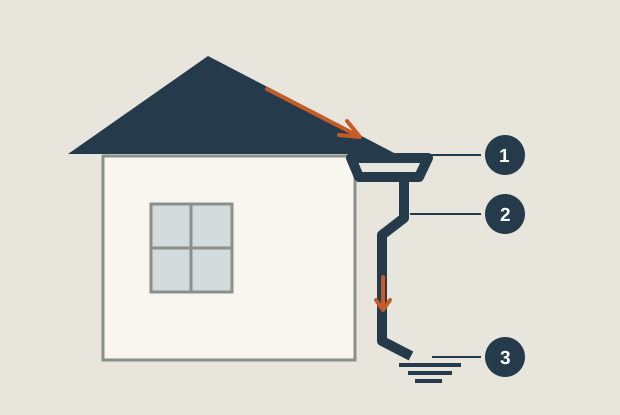
For a building with several entrances, the record can state which one the work relates to and identify the accessible outlet or return. It can also identify any high or concealed section that requires another arrangement. When the tenant, shop manager and person authorising the work are different people, confirm who should receive that account. A shared reference to the same sign, bay or rear door helps them compare it with any future reports.
If there is further wetting, record which part became wet first and how long the rain had been falling. Compare it with the original complaint rather than assuming the entire roof is affected. If water now reaches the ground at a different point, a photo that includes the change and the nearest fixed feature can help. For an interior report, identify the room and the surface that first showed a mark. The next assessment can use the clearance record and recent observations to decide which visible fitting or concealed route requires attention.
Questions about gutter cleaning in Finsbury Park
What if the person reporting the leak cannot see the roof?
Ask where they first see water and what it passes on the way down. Share a wider view taken from a safe position if possible. The report can help locate the area even when the outlet itself is hidden.
Can clearance be arranged when a shop is open?
Tell us which entrances need to stay in use and how the area below the gutter is used. We can discuss suitable working positions and times included in the agreed work. A rear approach may need its own arrangements.
Can a gutter behind a sign be inspected from the pavement?
It depends on the angle, height and surrounding space. A ground-based camera may be useful where there is a suitable position. If the sign blocks the view and the route to the gutter, another method may be needed.
Why does the wall stay stained after the dripping stops?
Old staining can remain visible after the original source has changed. Compare dated photos and note whether new wetting appears when it rains. If a mark indoors is changing, include that observation when asking for further assessment.
What if a pipe disappears into a wall before reaching the ground?
Tell us where you can last see it and whether any building records show the rest of the route. The accessible channel and visible pipe can be considered within the clearance visit. A concealed section may need separate investigation.
Can you refer to a particular shop in the report?
Yes. Give the agreed shop or entrance name and a fixed landmark on the affected wall. That makes it easier to identify the area if a tenant changes or a later enquiry comes through the managing agent.
Access to agree before the visit
| Building arrangement | Practical detail |
|---|---|
| Shop with a separate stair door | Name the contact for each entrance and describe when they are used |
| Business with a service lane | Confirm route, gate keys and regular deliveries |
| House with an extension beside the path | Show width at the tightest point and the position of the roof edge |
| Conversion with a private rear garden | Confirm who can provide entry and who agrees the work |
Coverage and bookings
See the areas we cover. For nearby enquiries, see Stroud Green and Harringay and Highbury.