
Gutter Cleaning Canonbury
On a garden elevation in Canonbury, the gutter may sit above a side return that is screened from view by mature planting. It can be easier to see the wet wall than to locate the opening that should carry the rain away. Glen’s provides gutter cleaning in Canonbury for accessible rainwater systems. Send a view of the wall and the route to it. If an occupier has seen a particular drip or overflow, tell us where it begins and how far the water travels.
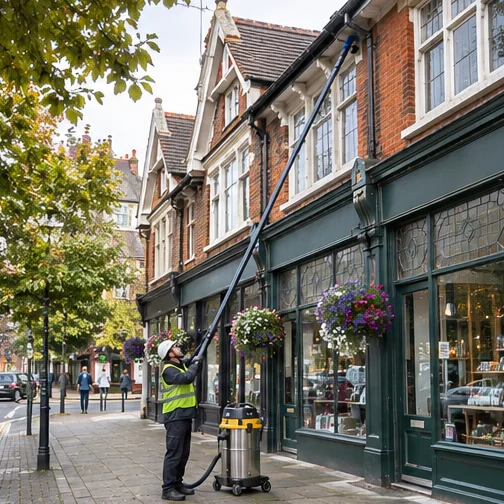
Illustrative photograph.
Use the garden to locate the affected wall
Islington’s Canonbury conservation area guidance describes mid-Victorian villas with generous gardens and mature trees, and identifies Canonbury Square and the New River Walk as notable features. Around a villa, a side wall may be visible from the front gate while the actual gutter turns behind the house. Look for a viewpoint within your own property from which both levels are visible. A full view of the elevation can show the gutter, a rear projection and the route beneath them in one photograph.
Planting changes the view across the seasons. A branch can hide a short length and can also restrict where equipment can be positioned. Tell us whether a path runs beside the wall or turns away behind a bed, hedge or outbuilding. If the gutter sits behind a bay, show how far the bay extends from the wall. Mention any gates or steps on the route. At a property with front and rear garden entrances, say which one leads to the affected part of the building and who can admit the team.
Make observations useful to the next person
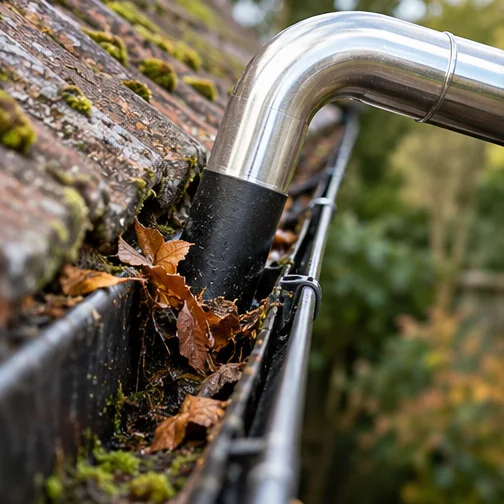
Once an agreed section has been cleared, we can record the location of material removed, any visible defect and any part that needs a different approach. In a shared building, use a description that another resident or agent can find without entering the room that first reported the problem. For example, name the short return above the window nearest the side gate. If the property has two similar entrances, state which one you use as the reference.
At the next rain, check the same place if it can be seen safely. Note how long the rain has been falling and where water first appears. If the wall is still stained but no longer becomes wet, distinguish the existing mark from active water. If a new drip appears below the original one, record the lower fitting and the time it happened. An agent can share both the maintenance record and the new observations with whoever needs to investigate a joint, the wall or a concealed part of the drainage route.
Follow the visible route from roof edge to pipe
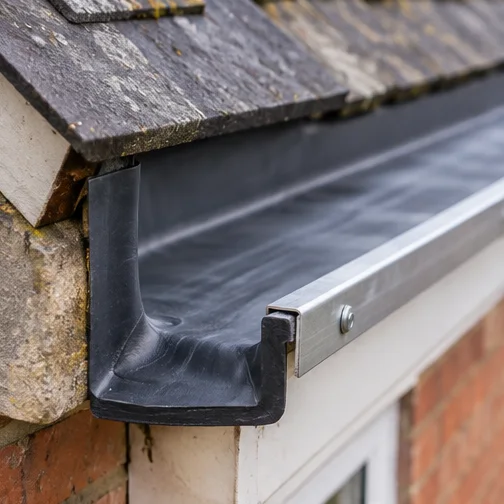
At a square frontage, the upper roof edge may sit behind a parapet. A visible hopper or pipe below it can offer the best reference from the ground. When water appears around the hopper, record whether it falls over the rim or runs down the wall behind it. Water can travel along a ledge before it becomes visible, so it helps to include the highest point you can see becoming wet. If a lower porch or bay catches some of the runoff, show its position too.
At the back, a return can have a small channel where it meets another roof. Water may leave through a short pipe and discharge onto a lower roof. Tell us if you have seen that connection in use or only know where the pipe seems to end. A clear view of the nearest outlet helps us place an overflow. If the lower pipe enters paving or goes behind the wall, describe where the visible part ends. An inaccessible connection can require a separate inspection even when the roof-level outlet is open.
- Side returns and mature planting
- Parapet channels and visible hoppers
- Shared building and private garden access
- Named records for future inspections
Access information for the booking
| Approach | Detail to confirm |
|---|---|
| Side path screened by planting | Where the path narrows or moves away from the wall |
| Front steps and a lower entrance | Position of railings and level ground below the gutter |
| Garden used by one flat | Who opens the route and who authorises work |
| Gutter visible from a neighbouring property | Which side offers agreed access and which part is obscured |
Agree access with the person who controls the route
A house divided into flats may have a rear garden used by one occupier while the roof is maintained for the whole building. Confirm who can agree what the visit will cover and who holds the key to the garden or side gate. Explain whether the agreed approach passes through a dwelling, a common hall or the outside area of another property. A floor plan can help if it is current, but a photo of the actual approach is useful for showing steps, tight turns and projections.
Gutter cleaning covers the agreed accessible channels and visible openings we can reach from suitable positions. A ground-based vacuum can be useful when the approach gives a clear line towards the trough. A camera can sometimes help identify how material gathers near an outlet. The eaves may be beyond that line if a lower roof, tall planting or narrow space interrupts it. If the instruction includes several elevations, describe each one separately so that access can be considered for every length.
Separate work at the premises
Gutter cleaning
Clear agreed accessible runs and openings above villa gardens, terraces and returns.
Ivy removal
Assess the route of stems around pipes and behind fixings.
Guttering repairs
Review visible seams and brackets alongside the condition of the adjoining run and wall.
Water damage repair
Compare interior moisture observations with the visible rainwater route before follow-up.
Gutter replacement
Discuss profile and material choices where several lengths need replacement.
Gutter lining
Assess channel support and outlet geometry where lining is under consideration.
Canonbury roof and garden observations
| What you see | Detail to send | What it helps identify |
|---|---|---|
| Wetting around a hopper | Whether water starts at the rim or appears behind it | Locates the visible end of a roof channel |
| Overflow behind a rear projection | Relationship between the upper and lower roofs | Shows which sections may drain into one another |
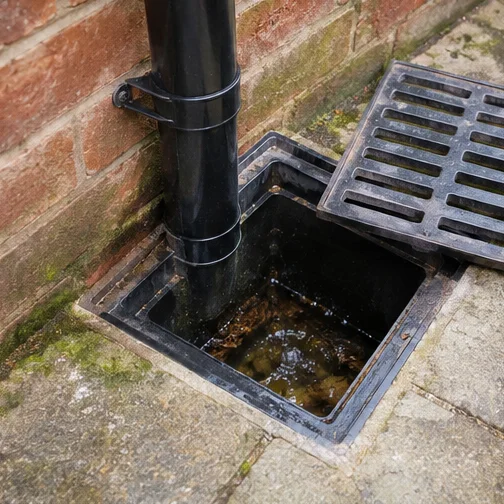
| Wet area at the foot of a pipe | Whether the pipe enters a gully, paving or the wall | Describes the last visible discharge point |
| Interior mark near a window | Date, changes after rain and closest exterior feature | Gives a location for further investigation |
Discuss the fitting and the wall it is attached to
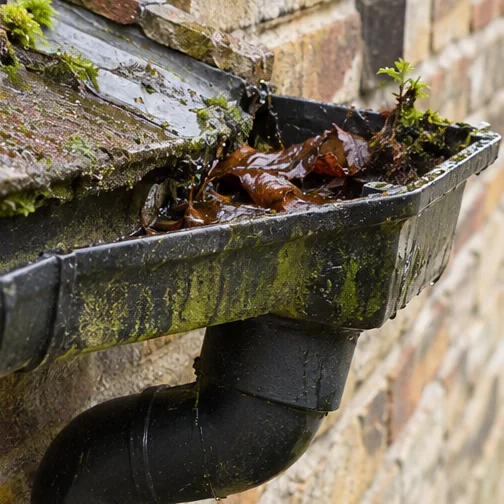
A gutter may still drip from a seam after loose debris has been removed. The nearby supports, the channel fall and the condition of the material all matter when considering guttering repairs. A small defect may be local to a joint or bracket. If a number of fittings are loose or damaged, the length and its support may need a wider assessment. Share any record of earlier changes, especially where a pipe or gutter profile differs from the adjoining parts.
A channel in suitable condition may be considered for gutter lining where its support, corners and outlets allow an appropriate installation. Replacement can be discussed if deterioration extends across several sections. Mention any known requirements for existing fittings and finishes so the owner can confirm what applies before work is specified. If ivy is present, describe how the stems reach the gutter and which fixings or surfaces they cover. For water damage repair, a record of when a room becomes wet after rain helps investigate the route and the affected material. A visible leak outdoors may be only one part of the assessment.

What helps when several people report the leak
Coverage and bookings
See the areas we cover. For nearby enquiries, see Highbury and Newington Green.
Questions about gutter cleaning in Canonbury
Can you reach a gutter where branches hang over the path?
It depends on the position of the branches, the available footing and the angle towards the roof. Send a photograph from ground level showing the approach. We can discuss which lengths can be reached and whether another arrangement is needed.
How can I show you where a leak is behind a parapet?
Show the whole wall and any pipe or hopper that is visible below the roof edge. Say where new water first appears. A photograph of the mark and a separate view of the whole elevation can be used together.
Is a visit useful if I cannot see the gutter from the garden?
Yes, where a suitable access and viewing position can be arranged. Tell us what blocks the view and whether there is another way to approach the wall. We can discuss what is likely to be accessible.
Should the garden key holder receive the same report as the owner?
Give us the recipient responsible for the work and let us know who else needs the observations. The owner can share details with the occupier when further access or a rain observation is needed. Use the same location references for both.
Can the colour of an existing pipe identify its material?
Paint colour alone cannot identify what the pipe is made from. If a replacement or repair is being considered, provide any records and a view of the nearby joints and supports. A closer assessment may be required to confirm the material.
What should I record if the original stain is still there after clearance?
Take a dated photograph and note whether the wall actually becomes wet in the next rain. An old mark may remain visible. If the wet area starts in a different place, include the nearest fixed feature so it can be located again.