
Gutter Cleaning Bounds Green
A side passage can appear level from the front gate and then drop beside the kitchen or rear garden. That change matters when the gutter you need cleared sits above the lower ground. Glen’s provides gutter cleaning in Bounds Green for accessible rainwater systems. Tell us which side is affected and show the roof in relation to the ground directly beneath it. If you are reporting a leak, describe the first point where you see rain leave the gutter, pipe or adjoining roof.
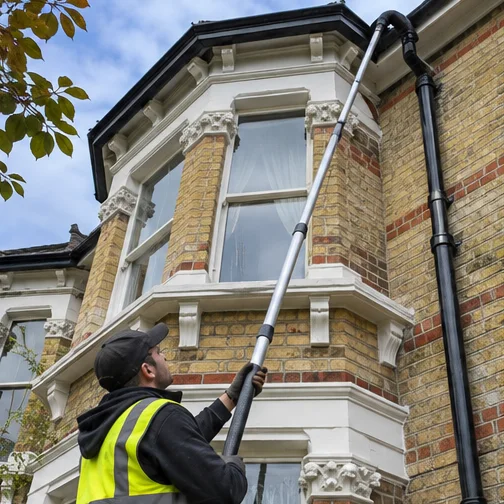
Illustrative photograph.
Establish whether the garage or extension has its own outlet
A lower roof can interrupt the route to the original wall and have drainage of its own. If an upper pipe discharges over a garage or extension, explain where it ends and how water leaves the lower roof. A spill at the lower edge can begin there or be fed by a problem above. Photos from two angles may show whether the upper pipe sits behind a projection. Note where water first becomes visible and whether the lower outlet is also carrying water.
At a corner, the pipe may turn onto another elevation or pass into an enclosed area. Follow the parts you can see without stepping onto a wet or unsafe surface. At the foot of the wall, record whether the pipe ends above a gully or continues below paving. A pool may arrive from the pipe or collect from the surface around it. If you have a drawing showing a drain added during a garage conversion or extension, it can help with a later inspection of the hidden route.
- Ground levels along the affected wall
- Garage and extension drainage
- Gated approaches and narrow turns
- Follow-up tied to visible outlets
Discuss which lengths can be cleared from the agreed position
Leaves and silt can collect behind an outlet lip or where a channel changes direction. An accessible opening may be clear while debris remains at the far end of a short return. Gutter cleaning removes material from agreed accessible sections and visible openings. A ground-based vacuum may be suitable where the footing and angle allow the equipment to reach. A camera can sometimes provide a view of a corner or outlet. We assess the approach to each length, especially where the ground slopes or the eaves sit behind a lower roof.
Where a garden or passage is shared, tell us who can give access and who is instructing the work. The occupier who first noticed a leak may have a useful view through a window but no key to the passage below. If an adjoining owner controls the only approach, arrange permission for that position and describe the route they have agreed. If access is available only through the house, include any tight turns or low doorways. Each elevation can have a different practical limit.
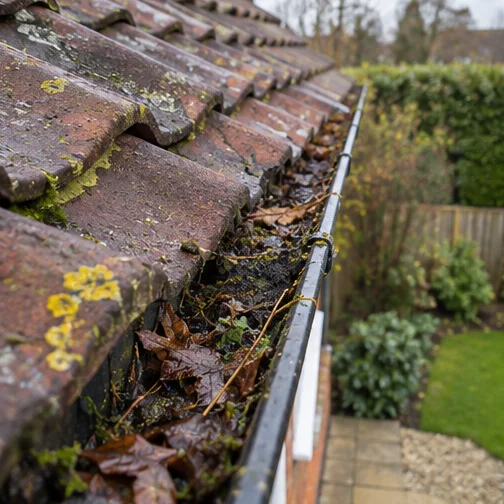
Describe the slope from the working side
Haringey’s urban character study identifies Bounds Green as one of the areas reached by a ridge extending eastwards. The approach at any particular property depends on the plot. At a house near Bounds Green Road, the front entrance may be raised above the pavement while the garden sits below the rear door. Measure or estimate the height from the side where work is requested. If the gutter runs over changing ground levels, give both ends. The lowest part of the path can produce a very different working height from the front steps.
Show the route as well as the level. A paved strip can slope towards a retaining wall or turn beside an extension. A rear gate may be wide enough at the boundary and narrower immediately inside, where a post or hedge takes up space. Include any steps, rails and overhead cover in a photograph looking along the approach. A second view looking towards the roof can show whether an open area lies directly below the gutter or some distance away.
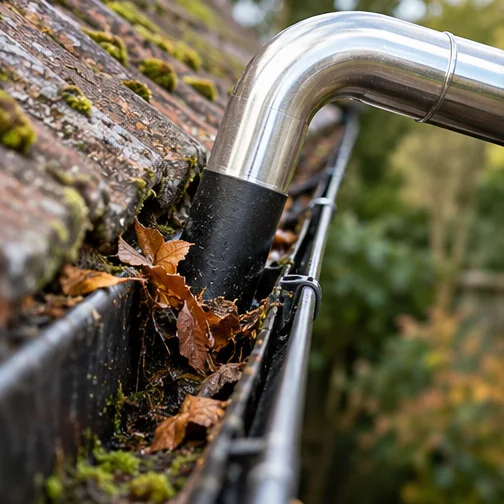
Work for other parts of the rainwater system
Gutter cleaning
Clear agreed accessible gutters above sloping paths, garages and rear additions.
Gutter replacement
Discuss replacement where connected lengths or brackets have deteriorated.
Gutter lining
Assess the existing channel, support and outlet when considering lining.
Guttering repairs
Review a leaking seam in relation to the gutter fall and adjacent supports.
Water damage repair
Compare the timing of inside marks with visible routes down the elevation.
Ivy removal
Assess the surfaces and covered fixings where growth climbs a side wall.
Bounds Green details to send before a visit
| Observation | Information to add | Why it helps |
|---|---|---|
| Main gutter above sloping ground | Height at both ends of the affected length | Shows how the approach changes along the wall |
| Water landing on a garage roof | Position of any upper pipe and lower outlet | Shows how the roof levels connect |
| Wetting beside a side passage | First wet point and nearest bend or gully | Locates the symptom along the visible pipe |
| Drip at a joint between old and new work | Date or location of the earlier alteration | Helps identify the relevant fitting |
Examine the gutter, joint and support together
A narrow gap at a seam can be visible when the channel is dry. Water may gather there because the gutter has dropped or a support has moved. After the accessible material has been cleared, the position of the joint and outlet can help define a guttering repairs assessment. Tell us if a repair was made at the same seam before or if a newer section joins the original run. An older photo can identify the fitting that was changed.
A channel may be suitable for gutter lining if its support, shape and outlet connection allow a workable installation. Where several lengths or brackets have deteriorated, replacement may need to be considered. If growth follows the side wall and passes behind a pipe, describe the stem route and the surfaces it covers. An ivy removal assessment can then account for the condition of the wall and fixings. For water damage repair, give the date and location of the first interior mark and explain how it changes after rain. Finding the entry route may require looking beyond the gutter.
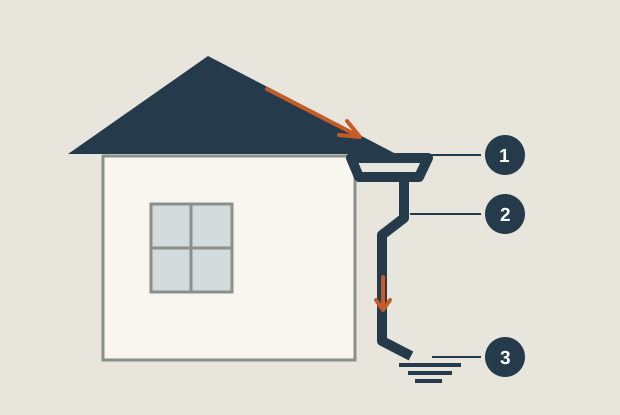
Keeping track of several independent runs
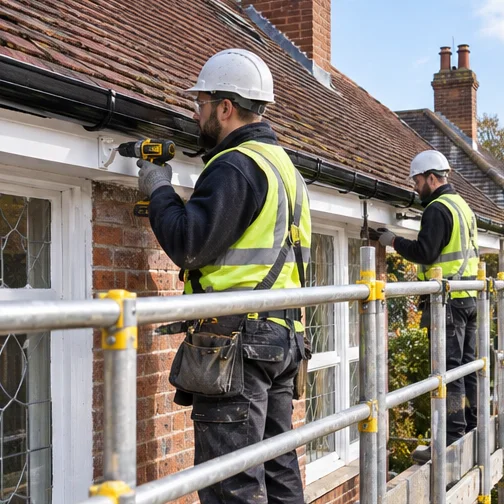
Give a later inspection a useful starting point
A record of the clearance can name each reachable section and any visible point that needs another look. Choose references that remain clear when the property is approached from another side. For example, the outlet above the low end of the side passage locates the concern better than the side gutter alone. If a particular section needs a different working position, the record can identify where the visit stopped and what access would need to be considered.
Check the original position during a later rainfall if you can see it safely. Note the timing and direction of the first runoff. If the channel no longer spills but the wall still gets wet at a lower bend, describe the two points separately. For a recurring inside mark, record the room and the closest part of the exterior wall. The owner or agent can compare the new account with the clearance record and decide whether a fitting, concealed drainage route or another part of the building needs assessment.
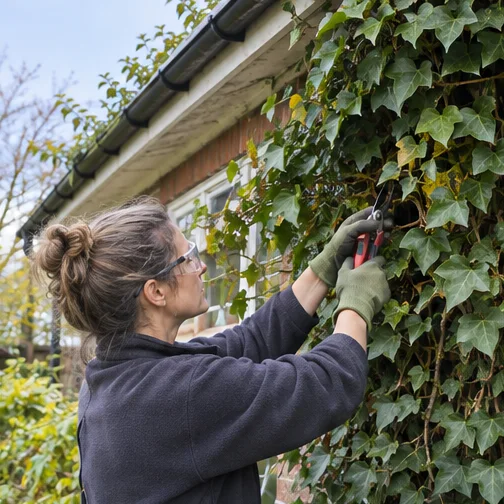
Questions about gutter cleaning in Bounds Green
Which height should I give if the gutter runs above a slope?
Give the approximate height from the ground at the affected point and mention how the level changes towards either end. A photo showing the whole side of the house makes it easier to judge the working position.
Can you clear the garage gutter and main roof together?
Tell us where each gutter sits and how to approach it. A low roof may have an accessible gutter of its own while blocking the line to the higher one. We can discuss the coverage for both.
What if the side passage is wider beyond a narrow gate?
Give the width at the gate and describe the turn immediately after it. Also show the space below the gutter. Enough room at the wall helps only if the agreed route can accommodate the equipment.
Why does water still collect at the bottom of the slope?
It may come from the paving, a gully or a rainwater fitting. Note where water first moves into the area and whether the upper gutter spills at the same time. A concealed connection may need another investigation.
Is a repeated drip enough to identify a faulty seam?
A visible drip can locate an area to inspect. The adjacent brackets, channel fall and outlet may affect where it appears. Send a view that shows the seam in relation to those parts.
What should I share with a managing agent?
Give the affected elevation, the route to it and the most recent observation. After a visit, include the record of sections reached and any point requiring further access. Use the same landmark so they can compare the reports.
Approaches at different levels
| Access setting | Detail to confirm |
|---|---|
| Garden below the rear door | Number and position of steps and available open space |
| Side gate beside a lower roof | Narrowest width and location of the overhang |
| Shared path between houses | Key holder and which working position has been agreed |
| Garage or extension beside a boundary | Distance from the roof edge to the nearest clear ground |
Coverage and bookings
See the areas we cover. For nearby enquiries, see Wood Green and Palmers Green and Muswell Hill.