
Gutter Cleaning Hadley Wood
At a house with several wings, a drip heard in the garden may come from a short gutter between two roofs rather than from the main eaves. Glen’s provides gutter cleaning in Hadley Wood for accessible rainwater systems. Send a view showing the affected edge and the route to it. If the house has an attached garage, a side wing or more than one storey at the rear, identify which part concerns you and where water first becomes visible.

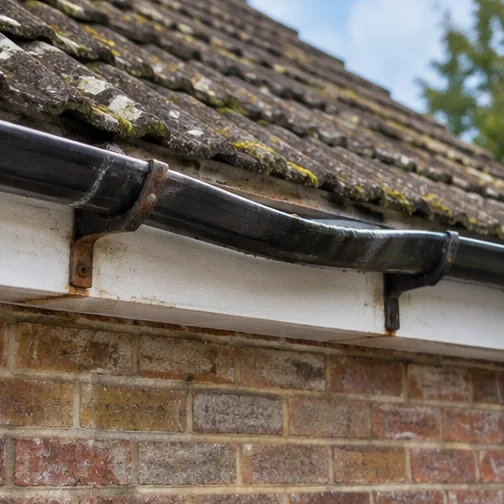
Illustrative photograph.
Describe the route past the front of the house
The Hadley Wood Neighbourhood Plan submission identifies Beech Hill and Camlet Way as routes through the centre of Hadley Wood, with the local parade and station near the Crescent West and Crescent East loop. At a residential address, the drive may provide a clear view of the front while the relevant gutter sits around the side. Say how someone would reach that side from the gate. A side path can narrow at the house or go down steps beyond a hedge. A photograph looking along the route helps us understand the width, level and any cover above.
At a property near the local parade, identify the entrance or unit nearest the affected roof edge. A sign or canopy can move runoff sideways before it falls. A person at the threshold may see the final drip while someone at an upper window can see water around the outlet. Give the first point each person saw and the approximate time. If the roof edge turns around a corner, include both walls in a photograph from a safe position. This can show where the pipe sits in relation to the entrance and where a rear route might begin.
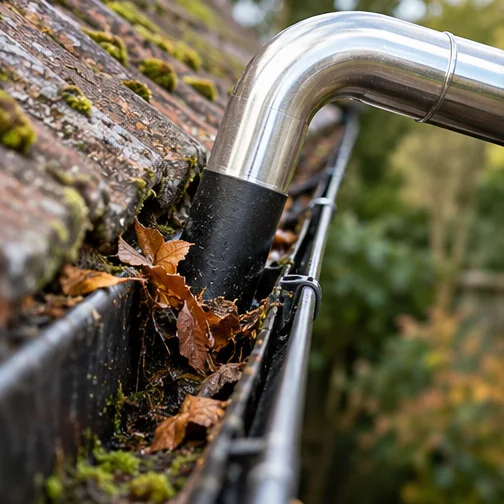
Separate a short wing gutter from the main roof
A roof above a wing can sit below the main eaves and run in another direction. One pipe may discharge onto the lower roof while another passes down the side of it. If water appears where the roofs meet, show the nearest outlets and explain how much of the upper gutter is visible. At a garage or porch, tell us whether the drip begins at the outer edge or where the lower roof joins the wall. A wide view of both levels may show a connection that a close view of the wet surface cannot.
From the garden, look for the point where water is supposed to leave the lower roof. It may have a short return or a pipe that goes behind a wall. If the pipe discharges into an open gully, note whether water reaches it or spreads across the paving. A paved area may also collect water from a slope or bed. Explain where you first see it moving. Where the pipe enters an enclosed route, mention any drainage record from earlier building work. The hidden part may need a separate inspection.
- Main roofs, side wings and garages
- Drive and garden access by elevation
- Upper pipes that feed lower roofs
- Named records for large or altered houses
Identify which part of the garden gives a usable approach
A generous garden may still have limited space near a particular wall. A tall hedge, planted border or branch beneath an eave can prevent a clear line to the trough. A retaining wall or steps can change the height from the working side. Describe the ground directly below the length and include any alternative approach. If one side of the house can only be reached by passing a garage or going through a gate, give the location and key holder. A second picture from the garden towards the wall is useful for showing projections and clearances.
Where a suitable ground-based position is available, gutter cleaning can clear agreed accessible channels and visible openings. An extendable vacuum may work where the reach and angle allow. A camera can sometimes show material gathered near an outlet or where a short length turns. A section behind a parapet or above a lower roof can require another arrangement. If you want several sides included, describe each separately. An open drive at one end of the house does not establish access to the rest of the roof.
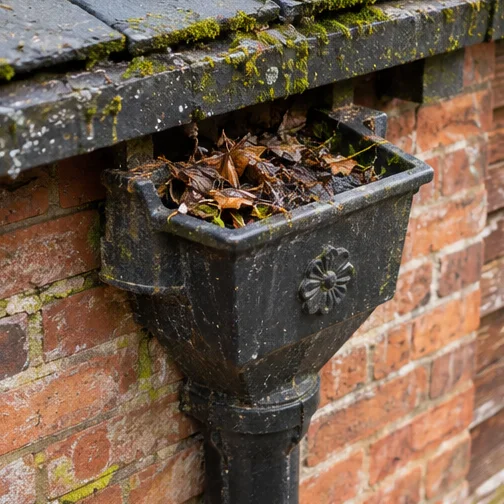
Hadley Wood details to share
| What you see | Detail to send | How it helps |
|---|---|---|
| Water where a wing meets the main house | Position of both roof edges and nearest outlets | Shows whether the levels drain into one another |
| Spill over a garage or porch | Where water first reaches the lower roof | Distinguishes its outlet from the higher route |
| Wet paving near a pipe | Whether the pipe enters a gully or continues below paving | Identifies the last visible connection |
| Gutter partly hidden by branches | Position of the branches and closest clear ground | Shows where an approach may be possible |
Review the parts still visible after clearance
Once leaves and silt are removed from a reachable channel, a joint or support may be easier to assess. A drip at a seam can relate to a local defect or to water collecting there because the channel has moved. Guttering repairs can be considered with the condition of the nearby supports, gutter and fixing surface. Tell us if a roof alteration changed the profile or outlet. It helps to locate the junction between the original run and any newer fitting.
Gutter lining depends on the condition of the supporting channel and the details at corners and outlets. Replacement may deserve consideration when several lengths or brackets have deteriorated. If climbing stems reach behind the gutter or cross from a garden wall to the building, show where they start and the fittings they cover. This helps define an ivy removal assessment. If water has reached a room, water damage repair starts with investigating how it entered and which material has been affected. A picture of the first interior mark can be used alongside observations of the outside.
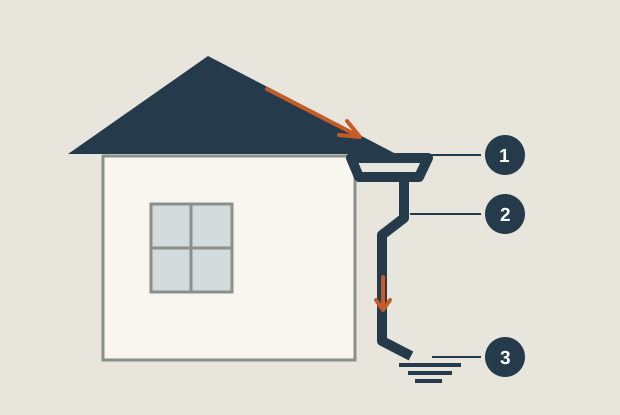
Work we can discuss after clearance
Gutter cleaning
Clear agreed accessible lengths around roof wings, garages and garden elevations.
Guttering repairs
Consider a visible seam or outlet together with the connected fittings.
Gutter lining
Assess channel support and outlet details when considering lining.
Gutter replacement
Review renewal options where multiple lengths or supports have deteriorated.
Ivy removal
Assess stems that pass from a garden wall to roof and pipe fixings.
Water damage repair
Use the position of indoor wetting and the roof layout to guide further assessment.

Keep the record tied to the part of the house
A clearance record can identify the agreed lengths reached, note where material was removed and describe any visible issue still requiring attention. For a property with several roof shapes, name the specific wing or lower roof. A reference such as the corner above the door next to the garage gives the owner a fixed place to check. If part of the gutter needs a different approach, the record can identify the section and the remaining access question.
In the next rain, compare the first wet point from a safe position. If the upper gutter no longer spills but a lower fitting still drips, record both locations. Give the date and approximate time after the rain began. Where the original concern is an indoor mark, note whether it changes and which exterior wall is closest. The follow-up can then consider a visible gutter fitting, an enclosed pipe or another possible route. Share the earlier clearance record with the person organising that assessment.
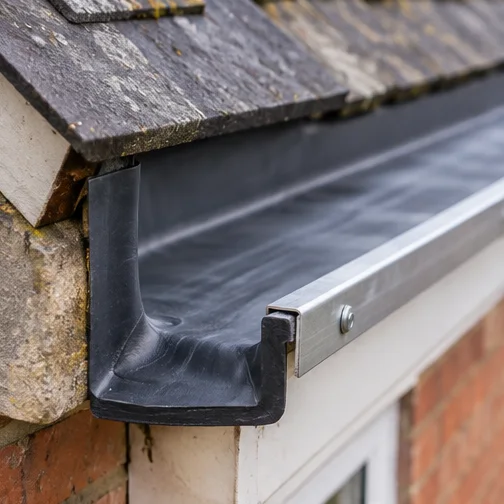
Describing access from the drive or garden
| Approach | Information to confirm |
|---|---|
| Side path reached from the drive | Narrowest point, steps and any locked gate |
| Garden below a retaining wall | Height from the working side and route down |
| Wall beside a garage or wing | Space between the lower roof and the boundary |
| Frontage around the local parade | Door use and any canopy or signage below the gutter |
Before we assess the roof edge
Questions about gutter cleaning in Hadley Wood
Can you include the gutters on a garage and the house?
List both and show how the roofs relate. A low roof may have its own reachable gutter but obstruct the line towards the main one. We can discuss the coverage for the available positions.
What if my drive is open but the side route has a locked gate?
Tell us who can open it and describe the path beyond. Give the width at the narrowest point and the location of any steps. This helps establish whether the route leads to a suitable working position.
Does water on an extension roof mean its gutter is blocked?
It may be normal runoff or water from a pipe higher up. A spill can also come from a restriction at the lower outlet. Describe where water first appears and whether you can see the lower roof discharging.
Can branches affect clearance even when the gutter itself is visible?
Yes. The branches can interrupt the line between the ground and the gutter or limit the usable space below it. A wide photo showing the wall and garden can help us discuss access.
Can you tell me whether a previous repair has failed?
Show the location of the repair and the point where water now appears. A visible joint and the surrounding supports can be assessed where there is suitable access. If the water comes from a concealed part, further inspection may be needed.
What should I record if different rooms report wetting?
Give each room’s location and the date the mark first appeared. Include the closest roof or wall feature outside. The observations may relate to different routes, so keep them distinct when sharing them with the building contact.
Coverage and bookings
See the areas we cover. For nearby enquiries, see Cockfosters and Enfield.