
Gutter Cleaning Richmond
We clear accessible gutters in Richmond. If the building sits above a sloping path or the ground changes level around it, show us the roof edge together with the available working ground. The height at the front door may be different from the height at the rear. We agree the runs and access before the visit, including which openings can be reached.
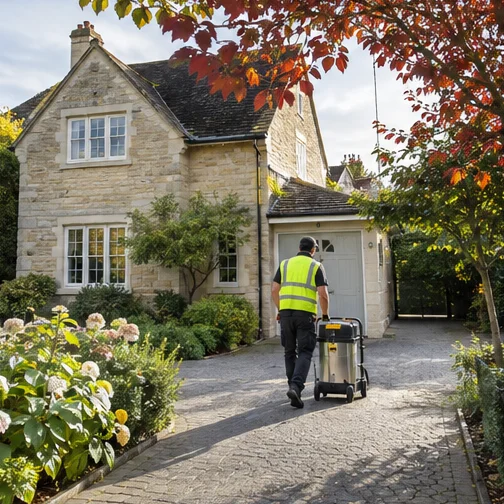
Illustrative photograph.
Show the changes in level along the access route
A position directly beneath the gutter may be on steps, near a retaining wall or on sloping ground. Tell us where there is clear, suitable ground farther back. If you can reach the rear from a different entrance, send a view of that route. The working position and the route for bringing equipment in need to be considered separately.
Include the points where the path becomes narrower or changes level. A broad pavement or drive may lead to a short passage with a tight turn. A lower roof can restrict the working angle even when the passage is clear. Show the roof edge and the available area beside it in the same photograph if possible. That helps us discuss what can be reached without assuming the same approach suits each run.
At a commercial or shared property, tell us who can confirm the space can be used. The ground below the channel may also be the main entrance or an access route for other occupiers. Let us know what needs to remain clear and whether an alternative route is available. If someone else will provide access, give us the contact in advance.
- Show the roof edge and changes in ground level.
- Identify the elevation by an entrance or window.
- Describe each available route separately.
- Mention who can confirm access to shared ground.
Identify which elevation you mean
Richmond Council’s Richmond Hill appraisal describes commercial streets, riverside grounds and gardens within the wider conservation area. For your property, tell us which elevation is affected and how its ground level relates to the gutter. At a house approached by steps, a view from the street may show the roof edge while giving little idea of the path around the side.
If the address includes a lower flat or separate entrance, identify which door is closest to the water. Do not assume the pipe next to that door drains the gutter above it. A longer view can show whether a bay or short addition has its own outlet. Tell us where rain first spills, whether it falls straight down or follows another fitting, and which parts you want included.
If you manage the building, give us an elevation name and a nearby feature that identifies the run. A west-facing gutter may be clear on a drawing and difficult to locate for a resident who only knows the garden door. We can use both references to identify the same section when agreeing work and afterwards when explaining what was found.
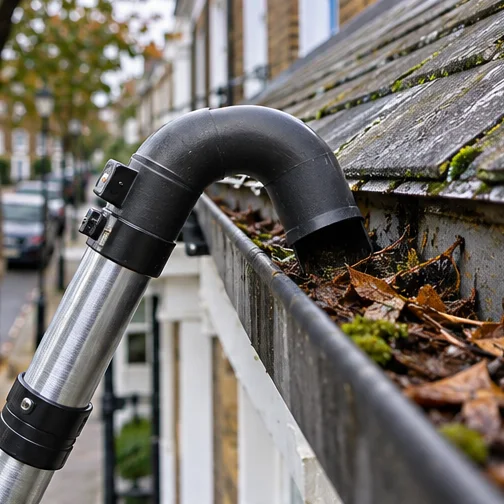
Relate the symptom to the roofline above it
| Where water is noticed | Reachable item to check | Helpful information |
|---|---|---|
| Lower steps beneath a projecting roof | Gutter above the steps and any separate bay outlet | Photograph showing both levels |
| Wall beside the garden entrance | Reachable channel and nearest visible outlet | Point where fresh water first emerges |
| Fitting that drips after earlier clearance | Visible seam and adjoining gutter | Which lengths were included last time |
Work along the agreed channel from the available position
Where the working position and reach suit the equipment, we use a gutter vacuum with reach poles. We collect accessible leaves, moss and compacted material along the lengths we agreed with you. We work towards the reachable downpipe opening and pay attention to the areas around turns and outlets. The visible rim of a gutter can look clear while debris remains below it.
If the angle into the channel is limited, ask about a camera view where access permits. A camera may show material or a visible fitting at the reachable part of the gutter. It does not necessarily show what happens beyond the inlet in a closed pipe. If we can remove a reachable obstruction, we do so. If the suspected blockage is farther along the pipe, we describe where the inspection stopped and discuss what may need a separate check.
Afterwards, we tell you which lengths and openings were reached. If the ground on another elevation did not provide a suitable position, we identify the affected section. See what our gutter cleaning visit covers for the work that can be agreed. We can discuss a separate approach for a length that could not be reached.
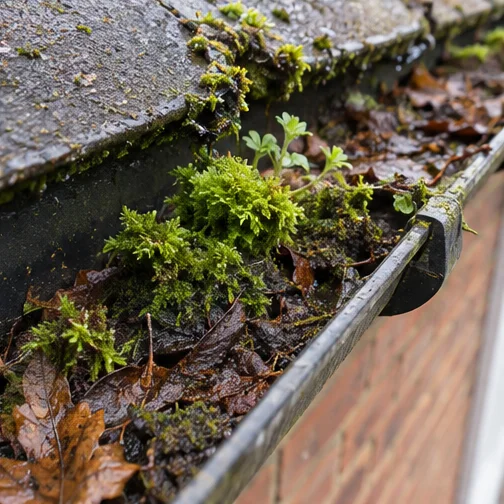
Give us enough information to plan the return if needed
Send the postcode and identify which side is higher or lower relative to the roof edge. If one photograph is taken from the street and another from the garden, label them. A gutter can look similar from different sides, especially if the property has several outlets. Mention where a retaining wall or flight of steps interrupts the route rather than estimating access from the height of the house alone.
If the visit was arranged by someone who will be away, give us the details of the person present and whoever should receive the findings. We can explain which parts were cleared and identify any accessible opening checked. If you need to arrange a separate visit for another run, use the same elevation name and describe what access has changed.
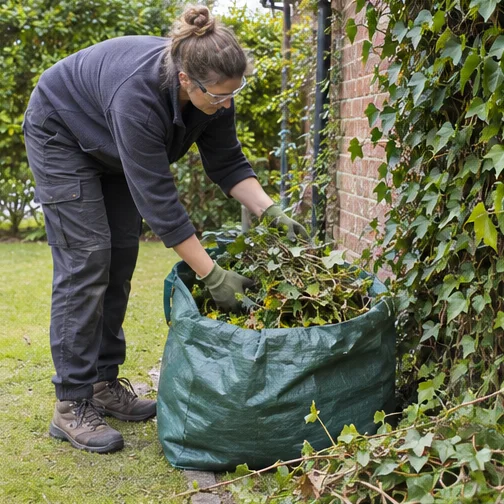
When upper and lower gutters need separate attention
Address any fault found after clearing the channel
A fitting can still leak even after its outlet has been cleared. If the defect is visible, we can discuss repairing the affected guttering independently of the clearance. If several sections have failed, we can assess whether to renew the affected length and look at how it would connect to retained fittings and its outlet. A clear section elsewhere does not tell us whether the leaking join is sound.
We can consider lining if a concealed channel remains supported and its surface and outlet can be inspected. If ivy hides a fitting or restricts the approach beside a wall, ask about cutting back the growth. If water has already entered the building, tell us where it appeared and whether the source has been identified. Assessing water damage is separate from clearance and may involve a different part of the property.
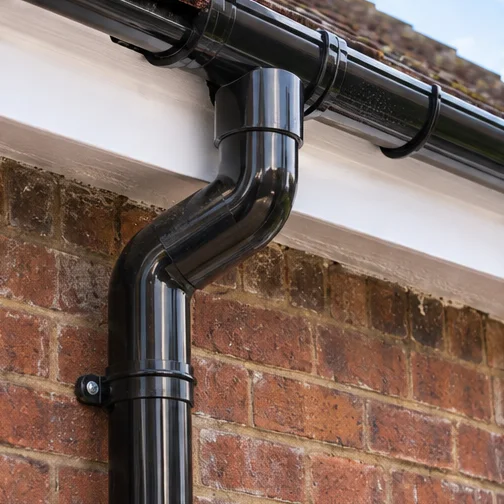
Compare working positions on changing ground
| Ground below the run | What to show us | What we use it for |
|---|---|---|
| Steps near the front door | Level area before or beyond the steps | Identify a usable setup |
| Path sloping around the side | Available width and level ground near the turn | Plan approach to the return |
| Garden below a raised terrace | Routes between levels and position of lower roof | Determine which channel can be reached |
Other work on the extension and roofline
Gutter cleaning
We agree which rooflines can be reached from the available ground.
Gutter replacement
We assess how a renewed length could join the existing gutter.
Guttering repairs
A visible fitting that still drips after clearance may need repair.
Ivy removal
We can discuss removing ivy that hides a downpipe or blocks the route to it.
Gutter lining
We look at a supported concealed channel and outlet before discussing a liner.
Water damage repair
Tell us which finish indoors is marked and whether the source has been identified.
Coverage and bookings
See the areas we cover. For nearby enquiries, see St Margarets and Kew and East Sheen.
Richmond booking questions
Does the height at the front tell you what is reachable at the back?
Not by itself. Show the rear ground and roof edge so we can discuss the position separately.
Can you set up away from the wall?
Where the reach and angle allow it, yes. Tell us where the open ground lies relative to the gutter.
Should I send a picture from the lower garden?
A view from level ground that shows the roof and route is useful. Do not try to reach the channel to take it.
What if the gutter is above a shared entrance?
Tell us who can provide access and when the doorway needs to remain clear.
Can you check both a bay and the roof above it?
Identify each run when booking. We discuss the approach and outlet separately if they drain independently.
Will you report a section you could not reach?
Yes. We describe which length remained and what prevented access so a further visit can be discussed.