
Gutter Cleaning St Margarets
We clear reachable gutters in St Margarets and check accessible downpipe openings. Tell us if the overflow falls towards steps, a sunken entrance or a lower window. What you see at the bottom does not always show where it began. A wider photograph lets us relate the wet area to the gutter and assess where the equipment could stand.
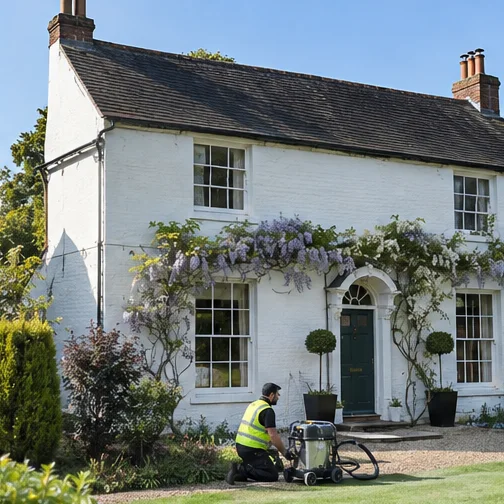
Illustrative photograph.
Find the roofline above the lower entrance
Richmond Council’s St Margarets Estate conservation statement describes the planned estate west of Twickenham Bridge. The relevant roof and ground arrangement depends on your property. At a house with a lower entrance, a drip can fall from an upper channel, run off a projecting bay or appear at a fitting on the wall. Tell us where you first see the water emerge.
If the lower entrance is shared with another occupier, ask them what they noticed during rain. A puddle at the foot of the steps may show where water gathers rather than where it entered. If you see water descending the wall from a specific outlet, identify that outlet in the photo. If it comes off the edge of a bay roof, show whether a gutter from above empties onto that roof or has its own downpipe.
A light shower can reveal a drip at one join while heavier rain causes overflow farther along. Describe both if you have seen them. If a length was cleared recently, tell us whether the accessible opening was included. We can discuss what remains to check without assuming every roof edge over the entrance was reached in the earlier visit.
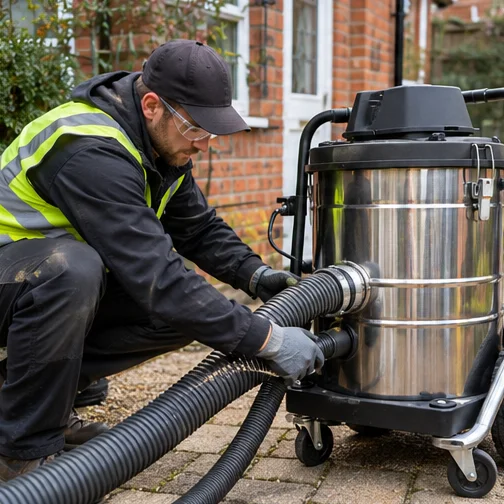
Set up away from the steps and keep the door available
Tell us where the ground is level and clear relative to the gutter. The lowest point beside a window might be directly under the leak without being a suitable place for a vacuum. A separate path or space behind railings can provide a different angle. A photograph that includes the steps, railing and roof edge helps us discuss the available ground before agreeing what can be reached.
Where more than one person uses the entrance, tell us whether there is another route and who can confirm which part needs to stay clear. If the working position is in a private area belonging to a different occupier, give us the relevant access contact. We discuss the approach before agreeing to work above a door or beside a narrow path. For a rear run as well, describe how to reach the garden independently.
For a property with planting or a lower projection, include the space beyond it. A bay, canopy or extension can limit the angle even where there is an open area next to the building. Tell us if the ground at the side is higher or lower than it looks in the front photograph. We can use both views to discuss a position for the pole and vacuum.
- Show both the roof edge and the steps below it.
- Identify whether the bay and upper run drain separately.
- Say which entrance needs to remain open.
- Give the contact who can show where water appears during rain.
Clear the reachable run and check the opening
Where the agreed ground and roofline suit the equipment, we use a gutter vacuum with reach poles to collect leaves, moss and compacted material. We move along the included lengths, paying attention to corners and the area leading into a reachable downpipe. A short bay channel may have its own outlet. We identify it separately when it is included rather than treating it as part of the higher run.
If the roof edge screens the inside of the channel, ask about a camera view. Where the angle and access permit, the view can help identify debris or a visible fault near the opening. We remove accessible material that obstructs it. If the pipe passes behind a fitting or into an enclosure, the section beyond our view may need further attention. We explain the limits of the reachable check.
When finished, we identify the lengths cleared and the outlets we reached. If water continues appearing near the lower entrance, the route from the roof to the wall may need to be assessed separately. See what our gutter clearance service covers for the work agreed in advance. We can explain which parts could not be reached and discuss the access that would be needed for them.
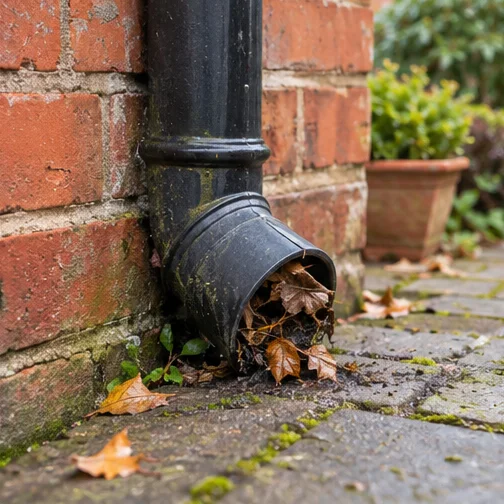
Follow the water towards the lower entrance
| What is visible | What we can check | Information to provide |
|---|---|---|
| Water falls from above a bay | Reachable upper run and nearest inlet | View of both roof edges |
| Staining appears beneath a visible pipe connection | Accessible gutter and visible connection | Where fresh water first appeared |
| Puddle gathers at the foot of steps | Signs of overflow from the roofline above | Whether water drips from the edge or runs down the wall |
Discuss what a remaining leak means for the building
If a seam or end still drips, we can discuss repairing the affected gutter fitting. We look at which part is visible and whether the lengths beside it are sound. A longer failed run can be considered for gutter replacement with attention to how it would meet retained sections and the downpipe. A supported concealed channel may be considered for lining if its surface and outlet can be inspected.
If growth covers a pipe close to a lower window, tell us what needs clearing from around the fitting. We can discuss cutting ivy back separately from clearing the channel above. If rainwater has already reached the inside of the property, tell us who can show the area and whether the source has been dealt with. Water damage assessment considers what has happened inside and is separate from clearance at the eaves.
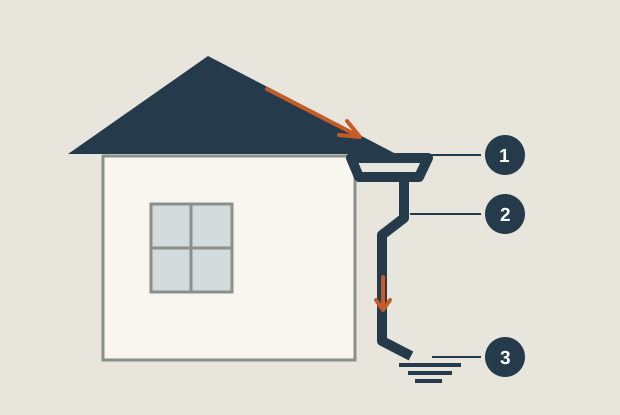
Work we can discuss after clearance
Gutter cleaning
We agree which bay, upper and rear gutters can be reached.
Guttering repairs
We can discuss a fitting that still drips onto the entrance after clearance.
Gutter lining
We assess a supported concealed channel before discussing a renewed lining.
Gutter replacement
We check where a replacement would connect to the retained gutter and pipe.
Ivy removal
We consider cutting back growth that hides a pipe beside a lower window.
Water damage repair
Tell us which lower room is affected and whether water still enters.
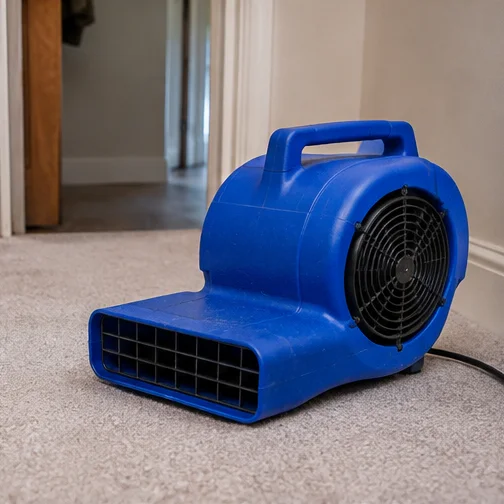
Give us a reference for the leak that others can recognise
If you are reporting on behalf of someone living below the gutter, label the picture with the door or window nearest the water. Include an overall view as well as any close-up. A reference such as “outside the lower entrance below the front bay” is more useful than a photo of a wet wall with no surrounding features. Describe when it happens, how long it continues and what was checked on the previous visit, if known.
Let us know who can open the relevant access and who should receive the findings. A resident may be able to show where water appears without being able to approve further work. We can arrange to explain what was reached and what was visible to the right contact. If more than one elevation is included, we identify them separately when giving feedback.
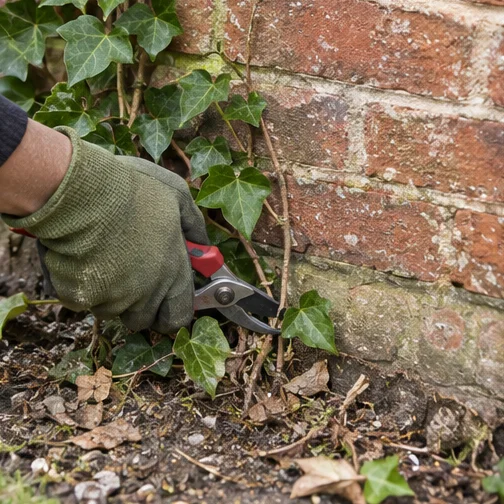
Establish a clear position without blocking the entrance
| Area available | What to show | Decision it supports |
|---|---|---|
| Path at the top of the steps | Width and whether it stays in use | Suitable position near the frontage |
| Separate side ground | Gate and line of sight to the gutter | Whether the roofline can be approached from an angle |
| Garden reached through another door | Route, keyholder and steps | How the equipment reaches the rear |
Before we assess the roof edge
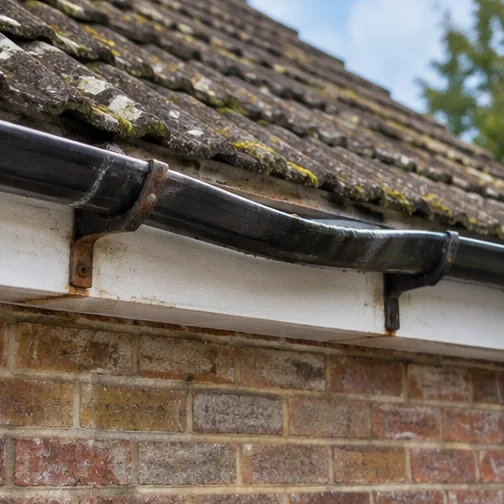
St Margarets booking questions
Can you clear a gutter above a sunken doorway?
Show us the steps and the ground available around them. We discuss a suitable position before agreeing what can be reached.
What if the mark is indoors below the steps?
Tell us when it appeared and what you saw outside during rain. Assessment of the interior is discussed separately.
Is the bay included with the upper gutter?
Identify both runs when enquiring. The bay may drain independently and need to be listed separately.
Can another occupier show where the water falls?
Yes. Give us their details and say who can provide the working access or approve further work.
Can you check a pipe that disappears beside the steps?
We can look at reachable openings and the visible connection. A concealed part may need another assessment.
Will you tell me whether the same joint still looks faulty?
We describe visible defects after clearance. If a separate repair is appropriate, we discuss it with you.
Coverage and bookings
See the areas we cover. For nearby enquiries, see Twickenham and Richmond.