
Gutter Cleaning Barnes
We clear reachable gutters in Barnes. If the channel has a mesh or cover, tell us which parts are exposed and whether you can see debris around an end or outlet. Some sections may be accessible while others need a different approach. We discuss what can be reached and what the visit should cover before agreeing the work.
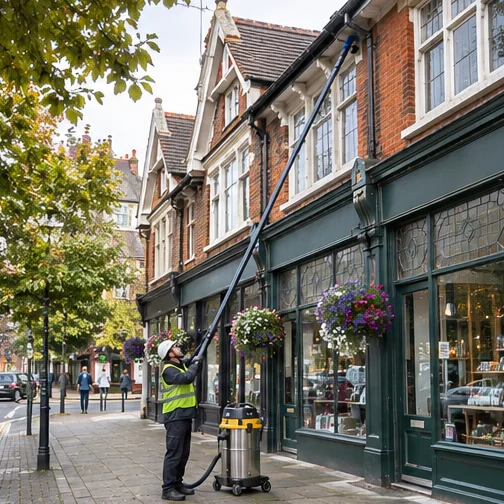
Illustrative photograph.
Identify what covers the channel and what remains open
Richmond Council’s Barnes Green conservation area appraisal describes the different settings around the Green, including shopping streets and Victorian and Edwardian residential areas. A gutter fitting can vary from one elevation to another even at the same property. A section above the front may have a cover while a rear return or a bay remains open. Tell us which run you want us to look at rather than assuming the whole roof edge is fitted the same way.
If you know the type of cover, describe it or send a photo from ground level. Do not remove anything to obtain a closer view. We need to know where the cover begins and ends and whether it obstructs the opening. A section can collect material at the end of a cover, while the centre of the run may be hidden. A wide photo of the roofline and outlet can show the relationship even if the cover itself is hard to see.
When it rains, identify where the water first leaves its usual route. It may go over the outer edge, drip at an end or appear below an upper discharge. If water travels across the top of the cover, mention that. If the same fitting still drips in light rain, include that observation too. Those symptoms can help us distinguish a reachable blockage from a separate issue with the fitting.
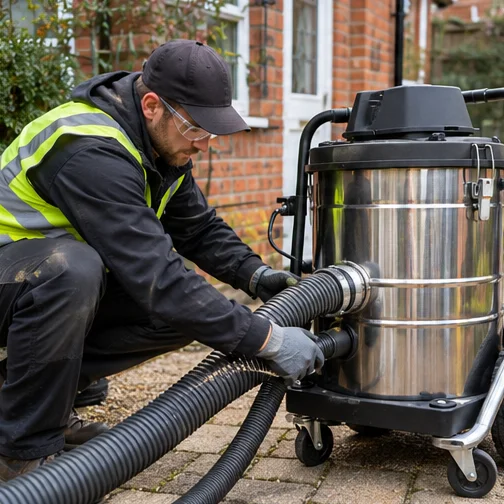
Record where the water comes out rather than where it lands
When you enquire, identify the nearest window or doorway and give us the timing of the overflow. If material is visible at one end, show where it sits in relation to the outlet. Tell us if the rear run is open while the front has a cover. That helps us discuss each length instead of making one assumption about all the gutters at the address.
Give us the name of the person who can show the ground and who should receive the findings if someone else owns or manages the building. We describe the parts we reached and identify any additional access that might be needed. For a future visit, use the same description for the covered and exposed lengths so it is clear which part you want considered again.
Agree the approach to the exposed parts
Tell us what space is available below the gutter and whether it runs past an extension. A front garden may have an open path but limited room immediately below a bay. A lower roof can screen a longer run even when the area beyond it is clear. Send us a view that includes the open ground, the projection and the roof edge so we can discuss where the pole might be positioned.
For a side or rear gutter, tell us who can open the route and whether the equipment needs to pass through the house. Include any turns and changes of level. If a neighbour or another occupier controls access, confirm who can open it on the day. The fact that you can see the roof from a particular spot does not establish that the space can be used. We agree the available working ground before booking.
At a business frontage, tell us which entrance customers use and what area needs to stay clear. The gutter may sit over a canopy or an upper roofline above it. If there is an alternative approach from a courtyard, describe it as well. Let us know which door or gate leads there and who can confirm that it is available.
- Show where a cover begins and ends.
- Point out the exposed inlet or corner you want checked.
- Describe the ground beyond any lower roof.
- Mention a separate uncovered run at the rear.
Discuss access at the open points
| Working position | Information to provide | Why we need it |
|---|---|---|
| Path beside a garden wall | Width and direction of gate opening | Helps identify where equipment can be brought in |
| Open ground beyond an extension | Roof projection and distance to the affected edge | Shows whether the pole can reach the channel |
| Courtyard serving a frontage | Who can provide access and which entrance is in use | Helps agree the working position |
Clear the accessible lengths and check the reachable inlet
Where the height and working position allow, we use a gutter vacuum and reach poles to collect accessible leaves, moss and compacted material. We work towards the opening into the downpipe. If a cover limits entry to part of the channel, we discuss what can be cleared from the accessible points. We do not assume a cover can be removed or that everything below it can be reached from the ground.
Ask about using a camera if there is a view into a particular opening or end. It may help us identify the debris or visible condition from a suitable angle. If we can reach material at the outlet, we remove it. An obstruction beyond the accessible opening can require a separate assessment. We explain what could be seen and where the check stopped rather than reporting that a concealed pipe was inspected in full.
After the visit, we identify the lengths cleared and the openings we reached. If part of a covered channel remains inaccessible, we explain which part and what prevents reach. See our gutter cleaning service for how we agree the accessible work. We can discuss the next step if the same point still overflows or appears to leak from a fitting.
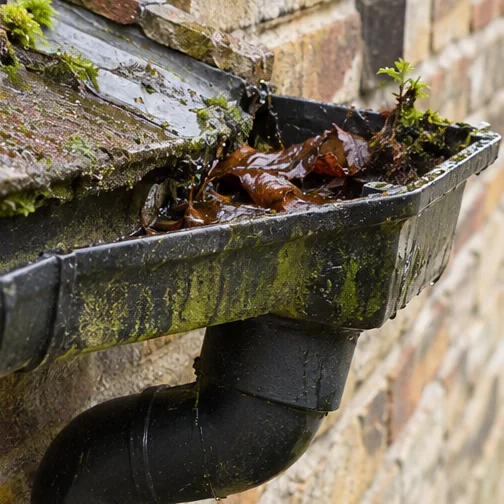
Separate work at the premises
Gutter cleaning
We agree which open or covered runs are reachable.
Ivy removal
We consider growth that obscures a pipe or limits access to the exposed point.
Guttering repairs
A visible leak at an end or join can be discussed separately.
Water damage repair
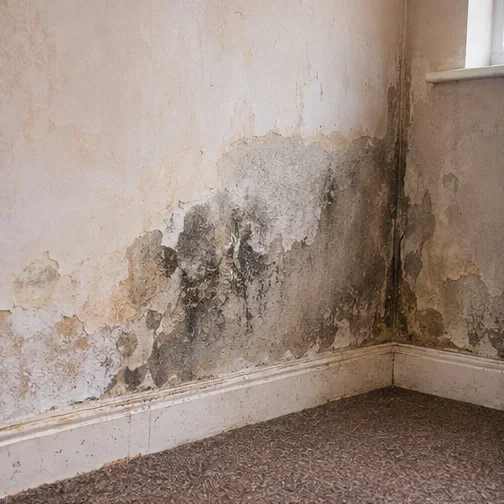
Tell us which indoor surface is affected and whether rain still enters.
Gutter replacement
We assess how a new length would meet retained fittings and covers.
Gutter lining
We inspect the surface and outlet of a supported concealed gutter before discussing lining.
Match the visible symptom to a reachable check
| What you noticed | What we can look at | Tell us before booking |
|---|---|---|
| Leaves at the end of a covered run | Reachable end and nearest inlet | Where the cover stops |
| Water spills across the outer edge | Exposed parts of the run and reachable outlet | Whether it starts at a single point |
| A join drips after leaves were removed | Visible fitting and adjoining lengths | Which section the previous visit covered |
Discuss any remaining problem at a fitting
If a seam, bracket or end remains visibly defective, we can discuss a separate gutter repair after clearance. If the gutter has failed along a larger section, we can assess renewing the affected run and how it would meet its outlet and any retained lengths. Tell us if a cover or other fitting was added around the time the issue began.
If a concealed channel has sound support but a failing surface, we can consider lining after we can see the relevant outlet and material. If ivy obscures the edge of the channel or restricts ground access, we can discuss cutting back the affected growth separately. If water has already marked a wall or ceiling indoors, tell us when it appeared and whether water is still entering. Assessing damage inside is separate from clearance at the eaves.

What helps when several people report the leak
Coverage and bookings
See the areas we cover. For nearby enquiries, see Mortlake and East Sheen.
Barnes booking questions
Can you clear a gutter that has a cover?
Tell us where the cover starts and ends. We discuss whether there are reachable points and what can be checked without altering the fitting.
What if only the outlet is exposed?
We can discuss a check of the reachable opening. Other parts of the channel may need a different approach.
Should I take the cover off before the visit?
No. Send what you can safely see from the ground and let us discuss what access is possible.
Can I include the open rear gutter separately?
Yes, if it can be reached. Show its outlet and describe the approach to the garden.
What if rain runs across the top of the cover?
Tell us where you saw the flow and whether the outlet also spills. That helps identify what should be inspected.
Do I need a separate visit for a fault in the cover?
Tell us what is visible. We discuss any work to a fitting separately from the accessible clearance.