
Gutter Cleaning Mortlake
We clear accessible gutter runs in Mortlake. If water arrives at a short gutter from more than one roof, show us where the surfaces meet and where the nearest downpipe sits. A spill at that point can involve the lower channel, the outlet it feeds or water from above. We discuss which lengths can be reached and what the clearance visit should cover.
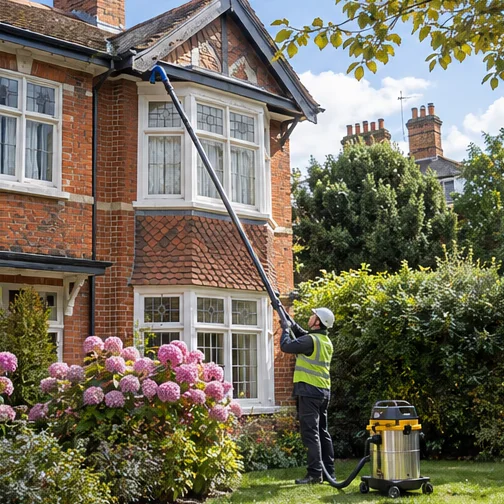
Illustrative photograph.
Work out how the short channel can be approached
A gutter near the junction of two roofs may be reachable from one direction and screened from another. Take a wider photo from the available ground if you can. Show the lower roof, the wall and the path or courtyard. If a fence or wall sits below the join, tell us what space remains on your side. We need a place to stand the vacuum and an angle from which the pole can approach the gutter.
If access is through a side gate or internal passage, describe the route beyond it. A gate can be wide enough while the turn behind it is tight. At a rear courtyard or converted property, let us know which contact controls access and whether anyone else uses the ground below the gutter. We can discuss one roofline independently if the other needs a separate approach.
At a commercial entrance, say whether the area is usually in use and when an alternative position is available. If water falls above a door that must stay clear, identify a route from the side or back if one exists. We discuss access before agreeing work and identify any length we cannot reach from the available ground.
- Show both roof edges and the point where water enters the lower run.
- Identify the downpipe that serves the receiving gutter.
- Describe the ground beyond the lower roof.
- Mention whether an earlier visit reached both levels.
Clear the receiving channel and check its reachable outlet
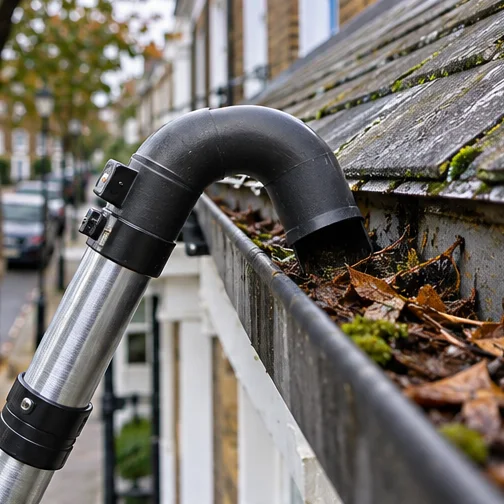
Where there is suitable reach and a workable position, we use a gutter vacuum with reach poles to collect accessible leaves, moss and compacted material. We work along the agreed lengths and pay attention to the point where the roofs meet. Material can gather where the gutter receives water from a pipe above or where the run changes direction. We check the accessible inlet and remove what we can reach around it.
If the roof edge prevents a view into the channel, ask about a camera check. The position and angle determine what can be seen. A camera may show the inlet or the area beside it without showing the full pipe. If the symptom points to an obstruction beyond the reachable opening, we explain where the check ended and discuss what needs separate attention. See our gutter cleaning service for what we agree before the visit.
We tell you which lengths and openings were reached. If only the lower channel could be approached, we identify that clearly. A separate run above may still need a different position. If water continues to escape at the meeting point after clearance, we describe what can be seen of the gutter, outlet and fitting and discuss whether another check is worthwhile.
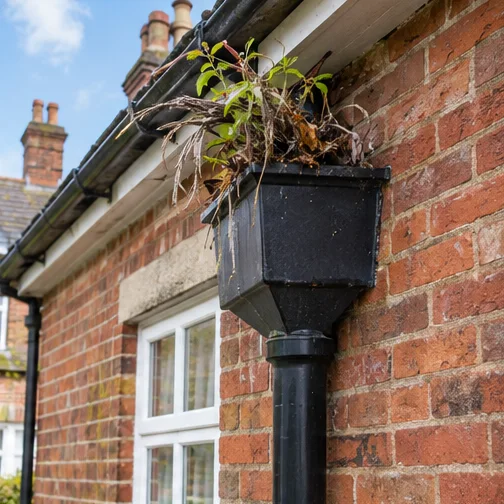
Identify the roof surfaces feeding the spill
Richmond Council’s Sheen Lane, Mortlake appraisal identifies several adjoining conservation areas. For your enquiry, the useful detail is the arrangement of the specific roof. If an upper pipe or a junction between roof slopes delivers water to a short length of gutter, include the junction and lower outlet in the same view. A cropped image of the wet wall often misses the point where the water entered that length.
Tell us what happens in a light shower and what changes when the rain becomes heavier. A gutter receiving flow from above can look clear at one end while material near the outlet holds back water. If water comes over the edge before it reaches the outlet, identify the point where it first escapes. A visible opening at the other end may not belong to the affected gutter, especially where an addition drains separately.
For a property with several occupiers, ask who saw the water and which window or door was closest. Give us both the roof edge and a feature below it. That makes it easier to describe the same point after the rain stops. If a previous visit reached only the street-facing run, identify any rear channel that was left out.
Work for other parts of the rainwater system
Gutter cleaning
We agree the receiving channel and any upper run that can be reached.
Gutter replacement
We look at where new guttering would meet retained sections at a junction.
Gutter lining
We assess a supported concealed channel and its outlet before discussing lining.
Guttering repairs
A fitting that continues to drip after clearance may need repair.
Water damage repair
Tell us which interior surface is affected and whether the outside source is known.
Ivy removal
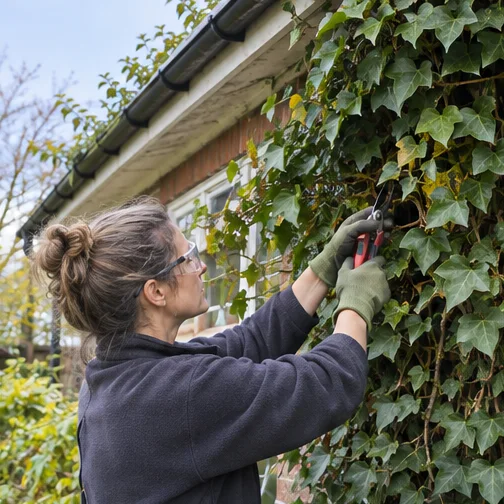
We can discuss trimming growth that obstructs access near the junction.
Identify how water arrives at the junction
| What you see | Reachable check | What to show us |
|---|---|---|
| Spill begins where an upper pipe ends | Lower gutter and reachable inlet | Pipe, receiving channel and outlet |
| Water comes over an edge away from the outlet | Accessible run leading towards the opening | Where the spill starts in rain |
| Drip continues from the same seam after clearance | Visible connection and adjoining length | Position relative to both roofs |
Consider a repair if the junction still leaks
If water still drips from a visible join once debris has been removed, we can discuss repairing the connection. If the affected section has failed along more than one fitting, we can assess renewing the damaged length and where it would connect to retained guttering and pipework. A supported concealed channel may be considered for lining after looking at its surface and outlet.
If ivy covers a pipe at the junction or restricts access to the courtyard, we can discuss cutting back the affected growth separately. If rainwater has already damaged an interior finish, tell us where it appeared and whether it still comes in. Water damage assessment is a separate enquiry from gutter clearance. Tell us which room or surface is affected and whether the outside source has been identified.
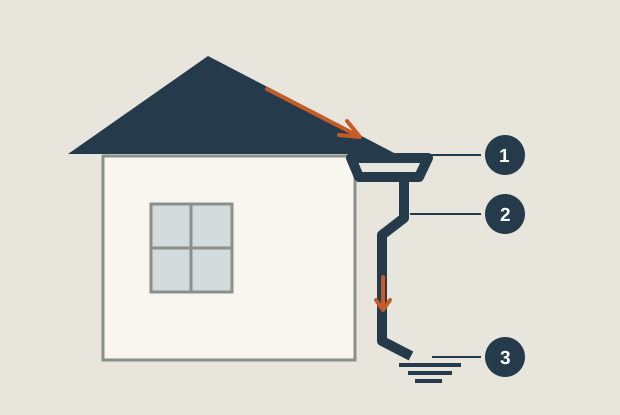
Keeping track of several independent runs
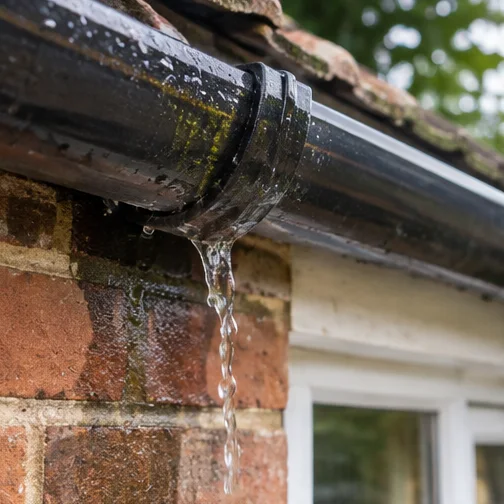
Give us enough detail to distinguish the runs
Identify each channel by its roof or a nearby window. A note such as “short return below the pipe from the upper roof” helps us recognise it from more than one direction. Include a view of where the lower run empties. If you cannot see how the two roofs connect, explain where water arrives at the lower edge rather than trying to inspect the junction yourself.
If an earlier visit only cleared the upper gutter, tell us what happened to the lower run afterwards. A photograph taken before and after a shower can help describe the symptom even when the building is dry on the day of the visit. Give us the contact who can show the approach and the person who should receive the findings if they are different people.
Mortlake booking questions
Can you check where two roofs drain into one gutter?
Show how the roof edges meet and where the pipe is. We discuss which lengths can be reached and included.
What if only the lower gutter overflows?
Tell us where water arrives at that gutter. It may have its own blockage or be receiving a spill from above.
Can you clear the upper and lower runs separately?
Yes, where they can be reached and agreed. Describe the approach to each before booking.
Will a camera show where an upper pipe begins?
It depends on the angle and what is accessible. Tell us which connection you want to see so we can discuss it.
What if the same join drips once the channel is clear?
We can describe any visible defect and discuss repair as separate work.
Should I report the leak using the front address?
Give us the address and identify the elevation or entrance below the affected junction, even if it is at the rear.
Discuss access to the receiving channel
| Position | Detail to send | Why it matters |
|---|---|---|
| Ground beyond the lower roof | Projection and clear area to one side | Helps assess the working angle |
| Gate leading to a courtyard | Route beyond it and contact who opens it | Determines whether equipment can reach the position |
| Path by a shared entrance | Part of path that needs to stay clear | Helps agree a suitable setup |
Coverage and bookings
See the areas we cover. For nearby enquiries, see Barnes and East Sheen and Kew.