
Gutter Cleaning Queen’s Park
If rain drips into the space below a front window at a Queen’s Park property, show us the roof edge and both levels of the frontage. A low window or doorway can sit beneath railings, steps and an upper gutter that is difficult to see from below. Glen’s clears accessible gutters and checks reachable downpipe openings. Give the full postcode and photograph the wall from ground level so we can assess which lengths to include.
Tell us whether water falls directly from the roof, travels down the wall or runs into the lower area across the paving. If the report comes from a lower flat, give the flat number and the route to its entrance. A separate view from the street helps us place the lower doorway in relation to the upper gutter and outlet.
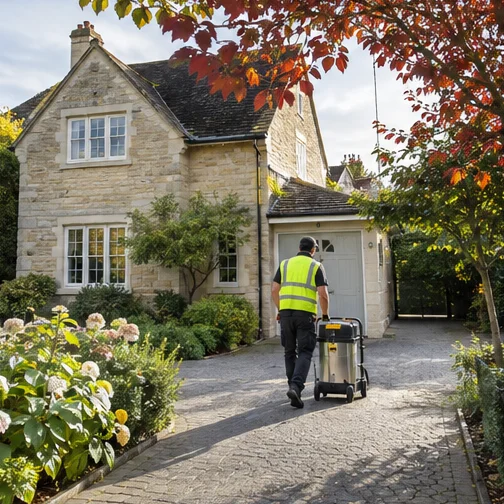
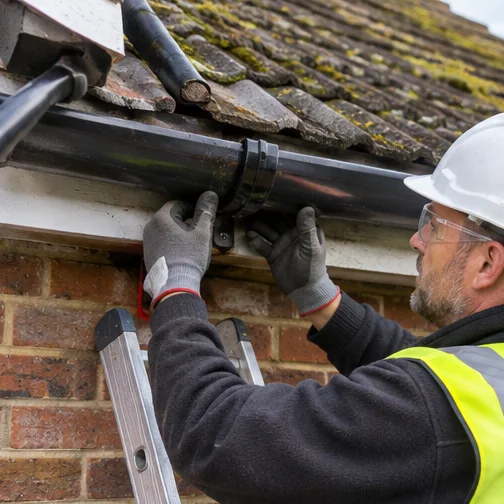
Illustrative photograph.
Show the approach to each level
Take one photograph from the pavement and another from inside the boundary, where you have access. Include the railings, gate swing and steps. A paved space may be visible below but only accessible through the lower flat. Tell us who can open that route and whether another person needs to use the stairs. Show any rail or narrow landing that limits the working area.
If there is a side approach to the same wall, describe how it connects to the frontage. Take a photograph looking along the wall so we can see how far the gutter projects and whether a canopy or bay intervenes. Where the only view is from the street, show where pedestrians pass and which part of the frontage belongs to the property. We can assess what arrangements would be needed before confirming the visit.
- Locate the first visible water above the lower frontage
- Show the approach from the street and from inside the boundary
- Trace the pipe on both sides of the railings
- Match fresh indoor damp to the external level
Locate where water enters the lower frontage
From a sheltered position, watch for the highest place where water first becomes visible. Drops may come off a seam or stop end, hit a railing and land on a step or sill below. Water that travels across the upper paving can enter the same space without falling from the roof directly. Show both routes if you see them, and note which one begins first.
A photograph taken after rain can show where the water reached the wall. Include the upper gutter, nearest downpipe and any bay or canopy. If a recording focuses on the lower window, mark the same window in the wider view. We can use the views to discuss which reachable sections to include in gutter cleaning and whether the visible gutter and lower drainage need to be assessed separately.
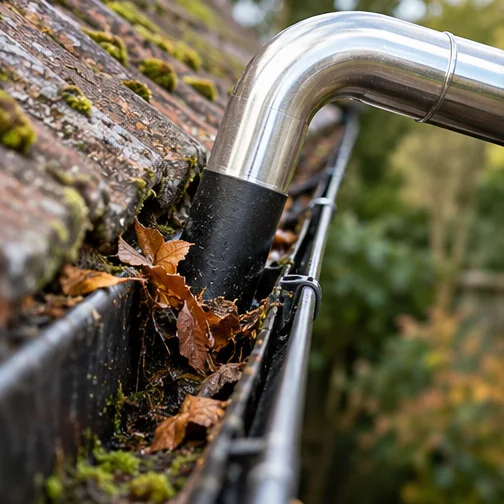
What to send for a Queen’s Park enquiry
| Detail | Useful photograph or note |
|---|---|
| Upper roof edge | Complete frontage with gutter, outlet and any lower projection |
| Lower entrance | Gate, steps and the surface available beneath the gutter |
| Downpipe route | Visible connections above and below the railings |
| Wet area | First appearance of water and whether it comes from the roof or paving |
Follow the downpipe past the railings
Look for where the upper gutter meets the pipe and trace the exposed length down. It may pass behind a bay, turn beside the steps or continue to the lower ground. Photograph the last visible connection and include any branch from a lower roof. A hopper near an upper window may receive water from a different run from the pipe beside the lower door. Show which roof edges appear to drain towards each fitting.
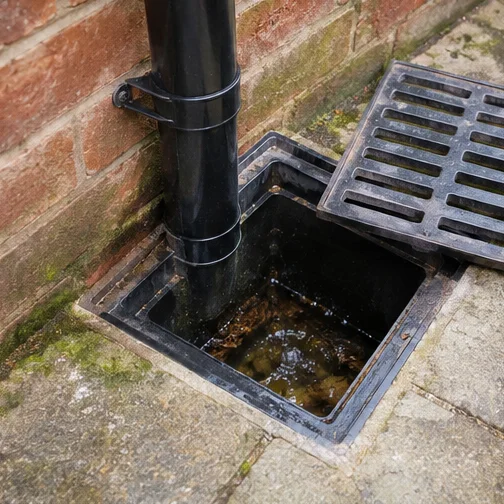
If the pipe empties into a gully near the lower entrance, record whether water rises there before the gutter starts to spill. Include any other pipes and surfaces feeding the gully. We can check reachable openings within the agreed clearance. A concealed connection behind the wall or a drain beneath the paving may need separate investigation. A view of the upper and lower pipe helps us identify which parts can be checked.
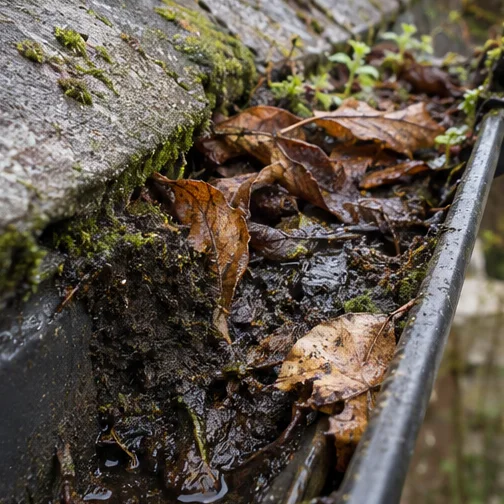
Record the fitting and access for any later work
If clearance reveals a visible loose support, open seam or slipped pipe connection, we can describe the fitting and discuss guttering repairs separately. A photograph showing the nearest window, railing or doorway helps identify the exact part. Tell us whether the fitting can be approached from the lower ground or whether another position is needed. Give the contact who can arrange it.
For gutter replacement, show the affected lengths and where they discharge. Tell us if an existing pipe, hopper or gutter profile should remain. A new length may have to meet a visible outlet above the railings, and its access may differ from a low fitting beside the steps. Keep the agreed work and photographs with the maintenance record so a later visitor can locate the same sections.
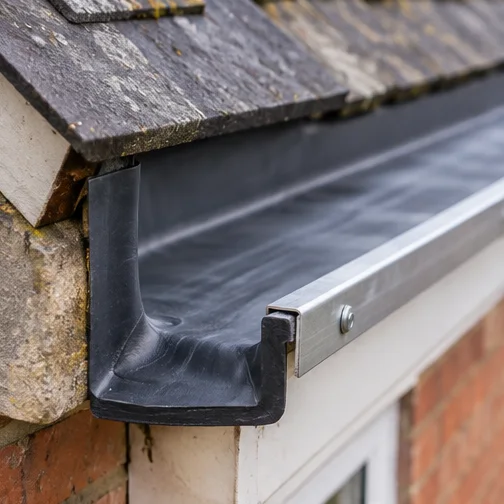
When upper and lower gutters need separate attention
If a low window has a well beside it, photograph its edge and the nearby ground while the area is dry. Include any cover and show how the surrounding paving slopes. Note whether water drops into the well or first reaches its edge at ground level. If the well is separate from the doorway, mark both positions so it is clear which surface became wet first.
If the top landing has been resurfaced, note whether the edge beside the stair or window well changed height. A photograph taken before the work can show where rain used to drain away. Compare that view with the present pipe base and mark any point where water now crosses onto the steps.
Match fresh damp to the exterior level
If moisture appears inside, record the first mark and its height relative to the window sill, door or floor. Photograph the corresponding area outside and include the pipe, nearby steps and the ground level. A patch above the frame can line up with a seam or roof junction. Water at the threshold may come from a pipe base or surface runoff. Tell us whether you saw a flow outside and what appeared first.
For a water damage repair enquiry, give the date of fresh wetting and any earlier work on the gutter, steps or window. If accessible gutters have already been cleared, identify which lengths and openings were checked. An old mark can remain after conditions change, so pictures of fresh wetting and an account of the latest shower help show what is still happening.
Observations around a lower ground-floor entrance
| What you see | What to record |
|---|---|
| Drops strike the railings | The gutter or pipe directly above and the first wet point |
| Water crosses the top step | Which direction it comes from and where it gathers below |
| A gully rises beside a low window | Incoming pipes and when it starts to fill |
| Fresh damp appears above the door | Its height and the corresponding exterior fitting or junction |
Other work on the extension and roofline
Gutter cleaning
Clear accessible gutter lengths agreed for the front or rear of the property.
Gutter replacement
Specify new lengths and connections around the fittings that are to remain.
Guttering repairs
Assess a visible loose support or shifted fitting near the marked entrance.
Ivy removal
Review ivy where it climbs past railings towards a pipe, bracket or outlet.
Gutter lining
Assess the existing channel and outlet before discussing lining above a lower frontage.
Water damage repair
Compare indoor wetting with the visible drainage and ground levels outside.
Coverage and bookings
See the areas we cover. For nearby enquiries, see Kensal Green.
Queen’s Park gutter cleaning FAQs
Can you assess a gutter above a lower entrance?
Yes. Show the full wall, steps and any railings or lower roof. Tell us which access routes can be used. We can discuss what can be reached before arranging the visit.
Does the lower flat need to provide access?
That depends on the approach. If we need to pass through the lower flat or its gate, tell us who can open the route and which areas are available.
Can you include a small canopy gutter?
Yes, where the channel is reachable. Show its outlet and the gutter above it. Tell us whether the upper roof discharges onto the canopy.
What if the pipe runs behind the steps?
Show the visible parts and the point where it goes out of sight. We can discuss reachable openings. A concealed route may need further access or investigation.
Can you check water collecting in the lower area?
Send a view of the steps, gully and pipe base. Record where water first becomes visible. We can assess reachable openings and discuss whether the lower drainage needs separate investigation.
What if the gutter has already been cleared?
Send the record of which lengths and openings were reached. Show where fresh water appears and give the timing. We can discuss what visible fitting or other surface may need further assessment.