
Gutter Cleaning Woolwich
A building in Woolwich can have an entrance facing the street and another reached from a lower service area. The gutter may be visible from both, while only one gives a useful approach. Glen’s clears accessible gutters and checks reachable downpipe openings. Tell us which elevation is affected and send a picture from the lowest ground that can actually be used for access.
Give the full postcode and the entrance name or number. If an intercom brings us into the wrong part of the building, explain how to reach the affected side from outside. A picture of the door and a separate picture of the roof edge can help the person arranging the work and the person meeting us agree on the same route.
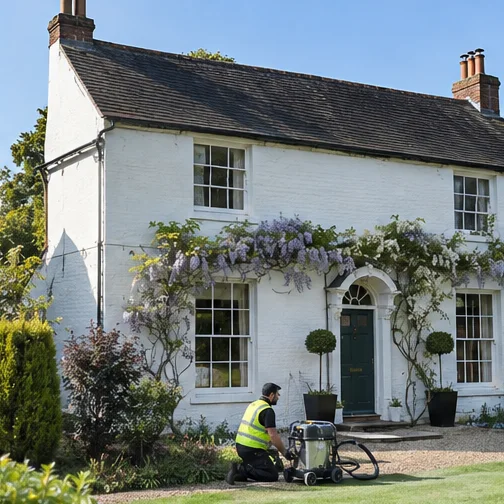
Illustrative photograph.
Identify the elevation from a permanent feature
Describe the affected gutter by the wall it runs along and the entrance, stair or window below it. At a building with several stair cores, saying that a gutter is above the back door may not identify it. Mark the door and the roof edge on a wide photograph. If a pipe crosses from the upper roof to a lower section, include both heights and show where the pipe changes direction.
If the first report came from an upper floor, ask the occupier to indicate what they could see and from which window. The part visible from above might be a small channel along a canopy rather than the main roof gutter. A picture from the level below can clarify the depth and the location of the closest outlet. We can use those views to set the scope of gutter cleaning for the accessible lengths.
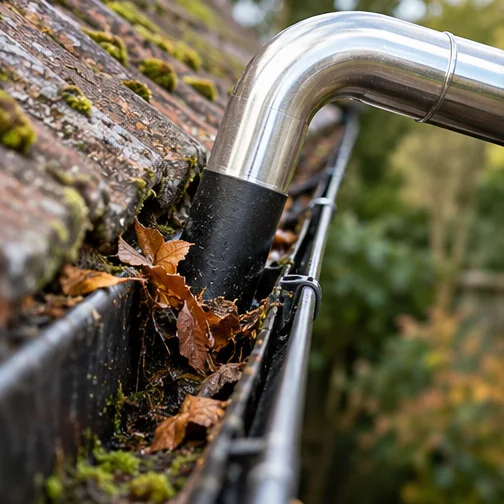
Agree the route between the street and service level
Show how the lower area is reached. It could be a gate at the side, a sloping vehicle route or steps that turn behind the building. Photograph the narrowest point and any landing between levels. If there is a barrier that only residents or staff can open, identify the person who can meet us. A contact number for the upper entrance may be of little use if that person cannot open the lower gate.
Find out what else takes place at the lower level. If the route is used to move bins or take deliveries, give us the times and where people have to pass. Show any fixed rails, raised edges or vehicles normally left in the area. Tell us whether the space below the gutter is part of the approach or only visible from it. The usable space, the roof height and the route between them are all relevant when we assess access.
- Mark the elevation by a door or stair that everyone can identify
- Show which gate reaches the lower service area
- Record where the pipe crosses a change in level
- Match inside wet marks to the outside level
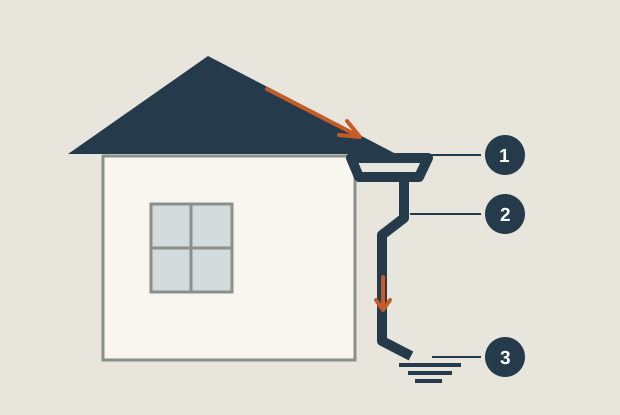
Trace the downpipe where the ground changes level
Look for the pipe as it passes an entrance or steps. If it is visible on the upper wall and disappears before reaching the lower area, send a picture of the point where it goes out of sight. A lower pipe on the same wall may serve another roof. Show any branch, hopper or exposed connection that establishes where the water comes from. Use a wide view if similar pipes run down several parts of the building.
Where there is a gully below the steps, photograph the pipe ends and the surface that slopes towards it. If water reaches the gully from the steps before it backs up around the pipe, make a note of the sequence. We can check reachable openings during clearance. The full route through a concealed pipe or underground connection can require a separate assessment. Recording the visible route helps distinguish those two parts of the enquiry.
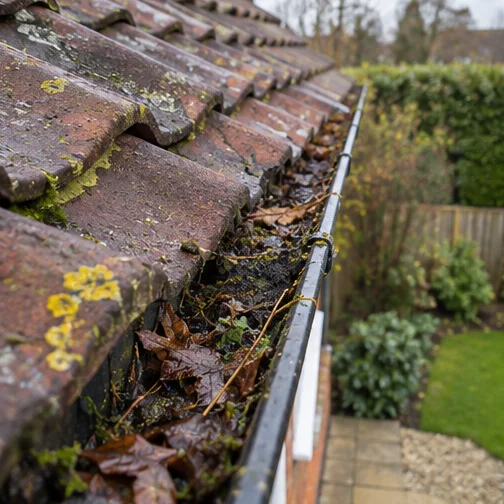
Information for a Woolwich visit
| Detail | What to send |
|---|---|
| Building reference | Street entrance and the separate service entrance, if present |
| Changes in level | Steps, ramps and the surface beneath the gutter |
| Pipe route | Visible branches and where a pipe passes out of sight |
| Access times | Who can open each gate and when the area can be used |
Link the signs indoors to the matching ground level
A mark near a lower doorway may be close to the pipe base or the point where rainwater runs off a landing. Note whether the first wet spot appears at floor level, around the frame or above the opening. If a person upstairs also reports a mark, describe its position separately. The two symptoms may come from different surfaces even when they are on the same elevation.
For a water damage repair enquiry, send the latest photographs of any fresh wetting alongside exterior views showing both levels. Tell us whether a recent change to a drain, handrail, canopy or doorway altered how water moves on that side. The time it takes for a mark to appear can help establish what was happening outdoors before it became visible. Give a date for any previous repair so it can be related to new reports.
Work we can discuss after clearance
Gutter cleaning
Clear accessible gutters on the agreed street-facing or lower elevation.
Guttering repairs
Assess a reachable fault beside the marked entrance, stair or landing.
Gutter lining
Assess a channel above a stepped frontage and the outlets it serves before discussing lining.
Gutter replacement
Specify new sections and supports relative to the accessible level and existing connections.
Ivy removal
Consider ivy where it reaches a fitting from a low wall alongside steps.
Water damage repair
Compare lower-level wet marks with visible rainwater discharge and surface routes.
Specify work by level and by fitting
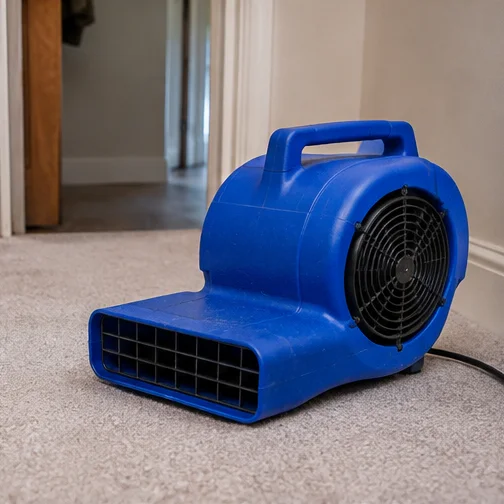
After reachable debris is cleared, we can report visible damage or changes in the position of a fitting. A slipped pipe near the lower entrance may be a separate issue from a gutter union above the upper level. If you want guttering repairs, point out the fitting on a wide photograph and confirm who can arrange access to it. Where connected sections serve different spaces, identify who manages each one.
When considering gutter replacement, state whether the existing outlet is to be reused and which level provides access to the relevant supports. Keep the visit record with pictures of the gate and any parts that were out of reach. The next person arranging work can then use the same descriptions. If the lower service area is only available at certain times, record that alongside the maintenance findings so a later quote can account for it.
Observations at an entrance below street level
| What you see | What to record |
|---|---|
| Water runs down the steps | The first step where it appears and what is above it |
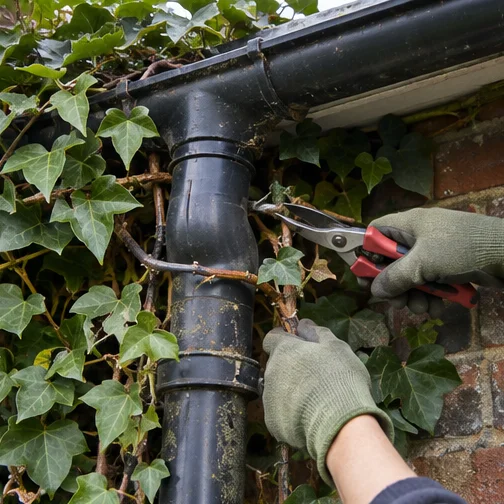
| Drips fall from a pipe bend | The higher fitting, bend and surface where they land |
| Gully fills beside the door | Incoming pipes and the direction of surface runoff |
| Damp begins above the frame | The closest exterior gutter, canopy or wall junction |
Before we assess the roof edge
Where bins are brought up a ramp, ask which part of the route needs to remain free and when the collection takes place. A wide angle from the entrance can show how the ramp meets the wall, but it may leave out a turn or a pinch point at the gate. Add a picture of that point, including any fixed handrail or gate stop.
Woolwich gutter cleaning FAQs
Can you assess access from a lower service yard?
Yes. Send a view of the yard, roof edge and route in. Tell us who can open the gate and whether vehicles or regular collections use the same ground.
Do you need the street entrance if there is a separate gate?
Give us the main address and the gate we should use. If the gate has a different number or faces another road, include those details so the route can be identified.
Can you clear a canopy below the main roof?
We can assess a reachable canopy channel. Show the main roof and outlet as well as the canopy. Tell us whether water from the upper roof reaches it.
What if the pipe goes behind a wall near the steps?
Show where it disappears and any lower section that comes back into view. We can discuss which openings can be reached. An enclosed connection may need separate investigation.
Can you include more than one entrance?
Yes, where suitable access is available. Give each entrance a reference and identify its gutter or outlet. Include contact details for any separate keyholder.
What if the wet mark is in a lower room?
Give its position relative to the door or window and tell us when it appears. An exterior image showing the same level, any gully and the roof above helps us discuss the relevant work.
Coverage and bookings
See the areas we cover. For nearby enquiries, see Charlton.