
Gutter Cleaning Wallington
We clear accessible gutter runs in Wallington and check openings into downpipes. If the pipe on the side of the house appears to end behind a fence or close to a gully, show us the parts you can see. We can use that information to agree where to inspect the system and explain what may need separate attention if water continues to back up below the gutter.
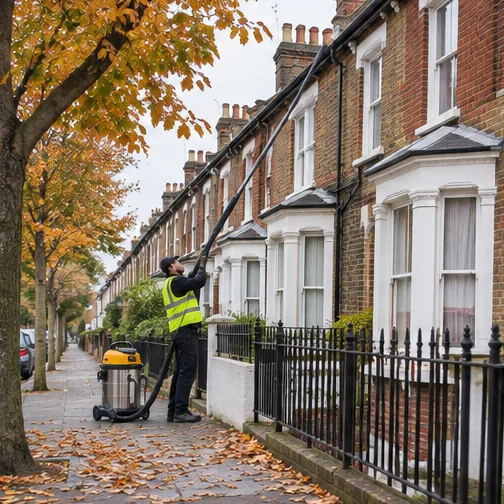
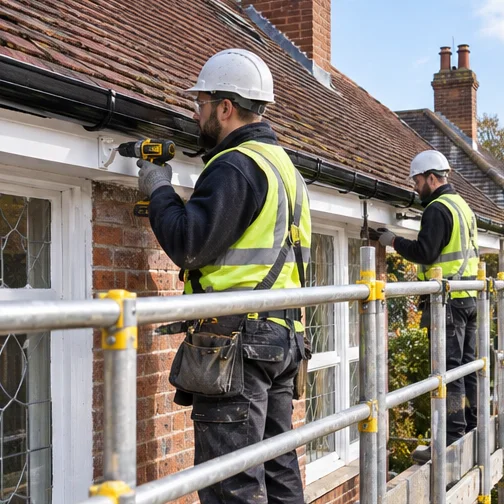
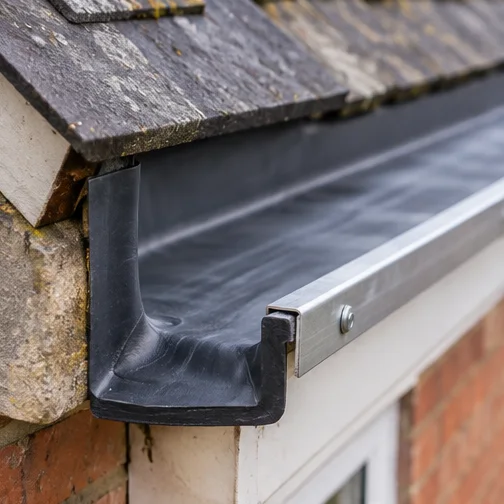
Illustrative photograph.
Describe the narrow part of the side route
Where the gutter is approached from a passage, show us the tightest part. It may be a turn behind the fence, a gate with a raised threshold or a gap beside a shed. Tell us whether we can enter from both ends. Having an opening at the rear can make it possible to stand the equipment farther along the wall, even if the route is awkward from the front.
If the pipe is near a neighbour’s boundary, tell us whether the affected opening can be reached from your side. We need to agree access before considering a different working position. For a flat or commercial premises, identify the person who can open the passage and the person who should hear about any fault. Where a shared route must remain available, say when it can be used for the visit.
- Show where the downpipe is last visible.
- Describe the tightest turn in the side passage.
- Say whether the shoe discharges above a gully.
- Identify which outlet belongs to the return gutter.
Clear the channel and accessible connection into the pipe
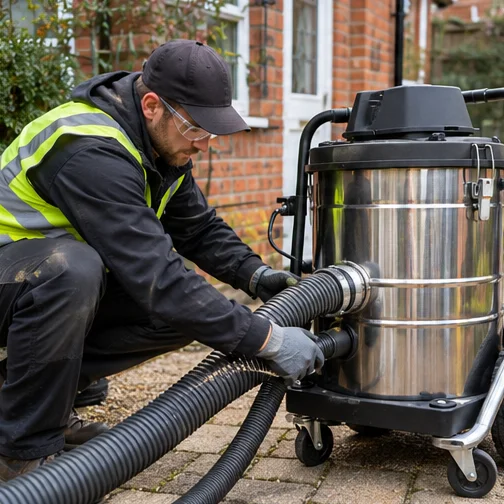
We use a gutter vacuum and reach poles where they are suitable for the roofline and working position. We remove leaves, moss and compacted material along the agreed lengths, checking turns and the areas close to the outlet. A clear-looking patch directly above the pipe can lead into a channel packed farther back, so we work along the accessible run rather than inspecting only the visible end.
We check the opening where the gutter feeds the downpipe and remove reachable material. We can report whether we found an obstruction at that point and what can still be seen of the pipe. If a restriction appears to be lower down or beyond the visible discharge, we discuss separate investigation. Ask about a camera check if you cannot see into the channel and want to know which sections can be inspected from the available position.
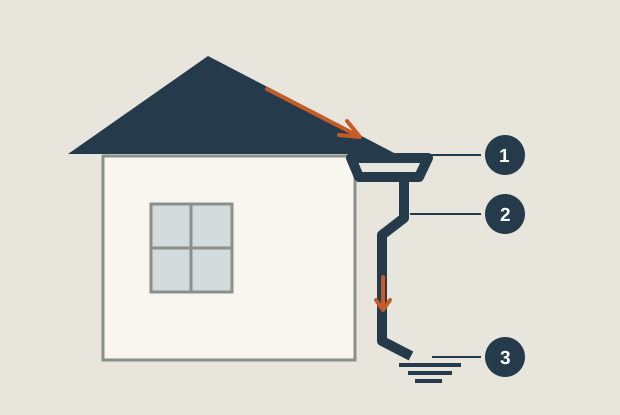
Follow the visible pipe to where the water appears
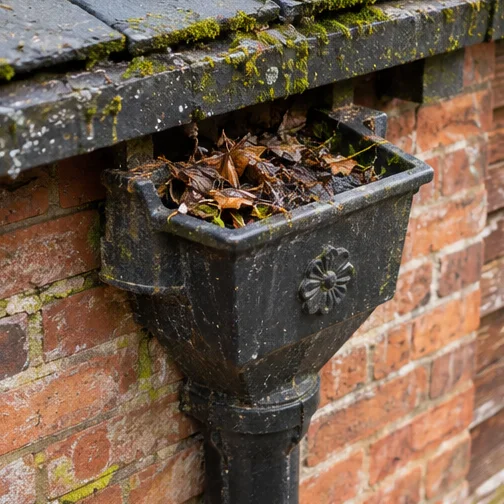
A downpipe can turn around a wall before it ends, which makes the lowest visible piece a poor guide to which gutter it serves. Send a photograph of the upper opening and another showing where the pipe reaches the ground. Tell us if it ends above a gully or disappears beneath paving. If you notice water near the fence, say whether it appears while the gutter is spilling or after the roof has stopped shedding water.
We use the description to identify the run and reachable opening. If you have a short video taken from ground level, show where the first overflow appears as well as the lowest visible part of the pipe. A picture of a puddle does not tell us whether the water came from the channel, a joint or a discharge point. Knowing where it began helps us discuss the likely inspection without promising work below ground.
Work for other parts of the rainwater system
Gutter cleaning
We vacuum debris from accessible channels and check the reachable opening into the pipe.
Gutter replacement
We discuss which lengths and fittings need replacing and which adjoining parts can remain.
Gutter lining
We inspect the support and outlet before discussing a renewed waterproof surface for a sound channel.
Guttering repairs
We look at local faults such as a leaking joint or loose support before agreeing any separate repair.
Water damage repair
We discuss assessment and drying for affected surfaces once the route of water entry is understood.
Ivy removal
We assess growth around rainwater fittings and discuss how far it can be cut back.
Describe the path of the water down the wall
| Where you see water | What to tell us | What we check |
|---|---|---|
| Along the gutter edge above the passage | Which part starts to spill first | Reachable channel and opening |
| At a downpipe bend | Whether water escapes at a visible connection | Condition and position of the fitting |
| Around a gully beside the fence | Whether water is reaching it from the visible shoe | Discharge and accessible parts of the system |
Consider follow-up if water still reaches the passage
If a connection is visibly loose or a joint leaks after clearance, we can discuss repairing the affected gutter fitting. If several lengths or sections have deteriorated, we can assess renewing the gutter run and how it would meet the current pipe. A sound channel with a failing surface may be suitable for lining once the channel and outlet have been inspected.
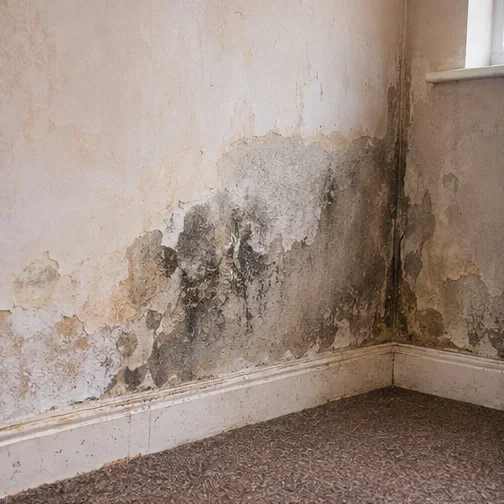
If ivy covers the side pipe, tell us what you want cut back and where it begins. We can discuss removal separately when it affects the ability to reach the fitting. If water has already reached an indoor wall, ask about assessment of the affected surface as a separate job. Our main gutter clearance page describes the typical work we agree for a visit and how we identify issues beyond accessible clearance.
Keeping track of several independent runs
If a fence has recently been added, take a wider picture from each end of the passage. It can show where the boards stop in relation to the bend and whether there is room to stand on your side. If the pipe has a removable cover, tell us who can open it and what is visible behind it. We can then explain whether the work can include that connection or whether the issue is outside the reachable section. Give us the location of any other outlet nearby so the two pipes are not confused.
Give us a clear description of the discharge
Send the Wallington postcode, height of the roof and location of the downpipe. If the side pipe enters the ground, tell us where it is last visible. If it discharges above a gully, say whether you can see water flowing out of the shoe. Include any recent work on paving, fencing or the pipe itself. A change near the bottom can affect how much of the system can be seen and reached.
After clearance we explain which lengths were reached and whether a blockage was removed from the opening. If we could not see beyond a bend or covered section, we identify where the visible part ends. Tell us if that information needs to go to a manager or another resident. A note of the relevant gutter, pipe and last visible connection makes it easier to agree any separate visit.
If several pipes reach the ground close together, label the one you are reporting in the photograph. A side outlet may serve a small return rather than the long run above the passage. Mention when the channel was last cleared, which sections were included and whether the water began appearing at a different point afterwards.
Wallington questions about side outlets
What if I cannot see where the pipe ends?
Tell us where it is last visible and whether it enters paving or passes behind a fence. We can discuss which openings can be checked from the available position.
Can you clear the whole downpipe from the gutter opening?
We clear reachable obstructions. An enclosed section or a restriction farther down may need separate investigation.
Can I book just the run above the passage?
Yes, if it can be reached and we agree it in advance. Give us the route in and show where its pipe connects.
Does a puddle by the fence mean the gutter is blocked?
Not necessarily. Tell us where the water appears first. We can look at the accessible outlet and explain what is visible of the discharge.
Can you use a rear entrance to reach a tight passage?
Tell us who can open it and what is on the ground beyond it. We discuss whether it provides a suitable position.
What if the pipe still backs up afterwards?
We can tell you what was removed and where the visible opening ends. If the remaining restriction appears to be farther down, we explain which point needs investigating separately.
Plan access from the front or rear
| Part of the route | Useful detail | Why we need it |
|---|---|---|
| Narrow turn behind a gate | Where the passage widens | Whether equipment can be brought through |
| Fence close to a pipe | Which side the opening is reached from | What can be seen and worked on |
| Rear yard | Who can open it and where the ground is clear | Whether another working position is available |
Coverage and bookings
See the areas we cover. For nearby enquiries, see Carshalton.