
Gutter Cleaning Selhurst
We clear gutters and reachable downpipe openings in Selhurst. If you can hear water spilling but cannot see the gutter above the window, tell us which side of the building is affected and when it happens. Give us an outside view of the roofline where possible. We can use that and your description to discuss how we would approach the run and whether a camera view would be useful.
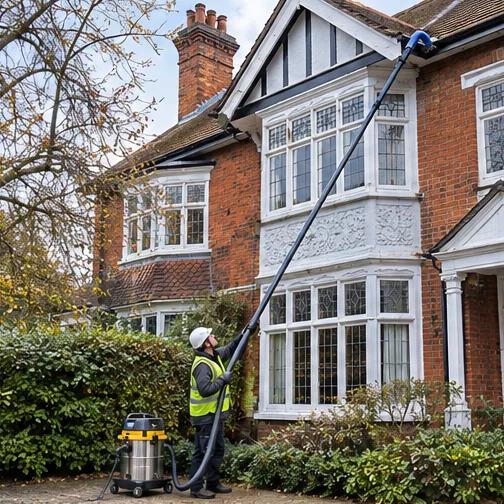
Illustrative photograph.
Establish a route to the position below the run
Tell us whether the ground below is a front path, a paved yard or a private garden. If you are arranging clearance for a property you do not live in, ask who can open that area and whether it is reached by a shared passage. A key for the main entrance may not give access to the yard where the vacuum would need to stand. The person who hears the leak and the person who can show us the ground may be different.
If a porch or lower roof hides the upper channel, send a photograph that shows how far it extends. A working position farther away from the wall may still give us a view of the gutter. We discuss which lengths are reachable with the available equipment and whether a separate arrangement is needed for the parts behind the projection. Tell us about stairs or narrow turns that affect the route to that position.
- Name the window or entrance nearest the first audible drip.
- Show the lower roof that hides the gutter from view.
- Give us the contact who can open the yard.
- Explain which seam or opening you want to inspect.
Report a leak you can hear before you can see
A loud drip may start above a window even though the water reaches the ground closer to a corner. When the gutter is hidden by the roof edge, say which room or door the sound is nearest and whether it begins at once or builds up after rain has been falling for some time. A ground-level video can capture where the water appears beside the wall. That is more helpful than guessing which fitting has failed.
If you have a view from another room, tell us whether there is a pipe on that side and which way the gutter leads towards it. There may be a bend or return out of sight from the window. A wider photograph helps us see how the roofline connects before we agree what to include. If the first report came from someone in an upstairs flat, include the entrance number as well as the side of the building they were looking from.
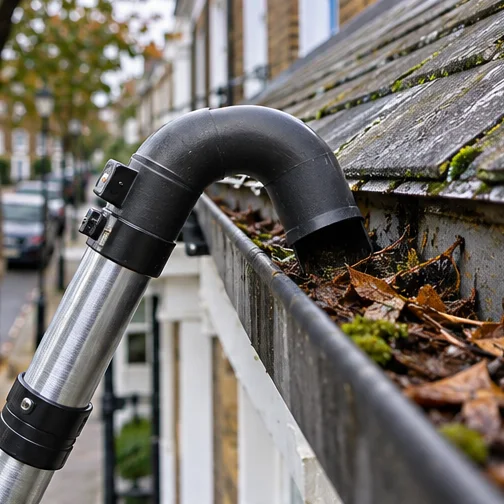
Match the observation to a visible part of the roofline
| What you noticed | Detail to add | What we check |
|---|---|---|
| Loud drip above a window | Which room and when the sound begins | Gutter edge and nearby connection |
| Water reaches a corner ledge | View of the wall above it | Where the channel turns |
| Overflow from a hidden run | Nearest outlet you can see | Reachable opening and area to inspect |
Make the hidden channel easier to assess
Where reach and access suit the equipment, we clear the agreed gutters using a vacuum and reach poles. We collect loose leaves and compacted material, working along the channel towards the nearest accessible outlet. If the gutter changes direction, we check the turn for debris that could remain when the straight run is clear. The water may have found a way over the edge before it got anywhere near the pipe.
We check reachable downpipe openings and remove material we can reach. If it is not possible to see into the channel from the ground, we can discuss a camera view. That can help establish where debris is lying or show a visible issue after clearance, depending on the roof edge and working position. Tell us if the reason you want a view is a repeated leak or a suspected joint, as that affects where to look.
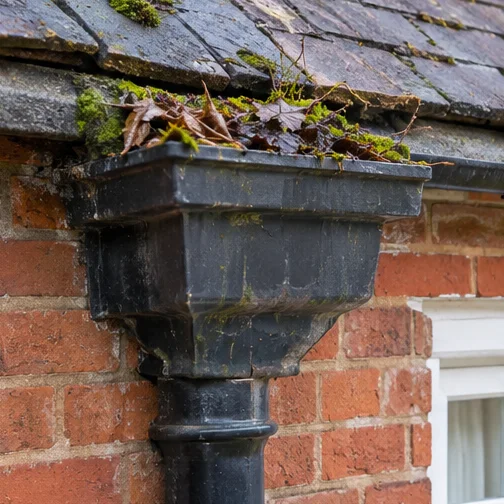
Keep observations from different parts of the building together
After clearance we describe what we found along the included runs and say which openings could be reached. If the visible issue lies near a window or around a corner, we can refer to that location in the findings. Tell us who needs those details if someone else is arranging a repair. If a section could not be inspected, we say where the view or reach was limited so that the next visit can be planned accordingly.
For a Selhurst booking, send the postcode, the approximate height of the affected gutter and the entrance nearest to it. If you know when the sound first appeared, mention whether there had been work on the roof or gutter shortly before. Tell us how the yard or garden is opened and whether a lower roof blocks the direct approach. These details make it easier to discuss the visit without relying on a single description of the noise.
Where two residents report the same leak from different rooms, include both positions. One may see where water reaches a ledge while the other hears it above the window. If those descriptions relate to a single channel, we can work out which visible part to inspect first. If they refer to different elevations, we can agree each run separately before the visit.
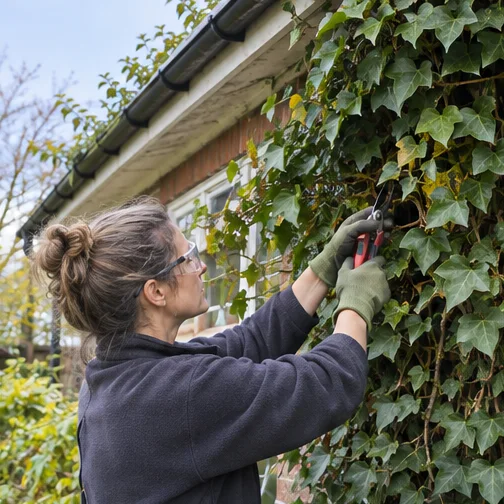
When upper and lower gutters need separate attention
If the leak is only audible from inside, ask the person reporting it to note whether the sound moves along the wall or repeats at one point. A tenant may be able to mark the nearest window on a photo taken in dry weather. We can relate that location to the roofline from outside. If there is a visible outlet nearby, show it in the same frame so we can identify the likely route.
Discuss the result of an inspection near a hidden fitting
Where we see a seam leaking or a length that has moved from its support, we can discuss a repair to the affected gutter. Some parts may still need a closer look if they cannot be seen from the working position. If the material has failed in more than one place, ask about renewing the damaged lengths and how they would connect to the rest of the system. Lining can be considered where a sound channel has a failed inner surface.
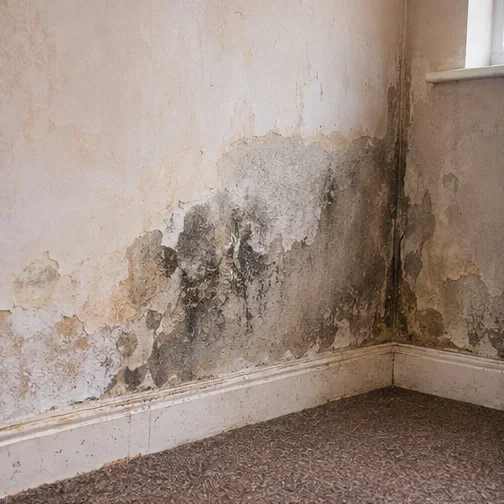
Tell us if growth obscures an opening or runs across a fitting. We can discuss cutting back ivy separately. If water has reached plaster, skirting or another indoor surface, ask about assessing the water damage as a separate enquiry. Include where the affected surface is in relation to the roofline. Our gutter clearance service explains how we check the reachable parts and what needs further investigation.
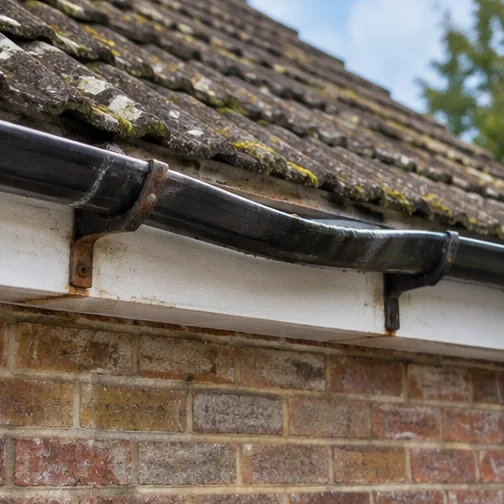
Decide what information a camera might add
| Question | What we need first | What a view may show |
|---|---|---|
| Is there debris behind the roof edge? | A working position with sufficient reach | Material in the visible channel |
| Does a joint appear out of position? | Location of the suspected seam | Condition of the part in view |
| Is the pipe obstructed below the outlet? | Where the visible pipe goes | Accessible opening rather than the whole pipe |
Other work on the extension and roofline
Gutter cleaning
We vacuum debris from accessible channels and check the reachable opening into the pipe.
Gutter replacement
We discuss which lengths and fittings need replacing and which adjoining parts can remain.
Guttering repairs
We look at local faults such as a leaking joint or loose support before agreeing any separate repair.
Ivy removal
We assess growth around rainwater fittings and discuss how far it can be cut back.
Gutter lining
We inspect the support and outlet before discussing a renewed waterproof surface for a sound channel.
Water damage repair
We discuss assessment and drying for affected surfaces once the route of water entry is understood.
Coverage and bookings
See the areas we cover. For nearby enquiries, see South Norwood and Thornton Heath.
Selhurst booking questions
Is a recording of the sound useful?
It can help if you also say which side of the building it comes from and when it starts. A video that shows where water appears provides more detail.
Can you use a camera without going into the upstairs flat?
That depends on the gutter and the position below it. Tell us whether there is access to a yard or garden from outside.
What if the person who reported the leak cannot open the yard?
Give us both contacts. We can discuss the reported location with one person and confirm access with the person who holds the key.
Can you inspect a length behind a porch?
Send a picture of the porch and the gutter above it. We assess whether the length can be reached from another position and discuss any limits.
Do you clear a pipe that cannot be seen below the roof?
We check reachable openings. If an obstruction appears to lie beyond the visible opening or discharge, we discuss separate investigation.
Can you describe which part was still hidden after the visit?
Yes. Tell us what terminology you use for the entrances or elevations so we can identify the section clearly in the findings.