
Gutter Cleaning Old Ford
We clear gutters and check accessible openings in Old Ford. If the overflow is on a frontage with two doors close together, tell us which address and roofline are affected. A shared-looking entrance does not tell us which length serves the property. We can agree the run, the accessible outlet and the route for equipment before visiting.
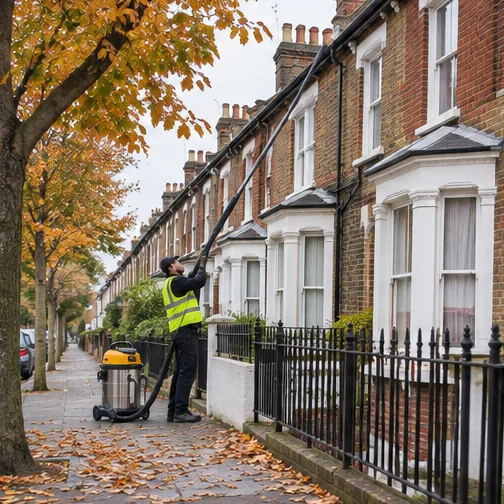
Illustrative photograph.
Identify which roof edge serves the area
| What you see | Detail to show | What we check |
|---|---|---|
| Water falls between two entrances | Which roof edge first spills | Accessible run and outlet |
| Pipe stands closer to a different doorway | Where the channel feeds it | Whether it serves the booked length |
| Drip starts beside a seam near the boundary | Both sides of the join | Visible fitting and nearby debris |
Identify the doorway and roofline independently
Tower Hamlets’ Central Area Good Growth guidance identifies paired doorways on a group of Old Ford Road terraces within the Victoria Park Conservation Area. Where two entrances are side by side, the gutter or downpipe may still sit farther along the frontage. Give us the number of the door nearest the first overflow and a wider picture of the roof edge. We can use both details to identify what needs checking.
A picture from across the street can show whether the gutter continues past another property or ends at a fitting. Tell us if the pipe appears to serve more than one length. If the two roofs look connected but have separate outlets, show the position of each. We agree what can be reached and included instead of assuming that a single visit covers the whole visible frontage.
Clear the agreed gutter and identify the accessible outlet
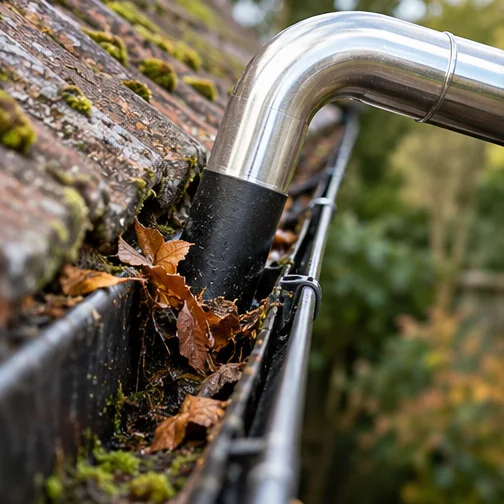
Where the roofline and working position suit the equipment, we use reach poles and a gutter vacuum to remove leaves, moss and compacted debris. We work through the agreed channel and check turns and outlet openings where material can gather. If the booked run continues past the section we can reach, we explain where the accessible length ends and what may need arranging separately.
At a reachable opening we clear material we can remove and describe what can be seen of the connection. If the pipe appears to be restricted farther down, we discuss a separate investigation. Ask about a camera check if a suspected seam or gutter length cannot be seen from below. Tell us which section you need to view and what you want to find out. The available position and roof edge affect what the camera can show.
Arrange access through the right entrance
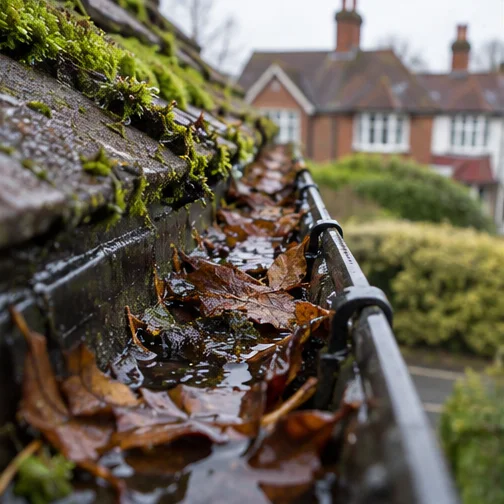
Tell us whether a gate or set of steps separates the working ground from the pavement. At a property with paired doors, the entrance that gives the best view of the gutter may not be the route into the rear area. We need to know who can open the route and whether the ground below is shared. Tell us which path must stay clear and when the area can be used.
If the rear gutter is included, give us the side or back route separately. A porch, fence or extension can affect where equipment can stand even when the path appears wide enough. If someone else controls the ground beside the wall, agree access with them and tell us who will be there. We consider the distance from that position to the booked length before confirming the visit.
- Show both doors if the frontage has paired entrances.
- Tell us where the booked run ends.
- Identify the nearest accessible downpipe opening.
- Give the keyholder for a shared path or rear route.
Describe any fitting that remains a concern
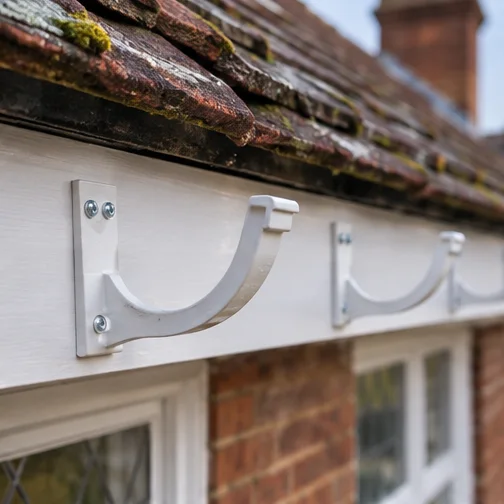
If a joint still leaks after accessible debris is removed, we can assess repair to the affected fitting once we have identified its position. Where several sections have failed, we can discuss renewing the damaged gutter and where it would meet an adjoining run or retained outlet. A supported channel with a failing inner surface may be suitable for lining after its condition and opening have been inspected.
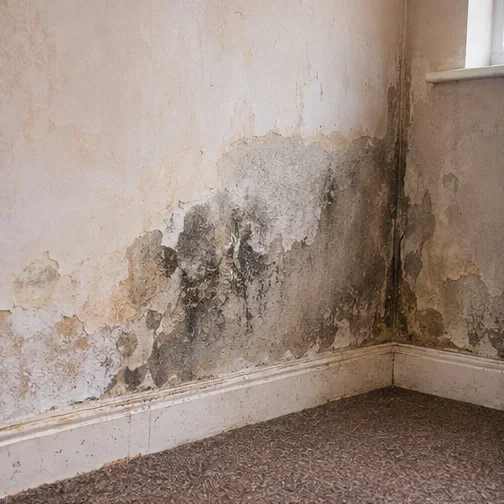
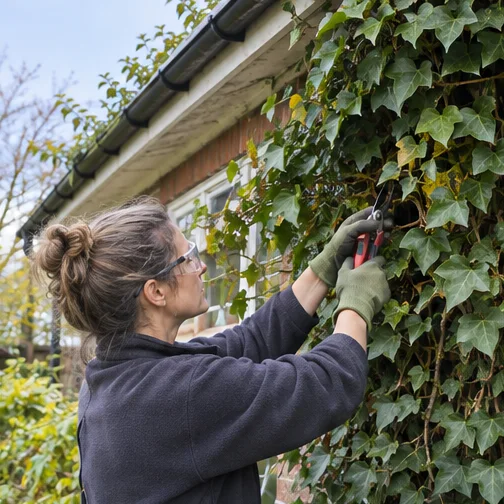
If ivy covers a fitting by the entrance or prevents access along the path, tell us where it starts and how far it reaches. We can discuss cutting it back as separate work. If water has already reached an inside wall, water damage assessment is separate from the gutter visit. Our gutter clearance service explains the usual work on accessible channels and how we report visible faults.
Services for the building manager
Guttering repairs
Inspect an accessible joint or support near the reported doorway.
Gutter cleaning
Clear the agreed accessible terrace lengths and check the openings that serve them.
Water damage repair
Discuss assessment of the affected interior separately from gutter clearance.
Gutter replacement
Discuss replacing a damaged length and how it would connect to the adjoining run.
Gutter lining
Assess a suitable concealed channel and its outlet before discussing lining.
Ivy removal
Consider cutting back growth where it blocks access to the fitting.
Information to keep with the maintenance record
If the roofline is difficult to see from the path, a wider photograph from a safe position can help distinguish a single gutter from two separate lengths. Include the nearest visible outlets as well as the doors below. Tell us who controls the route past the entrance and whether a different approach is available.
If the doorway has a shared step or porch, tell us whether it gives access to both properties or only one. A picture from farther back can show the division of the roofline even where the entrances sit together. If the two occupiers have separate maintenance arrangements, identify which gutter you are booking and who can confirm the adjoining route if we need to discuss it. We can report where the included clearance stopped.
Agree access at the front and rear
| Approach | Detail to send | What we consider |
|---|---|---|
| Raised entrance | Steps and nearest level ground | Working position below the front gutter |
| Shared front path | Who controls access and when it must remain open | Position for equipment |
| Rear route through a gate | Keyholder and narrowest point | Whether the return can be reached |
Record the booked length using a location the occupier recognises
After the visit we explain which runs and openings were reached and what material was removed. If a gutter continues beyond the booked length, we say where our work stopped. Tell us who needs the findings and the name they use for the affected entrance or elevation. We can use the same description when reporting a visible defect that may need attention.
For an Old Ford quote, send the postcode, gutter height and a view of the entrances and ground beneath the roofline. Say if water first appears above the entrance or beside a window farther along. If the same run was cleared previously, identify where that work stopped. If a new pipe has been fitted, tell us where it joins the original gutter and whether the current spill started afterwards.
When two doors share a small landing or open onto the same path, the layout at street level can make it hard to tell which gutter run you are looking at. An image including both the outlet and the roof above each door is useful. Tell us whether the adjacent occupier has reported water too, or whether the problem is limited to one side. We can then discuss which visible parts to inspect before the visit is confirmed.
Old Ford booking questions
Can you clear the part above one entrance only?
Yes, where we agree the length and can reach it. Tell us if the run appears to continue beyond the doorway and where its outlet sits.
Do I need the adjoining occupier to be present?
Tell us if we need their route or access to the ground they control. We can discuss whether the booked gutter can be reached independently.
Can you check a seam above a shared path?
Show the available ground and explain when the path needs to stay clear. We can discuss whether the seam can be reached from a suitable position.
What if the lower gutter drains separately?
Tell us where its pipe ends and whether you want it included. We agree the upper and lower lengths separately.
Can a camera show where the gutter passes the boundary?
Ask about the specific view you need. It depends on the roofline and the angle from the available position.
Can you record where the clearance stopped?
Yes. Give us the names or numbers used for the entrances so we can describe the included length and the visible position where access ended.
Coverage and bookings
See the areas we cover. For nearby enquiries, see Bow and Mile End.