
Gutter Cleaning New Eltham
A gutter can turn around a New Eltham house and disappear above an attached extension. If rain spills at the corner, show us the roof edge on both sides and where the nearest pipe sits. Glen’s cleans accessible gutters and checks reachable downpipe openings. We assess the approach to each length before agreeing what can be included, especially where one side of the house is easy to reach and the other is screened by a lower roof or fence.
Send the full postcode, a picture along the affected wall and another taken from the garden or drive. If you know where the water first shows, mark the spot. Tell us whether the problem is at the turn itself or further along one of the walls. This helps us describe the relevant roof edges even when their connection is difficult to see.
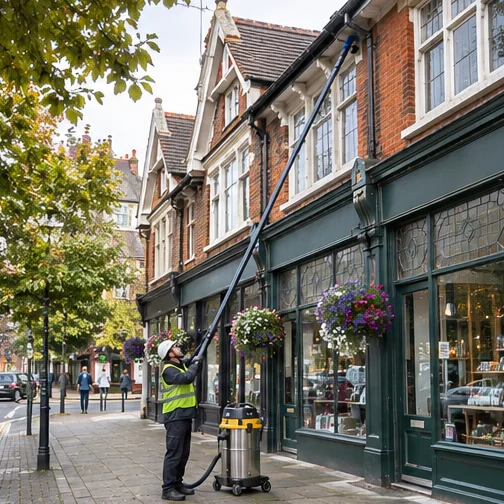
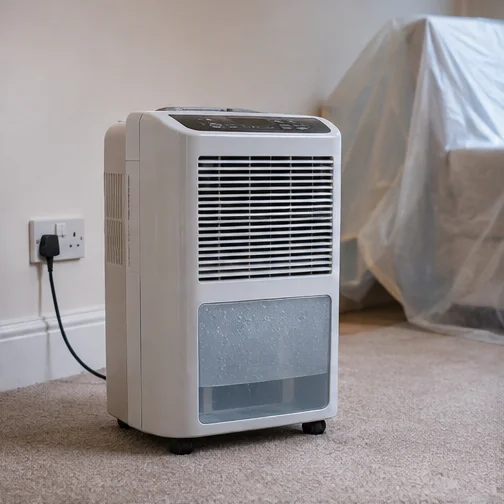
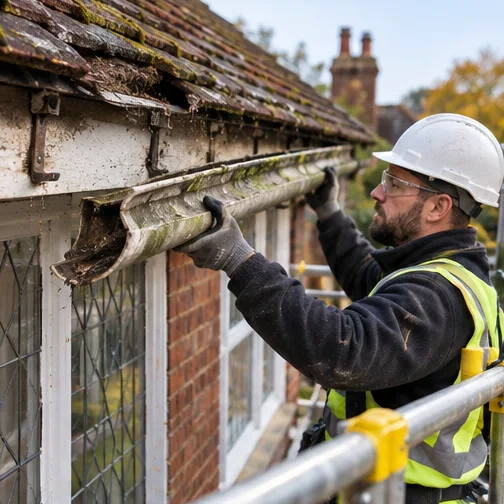
Illustrative photograph.
Follow the channel around the corner
From a safe position at ground level, identify the last point you can see on one wall and the first point visible on the other. Use the nearest windows or doors as references. If a projecting wall blocks the view, a photograph taken further back may show whether the gutter wraps around it. Also look for a short gutter above a separate roof nearby. Two lengths can look as though they meet when one is actually lower.
During a shower, note whether water appears underneath the angle, travels along a side edge or spills at an outlet. A picture taken in daylight after rain can show the shape of the fittings more clearly than a close recording taken while they are wet. Send both if you have them. We can use the roof positions and the sequence of the spill to discuss gutter cleaning for the reachable runs.
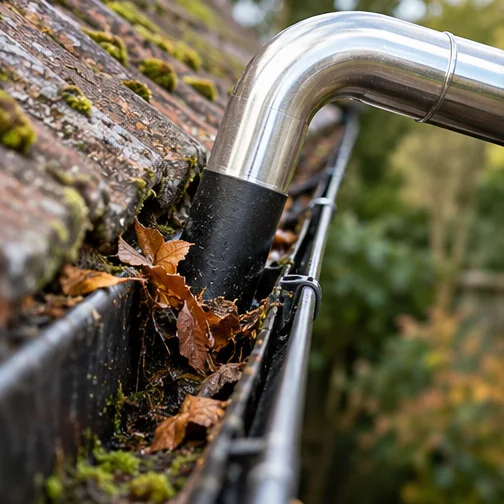
Relate a recurring wet patch to the roof layout
If water appears indoors, use the corner or the nearest opening to mark the corresponding position on the outside. Say whether the first damp spot is near the ceiling, along the wall or at floor level. A stain near an extension can coincide with the junction of two roof levels even when the dripping gutter is further away. Show the full width of the external wall so the relevant edges can be compared.
For a water damage repair enquiry, tell us what happened during the last rain that caused fresh wetting and whether the gutter had already been cleared. Include any recent changes to the roof edge, a new side gate or paving that altered the route of surface water. Keep the record of which lengths could be reached, especially if a roof return needed separate access. That can help locate the parts to check if the symptom returns.
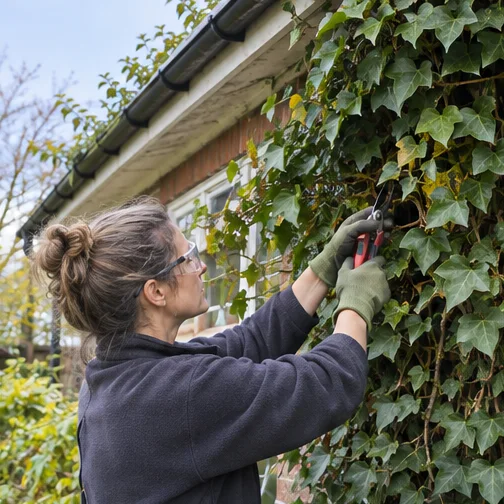
Check each possible approach
A side passage can lead to the affected corner while a lower roof covers the space immediately beneath it. Show where the passage begins and the point where the upper gutter becomes visible. If the width changes near a projection, take a picture looking back in the other direction. Include any gate, step or wall fitting. Tell us where there is room to turn or carry equipment through, and which objects can be moved.
At the rear, take a picture from far enough away to include the house, extension and boundary. Note whether the ground is level and if the nearest usable surface is separated from the wall by a border or fixed bench. For a shared drive or path, tell us who can keep it available and how the other users reach their entrances. If an alternative approach is only possible from another property, explain what has been agreed with the person who controls access there.
- Show where a gutter turns behind the extension
- Compare access from the side passage and garden
- Locate the pipe serving the corner
- Record where a drip starts along the gutter angle
Useful observations at a gutter return
| Observation | What to photograph or record |
|---|---|
| Drip from the bend | Both lengths, the joint and the nearest supports |
| Water crosses an extension roof | Where it falls from above and where it reaches the lower channel |
| Pipe disappears behind a wall | The last visible part and any lower fitting you can see |
| Water collects beside the patio | The gully, pipe base and direction of surface flow |
Identify what the corner drains into
Follow each visible length towards its nearest outlet. If the channel turns away from you, try to locate the pipe base and work upwards from there. A photograph showing both the pipe and the side of the extension can establish whether it belongs to the upper roof or the lower one. Include any branch where the two appear to join. If the pipe goes into paving, mark where its exposed section ends.
We can check reachable openings during the agreed clearance. If water rises out of a gully or appears beside the base, note when it happens relative to the spill above. If the water comes from an enclosed pipe or under the surface, a separate investigation may be needed. A view of both roof levels and the discharge point helps us discuss the relevant work even if one connection is hidden from the ground.
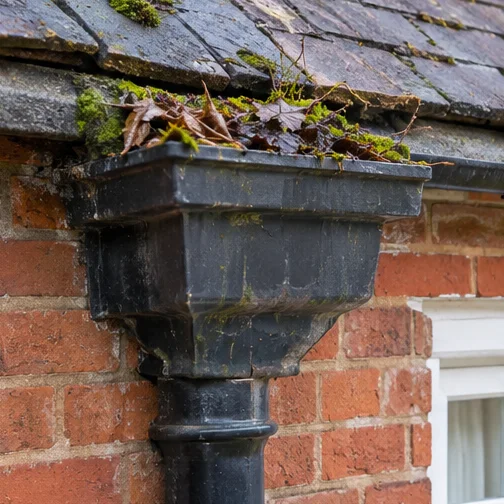
Separate work at the premises
Gutter cleaning
Clear accessible straight lengths and returns included in the booking.
Ivy removal
Check whether ivy beside a boundary has reached a return or pipe.
Guttering repairs
Assess a visible fault at an angle, support or outlet.
Water damage repair
Compare a recurring wet patch with the roof corner, extension and visible discharge.
Gutter replacement
Specify new lengths and their connection at the gutter bend.
Gutter lining
Assess the channel where it turns beside the extension before discussing lining.
Information for a New Eltham enquiry
| Detail | What to show |
|---|---|
| Gutter corner | Both walls and the roof edges that meet there |
| Side passage | Gate, changes in width and any lower roof above it |
| Outlet | The upper connection and lowest visible part of the pipe |
| Damp mark | The first wet point and its position relative to a wall or opening |
Record signs at the bend and the nearest supports
A drip under an angle can be caused by a joint at that point, or it can come from water travelling along the underside of a nearby length. If you have a video, note where the first bead forms. After a reachable section is cleared, we can report visible damage to the joint, stop end or bracket. If you want to discuss guttering repairs, identify which part of the corner is affected and show where the nearest supports sit on both sides.
For gutter replacement, photograph the sections that meet at the bend and the outlet they use. If only one side is to be changed, show how it currently connects to the other side. Give any details about earlier work, including a change of material or outlet position. This helps establish how new lengths would fit and what needs to remain connected while work is planned.
What helps when several people report the leak
Where a lower roof stops just before the bend, check whether there is a narrow strip of paving between it and the boundary. Photograph the strip from both ends and identify any outside tap, pipe or gate hinge that occupies it. This helps us judge whether the approach along that wall is usable or whether the corner has to be considered from the other side.
Coverage and bookings
See the areas we cover. For nearby enquiries, see Eltham.
New Eltham gutter cleaning FAQs
Can you clear the return as well as the long section?
Yes, where suitable access is available to both. Send photographs from each side and show the nearest outlet. We can agree the lengths separately if the corner blocks the approach to one of them.
What if I cannot see whether the gutters join?
Send the widest photographs you can take safely and show any outlets or pipe bases. We can assess the visible layout and explain what access would help confirm it.
Can you reach the corner above an extension?
We can consider the available positions once we see the upper roof, depth of the extension and surrounding ground. Send a side view as well as one from the garden.
Do you need the neighbour to be there?
Only if access depends on someone at that property. Tell us which area would be needed and who can make it available. A connected gutter and a shared working area are separate practical questions.
Can you assess a leak at the angle after clearance?
We can describe any accessible damage and discuss a separate repair enquiry. Send a photo showing the bend and adjoining supports, and note when the drip begins during rain.
What if I think the problem is under the paving?
Photograph where the visible pipe ends and where water appears. We can check reachable openings within the agreed clearance. An enclosed or underground route may need separate investigation.