
Gutter Cleaning Lower Clapton
We clear accessible gutters and check reachable downpipe openings in Lower Clapton. If a drip appears where an older length meets a newer fitting, show us both sections and the nearest outlet. We can discuss clearance and check what is visible of the connection. If the problem remains after the debris is removed, we explain what may need closer inspection.
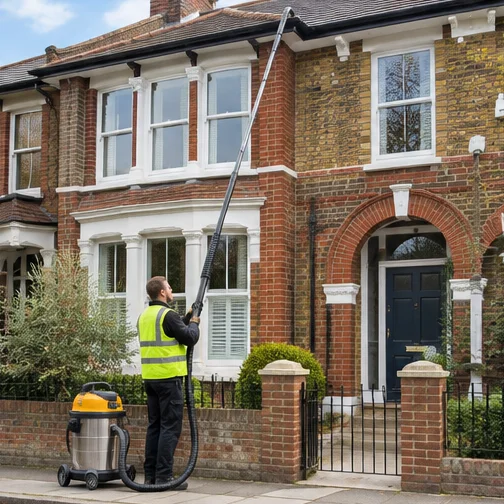
Illustrative photograph.
Identify the change in the gutter run
An older gutter can meet a recently fitted return, stop end or downpipe. The join may be near a change in the roofline rather than beside the nearest window. A picture of the whole section helps us see where that transition sits. Tell us whether the leak began after a new piece was fitted or whether the earlier length already overflowed. That helps distinguish what was observed from what still needs to be checked.
If you do not know what material the gutter is made of, you do not need to identify it yourself. Describe the two shapes and where water appears. If one length has a separate opening, point out where it drains. If the run is continuous, show the closest visible outlet on either side of the join. We can use that information to agree the relevant section before the visit.
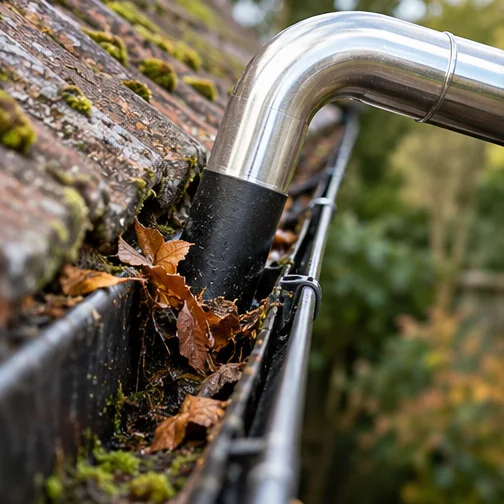
Use the earlier repair as a reference in the findings
After clearance we explain which runs and openings were reached and identify any visible fault. If a previous repair can be located, we can refer to the part on either side of it when describing what we checked. That helps a property manager or resident identify what might need a separate visit. If a section remains hidden behind the roof edge, we explain where our view ended.
Send the Lower Clapton postcode, the height of the run and the route to the working area. Include where the previous piece was fitted if you know. A photo showing the roof before and after the change can be useful, provided it identifies the same elevation. Tell us whether water first came from the gutter edge or the joint. We can use that description when checking the accessible channel and outlet.
If you have a receipt or note that identifies the earlier replacement, use the location in that note when you contact us. The name of a fitting alone may not identify the roofline. A simple description such as the return above a side gate gives us a useful starting point. If more than one outlet was changed, tell us which one is nearest the reported drip.
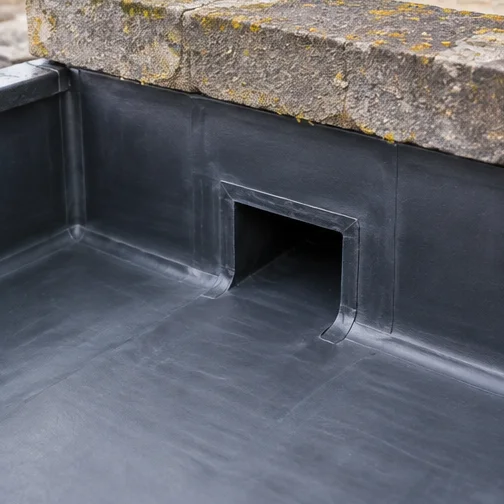
Check which side gives access to the meeting point
Tell us whether the connection is above a path, a bay or a rear addition. If the run changes direction beyond a canopy, show where there is level ground beside it. The join may be visible from the road even when the position needed to approach it is in a side yard. A wide view from another angle can help us consider the working distance and available space.
If someone else controls the area below, give us their contact details and say how it is reached. A person who previously arranged a repair may know which fitting was installed, while the keyholder can only open the gate. We can discuss the visit using information from both. For a shared entrance, mention when the route needs to be available and where equipment can stand without blocking it.
- Show the shape of the gutter on both sides of the join.
- Identify any outlet added during an earlier repair.
- Give a view of the ground beside the fitting.
- Tell us where a new leak starts in relation to the replaced piece.
Agree access to the join and nearby opening
| Location | Information to send | What we consider |
|---|---|---|
| Above the side gate | Clear ground and route through the gate | Where the equipment can stand |
| Beside an extension | Projection and nearest outlet | Reach to the join and channel |
| Front run near a shared entrance | Who can open it and when it must stay clear | Position for the work |
Clear accessible material on either side of the join
Where reach and access suit the equipment, we use a gutter vacuum and reach poles to collect leaves, moss and compacted debris. We work through the agreed lengths, looking at corners and changes in shape where material may catch. We also inspect the reachable opening into the downpipe. A clear-looking section beside a new fitting can lead into a run where material remains farther along.
At an accessible opening we remove debris we can reach and describe what can be seen of the connection. If a restriction appears to be deeper inside the pipe, it may need separate investigation. Ask about a camera check if the join cannot be seen from below. Tell us which fitting you want to identify and whether the view would be useful for someone who is arranging the next visit.
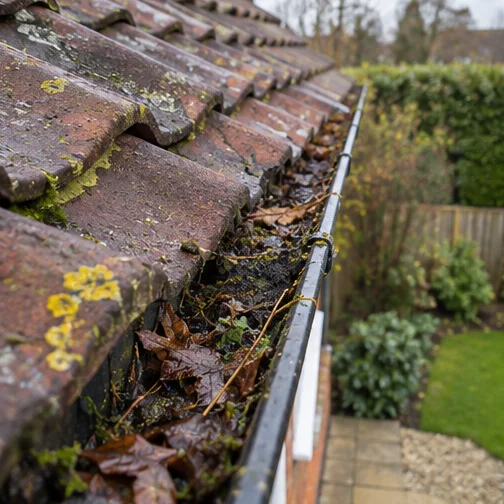
Separate work at the premises
Gutter cleaning
Clear accessible sections and check the opening that serves each included length.
Ivy removal
Consider cutting back growth where it prevents access to the visible join.
Guttering repairs
Inspect what is visible at the transition between an older and newer fitting.
Water damage repair
Discuss an affected interior surface separately once the exterior position is identified.
Gutter replacement
Discuss renewing a damaged length and where it would meet the part that remains.
Gutter lining
Assess a sound channel before discussing a liner that meets the existing outlet.
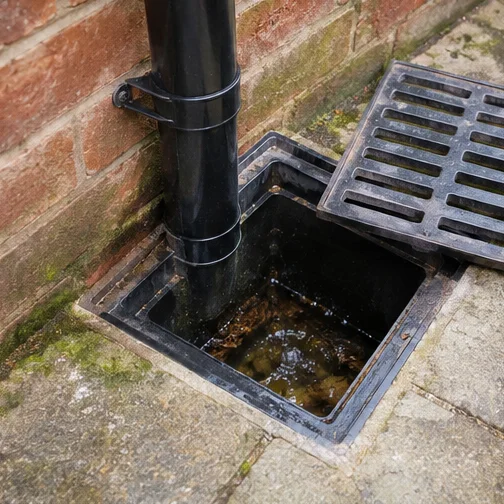
Describe the transition between gutter lengths
| What you notice | Detail to show | What we check |
|---|---|---|
| Drip where two shapes meet | Both lengths and nearby pipe | Visible connection after clearing reachable debris |
| Water spills beyond a new fitting | Which side spills first | Accessible run and outlet |
| Older length looks out of position | View including its supports | Whether there is a visible defect to discuss separately |
Decide which fitting to discuss after clearance
A seam may still leak after the accessible debris has been cleared. We can discuss repairing the affected connection after looking at the visible fit and the support around it. If several pieces have deteriorated, we can consider renewing the affected length and what is involved in meeting the part that remains. A suitable supported channel may be assessed for lining after checking its condition and outlet.
If growth obscures the join, describe how far the ivy extends and where the base can be reached. We can discuss cutting it back separately. If water has affected a surface inside the building, water damage assessment is separate from gutter clearance. Our main gutter clearance service explains the accessible work usually included and how we report an issue that still needs attention.
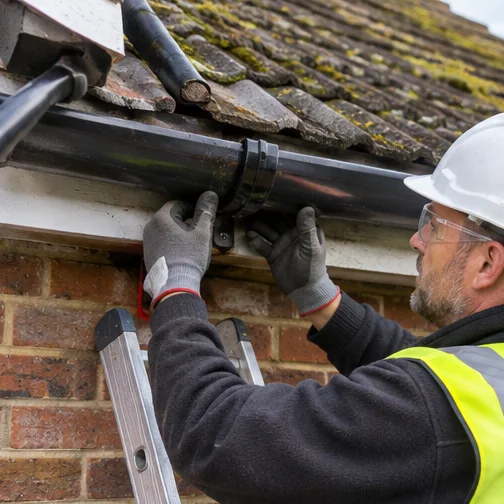
What helps when several people report the leak
Where there is a stop end close to the join, show it in the same view as the nearest pipe. The two lengths might end beside each other without draining together. We can discuss the run included in the booking and whether another outlet would need to be approached separately.
If the newer gutter meets a different outlet profile, show where the transition is supported. We can discuss the visible arrangement without assuming that one repair would suit every length. Tell us if the existing join was fitted to address an overflow or replaced for another reason. An account of where water appeared before and after the change can help distinguish a remaining restriction from a separate issue at the fitting. If only one side can be reached, say which one when arranging the visit.
Coverage and bookings
See the areas we cover. For nearby enquiries, see Upper Clapton and Homerton.
Lower Clapton booking questions
Do I need to identify the gutter material?
No. Show the shape and position of the old and new pieces if possible. We can look at what is visible and discuss whether a connection needs further inspection.
Can you clear a run that has been repaired recently?
Yes, where the length is accessible and included in the visit. Tell us which part was repaired and what happened afterwards.
Can a camera show the change between two pieces?
Ask about a view of that position. We can discuss whether the roof edge and available reach allow it to be seen.
Why does water spill near a new outlet?
There may be debris around the opening or another issue at the connection. Tell us when it spills and where it starts so we can check the accessible parts.
Can you include only the older gutter?
Yes, if we agree the length and can reach it. Tell us if it shares an outlet with the new section.
Can you record which fitting needs follow-up?
We describe the position and what was visible. A concealed joint or inaccessible section may need a separate inspection before work can be agreed.