
Gutter Cleaning Leytonstone
We clear reachable gutters and check downpipe openings in Leytonstone. If water spills at an end cap where the gutter stops next to a neighbouring roof, show us both roof edges and the nearest visible pipe. We can discuss which length to include, where the equipment can stand and whether the end fitting needs a separate look after clearance.
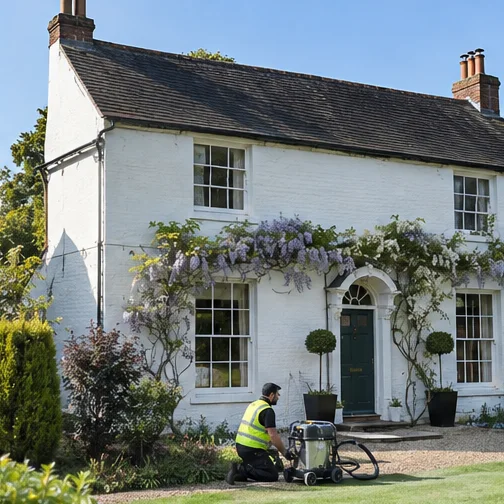
Illustrative photograph.
Find where the gutter actually ends
Two lengths can sit close together without being connected. Tell us if you can see a cap, gap or joint between them and where the pipe is in relation to that point. A photograph of both roofs from ground level can show the relationship more clearly than a picture taken directly under the leak. If water first appears at the end of the gutter, describe whether it falls over the edge or drips from the fitting itself.
A blocked outlet can cause water to collect toward the far end. Tell us whether the spill begins near the cap or farther along the channel and whether it happens in light rain. We check accessible debris and visible connections before deciding what might need attention. If an older piece was recently replaced, tell us which section stayed in place and whether the problem changed afterwards.
Check the working ground on the included side
The position below the cap may be beside a shared path, a front bay or an enclosed side return. Tell us where the available ground ends and who can open any gate we need to use. The best view may be from one end of the building while the suitable working position is on another side. We discuss where equipment can stand and how it can reach the agreed gutter.
If the rooflines are close to the boundary, tell us which parts can be approached from the booked property. We do not assume that we can use an adjoining route or include another length. Where access depends on a neighbour or a resident in another flat, give us the contact who can agree it. If a lower roof or canopy obstructs one side, show the clear ground nearby and how far the roof projects.
- Show the stop end and adjoining roof edge together.
- Identify the pipe that serves the booked run.
- Describe clear ground on the side you can open.
- Tell us if a repair changed the end fitting recently.
Work towards the end fitting and accessible outlet
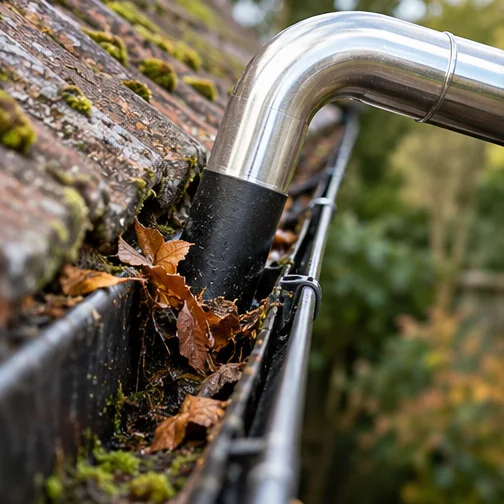
Where the reach and working position suit the equipment, we use gutter vacuum poles to collect leaves, moss and compacted material. We follow the agreed length and look at corners, outlet openings and the material that can collect against a stop end. A gutter can look clear at the edge while debris remains farther back. We work along the accessible channel and describe which sections were reached.
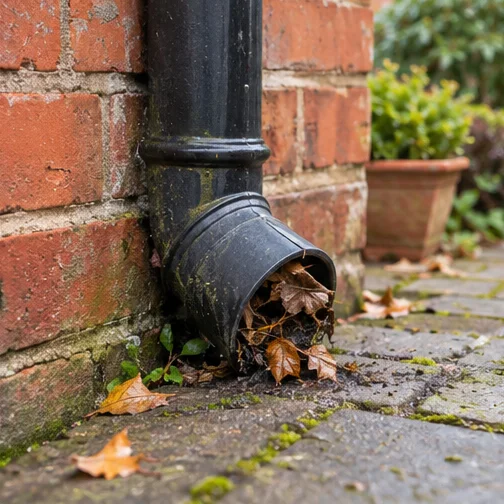
At a reachable downpipe opening we remove what we can and explain what is visible of the connection. If a restriction appears to be farther into a pipe, we discuss separate investigation. Ask about a camera check if the cap or joint cannot be seen from below. We consider what angle is available and whether the view would identify the section you reported.
Locate water around the stop end
| What you notice | What to show | First check |
|---|---|---|
| Water spills past the end of the channel | Stop end and nearest outlet | Accessible debris along the run |
| Drip begins at the cap | Position of the seam and adjacent support | Visible fitting after clearance |
| Separate gutter sits beside the cap | Both roof edges and pipes if visible | Whether the lengths are connected |
Discuss a visible fault at the end of the run
If a stop end or nearby joint still leaks after clearance, we can assess repair of the affected fitting and the visible support around it. Where damage extends along several sections, we can discuss replacement of the worn length and how it would meet an existing return or outlet. If a sound concealed channel has a failed inner surface, lining may be considered after its support and opening have been checked.
If growth hides a connection at the end of the gutter, tell us what you want cut back and where it can be approached. We can discuss that separately if it affects access. If water has reached an inside wall or ceiling, water damage assessment is separate from clearing the gutter. Our gutter clearance service explains the typical accessible work and how we report visible issues that remain.
Work we can discuss after clearance
Gutter cleaning
Clear accessible debris along the booked run and check the opening that serves it.
Guttering repairs
Inspect a visible fault at the cap, seam or support after clearance.
Gutter lining
Assess a sound concealed channel and its outlet before discussing lining.
Gutter replacement
Consider where renewal would end and how it would meet a retained fitting.
Ivy removal
Discuss cutting back growth that hides the end fitting or restricts access.
Water damage repair
Assess any affected indoor surface separately from work on the exterior gutter.
Describe the end that was reached and what still needs attention
After the visit we explain which lengths and openings were checked and where we removed material. If there is a visible issue close to the boundary, we describe the affected side and say where our reach ended. That helps whoever arranges follow-up distinguish the booked end fitting from another gutter beside it. Tell us who should receive the findings if they were not there.
For a Leytonstone quote, send the postcode, gutter height and a wider view showing the stop end and nearest visible pipe. Tell us if the run shares an outlet or merely ends beside another channel. If an earlier visit cleared a different side, mention where it stopped. If the leak began after work on the gutter, say which part was changed and whether a new fitting was installed at the end.
When the two roof edges are difficult to distinguish, give us a point of reference on each elevation. A window, door or projection can help us identify the same position from the ground. If you can only see the outlet from a garden, tell us who can open it. We can discuss how that route affects which lengths can be reached and whether the neighbouring side would need separate arrangements.
Agree access close to a neighbouring roof
| Ground below | Useful detail | What we consider |
|---|---|---|
| Shared path | Who controls the gate and when the route can be used | Position for equipment |
| Low projection near the boundary | Distance from clear ground to the wall | Reach to the end fitting |
| Garden beside another property | Which side can be opened | Whether another working position is needed |
Before we assess the roof edge
If the gutter passes behind a projection before it ends, show the nearest clear ground from which it might be approached. A view from the side can reveal whether the length stops before the wall or continues around it. That detail helps us agree the run and identify the opening to inspect.
Leytonstone questions about gutter ends
Can you clear just the length up to the cap?
Yes, if we agree the length and can reach it. Tell us where its outlet sits and whether another run feeds into it.
What if the cap is very close to the neighbouring gutter?
Show both pieces in one picture if possible. We can discuss how they appear to connect and which side is included.
Do you need access to both properties?
Tell us what can be reached from the booked side. If another route is needed, we discuss it with you before agreeing the visit.
Can a camera show whether a stop end is out of place?
Ask about a view of that position. The angle and reach determine what can be seen.
Does a drip at the end mean the fitting needs replacing?
It may be related to debris or a defect at the fitting. We check the reachable parts and explain what remains visible after clearance.
Can you tell the owner where the work stopped?
Yes. Give us the names used for the entrances or elevations so we can identify the booked length and the point it reached.
Coverage and bookings
See the areas we cover. For nearby enquiries, see Leyton and Wanstead.