
Gutter Cleaning Kingston upon Thames
If you arrange maintenance for a building in Kingston upon Thames, identify the affected gutter by the entrance or elevation it overlooks. A report that says water is coming down at the back can refer to several roof edges on a building with a rear yard, an annexe and more than one doorway. Glen’s clears accessible gutters and checks reachable downpipe openings. We use photographs and access details to agree which lengths are included.
Send the full postcode and mark the affected area on a photograph taken from the ground. If the building has a separate service entrance or a keyholder in another unit, give those details as well. For a home, show the door or window nearest the spill and the route from the gate to the wall.
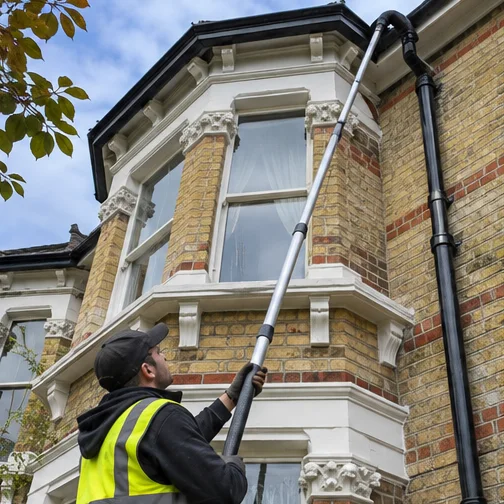
Illustrative photograph.
Match the scope to the access arrangements
Give us the route that will be available on the day. If the working area can be reached from a communal gate, tell us who can open it and whether there is another gate or step beyond it. Photograph the ground below the affected edge as well as the entrance to the area. A view from inside a courtyard can show how much usable space remains beside railings, a bin store or a fixed canopy.
Find out whether the route is needed by residents, staff or visitors during the proposed window. If an alternative door can be used, say where it leads and confirm who can open it. Where separate occupiers manage different areas, pass the marked photograph and proposed access route to each relevant contact. We can then discuss whether the roof edge and working position are suitable before the visit.
- Mark the affected elevation using a recognisable entrance
- Give the site contact the same picture as the person booking
- Trace visible branches to each roof edge
- Keep the location references in the maintenance record
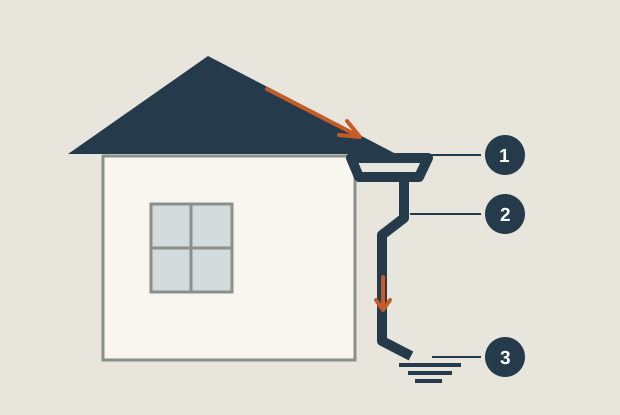
Establish where the water leaves each gutter
Look for the pipe serving the marked length and follow the visible route down the wall. If another roof has a branch into it, show the branch and the roof it comes from. Where a pipe passes behind cladding or a lower roof, photograph the parts on either side. An outlet hidden by a projection can still be located in relation to a doorway or window.
At ground level, note whether the pipe empties above a gully or continues below paving. If water appears around the pipe base during rain, record when that starts and which other outlets are nearby. We check reachable downpipe openings as part of the agreed clearance. An enclosed route or a drain below the surface may need a separate investigation. Show any surface water crossing the same area so the gutter and the ground-level symptoms can be discussed individually.
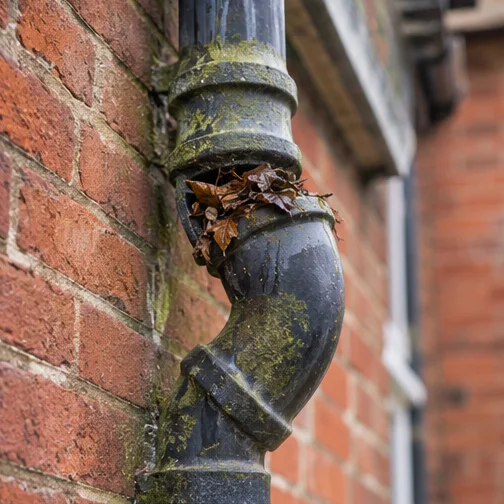
Mark the reported roof edge on the building
Start with a photograph that someone unfamiliar with the property could use to identify the location. Include an entrance number, stair or distinctive window. Show the gutter and its nearest outlet together where possible. If the person who reported the leak saw it from a window, ask them which way they were facing. A close photograph of a pipe can be difficult to place if the same fittings repeat across several elevations.
Record when the water appeared and whether it came from the edge, ran down the wall or collected on paving. For more than one report, list the locations separately. A person at one entrance may have seen a spill from above while another noticed water gathering at ground level. We can use their observations to consider which lengths and openings should be assessed for gutter cleaning.
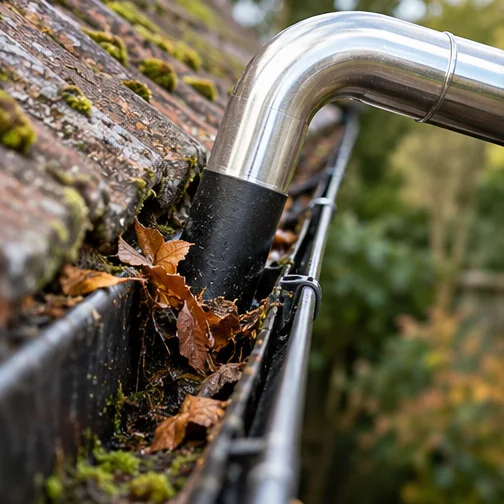
Work for other parts of the rainwater system
Gutter cleaning
Clear the agreed reachable gutters for the home, communal area or other premises.
Gutter replacement
Plan replacement lengths around shared connections and the fittings staying in use.
Gutter lining
Assess an existing channel and its outlet before considering lining above a managed entrance.
Guttering repairs
Assess a reachable fault identified by entrance number or elevation.
Water damage repair
Compare damp reported by an occupier with the matching exterior fittings and ground levels.
Ivy removal
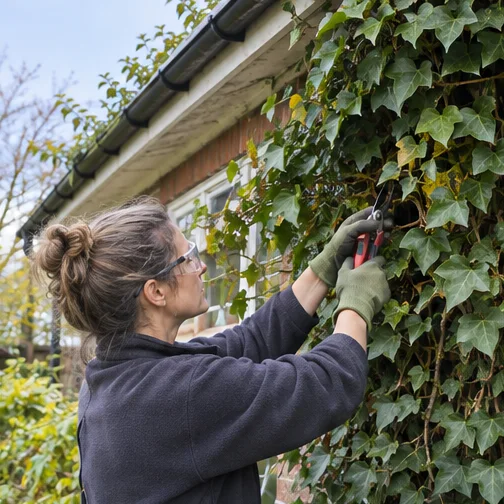
Review whether ivy in a courtyard has reached a marked pipe or outlet.
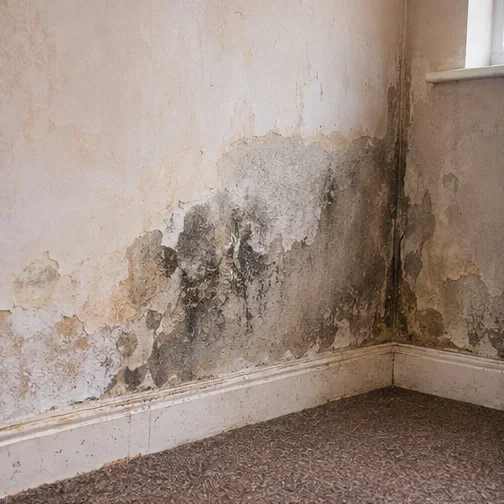
Details for a Kingston upon Thames visit
| Detail | What to send |
|---|---|
| Building reference | Full address, affected elevation and an entrance or window used to identify it |
| Gate and working area | Current pictures showing the route and ground beneath the gutter |
| Outlet | Where it leaves the roof and any visible branch or lower connection |
| Site contact | Person who can open the agreed areas and identify the marked roof edge |
Give the maintenance contact useful repair evidence
When clearance exposes a visible seam, bracket or outlet in poor condition, we can describe the accessible fitting and its position. If the building manager wants photographs of a particular area, let us know before the visit. The available view and access affect what can be seen. For a guttering repairs enquiry, include the nearest support and the connected lengths rather than sending a close image without a reference.
If gutter replacement is being considered, show which roof edges and outlets are to remain in use. A long run can continue past a wall or unit boundary, and a new length still has to discharge into a suitable connection. Identify who can agree work at any shared point and whether another visit will require a different access arrangement. Keeping the repair scope with the clearance record makes it easier to see which sections have been assessed.
Keeping track of several independent runs
If the same courtyard is used by two properties with different addresses, note which street each entrance faces. A picture of the gate from the public side helps identify the route before the site contact arrives. Include any building name used on signage and say whether the affected gutter belongs to the building directly in front or to another elevation reached through the yard.
Compare later reports using the same building references
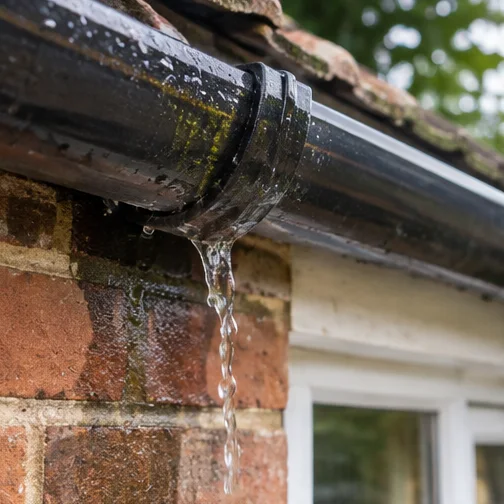
If an occupier reports fresh wetting after the visit, ask for a picture using the same door or window as the earlier record. Note the height of the first wet point and the time it appears relative to rain. A damp mark above a door and water entering beneath it can involve different parts of the elevation. An outside view should include any outlet, gully or wall junction near the affected point.
For a water damage repair enquiry, share the dates and the relevant section of the clearance record. Tell us which lengths and openings were reachable and whether a later repair changed any fittings. If a second building contact takes over, share the marked photographs and gate details. This lets them match a new report to the agreed work even if they have not previously visited the roof or yard.
Kingston upon Thames gutter cleaning FAQs
Can you book with the managing agent and meet a different person?
Yes. Send us the agreed work and contact details for the person on site. Make sure they can open the relevant entrances and identify the affected elevation.
Can you include a house with its own driveway?
Yes, where access is suitable. Show the gutter, outlet and driveway. Tell us if a vehicle or side gate affects the approach.
What if we can only reach the yard at certain times?
Give us the available window and any times the gate or space must be free for others. We can assess whether the relevant positions can be made available during the visit.
Can you check a pipe hidden by cladding?
Send the visible sections and where they disappear. We can discuss which openings can be reached. A concealed section may need its own assessment.
What if an occupier only saw the overflow from upstairs?
Ask for a picture from a safe position indoors and another showing the whole wall from the ground. Mark the same window or doorway in both views if possible.
Can you quote for a damaged length after clearance?
We can discuss a separate quote for a visible reachable defect. Send its position and the adjoining lengths and tell us who can approve any additional access required.
Evidence for the building maintenance record
| Report | What to keep |
|---|---|
| Overflow above a common entrance | A photograph of the entrance, roof edge and first visible spill |
| Water collects near a service gate | The visible outlet, gully and direction of surface flow |
| A bracket appears out of position | A wide view with the connected lengths and nearest support |
| Damp reappears in an occupied room | Its height, date and position relative to the outside wall |
Coverage and bookings
See the areas we cover. For nearby enquiries, see New Malden.