
Gutter Cleaning Hanwell
We clear reachable gutter runs in Hanwell and check accessible downpipe openings. If the problem is a puddle beside the house, tell us whether you saw water falling from the eaves or rising around the bottom of the pipe. Those symptoms can involve different parts of the rainwater system. A description of what happened during the shower helps us agree which work the visit should cover.
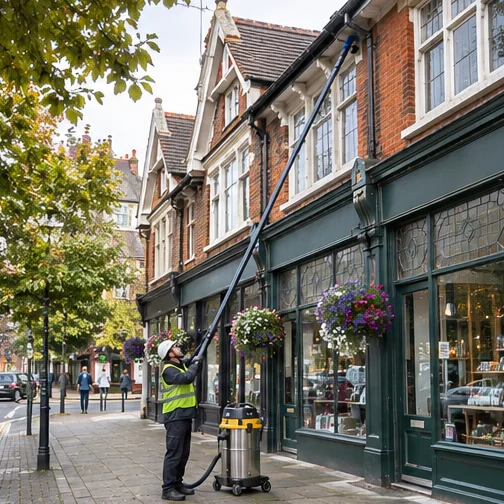
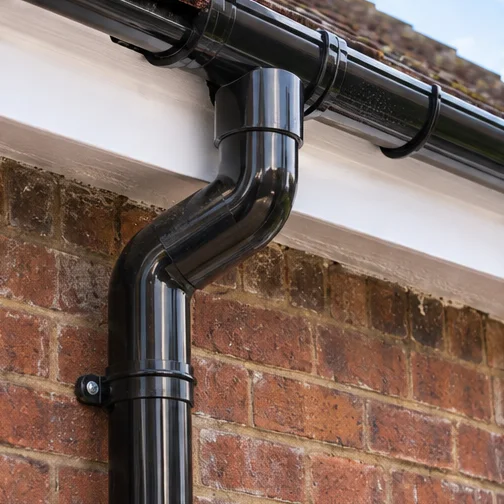
Illustrative photograph.
Check where we can reach both ends of the pipe
An accessible outlet high up and an accessible discharge point at the bottom are two separate considerations. The upper opening may sit beside a roof edge that cannot be seen clearly from the ground. The lower end may disappear behind a fence panel, below a cover or inside an enclosure. Tell us what you can see without removing anything. We use that information to discuss where we can inspect the system and which parts may need separate access.
If a gate opens towards the wall, show us the position it occupies when it is open. A picture taken while the gate is shut can make the available working area look wider than it is. If the route leads over steps or through a shared garden, describe any corners the equipment must pass. Let us know whether a person needs to be present to open a lock or whether we should arrange access with a neighbour or building manager first.
For a property with a side addition, tell us which roof the pipe serves and whether there is a roof projection below the outlet. We need room to position the poles from a suitable point. The space at the foot of the pipe may be clear while the view up to the gutter is obstructed. We discuss those details before promising access to a particular section.
- Say whether water appeared at the eaves or foot of the pipe.
- Show the upper outlet and lower discharge in separate views.
- Tell us if the pipe ends behind a panel or cover.
- Identify who can give access to a shared side passage.
Locate the first sign of water
Start your enquiry with the elevation and the place where water first appeared. If you saw it spill from the gutter, describe the nearest corner and whether the overflow was continuous or confined to one point. If the gutter appeared to carry water normally but the ground beside the pipe flooded, tell us what you could see of the discharge. A lower restriction may be present even when the roof channel is clear.
Do not assume that a damp mark directly below a fitting proves the fitting leaks. Water may run down the surface of the wall or track along the underside of the channel before dropping. If the wall is already wet from rain, a picture of the nearest outlet and the path below it may tell us more than a picture of the mark. Give us enough context to identify the pipe if there are several on the property.
The timing also helps. A small leak at a join can start early in a shower, while a restriction may only become apparent after enough water collects behind it. If the symptom changes when the rain becomes heavier, describe that change. If someone has already cleared a section and the same problem returned, identify which part was cleared. We can then ask whether the original visit covered the outlet and the run on either side of it.
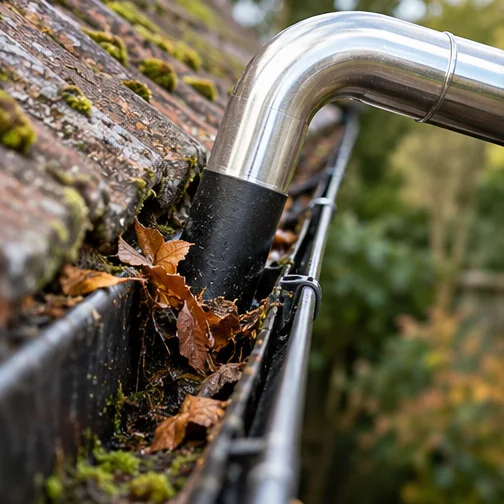
Which part should we check?
| What you noticed | Where we look first | What may need a separate visit |
|---|---|---|
| Water rises at the open top of a pipe | Reachable outlet and debris around the entrance | Restriction below the opening |
| A drip appears where two lengths meet | Visible join and nearby build-up | Local repair after clearance |
| Water pools around a covered discharge | Visible pipe route and signs of overflow above | Assessment of the covered or underground section |
Work from the run towards the outlet
For an accessible channel, we use a gutter vacuum and reach poles where the height and working area suit them. We collect the leaves, moss and compacted material along the lengths agreed for the visit. If several runs meet one outlet, we pay attention to the material on both sides of the opening. Debris pushed against the edge can partly cover an opening without completely sealing it.
At the top of the downpipe we check the reachable opening and clear the material we can access. If we need to look at a section hidden behind the roof edge, ask about using a camera where the position allows it. The camera helps us see the reachable channel and its outlet. A hidden pipe or covered discharge may still need a separate assessment, depending on what we find. Tell us if the pipe connects directly to another fitting that you want us to identify.
When clearance is complete, we explain which lengths and openings were included and which parts were inaccessible. If the outlet looks clear but the issue appears lower down, we explain that distinction. The gutter cleaning service covers the clearance work we agree with you. A problem with an enclosed pipe or a below-ground discharge needs to be considered separately from material in the gutter.
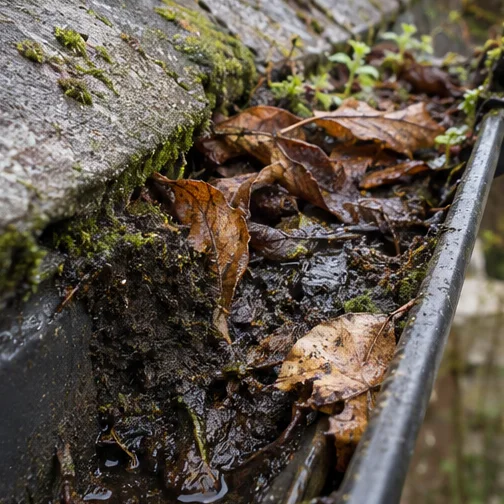
Describe what drains into the affected point
A small extension may have a short gutter that empties into a pipe also used by a larger roof. If you want both lengths included, identify them separately so we can agree what we can reach. Where only one run needs clearance, tell us whether its pipe is shared with another elevation. The shape of the gutter is one factor, while the direction of the outlet helps us decide where compacted material is most likely to sit.
If water collects near a step or low area, explain where it travelled before pooling. A photo after the rain may show the lowest point, but it cannot always show the route the water took. For a shared property, give us the details of the person who knows what was observed and of whoever controls access. We can refer to the same landmarks when explaining which openings were cleared and where further checks may be worthwhile.
When upper and lower gutters need separate attention
Decide whether a fitting needs further attention
If a connection still leaks after a reachable obstruction has been cleared, we can discuss repairing the joint or bracket. A loose clip may let a pipe move without indicating that the whole gutter has failed. Tell us if the fitting has been knocked or has moved away from the wall. If several lengths or joins are in poor condition, we can consider replacing the affected run and checking where the renewed length would meet the existing pipe.
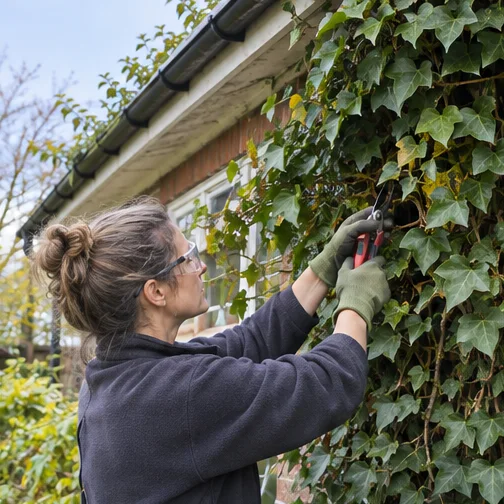
Some supported concealed channels may be suitable for lining if their existing surface has failed. We assess the visible construction and outlet before discussing that option. If ivy hides the upper connection or grows through a loose clip, we can discuss cutting the growth back where it affects access. An indoor wall or ceiling already affected by water needs a separate discussion about the extent of the damage and whether the source has been addressed.
Practical access for pipe and gutter checks
| Part of the system | Describe before booking | Why it matters |
|---|---|---|
| Outlet next to an extension | Roof projection and available ground | Helps establish a position for the poles |
| Pipe beside a shared gate | How the gate opens and who holds the key | Establishes which parts can be approached |
| Discharge behind a fence | What is visible from your side | Helps separate reachable checks from follow-up work |
Other work on the extension and roofline
Gutter cleaning
We clear the agreed channel and describe which opening was reached.
Gutter replacement
We check whether failed lengths or connections need renewing.
Guttering repairs
A loose clip or leaking union may need repair after the outlet is checked.
Ivy removal
We can assess growth where it obstructs the pipe or conceals a joint.
Gutter lining
For a supported concealed gutter, we look at the lining surface and its outlet.
Water damage repair
Indoor damage is considered separately from the clearance outside.
Coverage and bookings
See the areas we cover. For nearby enquiries, see Northfields.
Hanwell booking questions
Is clearing a gutter enough if the ground still floods?
It depends where the water is escaping. Tell us whether the channel overflows or whether the water appears only at the lower end of the pipe.
Can you see a blockage through a closed pipe?
We check the reachable openings and what can be seen of the connections. A concealed restriction can require a separate assessment.
What if the pipe connects to a water butt?
Show where it enters and tell us what happens when the butt fills. We use that to discuss which part of the rainwater system should be checked.
Will you look at the rear outlet if I only report a front puddle?
Tell us which runs you want included when you enquire. We agree the lengths and work out whether the outlet at each end can be reached.
Can someone else provide the gate key?
Yes. Give us their contact details and tell us who can decide whether any extra work is needed after the initial checks.
Do you repair an indoor stain during the gutter visit?
Assessment of the indoor damage is separate. Tell us when it appeared and whether the source of the water has already been dealt with.