
Gutter Cleaning Hackney Central
We clear gutters and check reachable outlets in Hackney Central. If the street frontage has a parapet and you cannot see the channel from below, tell us where the rainwater comes out and how access to the roof area is arranged. We can discuss what can be reached and whether the job needs a closer inspection before clearance is agreed.
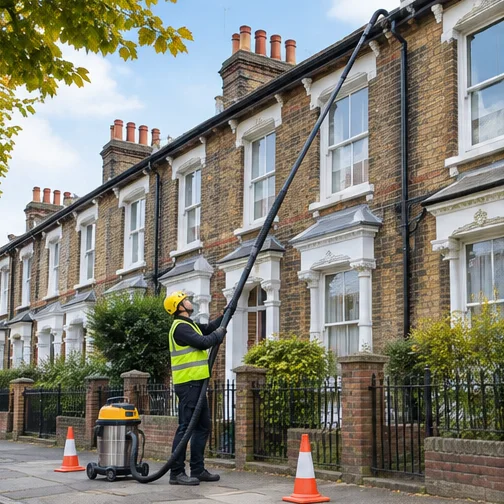
Illustrative photograph.
Locate a gutter that sits behind the frontage
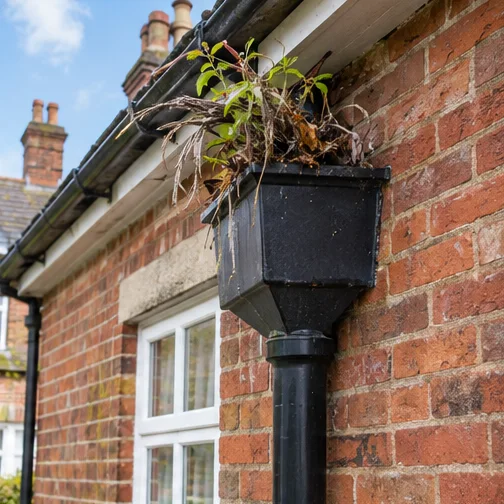
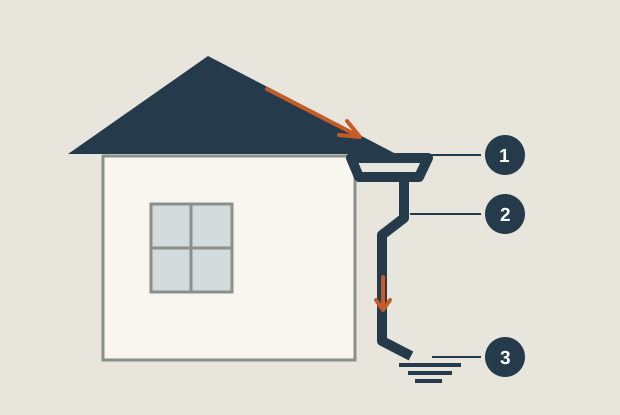
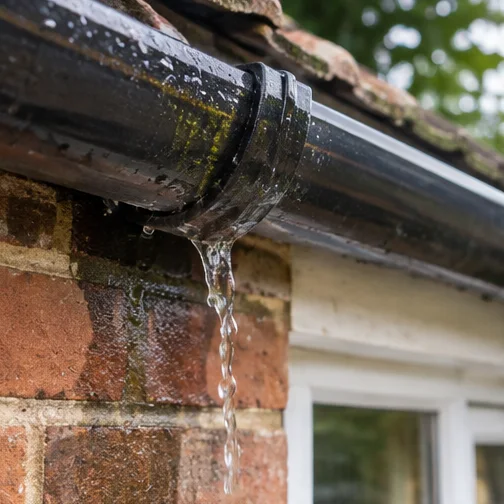
On a property with a parapet, you may see only an outlet through the wall or the pipe beneath it. A leak can become visible near a window or sign even though the channel itself is hidden. Give us a view of the roof edge and the outlet from a safe position. Tell us whether there is another pipe around the side and which one you see carrying rainwater.
If you already have a photo from an accessible terrace, show how the channel meets the wall and which way it runs. You do not need to approach the edge for a new picture. A description from the person who manages roof access can help us work out whether the gutter can be approached from there or needs another arrangement. Give us the exact entrance if the property shares a frontage with other premises.
Identify who controls the roof area and ground below
Ask who can open any gate, stair or door that leads to the accessible working area. The person who reports the leak from below may not be able to arrange access to a terrace. If you are booking for an occupier, tell us whether a caretaker or building manager needs to be involved. Where a shop entrance is beneath the outlet, say when it needs to remain clear and who can agree that arrangement.
Tell us if there is a rear yard that gives a view of the gutter from another angle. A plant enclosure, canopy or narrow passage can affect where the equipment can stand. We discuss the working position and the lengths it allows us to reach before including them in the visit. A route that works for a visible rear gutter may not suit a concealed channel over the street side.
- Show the outlet where it comes through the wall.
- Name the entrance or terrace closest to the leak.
- Identify the contact who can arrange roof-area access.
- Tell us whether the rear run has an independent outlet.
Check the accessible length and the opening through the wall
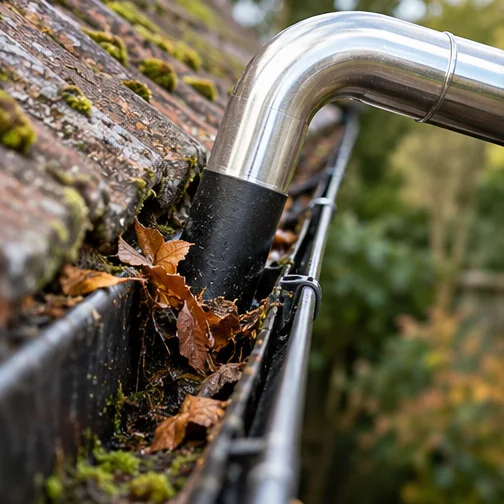
Where the equipment is suitable, we use a gutter vacuum and reach poles to remove leaves, moss and other compacted debris. We follow the accessible length and pay attention to the turns and the opening it feeds. A channel that passes behind a wall can have sections that are out of view, so we explain which length we can reach and what would need a separate arrangement.
At an accessible outlet we remove material we can reach and describe what we can see of the connection. If the route through the wall remains restricted, it may need a closer inspection. A camera view can be discussed if you need to see a particular area of the channel. Tell us which part you want to identify and whether the view is for an owner or maintenance contact who cannot attend.
Locate a concealed gutter from the parts in view
| Visible sign | Detail to send | What we consider |
|---|---|---|
| Water emerges through the wall above a pipe | Outlet position and roofline | Which channel feeds it |
| Damp appears below a parapet | Where water is first visible | Accessible length and visible connection |
| Rear pipe runs clear while the front spills | Which outlet serves which side | Whether the two runs drain separately |
Discuss work to the channel separately from the clearance
If an accessible seam is visibly leaking or a fitting has moved, we can discuss repairing the affected part once the location is clear. Where deterioration extends along several pieces, we can assess replacing the damaged lengths and their connection to the remaining outlet. A supported channel with a failed inner surface may be suitable for lining after its condition and the route to the outlet have been checked.
If growth covers an outside fitting, tell us which part needs cutting back. We can discuss that separately where it affects access. If the leak has damaged an indoor surface, water damage assessment is a separate job to discuss. Our gutter clearance service explains the equipment and how we report an issue that remains after accessible debris is removed.
Work we can discuss after clearance
Gutter cleaning
Check reachable parts of the channel and the opening through the wall.
Guttering repairs
Look at an accessible seam or joint around the reported position.
Gutter lining
Assess the condition of a suitable channel behind the frontage before discussing lining.
Gutter replacement
Discuss replacing failed lengths and how the renewed gutter would meet the visible outlet.
Ivy removal
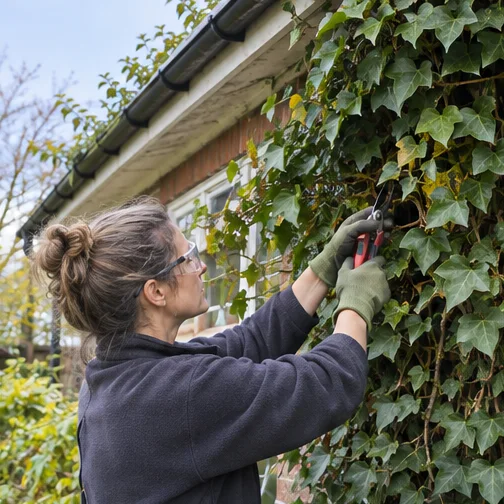
Consider cutting back growth where it prevents access to the outlet.
Water damage repair
Discuss indoor staining separately from clearance of the exterior gutter.
Give the site contact a description of the remaining issue
After clearance we explain which runs and openings were reached. Where the full channel could not be seen, we say where the accessible section ends and what would need a closer look. If an outlet through a wall remains a concern, we identify the visible connection and the position of the pipe below. That description helps whoever is arranging further work discuss the correct part of the building.
For a Hackney Central enquiry, give us the postcode, the entrance number and the location where water first appears. Include any height difference between the front and rear and say who can open the relevant area. If another contractor recently worked on the roof or outlet, tell us which part changed. A short account of the previous work helps distinguish a new symptom from a leak that was never resolved.
If the building has more than one parapet or several outlets, mark the one involved on a photo of the whole frontage. Use the name of the nearest entrance, terrace or room when you describe it. We can use that name again when reporting which visible part was checked and which section still needs access. If a view from the pavement is obscured, a description of where the pipe emerges can still help us identify it.
Identify who can arrange each approach
| Position | Contact or detail needed | What we can agree |
|---|---|---|
| Terrace beside the channel | Who can open the route and where the edge lies | Whether the gutter can be reached from there |
| Street frontage | Which entrance needs to remain available | Position of the equipment |
| Rear service area | Gate access and route past any canopy | Whether another view or working position is available |
Before we assess the roof edge
When the outlet and channel are at different levels, include a photo that shows the wall between them. This can help identify where the visible pipe begins and whether the water you saw came from the outlet or from above it. We can use that location when describing what was checked.
If the site has a maintenance record that identifies a roof hatch or a terrace door, include the relevant location with the enquiry. Tell us whether the person reporting the leak can show us the outlet from outside, even if they cannot arrange access to the channel itself.
Hackney Central questions about hidden gutters
Can you clear a gutter when only its outlet is visible?
It depends on the working position and where the channel can be reached. Tell us where the outlet is and whether another route gives a view of the gutter.
Can you look through the wall outlet with a camera?
Ask about the view you need. We can discuss what can be seen from the available position. An enclosed restriction may need closer inspection.
Who needs to give access to a terrace?
Tell us who controls the door or gate and whether the building manager needs to agree access. Include a separate contact for the entrance below if needed.
What if the outlet drips above a shop sign?
Show the wall, outlet and sign in one frame if possible. We check which fitting is visible and discuss how it can be reached.
Can you include a rear gutter at the same address?
Tell us whether it drains separately and who can open the rear area. We agree the included runs before the visit.
Can you say what part could not be inspected?
Yes. We identify the position where reach or visibility ended so you can use that information when discussing a further visit.
Coverage and bookings
See the areas we cover. For nearby enquiries, see Homerton.