
Gutter Cleaning Gidea Park
A gutter over a bay window can be hard to read from the pavement. The bay may have a small channel of its own or collect water coming from the roof above. If you see a drip onto the sill, tell us where it starts and which part of the front wall gets wet. At Glen’s we clean accessible gutters and check reachable downpipe openings. A photograph of the complete front elevation and a second view from the side help us plan a visit to your Gidea Park property.
Havering publishes a conservation area appraisal and management plan for Gidea Park. When the enquiry involves replacing or altering rainwater fittings at a property in the designated area, give the address and mention the materials you want to retain. For a routine clear, describe the roof edges and how we can get to them from ground level.
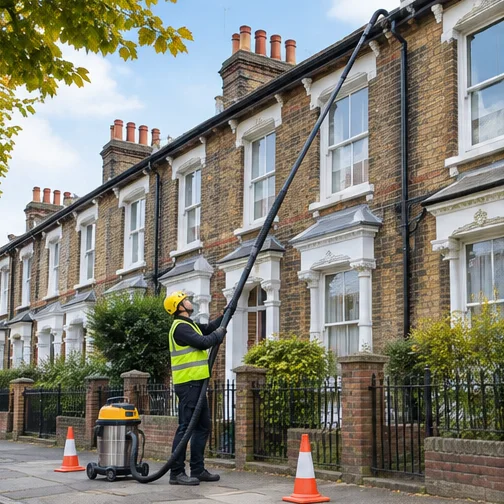
Illustrative photograph.
See which roof feeds the bay
Look up from the bay window and follow the edge of the main roof in both directions. A downpipe might stop over the bay roof or carry water past it to a drain. Where a higher roof discharges towards a lower one, the smaller channel may receive more water than its footprint suggests. If a drip begins at the bay only when the rain is heavy, a short film from a safe location can show whether the small channel fills gradually or water is already falling from above.
A still image is useful even in dry weather. Include the end of the bay roof, the first fitting above it and enough of the wall to see how the levels relate. Photograph both ends if a pipe goes out of sight around the corner. An inside photograph of the bay ceiling helps locate damp in relation to the window, but we need the outside view to establish the part of the rainwater system to examine. You can book gutter cleaning for the reachable channels and ask us to identify which ones are included in the scope.
Leave room to work beside the return
A side return may look open at the gate and narrow where a porch, bin store or extension begins. Tell us the narrowest point and what surface is underfoot. A series of steps means the position visible in a photograph of the gate may be at a different level from the rear wall. If there is a loose cover or a step down behind the bins, mark it in the photographs so the usable working positions are clear. A plan showing roughly where the gutter runs is useful on a property with several changes of direction.
Let us know if parking or temporary storage normally takes up the area beneath the affected edge. Moving a vehicle can make a front approach possible. A vehicle can also be the only thing keeping a shared drive clear of other parked cars, so agree the arrangements with the people who use it. If the gutter can only be reached from the neighbour’s side, tell us in advance. We can consider what access would be needed and you can establish who can arrange it before setting a date.
- See whether the upper gutter feeds the bay channel
- Show where the side return becomes narrow
- Keep an image of any original bracket you want to retain
- Check where the downpipe meets the paving or gully
Look at the seams and support after a clear
Compact debris can hide a union, the rim of an outlet or the shape of the channel. Once the reachable material is removed, an accessible part of the gutter may show a seam that has shifted or a dip between supports. If rain previously dripped from the middle of a run, the position of that drip is worth noting. Water collecting in the dip can spill over a low edge, while a drop forming exactly at a seam may indicate a problem at that fitting. The two observations lead to different gutter repair enquiries.
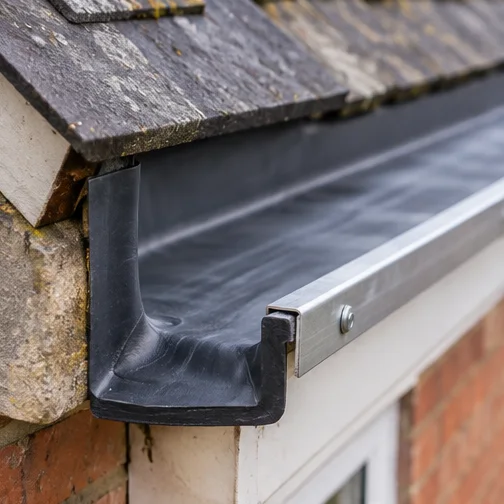
Some channels are partly concealed by the roof edge. Photograph any exposed end where its shape or material can be seen. If you are considering gutter lining for an existing channel, tell us about prior patches, pooling or movement and give the position of the outlet. An assessment needs to account for the channel underneath, its support and the path water will take once it reaches the opening. The condition of an exposed end alone may say little about the rest of a concealed length.
Information to send for a Gidea Park visit
| Part of the property | What to photograph |
|---|---|
| Bay roof | Its complete edge and the higher gutter above |
| Side return | The gate, any steps and the narrowest working space |
| Pipe base | The discharge point and adjacent paving |
| Corner between roof edges | Both runs and the nearest outlet in one wider view |
Work out what the downpipe serves
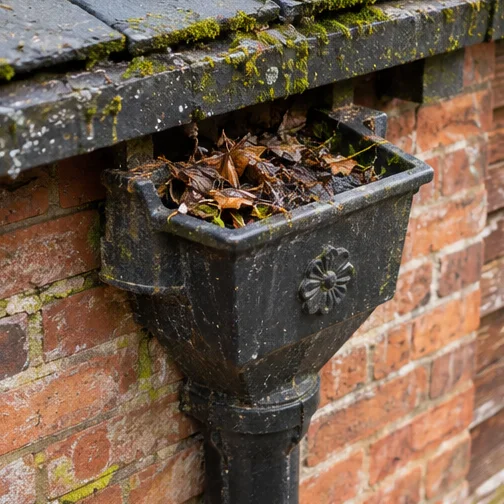
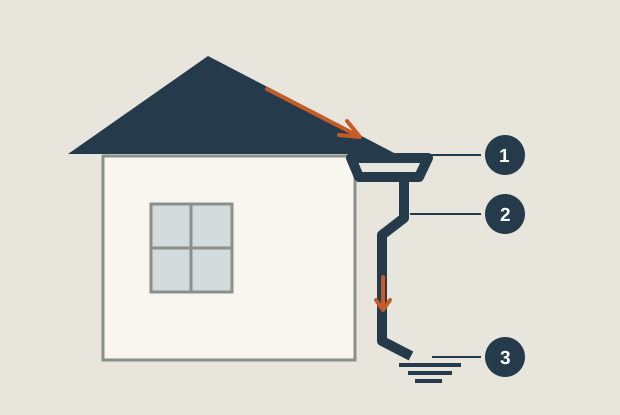
A pipe by a bay can take water from the main gutter, the bay gutter or both. Follow the outside pipe upwards from its base and record any branches you can see. A small photograph of a bend can be difficult to place in a long frontage with several bends, so include the nearest window or door in a wider shot. If the pipe goes into the ground, show where the base meets the paving. Where it discharges over a gully, note whether water pools or flows away during rain.
We check reachable downpipe openings during a clearance. If water appears through the paving or rises out of a gully, describe where and when you see it. It may be necessary to assess the drainage further along the route as a separate job. If the main symptom is damp around a bay ceiling, include when it dries, whether it follows wind-driven rain and how far the patch spreads. These details are useful when deciding what to cover in a water ingress assessment.
Work we can discuss after clearance
Gutter cleaning
Clear accessible bay, main roof and extension gutters included in the booking.
Guttering repairs
Assess shifted seams, sagging runs and loose brackets once they can be reached.
Gutter lining
Assess the underlying channel before considering lining above a bay or behind a roof edge.
Gutter replacement
Discuss replacement profiles around angles where a bay connects to another run.
Ivy removal
Assess plant growth around a pipe bracket where stems have climbed beside the bay.
Water damage repair
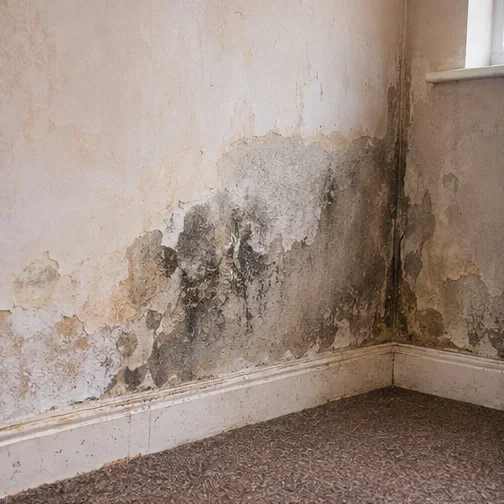
Compare the position of staining around the bay with reachable gutters and adjacent roof edges.
Record the fittings before discussing changes
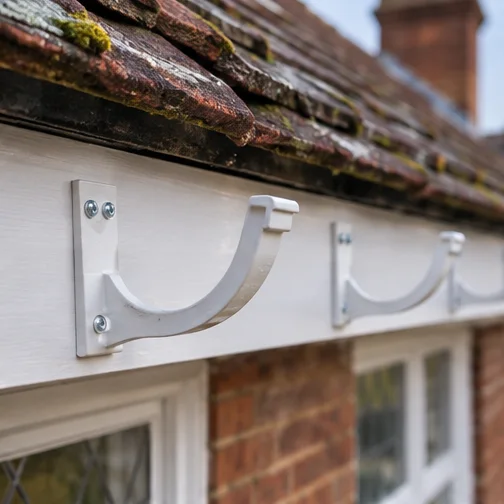
If you are thinking about replacement, take photographs of straight lengths as well as angles, ends and the connection to the pipe. An angle above the bay often determines how the surrounding lengths have to be joined. A decorative bracket can influence where a replacement channel sits and how it meets the existing roof edge. Include an image from below if you can take it safely, as it may show an attachment hidden in the view from across the street.
Give us the location of any fittings you hope to keep in service and say why. The reason might be that one downpipe serves the neighbour too, or that the profile continues round a bay and you would like to retain its appearance. If there are records of earlier work on one corner of the house, note which corner they refer to. That can help us assess whether the current symptom is associated with an older section or a connection between materials. Tell us how you intend to use the information, especially if another person is preparing a specification for the roof or external joinery.
What we can discuss after clearance
| Observation | Next decision |
|---|---|
| Material gathered at a small outlet | Whether the opening is reachable and its route can be seen |
| Water sitting between supports | Whether to assess the bracket positions and gutter fall |
| Drip returns at one seam | Whether the union can be examined for repair |
| Damp spreads across the bay ceiling | Whether the roof covering and adjoining wall need further investigation |
Before we assess the roof edge
Gidea Park gutter cleaning FAQs
Can you clear the bay gutter separately?
Yes, if there is an accessible separate channel. Show the roof above it and the point where the bay gutter empties. If the higher roof also discharges onto the bay, let us know when you enquire.
Do you need access through the side gate?
It depends on where the affected run is and which surfaces we can work from. Send pictures from the front and rear and mention a narrow passage, uneven steps or a locked gate. Include how we would get to the rear if the side route is unavailable.
Should I send a picture of an original bracket?
Yes, especially if a fitting is loose or you want to keep it during later work. Include the bracket and a wider view showing the lengths it supports. A wider view helps identify whether a joint nearby is also affected.
What if the gutter is hidden behind the edge of the roof?
Tell us which part is hidden and photograph any visible ends or outlets. We can discuss what can be inspected from the available access. An enclosed or concealed run may need different access from an open gutter.
Can a clear stop staining below a bay?
It can help when the stain is caused by overflow from material in the gutter. Once the reachable run is clear, staining that reappears may need further checks at the seams, roof covering or adjacent wall. Share the date and conditions when it next appears.
Can you include both front and rear gutters?
Yes, where access allows. Identify the roof edges at each end and mention any lower roofs, porches or extensions between the main building and the working area. We can use those details to describe which runs the booking covers.
Coverage and bookings
See the areas we cover. For nearby enquiries, see Romford.